
7 Books That Helped Me Let Go of People Who Hurt Me
Discover 7 powerful books that guided me through the process of healing, setting boundaries, and finally finding peace after toxic relationships.


Releasing people who’ve caused us pain can feel like prying open a hand that’s been clenched for far too long—rigid, uneasy, and achingly difficult. Releasing that weight isn’t just about moving on; it’s about reclaiming your peace. Below is a list of 7 books that helped me let go of people who hurt me.
1. Tiny Beautiful Things by Cheryl Strayed
A collection of heartfelt advice columns from Cheryl Strayed, this book is raw, compassionate, and unflinchingly honest. Her responses to strangers’ deepest hurts often felt like they were written for me. One of her constant messages—that love and loss are intertwined—helped me accept that letting go is not failure, but a natural part of life. Reading her words felt like having a wise friend who tells you the truth with so much empathy that you actually feel stronger afterward.
2. Radical Acceptance by Tara Brach
Tara Brach combines Buddhist wisdom with psychology to teach that healing begins when we stop fighting reality. I realized I’d been rejecting not just the person who hurt me, but parts of myself that still felt angry or broken. Brach’s concept of “the trance of unworthiness” hit me hard—it explained why letting go felt impossible. Her guided practices helped me see my pain without judging it. This shift didn’t erase the hurt, but it made me gentler with myself in the process.
3. Rising Strong by Brené Brown
In Rising Strong, Brené Brown focuses on what happens after you’ve been knocked down—how to get back up with grace and courage. I realized that letting go wasn’t just about removing people from my life; it was about facing the pain they left behind. Her stories made me feel less alone, and her actionable steps—like owning your story and rewriting the ending—helped me rebuild confidence. This book made me believe that even after heartbreak, we can rise not just restored, but stronger than before.
4. Big Magic by Elizabeth Gilbert
Elizabeth Gilbert’s Big Magic isn’t just about creativity—it’s about courage. While the book focuses on living a creative life, many of its lessons apply to emotional healing. Her message that life is too short to let fear dictate your choices inspired me to step into the “big magic” of my own life. Letting go became less about loss and more about making space for something beautiful.
5. The Mountain Is You by Brianna Wiest
Brianna Wiest’s book is all about self-sabotage—how we get in our own way without even realizing it. She explains that holding onto toxic people can be a form of self-sabotage, rooted in fear and old wounds. The metaphor of “the mountain” being yourself hit me hard—it’s not always them we have to overcome, but our own patterns. Her chapters on emotional intelligence and self-awareness gave me the push to finally stop chasing what hurt me. This book reminded me that the climb to peace might be steep, but every step is worth it when the view is your own freedom.
6. Daring Greatly by Brené Brown
Brené Brown’s Daring Greatly is all about vulnerability as the gateway to connection and courage. She challenges the idea that vulnerability is weakness, showing instead how it creates strength. For me, this meant facing the pain of loss head-on instead of pretending I was fine. I realized that avoiding vulnerability kept me stuck in old wounds, while embracing it allowed me to heal. The book gave me permission to feel deeply without shame, making the process of letting go more honest and compassionate.
7. Letting Go by David R. Hawkins
David Hawkins offers a practical roadmap for emotional release, introducing what he calls the “Letting Go Technique.” It’s about fully feeling an emotion without suppressing, resisting, or clinging to it—until it naturally dissolves. I began to notice how often I tried to numb my pain instead of allowing it to pass through me. Hawkins’ emotional scale, from shame to enlightenment, gave me a sense of where I was and where I could go next. The process felt like slowly loosening a tight knot in my chest. This book reassured me that emotional freedom is possible, but it’s a conscious practice.
Why These Books Matter
Each of these books offers more than just words on a page—they’re roadmaps through the messy, winding journey of letting go. They matter because they meet you where you are: raw, hurt, and maybe a little lost. Some will hand you practical tools, others will gently shift your perspective, and a few will hold your hand in silence while you process.
Together, they prove that healing isn’t about erasing the past—it’s about reclaiming your peace, rewriting your story, and learning to stand whole even when pieces have been taken from you. In their own ways, they remind us: you are stronger than what happened to you, and your next chapter can be beautiful.
Conclusion
Letting go isn’t a one-time act—it’s a practice. These books didn’t just help me move on; they helped me rebuild my relationship with myself. If you’re struggling, remember: healing is not about erasing the past, but about making peace with it.
About the Creator
Diana Meresc
“Diana Meresc“ bring honest, genuine and thoroughly researched ideas that can bring a difference in your life so that you can live a long healthy life.
Keep reading
More stories from Diana Meresc and writers in BookClub and other communities.
8 Books to Read When You Don't Know What to Do With Your Life
We’ve all been there — that unsettling, in-between place where you’re not sure what the next step should be. Your career feels stuck, your personal life feels hazy, or maybe everything just feels… flat. The good news? You’re not broken — you’re just in transition. And one of the best ways to navigate these foggy seasons is to let books be your compass.
By Diana Meresc6 months ago in BookClub
My New Book is Finally Here
My poetry collection Beautiful and Brutal Things is done. It's actually done and finally published over 270 pages. Over a year of my life went into this book. More than a year, really. Long days at my computer, sometimes seven days a week because I couldn't stop even when I probably should have. Then two months of editing that felt harder than the writing itself. But it's finished, and I'm still standing, and the book is real.
By Tim Carmichael6 days ago in BookClub
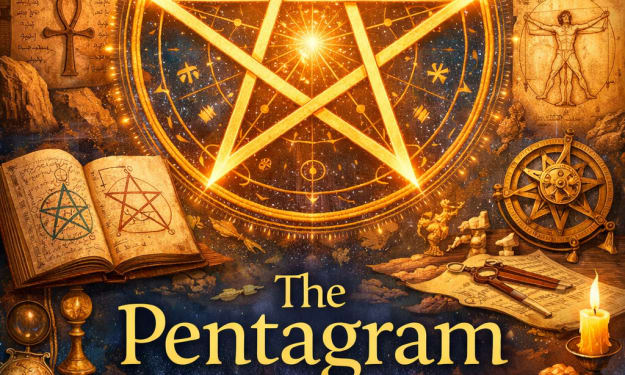
The Pentagram
A Symbol Older Than Written Memory The pentagram ranks among the oldest geometric symbols known to human civilization. Defined as a five-pointed star formed by a single unbroken line, the figure appears in material culture dating back more than five thousand years. Archaeological evidence places early examples in Mesopotamian inscriptions, where the form carried associations with celestial order, spatial direction, and authority. From those earliest appearances, the pentagram moved fluidly across cultures, languages, and belief systems, adapting its meaning while retaining its distinctive structure.
By Marcus Hedare2 days ago in BookClub



Comments
There are no comments for this story
Be the first to respond and start the conversation.