
5 Massive Books That Are Worth Your Time
Five literary monsters that broke my back, melted my brain, and somehow made me love reading more.


You want to know the exact moment I became an insufferable asshole?
October 2019. Barnes & Noble. I’m buying a birthday card for my nephew (dinosaurs, he was going through a phase) and I see this guy — leather jacket, man bun, the works — picking up a copy of Infinite Jest. And I just… laughed. Out loud. Like a dick.
"Good luck with that," I said.
He looked at me, looked at the book, looked back at me. "You've read it?"
"Three times."
Total fucking lie. I'd read maybe 200 pages and a plot summary. But something about his stupid man bun made me want to win whatever this was.
"Wow," he said. "I've been meaning to-"
"Don't." I was already in it. "Unless you've got three months and a serious cocaine habit, just... don't."
He put the book back. I felt like a god. A small, petty god who gatekeeps literature.
Then I bought The Brothers Karamazov because I figured if I was going to be that guy, I might as well commit to the bit.
Except and here's where it gets stupid - I actually read it.
The whole thing. All 800 pages of Russian sadness. And then I read another massive book. And another. And now I'm that guy for real, except worse, because I genuinely believe everyone should suffer through these enormous books like I did.
So here. Here's five books that will ruin your life in the best way. Books so big they'll give you scoliosis.
Books that'll make you miss your stop, skip meals, and genuinely con-sider calling in sick to work because you NEED to know if Dmitri actually killed his dad or not.
The Count of Monte Cristo
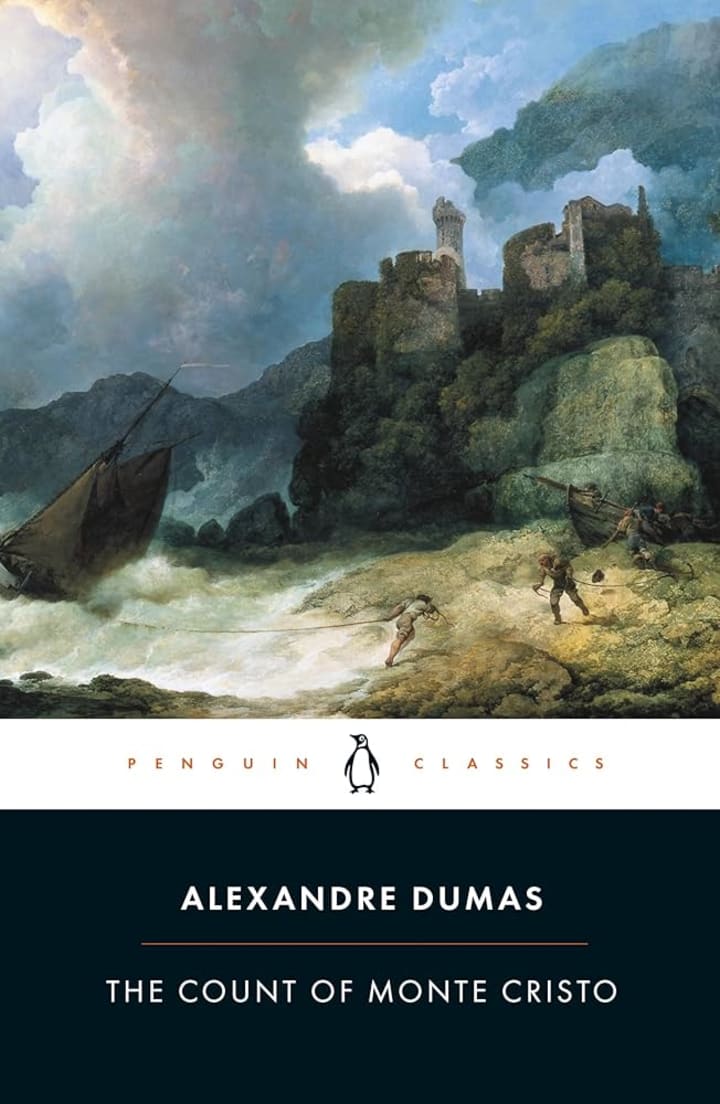
This book is 1,276 pages of pure, pharmaceutical-grade revenge porn and I injected it directly into my veins over Christmas break 2020.
Remember 2020? When we all pretended we were going to learn bread-making and become better people? Yeah, instead I read about a French guy systematically des-troying everyone who wronged him while I ate Cheetos in my under-wear. Peak pandemic behavior.
Here's the thing nobody tells you about Dumas: the man did NOT believe in editing. This book has subplots inside subplots inside subplots, like a Russian nesting doll made of grudges. There's a whole section about bandits in Rome that has absolutely nothing to do with anything except Dumas probably went to Rome once and wanted to write about it. There's ANOTHER section about hashish that goes on for thirty pages because, again, Dumas clearly loved his drugs.
But it WORKS. It all fucking works. Because by page 1000, when the Count is serving revenge colder than my ex's heart, you've lived with these characters so long they feel like family. Terrible, French, melodramatic family who poison each other at dinner parties.
The Count himself is basically Bat-man if Batman was French and way more into psychological torture. He doesn't just want to hurt the people who betrayed him - he wants to destroy their entire bloodlines. He wants their children's children to feel it. He's playing 4D chess while everyone else is playing checkers, and he's doing it in increasingly ridiculous disguises.
There's a scene where he shows up to Paris society as this mysterious nobleman with unlimited money and everyone loses their goddamn minds. He's got slaves (yeah, it was written in 1844, there's some prob-lematic shit), he's got exotic horses, he's tossing emeralds around like Tic Tacs. It's the most extra thing I've ever read and I loved every ridiculous second of it.
Read this if: you've ever fantasized about destroying your enemies but you're too lazy to actually do it.
1Q84
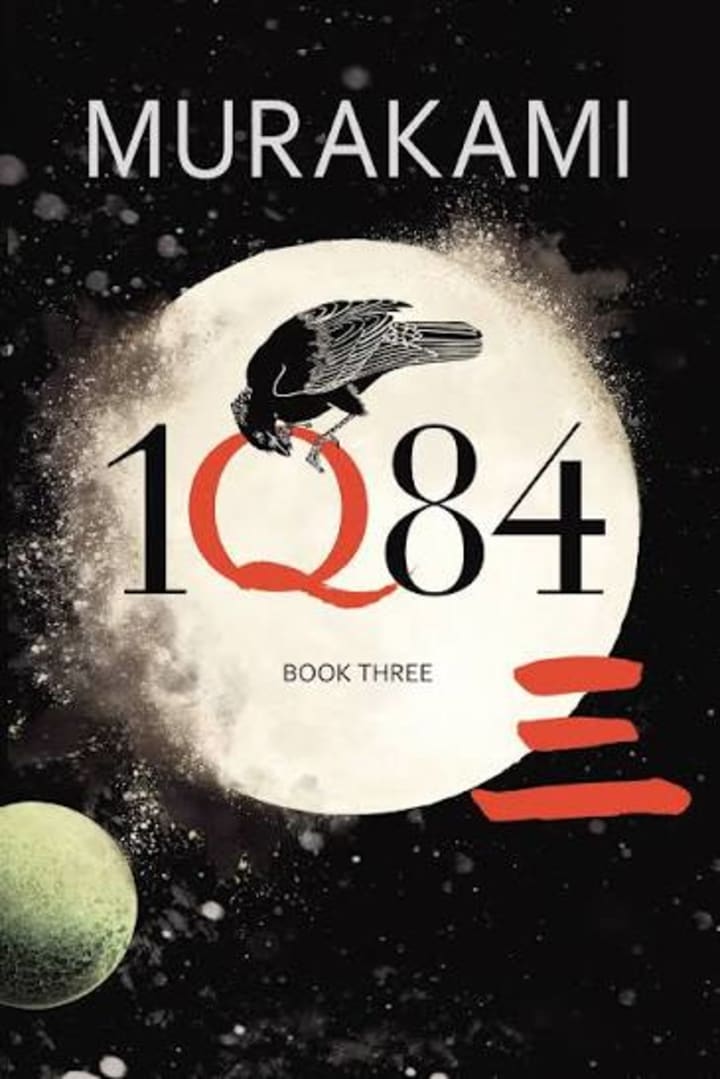
I started reading Murakami because a girl I was trying to impress said he was her favorite author. She had bangs and wore oversized sweaters and I was convinced she held the secrets to the universe.
She didn't. But Murakami might.
This book... Christ, how do I even explain this book? It's like if Lost was a novel but written by someone who actually knew where they were going. Woman climbs down a high-way staircase in Tokyo, suddenly there's two moons, and that's the NORMAL part.
I'm 400 pages in before I realize I have no fucking clue what's hap-pening. There's a religious cult that might be right about everything. There's little people who climb out of mouths (OR DO THEY?). There's a seventeen-year-old who might have written the most important book ever or might just be a weird kid. Everyone's having the worst sex you've ever read described in clinical detail.
But here's what Murakami does that nobody else can do: he makes you FEEL displaced. Like, you're reading it on your couch but you're also somehow in this weird parallel Tokyo where nothing makes sense but also everything makes perfect sense. It's hypnotic. It's frustrating.
It's 925 pages of "what the fuck" and I read it twice.
The food descriptions alone are worth it. This man describes mak-ing a sandwich like it's a religious experience. There's a scene where a character cooks spaghetti and I swear to god it's more erotic than actual porn.
Also, everyone in this book is lonely in such a specific way that you realize you're lonely in exactly the same way, and then you have to sit with that for a while.
Infinite Jest

Fuck me, I'm actually going to defend this pretentious doorstop.
But first, let me say: if you're the kind of person who talks about Infinite Jest at parties, you deserve whatever happens to you. This book has been ruined by every MFA student who thinks reading it makes them special. It doesn't. It makes you tired and confused and possibly insane.
That said.
This book predicted everything. Everything. Our phone addiction, our entertainment addiction, our inability to just BE without consum-ing something. Wallace wrote about people so entertained they forget to live and haha, oh shit, that's literally everyone now.
I read it in 2021, unemployed and drunk most of the time, which is probably the ideal state. You need to be slightly unhinged to handle the timeline jumping around like a meth head. You need patience for the 100-page sections about tennis that are actually about conscious-ness. You need to accept that the footnotes are more important than the main text sometimes.
But when it hits, it HITS. There's a scene in a halfway house that made me ugly cry into my beer. A descrip-tion of addiction that's so accurate it should be taught in med school.
Characters so fucked up and human that you see yourself in all of them, even the worst ones.
The ending isn't an ending. Wallace died before he could fix it (or maybe that's the point, who knows). First time through, I literally checked if pages were missing. Second time, I threw the book at the wall. Third time, I got it. Or I think I got it. Or maybe I just gave up.
One of those.
The Brothers Karamazov
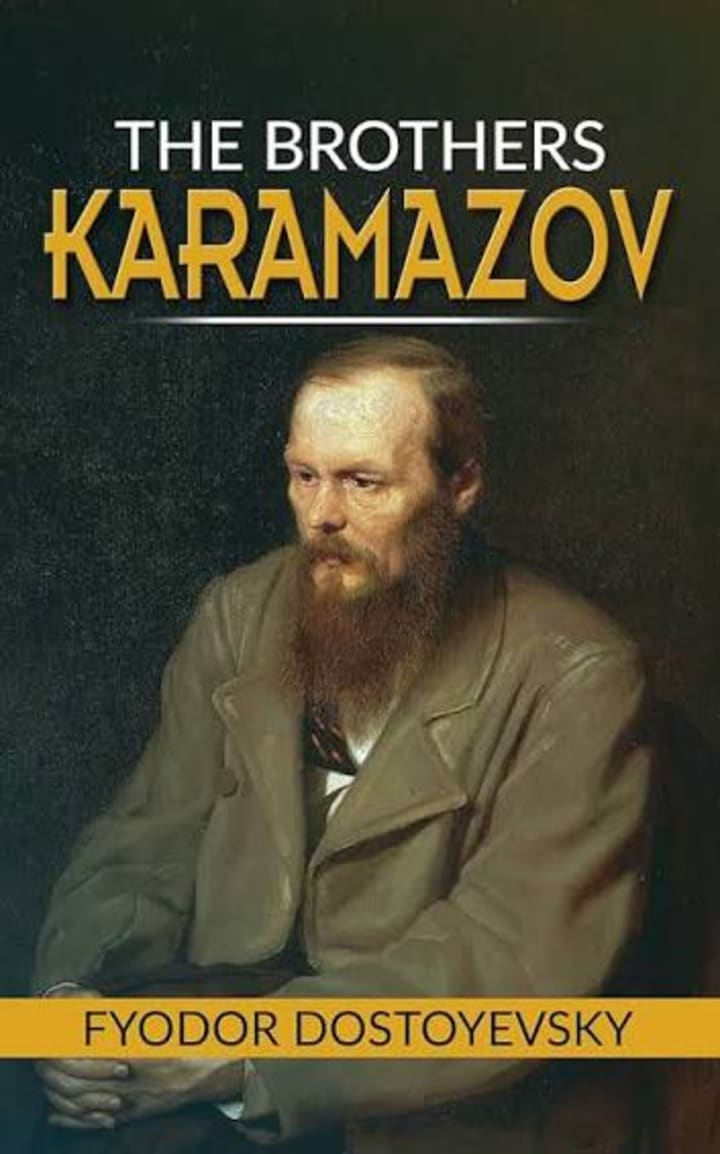
This is the book that started it all. My gateway drug into massive Russian literature.
800 pages of the most dysfunctional family in fiction, and I'm including the Bluths. Everyone's either murder-horny, God-obsessed, or both. The dad's a piece of shit, the brothers all want to kill him, and then someone actually does it but Dostoevsky makes you wait 600 PAGES before the murder even happens.
Instead, you get philosophy. So much philosophy. Characters monologue at each other for entire chapters. There's a bit called "The Grand Inquisitor" that's just one brother telling another brother a fanfic he wrote about Jesus, and it goes on FOREVER, and it's some-how the most important thing ever written about freedom and faith and I'm not even religious.
What fucks you up about Dosto-evsky is that everyone's kind of right? The atheist brother makes sense. The religious brother makes sense. The sensualist brother who just wants to fuck and drink makes the MOST sense. By the end, you don't know what to believe about anything.
I read this in coffee shops, trying to look intellectual, but really I was just confused and overcaffeinated. There's a trial scene that's basically Russian Judge Judy. There's a love triangle that's actually a love pentagon. Everyone's name is Fyodor something and you need a spreadsheet to keep track.
But. BUT. When you finish it, you feel like you've LIVED it. Like you've been to 19th century Russia and met these beautiful disasters and wrestled with questions that matter even though nothing matters.
Your brain will melt. You'll question everything. You'll bore your friends talking about it.
The Goldfinch

Donna Tartt wrote this behemoth and then disappeared for another decade because apparently she only writes one book per geological era.
It's 771 pages about a kid who accidentally steals a painting during a terrorist attack and then just... keeps it? For years? While doing massive amounts of drugs and furniture fraud?
This book shouldn't work. It's too long, too detailed, too obsessed with describing wood grain and drug highs. But Tartt writes like someone who's never heard of Twitter. She'll spend 10 pages describing a single room and somehow you're riveted. She'll dedicate entire chapters to furniture restoration and you're like "YES, TELL ME MORE ABOUT DUTCH MARQUETRY."
The Vegas section is where it goes completely off the rails. Two teenagers alone in a foreclosed Mc-Mansion doing every drug known to man while the prose gets increas-ingly hallucinogenic. I read this part during a work trip to Vegas (poetic, right?) and had to keep checking if what I was reading was real or if I was having a contact high from the casino air.
There's a character named Boris who's pure chaos in human form. He shows up, ruins everything, disappears, comes back, ruins everything worse. He's terrible. I love him. Everyone you know has a Boris in their life.
The ending made people MAD. Like, throwing-the-book mad.
Writing-angry-Goodreads-reviews mad. But that's how you know it worked. Tartt spent 700 pages mak-ing you care about these broken people and their stolen painting and then she's like "actually, here's what it all means" and you're like "NO, DONNA, I WANTED TO FIGURE IT OUT MYSELF."
Look, I could sit here and tell you these books taught me about the human condition or made me a better person or whatever bullshit people say about literature. But honestly? I read them because I'm competitive and stubborn and I like telling people I've read them.
But also and I hate that this is true - they did change my brain. Not in a spiritual way. In a literal, physical way. My attention span went from goldfish to... I don't know, slightly larger goldfish. I star-ted dreaming in longer narratives.
I became one of those unbearable people who says things like "oh, that reminds me of a scene in Dostoevsky."
So read them. Or don't. But if you do, prepare to become insufferable. Prepare to miss your stop on the train. Prepare to cancel plans because you're 900 pages in and you NEED to know what happens.
Prepare to be that asshole in Barnes & Noble, judging someone else's book choices.
The cycle continues.
About the Creator
General gyan
"General Gyan shares relationship tips, AI insights, and amazing facts—bringing you knowledge that’s smart, fun, and inspiring for curious minds everywhere."
Keep reading
More stories from General gyan and writers in BookClub and other communities.
5 Books You Should Not Skip Reading in 2025
21 Lessons of the 21st Century by Yuval Noah Harari Why should you read this book? It tells about the nexus between the info-tech and bio-tech industries, which are dominating the world with the use of AI. It delineates how AI will change the world by automating machines, reducing the need for humans in decision-making, and galvanizing the demand for philosophers. Most im-portantly, this book lifts the curtains of capitalist monopoly over "beauty, Creativity, and health."
By General gyan4 months ago in BookClub
Rachel Reviews: Lakefront Wolves by Joseph Deegan
Meet Finn. He's an 18 year old kid who has potential. He's bright with great school scores and he's also an athlete, a footballer of some prowess. He has it all going for him, it would seem, and yet, he's determined to send what could be a well-planned, stable existence firmly off the rails. He drinks, he smokes, he takes drugs, he has violent tendencies and he's in danger of losing not only his mind but all that he holds dear.
By Rachel Deeming10 days ago in BookClub
Marsilio Ficino
Marsilio Ficino and the Renaissance Revival of Plato The Renaissance transformed the intellectual landscape of Europe through renewed engagement with classical antiquity. Greek and Roman manuscripts long absent from Western study returned to circulation through Byzantine scholars, monastic libraries, and new centers of learning in Italian city-states. Florence emerged as a leading center of cultural and philosophical renewal during the fifteenth century, where wealthy patrons supported scholarship, art, and literary production. Within such an atmosphere of rediscovery, the figure of Marsilio Ficino rose to prominence as one of the most influential interpreters of ancient philosophy.
By Marcus Hedareabout 17 hours ago in BookClub


Comments
There are no comments for this story
Be the first to respond and start the conversation.