
48 Laws of Power
A Timeless Examination of Strategy, Influence, and Human Nature Unveiling the Harsh Realities of Power Through History’s Greatest Minds.

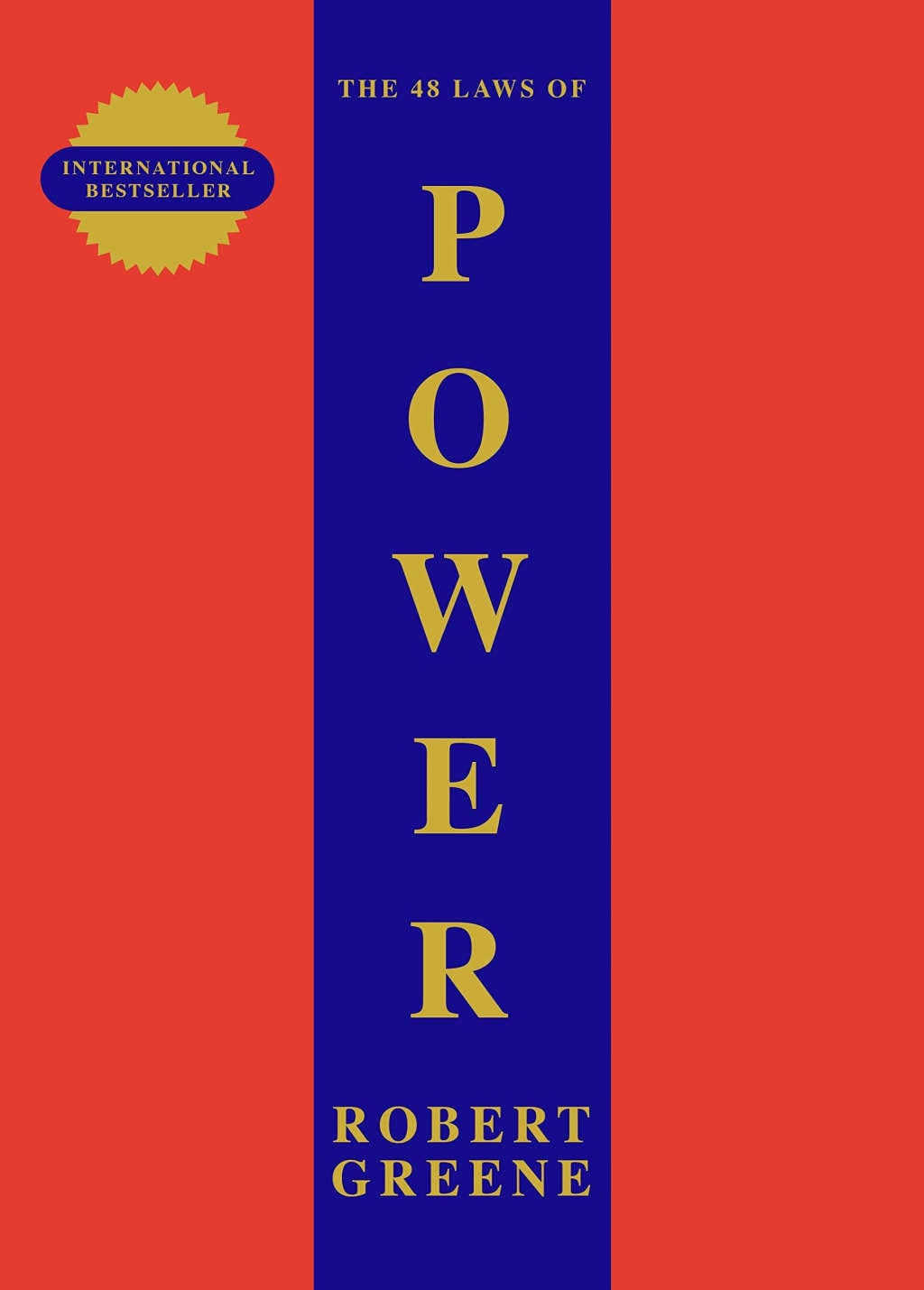
The 48 Laws of Power by Robert Greene, first published in 1998, is a provocative and influential work that explores the nature of power and its application throughout history. The book has become a cultural phenomenon, widely read across diverse fields including business, politics, entertainment, and even sports. Its unapologetic exploration of manipulation, strategy, and dominance has made it both celebrated and controversial. Greene, drawing from over 3,000 years of historical examples, offers a comprehensive manual on how power is acquired, maintained, and lost.
Structured into 48 concise laws, the book provides readers with maxims that range from “Never outshine the master” to “Crush your enemy totally.” Each law is accompanied by detailed historical anecdotes, reversals, and interpretations that illustrate how these principles have been used successfully or disastrously by figures such as Napoleon Bonaparte, Machiavelli, Elizabeth I, Henry Kissinger, and many others. These narratives are not only instructive but also serve to underline Greene’s central thesis: power is an omnipresent force, and those who wish to survive or thrive in competitive environments must understand how it works.
One of the most compelling aspects of the 48 Laws of Power is its timelessness. Greene’s work transcends cultural and temporal boundaries by using historical examples from ancient China and Renaissance Italy to 20th-century America. This wide-ranging scope lends the book a sense of authority and richness. The format is methodical: each law includes a brief statement, a detailed explanation, a “transgression of the law” section (where someone failed to follow it), an “observance of the law” (a success story), and often a “reversal,” which cautions against applying the law blindly.
The book’s tone is notably cold, pragmatic, and often cynical. Greene does not attempt to moralize; instead, he presents power as a neutral tool amoral rather than immoral. He frequently warns readers not to assume that good intentions will protect them from exploitation. In this way, the book functions not only as a guide for those who wish to gain power but also as a defense manual for those who wish to recognize and protect themselves from manipulation.
While the book has been praised for its depth, clarity, and strategic insight, it has also faced criticism. Some readers and critics argue that the book promotes unethical behavior, as many of the laws endorse deceit, emotional detachment, and domination. Laws such as “Pose as a friend, work as a spy” or “Use selective honesty and generosity to disarm your victim” have led some to view the book as a manual for manipulation. Greene, however, contends that the book is descriptive, not prescriptive that is, it seeks to describe how power works, not necessarily how it should be used.
Despite the controversy, the book’s influence is undeniable. It has been widely adopted by corporate executives, political operatives, entrepreneurs, athletes, and artists. Notably, rapper 50 Cent collaborated with Greene on a follow-up book, the 50th Law, which applies similar principles to fearlessness and street smarts. The 48 Laws of Power has also been banned in some U.S. prisons due to concerns over its content, further underscoring its perceived potency.
From a literary perspective, the book is well-crafted. Greene’s prose is elegant yet accessible, and the layout featuring bold headings, sidebars, and historical illustrations makes it visually engaging. The philosophical underpinnings draw from thinkers like Sun Tzu, Machiavelli, and Baltasar Gracián, lending the book intellectual weight as well as practical application.
In conclusion, The 48 Laws of Power is a compelling, sophisticated, and thought-provoking work. It offers deep insights into the human desire for control and influence, and whether one agrees with its principles or not, it cannot be ignored as a cultural artifact. The book is best read critically, with a strong sense of ethical reflection. For those seeking to understand the mechanics of power in history and in contemporary life, Robert Greene’s work remains an essential and enduring text.
About the Creator
Syed Haider Mehmood
I live through stories—crafting reviews, self-written tales, poetry, and reflections on novels and life. Rooted deeply in my love for reading and writing, I transform thoughts and emotions into words that truly resonate with readers.
Keep reading
More stories from Syed Haider Mehmood and writers in BookClub and other communities.
The Power of Geography
The Power of Geography by Tim Marshall Ten Maps That Reveal the Future of Our World by Tim Marshall is a compelling continuation of his earlier geopolitical work, Prisoners of Geography. Published in 2021, this book offers a masterful exploration of how geography despite the rapid advance of globalization, technology, and diplomacy continues to shape the destiny of nations. With the rigor of a seasoned journalist and the clarity of a skilled storyteller, Marshall provides a detailed, region-by-region analysis of ten critical locations that are set to shape the world’s political and economic future.
By Syed Haider Mehmood8 months ago in BookClub
Rachel Reviews: Lakefront Wolves by Joseph Deegan
Meet Finn. He's an 18 year old kid who has potential. He's bright with great school scores and he's also an athlete, a footballer of some prowess. He has it all going for him, it would seem, and yet, he's determined to send what could be a well-planned, stable existence firmly off the rails. He drinks, he smokes, he takes drugs, he has violent tendencies and he's in danger of losing not only his mind but all that he holds dear.
By Rachel Deeming14 days ago in BookClub


Comments
There are no comments for this story
Be the first to respond and start the conversation.