
4 BOOKS THAT HAVE MADE PEOPLE MILLIONAIRES
The relation between learning and earning

In a world where financial security and independence are highly sought after, the right knowledge can be a game-changer. Reading books, especially those focused on personal finance and wealth-building, is one of the most powerful ways to acquire knowledge. Proven studies have shown that individuals who regularly read are more likely to achieve higher levels of success, both personally and professionally. They can teach you how to manage your money, invest wisely, and develop a millionaire mindset. In this article, we’ll explore some of the must-read financial books that have the potential to transform your thinking, inspire action, and ultimately, boost your earnings. Whether you’re just starting out or looking to refine your financial strategy. Here are top book that can make you a millionaire, remember wealth starts with the mindset.
1."Think and Grow Rich" by Napoleon Hill
Overview:
"Think and Grow Rich" is one of the most influential self-help books ever written, originally published in 1937. Napoleon Hill distilled the wisdom and strategies of successful people of his time, including Andrew Carnegie, Thomas Edison, and Henry Ford, into a clear, actionable guide for achieving wealth and success.
The book is built around Hill's "13 Steps to Riches," which include principles like desire, faith, and persistence, emphasizing the power of thought and the importance of a positive mental attitude.
Key Concepts:
Desire: Hill argues that a burning desire is the starting point for all achievement. It’s not just about wishing for wealth, but about having an unwavering passion and determination to attain it.
Faith: Cultivating a deep belief in your ability to achieve your goals is crucial. Hill suggests using affirmations and visualizations to reinforce this belief.
Autosuggestion: The process of feeding your subconscious mind with positive thoughts and affirmations to influence your actions and mindset.
The Mastermind Principle: Surrounding yourself with like-minded individuals who can support and elevate your efforts.
Persistence: The importance of never giving up, even when faced with challenges and setbacks.
Impact: "Think and Grow Rich" has inspired millions to pursue their dreams and has been credited with helping countless people transform their financial lives. Its lessons are timeless, making it relevant even in today’s fast-paced, modern world.
Where to buy
2. "Financial Literacy for Young Adults" by Raman Keane
Overview:
Raman Keane’s "Financial Literacy for Young Adults" is a practical guide aimed at equipping young people with the essential financial knowledge they need to navigate the complexities of adult life. Written in an accessible and engaging style, the book covers fundamental topics like budgeting, saving, investing, credit, and debt management. Keane's approach is tailored to the unique financial challenges faced by young adults, including student loans, first-time employment, and the temptation of instant gratification in a consumer-driven society.
Key Concepts:
Budgeting: The book introduces simple yet effective methods for creating and maintaining a budget, helping young adults track their income and expenses and make informed financial decisions.
Saving and Investing: Keane emphasizes the importance of starting to save and invest early. He explains various savings vehicles and introduces basic investment principles, including the power of compound interest.
Understanding Credit: The book demystifies credit scores, credit cards, and loans, offering strategies for building and maintaining good credit while avoiding common pitfalls.
Debt Management: Keane provides practical advice on managing and paying off student loans, credit card debt, and other forms of debt, with a focus on avoiding long-term financial burdens.
Financial Planning: The book encourages readers to think long-term, setting financial goals for major life events like buying a home, starting a family, or retirement.
Impact: "Financial Literacy for Young Adults" is an invaluable resource for young people entering the financial world. It’s designed to build a strong financial foundation that can lead to lifelong financial stability and success.
Where to buy
3. "The 48 Laws of Power" by Robert Greene
Overview:
Robert Greene’s "The 48 Laws of Power" is a provocative and insightful exploration of the dynamics of power in human relationships. Drawing on historical examples, Greene presents 48 laws that govern how power is acquired, maintained, and lost. The book is often seen as controversial due to its ruthless strategies, but it’s widely regarded as a masterpiece in understanding human behavior and strategy. Whether you’re navigating corporate politics, negotiating in business, or simply seeking to understand social dynamics, Greene’s book offers a wealth of knowledge.
Key Concepts:
Law 1: Never Outshine the Master: Always make those above you feel superior, and don’t draw too much attention to your own talents.
Law 3: Conceal Your Intentions: By keeping your true plans hidden, you can manipulate and maneuver others without them realizing your motives.
Law 48: Assume Formlessness: Flexibility and adaptability are crucial to maintaining power; by remaining fluid and unpredictable, you can avoid being targeted or outmaneuvered.
Impact: "The 48 Laws of Power" is often regarded as a must-read for anyone interested in leadership, strategy, or personal development. Its teachings have been applied by leaders, executives, and even artists to achieve success in highly competitive environments. While some may find the laws ethically challenging, the book provides a deep understanding of the mechanics of power in human interactions.
Where to buy
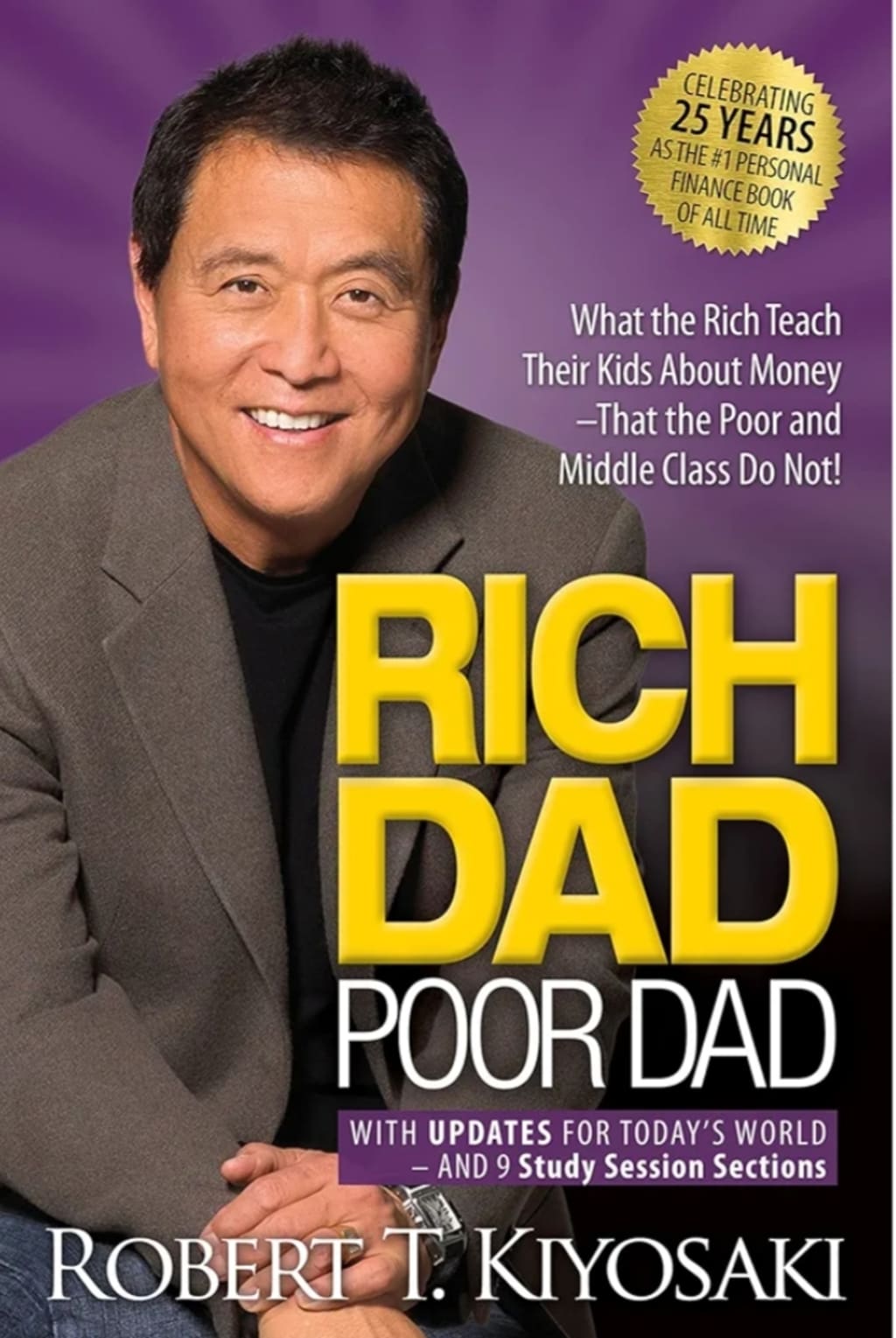
4."Rich Dad Poor Dad" by Robert Kiyosaki
Overview:
"Rich Dad Poor Dad" is a groundbreaking personal finance book that has reshaped the way millions of people think about money and investing. First published in 1997, Robert Kiyosaki's book is a semi-autobiographical account that contrasts the financial philosophies of his "Rich Dad" and "Poor Dad," two father figures with very different approaches to money.
- Rich Dad vs. Poor Dad:
Kiyosaki's "Poor Dad" represents his biological father, a highly educated man who followed the conventional path of getting a good education, working hard, and climbing the corporate ladder. Despite his academic achievements, Poor Dad struggled financially. On the other hand, his "Rich Dad" was the father of his best friend, a successful entrepreneur with minimal formal education but a deep understanding of money and wealth-building. Rich Dad taught Kiyosaki the principles of financial independence and how to make money work for you rather than working for money.
Key Concepts:
Assets vs. Liabilities: One of the central lessons of the book is understanding the difference between assets and liabilities. Kiyosaki emphasizes that true wealth is built by acquiring assets—things that put money in your pocket, such as investments, real estate, and businesses—while avoiding liabilities that drain your resources.
The Importance of Financial Education:
Kiyosaki argues that traditional education often fails to teach practical financial literacy. He advocates for self-education in finance, investing, and entrepreneurship as the key to achieving financial freedom.
The Rat Race:
Kiyosaki describes the "rat race" as the cycle of working for a paycheck, paying bills, and being trapped in a cycle of debt. He urges readers to break free from this cycle by developing multiple streams of income through investments and passive income.
The Power of Entrepreneurship:
The book encourages readers to think like entrepreneurs and consider starting their own businesses as a path to financial independence.
Impact: "Rich Dad Poor Dad"has become a global bestseller, inspiring millions to take control of their financial futures. Its straightforward, relatable storytelling makes complex financial concepts accessible to a wide audience. The book has sparked a movement toward financial education and has led many to reevaluate their financial strategies and pursue wealth-building opportunities outside of the traditional job market.
Where to buy
Conclusion
In choosing the right finance book, consider what you’re looking to achieve. If you're focused on building wealth through mindset and determination, "Think and Grow Rich" by Napoleon Hill offers timeless principles that can guide your journey toward success. For young adults just starting to navigate the financial world, Raman Keane’s "Financial Literacy for Young Adults" provides essential tools and knowledge to establish a strong financial foundation. If you’re interested in understanding the dynamics of power and influence, Robert Greene’s "The 48 Laws of Power" presents invaluable insights into human behavior and strategic thinking. And if you want to differentiate between rich and poor thinking,and how rich people do things differently from the poor,then "rich Dad and poor Dad" by Robert Kiyosaki is the best deal.
Each of these books offers unique perspectives and strategies, so whether you're aiming to master personal finances, develop a wealth-building mindset, or gain a deeper understanding of power, there's a book here that can help you take the next step in your financial journey.Good luck in your journey.
About the Creator
Keep reading
More stories from Deluxethewriter and writers in BookClub and other communities.
The Salted Horizon
The salted horizon The Salted Horizon” The sun dipped low on the horizon, casting a warm, golden hue across the churning waves. The Sea Serpent, a weathered fishing trawler, bobbed rhythmically on the swells, its hull groaning as if in protest. Captain Elias stood at the helm, squinting against the glare, his gnarled hands gripping the wheel. His crew—weathered men with salt-crusted beards—moved about the deck, their boots thudding against the damp wood. The air smelled of brine and diesel fuel, a heady mix that clung to everything—the nets, the rusty winches, even the frayed edges of the tattered flag fluttering from the mast. Elias had spent decades chasing the elusive bounty of the sea, but today felt different. The wind whispered secrets, and the gulls circled overhead, their cries echoing like lost souls. Amidst the creaking rigging and the slap of waves against the hull, there was one figure who stood out—a young woman named Isla. Her eyes held the same wildness as the ocean, and her laughter danced like sunlight on water. She’d joined the crew only a month ago, fleeing a past she refused to discuss. Elias had taken her on reluctantly, but her determination and fearlessness had won him over. Isla leaned against the railing, her gaze fixed on the distant horizon. “Captain,” she called, her voice carrying over the wind. “What do you think lies beyond?” Elias studied her, his gray brows furrowing. “Beyond? More water, more storms. Maybe a forgotten island or two.” “But what if there’s magic out there?” Isla’s eyes sparkled. “Legends of sirens and hidden treasures. Don’t you ever wonder?” Elias chuckled. “Magic? We’re fishermen, not poets. Our treasure is in the nets, not fairy tales.” Yet as the days blurred into weeks, Isla’s words haunted him. The crew grumbled about her strange behavior—the way she’d whisper to the waves, the way she’d trace symbols in the salt spray. Elias dismissed it as superstition until the night the storm hit. The tempest descended with fury, waves crashing over the deck, lightning splitting the sky. Elias fought to keep the Sea Serpent steady, shouting orders above the roar of wind. Isla stood beside him, her eyes wide, her lips moving in silent incantations. Elias wondered if she’d lost her mind. Then, in the heart of the storm, it happened. A colossal wave reared up, swallowing the boat. Elias clung to the wheel, but Isla—she stepped to the edge, arms outstretched. Her voice rose, a melody that transcended language. And the sea listened. The wave split, creating a watery tunnel. Elias glimpsed depths no mortal had seen—coral cities, phosphorescent creatures, and a luminous shipwreck wreathed in silver. Isla stepped onto the crest, her feet barely touching the water. Her eyes met Elias’s, and he understood. “Go,” she mouthed, and then she stepped off the edge. The Sea Serpent shuddered, and the tunnel collapsed. Elias clung to the wheel, heart pounding. Isla was gone, swallowed by the abyss. The crew emerged from hiding, their faces pale, their disbelief mirrored in his own. They searched for her, but the sea kept its secrets. Elias sailed on, haunted by Isla’s final words. Magic existed, he realized, and it had claimed her. The crew whispered her name, a prayer to the salted horizon. And every storm, Elias scanned the waves, hoping for a glimpse of her—his lost siren, his vanished treasure.
By Deluxethewriter2 years ago in Fiction
Rachel Reviews: Lakefront Wolves by Joseph Deegan
Meet Finn. He's an 18 year old kid who has potential. He's bright with great school scores and he's also an athlete, a footballer of some prowess. He has it all going for him, it would seem, and yet, he's determined to send what could be a well-planned, stable existence firmly off the rails. He drinks, he smokes, he takes drugs, he has violent tendencies and he's in danger of losing not only his mind but all that he holds dear.
By Rachel Deeming14 days ago in BookClub




Comments
There are no comments for this story
Be the first to respond and start the conversation.