
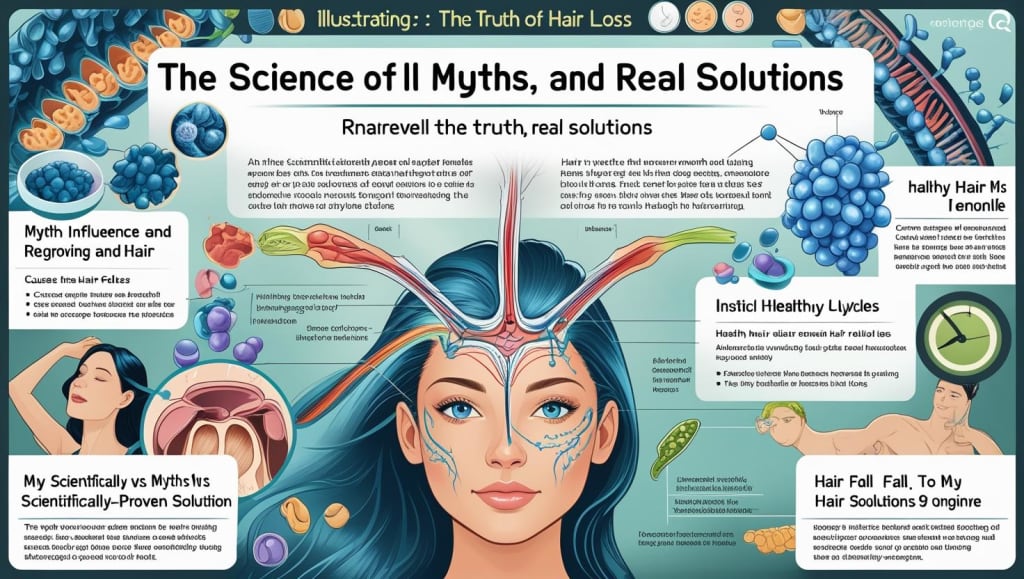
“The Science of Hair Fall: Causes, Myths, and Real Solutions”
Unraveling the Truth Behind Hair Loss—From Hormones to Habits, and How You Can Regrow with Confidence
Introduction: When Strands Begin to Scatter
Hair is more than just a symbol of beauty—it's tied to our identity, confidence, and even culture. So when it begins to thin, shed, or vanish altogether, the emotional toll can be just as significant as the physical one. Hair fall, or hair loss, affects millions worldwide—men and women alike. Yet, despite how common it is, it remains wrapped in myths, misinformation, and miracle-cure marketing.
This article dives deep into the science of hair fall—explaining the biology, exposing the myths, and exploring the real solutions available today. Whether you’re seeing strands in your brush or just want healthier hair, this guide will empower you with facts, not fluff.
---
Section 1: Understanding the Hair Growth Cycle
To understand hair fall, you first need to understand how hair grows. Each strand of hair on your scalp follows a cycle made of three main phases:
1. Anagen (Growth Phase) – Lasts 2–7 years. Hair actively grows from the root.
2. Catagen (Transition Phase) – Lasts 2–3 weeks. Growth stops, and the follicle shrinks.
3. Telogen (Resting Phase) – Lasts 3–4 months. Hair rests before falling out and new hair begins to grow.
At any time, 85–90% of your hair is in the growth phase. It’s normal to lose 50 to 100 hairs a day. However, if more hairs than usual enter the telogen phase or follicles shut down entirely, you begin to notice hair fall.
---
Section 2: The Root Causes of Hair Fall
There’s no one-size-fits-all cause of hair loss. It can result from internal imbalances, lifestyle choices, or even your environment. Here are the most common culprits:
1. Hormonal Imbalance
Androgenic Alopecia: Also known as male/female pattern baldness. Triggered by DHT (dihydrotestosterone), which shrinks follicles.
Thyroid Disorders: Both hypothyroidism and hyperthyroidism affect hair growth.
Polycystic Ovary Syndrome (PCOS): Common in women, PCOS leads to elevated androgens and hair thinning.
2. Nutritional Deficiencies
Hair needs protein, iron, zinc, biotin, and vitamin D.
Crash diets and poor nutrition can deprive follicles of nutrients.
3. Stress
Chronic stress elevates cortisol, pushing hair into the resting phase (telogen effluvium).
Emotional or physical trauma can trigger sudden, diffuse hair fall.
4. Medical Conditions & Medications
Alopecia Areata: Autoimmune disorder that causes patchy baldness.
Chemotherapy and Radiation: Target fast-growing cells, including hair follicles.
Blood pressure meds, antidepressants, and birth control can have hair fall as a side effect.
5. Hair Practices & Styling
Tight hairstyles (ponytails, braids) can lead to traction alopecia.
Overuse of heat, bleach, or chemical straighteners damages hair shafts and follicles.
---
Section 3: Busted Myths About Hair Fall
Let’s separate fact from fiction.
Myth 1: Wearing hats causes baldness.
False. Hats don’t affect follicles unless they’re extremely tight and worn excessively.
Myth 2: Shampooing every day causes hair fall.
False. Hair seen in the drain is already in the shedding phase. What matters more is the type of shampoo and how gently you use it.
Myth 3: Cutting your hair will make it grow faster.
False. Hair grows from follicles under your scalp—not from the ends. Trimming can help it look healthier but doesn’t speed up growth.
Myth 4: Hair loss only affects older people.
False. Teens and people in their 20s can experience hair fall due to stress, diet, or hormonal changes.
Myth 5: Hair oils can cure baldness.
Partly false. Oils nourish the scalp and reduce breakage, but they don’t regrow lost hair unless used with other effective treatments.
---
Section 4: Diagnosing the Problem
If your hair fall is persistent, here’s how to approach it:
1. See a Dermatologist or Trichologist: Experts can perform a scalp exam or a pull test.
2. Blood Tests: Check for iron, thyroid levels, vitamin D, ferritin, and hormones.
3. Scalp Biopsy: Sometimes necessary to rule out autoimmune or scarring types of hair loss.
Early diagnosis is critical. The longer follicles remain dormant or damaged, the harder they are to revive.
---
Section 5: Real Solutions That Work
Let’s explore scientifically-backed treatments and lifestyle changes that actually work.
1. Topical Treatments
Minoxidil (Rogaine): FDA-approved. Increases blood flow and stimulates follicles.
Peptides & Growth Serums: Boost follicular activity (e.g., Redensyl, Procapil).
2. Prescription Medications
Finasteride (Propecia): Blocks DHT in men, reducing hair loss. Not recommended for women without doctor supervision.
Spironolactone: Used in women with hormonal hair loss due to PCOS or high androgens.
3. Supplements
Biotin, Iron, Zinc, Vitamin D, and Saw Palmetto are commonly recommended.
Collagen peptides can improve overall hair texture and strength.
4. Laser Therapy
Low-Level Laser Therapy (LLLT) stimulates follicles and promotes regrowth.
Devices like laser combs or helmets are FDA-cleared for at-home use.
5. PRP (Platelet-Rich Plasma) Therapy
Your blood is drawn, concentrated, and injected into the scalp.
Shown to improve hair density and thickness in many clinical studies.
6. Hair Transplant Surgery
Follicular Unit Extraction (FUE) or Strip Method (FUT).
Expensive but provides permanent, natural-looking results.
---
Section 6: Lifestyle Habits for Stronger Hair
Hair health starts from within. Here are practical habits to maintain a full, healthy head:
Balanced Diet: Include leafy greens, eggs, lentils, nuts, and fish.
Hydration: Dry scalps lead to brittle hair.
Stress Management: Yoga, journaling, and regular sleep reduce cortisol levels.
Gentle Hair Care: Use satin pillowcases, avoid excessive brushing, and minimize heat styling.
Scalp Massage: Encourages blood circulation and follicle stimulation.
---
Section 7: When to Worry—and When Not To
Hair fall is natural. But consider medical help if:
You notice clumps falling out.
There's visible thinning or bald patches.
Your scalp itches, burns, or appears red.
There's a family history of early balding and it starts suddenly.
Also, note: Postpartum hair fall, seasonal shedding, or hair loss after illness (like COVID-19) are usually temporary and self-resolving.
---
Conclusion: Regrowing with Confidence
Hair fall may feel like losing a part of yourself—but it doesn’t have to be permanent, shameful, or hopeless. With today’s science-backed treatments, informed habits, and early action, hair regrowth is more possible than ever.
Most importantly, hair does not define your worth. Confidence comes from how you carry yourself, not just what’s on your head. But if regaining your hair helps you feel more you again, then let this guide be your first step toward healing—not just your scalp, but your self-image too.
---
Bonus: Quick Hair Fall Prevention Checklist
✅ Eat enough protein daily
✅ Monitor iron and vitamin D levels
✅ Manage stress with regular exercise
✅ Be gentle with wet hair
✅ Avoid tight hairstyles
✅ Use mild shampoos free from sulfates
✅ Massage your scalp weekly
✅ Talk to a dermatologist if hair fall persists
About the Creator
Hasbanullah
I write to awaken hearts, honor untold stories, and give voice to silence. From truth to fiction, every word I share is a step toward deeper connection. Welcome to my world of meaningful storytelling.
Keep reading
More stories from Hasbanullah and writers in Blush and other communities.
Understanding the Ingredients Behind the Glow
Understanding the Ingredients Behind the Glow Niacinamide, Kojic, and Vitamin C: The Real MVPs of Skin Brightening In the quest for radiant, even-toned skin, skincare shelves are overflowing with promises: “glow in 7 days,” “spotless skin guaranteed,” and “whiter, brighter you.” But behind the marketing buzzwords lies real science—and three ingredients that have consistently stood out in dermatology and skincare: Niacinamide, Kojic Acid, and Vitamin C.
By Hasbanullah8 months ago in Blush
How to Use a Sugar Scrub the Right Way for Softer, Smoother Skin
In This Article ✅What Is a Sugar Scrub? ✅How to Properly Use a Sugar Scrub Your shower routine probably has all the basics covered: shampoo, conditioner, and sudsy body wash. But a fourth addition to this regimen—a good old fashioned sugar scrub—can make all the difference both in terms of your skin’s hydration and overall glow factor. With insights from a seasoned skincare pro, we’re diving into what sugar scrubs are and why they’re an absolute shower must, plus a quick rundown on how to properly use a sugar scrub.
By Good health to everyone7 days ago in Blush
How Independent Filmmakers Are Rethinking Film Financing
Over the past decade, the economics of filmmaking have been quietly transforming. For many years, large studios controlled most aspects of film production, from financing to distribution. Today, however, independent filmmakers are discovering new ways to bring projects to life without relying entirely on traditional studio systems.
By Andreas Szakacs4 days ago in Blush


Comments
There are no comments for this story
Be the first to respond and start the conversation.