
The Ferocious Taowu in "Shanhaijing"
Record of Strange Beasts in the Classic of Mountains and Seas
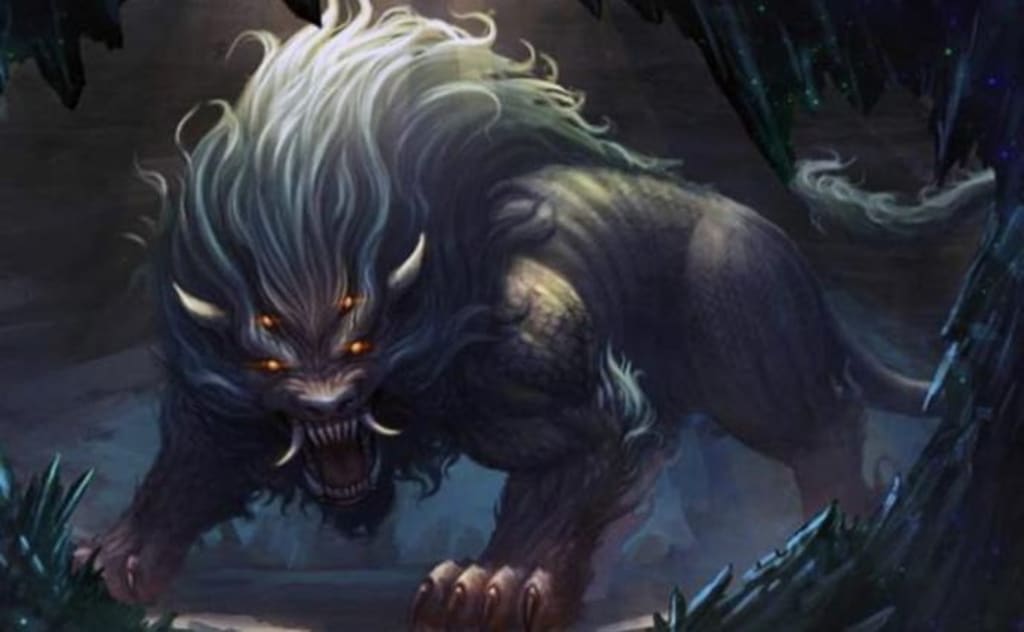
In the realm of Chinese mythology as chronicled in the "Shanhaijing," Taowu holds a fearsome reputation as a symbol of chaos and unyielding ferocity. This mythical creature has left an indelible mark on the cultural and mythological landscape with its distinct characteristics and the stories associated with it.
Appearance and Physical Features
Taowu is depicted as a large, menacing creature. It has a robust, muscular body covered in coarse, shaggy fur, often described as black or dark - colored, which gives it an air of mystery and danger. Its head is large and square - shaped, with a pair of small, fierce - looking eyes that seem to glow with an inner rage. Taowu's jaws are wide and filled with sharp, jagged teeth, capable of inflicting serious damage.
One of its most distinctive features is its tail, which is long and thick, almost like a club. This tail can be used as a powerful weapon, allowing Taowu to lash out at its enemies with great force. Some accounts suggest that its legs are short but extremely strong, enabling it to charge forward with incredible speed and strength, like an unstoppable juggernaut.
Aggressive Behavior and Temperament
Taowu is known for its extremely aggressive and uncontrollable nature. It is a creature that thrives on chaos and destruction. It has a violent temper and is quick to attack, whether it be other animals or humans who cross its path. There is no reasoning with Taowu; it acts purely on instinct and aggression.
It is a solitary creature, preferring to roam the wilds alone, and it marks out a large territory for itself. Any intruder into its domain is met with fierce resistance. Taowu's aggression is not just limited to self - defense; it seems to actively seek out conflict, making it a feared presence in the mythological world.
Mythological Stories
In one well - known mythological story, Taowu was one of the four evil beasts in ancient China, along with Qiongqi, Taotie, and Hundun. These four beasts were seen as harbingers of chaos and were a constant threat to the peace and stability of the world. Taowu, in particular, was known for its stubborn and unruly behavior. It refused to be tamed or controlled, and its actions often led to widespread destruction.
Another story tells of how Taowu was involved in a great battle between the forces of good and evil. On the side of evil, Taowu used its brute strength and aggression to cause havoc among the ranks of the good - aligned forces. Its presence on the battlefield was enough to strike fear into the hearts of many, and it took a combined effort of powerful heroes and deities to subdue it.
Cultural Significance
In Chinese culture, Taowu represents the darker, more chaotic aspects of nature and human nature. It serves as a cautionary symbol, reminding people of the consequences of unrestrained aggression and the importance of maintaining order. The story of Taowu's defeat by the forces of good also symbolizes the triumph of virtue over vice, the power of self - control and righteousness in the face of overwhelming chaos.
Taowu is also associated with the concept of the "unruly" or the "uncivilized." In ancient times, it may have been used as a metaphor for people or groups who refused to abide by the established social norms and laws, causing disruption and chaos in society.
Influence on Art and Literature
Taowu's fearsome appearance and reputation have had a significant impact on Chinese art and literature. In traditional Chinese art, Taowu is often depicted in a menacing pose, with its teeth bared, its tail raised, and its body tensed for attack. Artists use bold lines and dark colors to capture its ferocity and the sense of danger it emanates. In sculptures, Taowu is rendered with great detail, emphasizing its muscular body and powerful features.
In literature, Taowu appears in many ancient texts, where it is described in vivid detail. Poets and storytellers have used Taowu to create dramatic and thrilling narratives, exploring themes of good and evil, chaos and order. In modern literature, especially in fantasy and horror genres, Taowu continues to be a popular subject. It is often reimagined and adapted to fit new storylines, introducing this ancient and fearsome creature to a new generation of readers and audiences.
In conclusion, Taowu in the "Shanhaijing" is a creature that embodies the wild and untamed aspects of Chinese mythology. Its appearance, behavior, and the stories associated with it have made it an enduring symbol of chaos and the struggle between order and disorder. Whether in art, literature, or cultural traditions, Taowu continues to fascinate and inspire, reminding us of the complex and often dangerous nature of the mythological world.
About the Creator
hello-word
As a Chinese person, love for the culture of my own country. Nowadays, the global exchange of information is becoming increasingly rapid. I also hope that more people can gain a deeper and more detailed understanding of Chinese culture.
Keep reading
More stories from hello-word and writers in Blush and other communities.
The Mysterious Hundun in "Shanhaijing"
Within the pages of the "Shanhaijing," a rich repository of ancient Chinese mythology, Hundun emerges as an enigmatically fascinating and somewhat confounding creature. Representing primordial chaos, Hundun has long intrigued scholars and enthusiasts alike with its unique characteristics and the profound symbolism it embodies.
By hello-wordabout a year ago in Humans


Comments (1)
So fearsome’! So ferocious’! Great work!