
Spotting Eye Floaters: What They Mean and How to Manage Them
Understanding the Symptoms, Causes, and Effective Remedies for Those Annoying Visual Specks
Introduction:
Eye floaters are small, shadowy shapes or specks that drift across your field of vision. Though usually harmless, they can be quite distracting or concerning when they first appear. Most floaters are caused by natural age-related changes, but they can also be a symptom of an underlying eye condition, which is why understanding their nature and potential remedies is important for maintaining eye health.
What Are Eye Floaters?
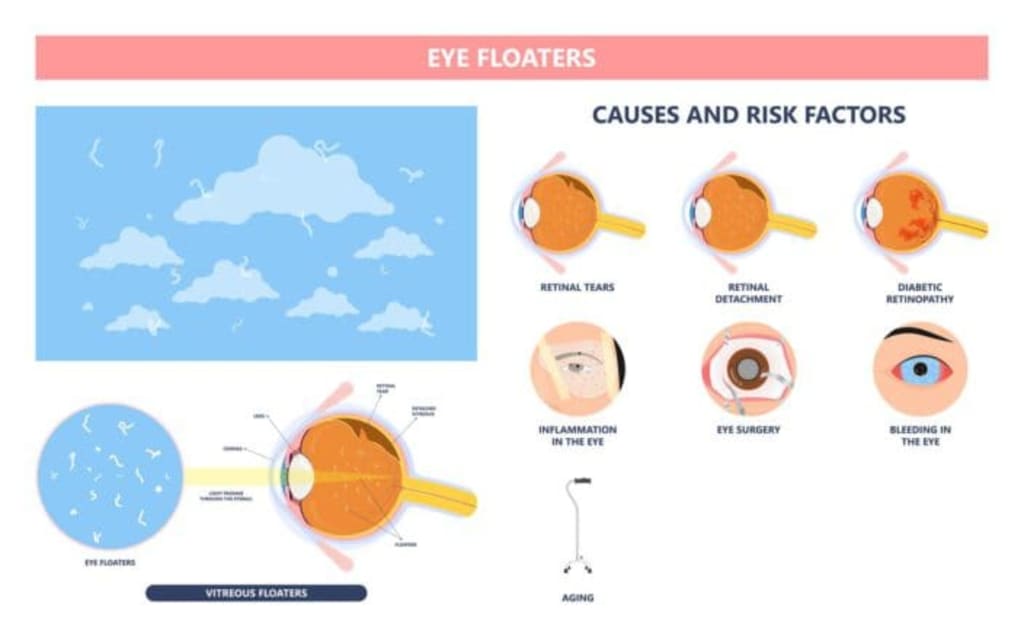
Eye floaters are tiny clumps of gel or cells inside the vitreous, the clear gel-like substance that fills the space between the lens and the retina in the back of your eye. As we age, the vitreous begins to liquefy and shrink, a process called vitreous detachment. During this process, bits of collagen fibers or other substances may clump together, casting shadows on the retina. These shadows are what we perceive as floaters.
Floaters come in various shapes and sizes, including:
• Small spots or specks
• Thin, thread-like strands
• Cobweb-like formations
• Rings or small circles
They may appear more noticeable when looking at a bright, uniform background such as a clear sky or a white computer screen.
Common Causes of Eye Floaters:
While eye floaters are often linked to the natural aging process, they can also result from other factors. Some of the most common causes include:
1. Aging (Vitreous Degeneration): As mentioned, age-related changes in the vitreous humor are the most common cause of floaters. As we age, the vitreous shrinks, causing parts of it to break loose and float within the eye.
2. Posterior Vitreous Detachment (PVD): PVD occurs when the vitreous pulls away from the retina. This separation is common as people age and can lead to an increase in the number of floaters. Most cases of PVD are benign, but they can sometimes lead to retinal tears or detachment, which require medical attention.
3. Retinal Tears or Detachment: Although less common, floaters can signal a more serious issue like a retinal tear or detachment. These conditions may occur if the vitreous pulls too hard on the retina during the detachment process, causing the retina to tear. A retinal tear can lead to detachment, which is a medical emergency requiring immediate treatment to prevent vision loss.
4. Eye Inflammation (Uveitis): Inflammation inside the eye can cause floaters. Uveitis, an inflammation of the uvea (the middle layer of the eye), may lead to clumping of inflammatory cells, which can then float inside the vitreous and create floaters.
5. Eye Injury or Trauma: Physical injury to the eye can cause floaters as a result of vitreous damage or retinal trauma. Any blunt or penetrating injury can lead to bleeding within the eye, increasing the chance of floaters.
6. Diabetic Retinopathy: People with diabetes may experience floaters as a result of diabetic retinopathy, a condition in which abnormal blood vessels develop on the retina and may bleed, leading to floaters.
7. Cataract Surgery or Other Eye Surgeries: Eye surgeries, such as cataract removal or laser procedures, may also result in floaters due to changes in the vitreous.
Symptoms of Eye Floaters:
Floaters can vary widely in appearance and frequency. Some common symptoms of floaters include:
1. Shadowy Shapes: Small spots, dots, lines, or cobweb-like figures that float in and out of your visual field. These shapes often move as you move your eyes, appearing to drift away when you try to look directly at them.
2. Increased Awareness in Bright Light: Floaters tend to be more noticeable when looking at a bright or light-colored surface, such as a clear blue sky or a white wall.
3. Sudden Increase in Floaters: A sudden increase in floaters, especially if accompanied by flashes of light or a sensation of a shadow or curtain moving across your vision, can indicate a serious condition like a retinal tear or detachment. This warrants immediate medical attention.
When to See a Doctor:
While occasional floaters are typically harmless, it’s important to monitor any changes in their behavior. Seek immediate medical attention if you experience the following:
• A sudden and significant increase in the number of floaters
• Flashes of light in your peripheral vision
• A shadow or curtain-like effect over part of your visual field
• Sudden vision loss
These symptoms can indicate retinal detachment, which requires prompt treatment to prevent permanent vision loss.
Remedies and Treatment Options for Eye Floaters:
In most cases, eye floaters do not require treatment and may become less noticeable over time. However, if they become bothersome or are linked to a more serious underlying condition, there are several remedies and treatment options to consider.
1. Observation and Adaptation: For most people, floaters are simply an annoyance rather than a sign of a serious problem. Over time, your brain can adapt to the presence of floaters and effectively “ignore” them, making them less noticeable.
2. Vitrectomy: For severe cases where floaters significantly impair vision or cause distress, a surgical procedure called a vitrectomy may be recommended. During a vitrectomy, an ophthalmologist removes the vitreous gel along with the floating debris and replaces it with a saline solution. While this procedure can eliminate floaters, it comes with potential risks, such as retinal detachment, cataract formation, or infection.
Vitrectomy is typically reserved for cases where floaters severely affect the quality of life, as the risks of surgery often outweigh the benefits for less severe cases.
3. Laser Therapy (Laser Vitreolysis): Another treatment option for persistent and bothersome floaters is laser vitreolysis, a non-invasive procedure that uses a laser to break up floaters in the vitreous, making them less noticeable. During this procedure, a laser is directed at the floaters, fragmenting them into smaller pieces that are less likely to interfere with vision.
Laser vitreolysis is considered a safe and effective treatment for floaters in certain cases, but it may not be suitable for all types of floaters or all patients.
4. Diet and Lifestyle Changes: Maintaining overall eye health can help reduce the risk of developing floaters. Some dietary and lifestyle adjustments include:
• Hydration: Staying hydrated helps maintain the fluid balance in your body, including your eyes. Proper hydration may reduce the development of floaters by keeping the vitreous more stable.
• Antioxidants: A diet rich in antioxidants, such as vitamins C and E, can support eye health by protecting against oxidative damage. Leafy greens, citrus fruits, and nuts are excellent sources of these nutrients.
• Omega-3 Fatty Acids: Omega-3 fatty acids, commonly found in fish oil and flaxseed, have anti-inflammatory properties that may help support eye health and reduce the risk of conditions that contribute to floaters.
• Regular Eye Checkups: Scheduling regular eye exams can help detect and address any early signs of conditions that may lead to floaters.
Conclusion:
Eye floaters are a common occurrence, especially as we age. While they are usually harmless, sudden increases in floaters or accompanying symptoms like flashes of light or vision loss should be taken seriously. Understanding the causes and symptoms of floaters is essential for identifying any underlying conditions and seeking timely medical attention if necessary.
Fortunately, in many cases, floaters require no treatment and become less noticeable over time. For those who find floaters to be disruptive, treatments like vitrectomy and laser vitreolysis offer potential relief. Additionally, maintaining a healthy lifestyle and regular eye checkups can go a long way in supporting overall eye health and reducing the likelihood of developing floaters.
About the Creator
PETER J
Driven by a passion to inspire and uplift, Peter. J is a motivational story writer who weaves tales of resilience, personal growth, and triumph over adversity.
My First Time Skiing and I Got Lost, Alone, in the French Alps
Looking back, I can trace some of my life’s biggest adventures to a simple action from my sister. She’d introduced me to Tommy (a very long time ago), a colleague of hers, who had overshared his penchant for Italian-looking women, and I ticked that box.
By Chantal Christie Weiss3 days ago in Humans


Comments
There are no comments for this story
Be the first to respond and start the conversation.