
Scientists Say Some People Glow in the Dark — Here’s Why
Science

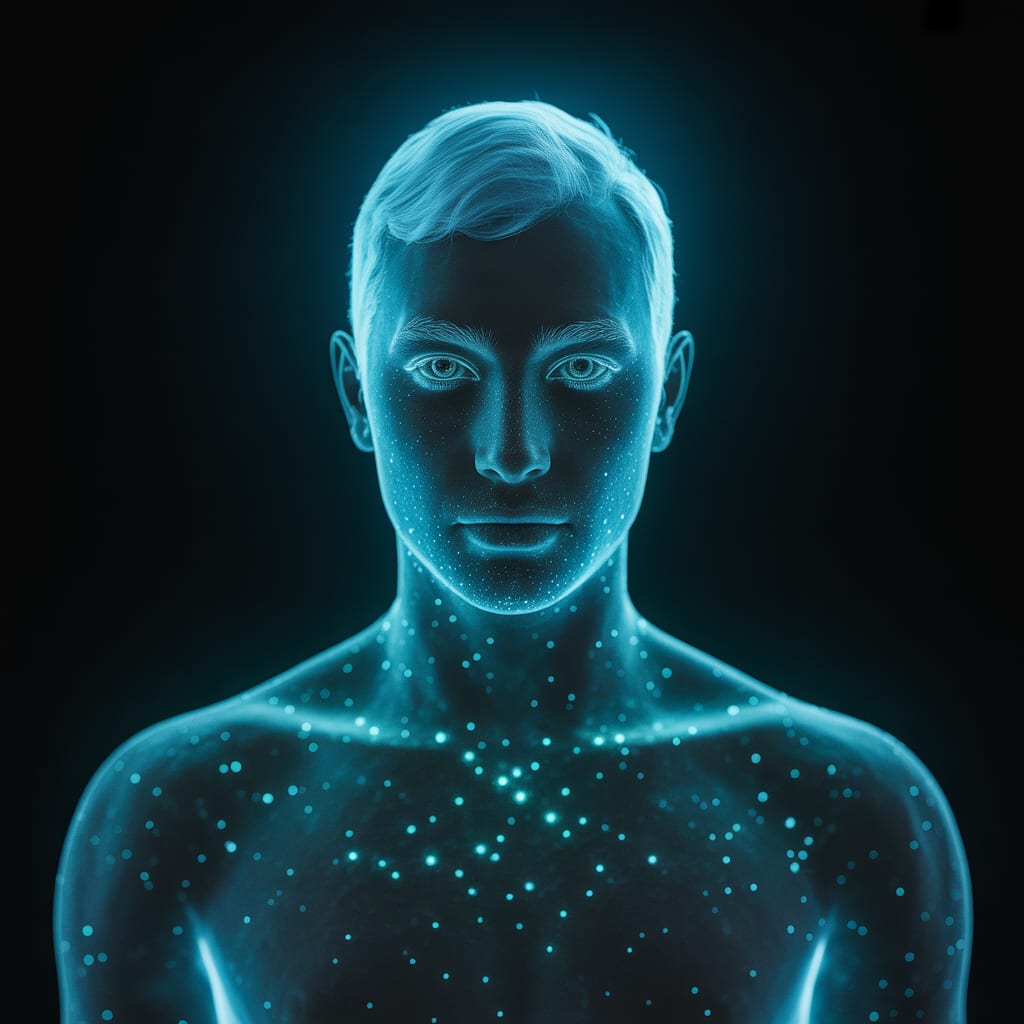
It sounds like something straight out of fantasy — humans glowing in the dark. But this idea isn’t fiction or superstition. It’s a scientific fact. Researchers have discovered that every human emits a faint, natural glow created by chemical reactions inside the body. The light is far too dim for our eyes to detect, but with ultra-sensitive cameras, scientists can actually capture it.
Even more surprising: some people glow more brightly than others, and your glow changes depending on your health, stress levels, and even the time of day.
So what’s really happening inside our bodies? And why do we glow at all? Here’s what science says.
---
The Hidden Light Inside Every Human
Like all living creatures, the human body produces a tiny amount of light — known as biophoton emission. These biophotons are particles of light generated during biochemical reactions. The glow is incredibly faint, about 1,000 times dimmer than what the human eye can detect.
This glow is not to be confused with the bright bioluminescence of fireflies or jellyfish. Humans don’t flash or sparkle. Instead, our light is constant, soft, and invisible — a silent signature of life.
In one groundbreaking experiment, scientists placed volunteers in a completely dark, sealed room and used highly sensitive cameras to capture the light from their skin. The images revealed glowing patches across their bodies, especially around the face and upper torso. The results surprised even seasoned researchers.
---
Why Do Humans Glow? The Science Behind It
Our glow comes from a basic, essential function: metabolism.
Inside every cell, oxygen is used to break down nutrients to produce energy. This process gets messy — some molecules escape as reactive oxygen species (ROS). When these molecules interact with lipids, proteins, or DNA, tiny sparks of energy are released in the form of photons.
These photons are light.
This means every time your cells work, fight stress, or repair damage, they release microscopic flashes — too small for us to see, but very real.
Three main reasons humans glow:
1. Energy Production
Cellular metabolism releases small bursts of light as a natural byproduct. The more active your metabolism, the brighter your glow.
2. Oxidative Stress
When your body is under stress, you produce more reactive molecules. More reactions mean more light — which is why stress increases biophoton emission.
3. Skin Chemistry
The interaction between oxygen, lipids, and pigments in the skin contributes to glow intensity, especially around the face where the skin is thinner.
---
Do Some People Really Glow Brighter? Yes — and Here’s Why
Studies show variations in brightness between people, and even within the same person depending on conditions. While the differences are still small, they are significant enough for scientists to measure.
Factors that increase glow:
Higher stress levels
Lack of sleep
Intense exercise
Fever or illness
Inflammation
Younger, more active cells
Higher metabolic rate
Greater sun exposure (temporarily)
People with healthier antioxidant systems may glow slightly less because their cells neutralize reactive molecules more efficiently.
Surprisingly, the human glow follows a daily rhythm. It peaks in the late afternoon and is lowest around 10 a.m. This aligns with changes in metabolic cycles.
---
Where Do Humans Glow the Most?
Scientists found the glow isn’t evenly spread across the body.
Brightest areas:
Forehead
Cheeks
Neck
Upper chest
These regions have:
More blood circulation
Higher metabolic activity
Thinner skin
Greater exposure to environmental stress
It turns out your face isn’t just expressive — it’s literally glowing.
---
Can Humans Glow Bright Enough to See?
Our natural glow is far too weak to be seen with the naked eye. However, there are rare situations where a visible glow can occur:
1. Fluorescent Skin Bacteria
Some skin bacteria glow under ultraviolet light — a trick used in dermatology.
2. High Vitamin Intake
Certain vitamins (especially B-complex) can create a faint fluorescent effect.
3. Radioactive Exposure
Some radiation forms can cause glowing skin, but this is dangerous and absolutely not natural.
4. Contact With Bioluminescent Creatures
Marine organisms like dinoflagellates can leave a glowing residue on the skin temporarily.
But the everyday human glow remains invisible without advanced equipment.
---
Why This Glow Could Be the Future of Medicine
The discovery of biophoton emission has opened new possibilities for non-invasive health monitoring. Scientists believe that measuring a person’s glow could one day help to:
Detect early disease
Identify oxidative stress and inflammation
Monitor the effectiveness of treatments
Study aging at the cellular level
Diagnose metabolic disorders
In other words, your glow might be a health fingerprint — a silent indicator of what’s happening inside your body.
---
A Soft Light We All Carry
The idea that humans glow — even faintly — is poetic and powerful. It reminds us that our bodies are not just biological machines but radiant systems constantly producing energy, healing, and adapting.
Although we can't see our own glow, science can — and what it reveals is a hidden beauty woven into the biology of every person.
You may not light up a dark room like a firefly — but you shine in your own invisible way. And now, thanks to science, we finally know why.
About the Creator
Mastering the Art of Men’s Hair Highlights: A Guide to Depth, Texture, and Style
In the modern world of men’s grooming, a great haircut is only half the battle. To truly stand out, many men are turning to color—specifically highlights—to add personality and sophistication to their look. According to the comprehensive guide by New Times Hair, A Complete Guide to Hair Highlights for Men, highlights are no longer just a trend; they are a powerful tool for adding dimension and life to otherwise flat hairstyles.
By Emma Smith5 days ago in Blush




Comments
There are no comments for this story
Be the first to respond and start the conversation.