
My Beauty Journey: Tips from an Insider
After 8 years in beauty, let's debunk some myths.

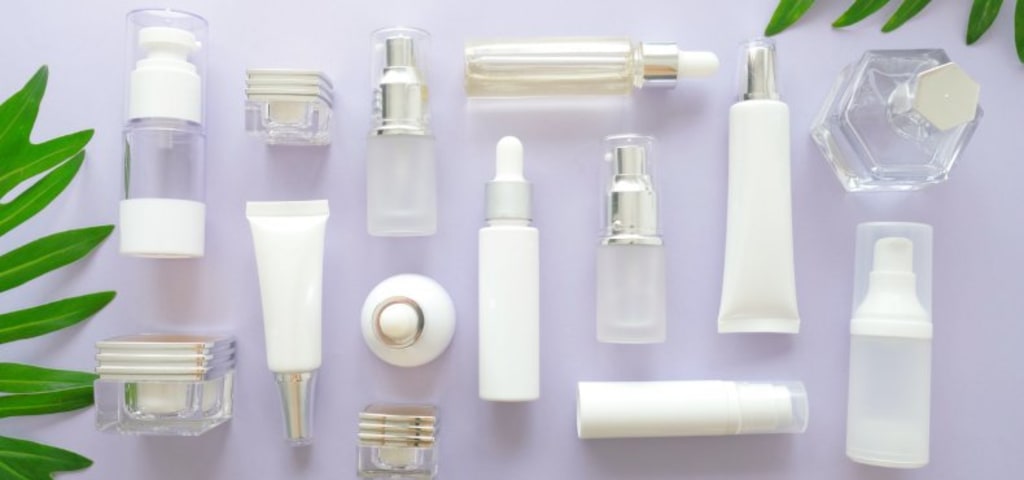
Let’s answer your first question: why should you trust someone writing an article on the internet about skincare and beauty products?
I’ve spent over 8 years in the beauty industry, working for companies in Canada like Shoppers Drug Mart, Vasanti, Clarins and Estee Lauder. I’ve been trained on numerous product lines, skincare and facial techniques, how to do spa-like treatments and microdermabrasions at home.
Ultimately, I’ve talked to thousands and thousands of people about their beauty and skincare concerns, cost-effectively fixing their daily routines with new and innovative products that help treat their various ailments. I’ve treated psoriasis and eczema in infant babies, reduced freckles and age spots, covered up textured skin, and advised against malpractices. After working in the luxury beauty industry for so long, I actually switched over to natural skincare and makeup, finding some amazing products for fractions of the price for some people, and helping them through their concerns at that level as well!
I’m here to tell you things the luxury beauty industry won't. Why? Because even though they help millions of people with their skincare and beauty concerns, the bottom line is sales. I am NOT saying that any products are good or bad, in fact, I’ve come across many stellar products from all the lines I’ve worked for, but the key thing to remember is that your beauty routine should always consist of what works best for YOU, whatever that may be. If you like making your own coffee scrub at home, and you find that works best for YOUR skin in particular, by all means, don’t let anyone talk you out of it.
Tip Number 1: The “Three-Step Skincare Process” is a total bust.

Some companies developed this “Cleanse-Tone-Moisturize” Three-Step Program because of how their products are formulated. Generally speaking, a cleanser will clean your face and pores while possibly affecting the pH level of your skin, a toner will rebalance that Ph, deliver key ingredients and purify your pores, and a moisturizer will…well...bring back moisture and deliver other ingredients.
“Wait, how do I tell if the ph level of my face has changed?”
You know that “squeaky” feeling when you’ve cleansed your face and your fingers get squeak on your skin since it feels tight? That’s the easiest indicator right there. That feeling can provide a clear indication that your current routine isn't suiting your skin's needs.
Many products that are on the market nowadays don’t actually require the rebalancing of the PH level of your skin. There are TONS of cleansers on the market that don’t need to be followed up by a toner or astringent.
To that point, if you need to use a toner because of a skin issue like acne, uneven skin tone or textured skin, they can be an amazing way to deliver intense treatments to the skin. Choosing the skincare process that works for your needs specifically is the best way to go, using a “Three-Step” skincare regime just because you think you need to isn’t actually the norm anymore!
Bottom line here is, at the very BASIS of your routine, you should be using a cleanser (whether that be a micellar water, cleansing cloths, pre-moistened wipes, gel cleanser, milk cleanser or cleansing lotion), and a moisturizer that suits your needs and addresses your concerns.
Tip Number 2: If you have to choose between a serum and a moisturizer, ALWAYS choose moisturizer

Serums are tremendously effective at delivering amazing ingredients deep into the base layers of your skin. They are typically lightweight, absorbing quickly into the skin, often with a satin-like finish. They also help deliver the properties from the moisturizer that you put on top deeper into the skin as well!
If there’s one thing you take away from this article, it’s that moisturizers are WAY more important to have than serums. If you only have enough money for one or the other, always choose a moisturizer. Only using a serum can be proven often to be ineffective, leaving your pores open and in need of a thicker agent to nourish the skin.
Fun fact, some anti-aging serums actually do nothing at ALL unless there’s a moisturizer applied topically afterwards. They don’t tell you that on Pinterest!
Tip Number 3: You can make many skincare products at home, for a FRACTION of the price

Speaking of coffee scrubs, have you ever read the ingredients?
Many of them consist of a carrier-oil base (coconut oil, shea butter, grapeseed oil, etc.), coffee grounds, and granulated sugar. There’s a ton of recipes on sites like Pinterest on how to make your own coffee or sea salt scrubs at home, and I would implore you to have a look before purchasing a $20 or $30 scrub.
Working with natural skincare, I’ve noticed many people making their own moisturizers as well by buying basic ingredients like aloe, shea butter, coconut oil, jojoba oil, etc. and even adding other ingredients like essential oils or ingredients to treat their specific skin ailments. This is an amazing way to go natural with your skincare, and it’s proven to be effective for a large number of people!
That being said, some skincare companies have produced amazing products, so creating your own isn’t necessarily always the best answer.
Tip Number 4: Read your ingredients!
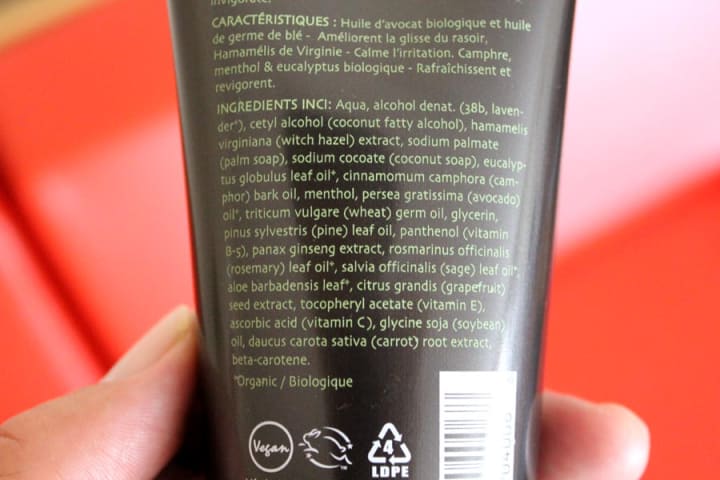
Many clients of mine haven’t realized that the “ingredient deck” is organized how it is for a reason. Let’s take this “made-up” ingredient deck for a moisturizer as an example:
Water, Mineral Oil, Paraffinum Liquidum, Glycerin, Petrolatum, Glyceryl Stearate, Seasame Oil, Urea, Cucumber Extract, Sunflower Oil, Proplyne Glycol Dicaprate, Grapefruit Extract, Jojoba Seed oil, Sodium Hyaluronate, Pentylene Glycol
The ingredient deck is always in the order of the most-quantity to the least-quantity, with the bottom third of the ingredient deck consisting of almost NOTHING of the product. So in this case, there’s a lot of Sesame oil, urea and cucumber in this formula, but lots of emollients like glycerin and mineral oil as well. There’s almost no Sodium Hyaluronate (Hyaluronic Acid), so if that’s the ingredient you’d be looking for, you might want to move to a different moisturizer that has more in it.
Tip Number 5: Pick the appropriate PRODUCT, not PRICE-POINT

I’ve come across a TON of facial products in the $10-$20 category that literally outperform the luxury products ranging from $60-$100 for some skincare cases. I urge everyone to do proper research and save their money if they can, using products that work at appropriate price levels for them!
Here's the Bottom Line:
You don't have to listen to salespeople, or purchase their products if you don't want to. Always do your research, look for alternatives, and ask for recommendations from people that you trust. The key here is to find ingredients in your skincare products that work for your specific concerns. There are amazing resources online - with SO many amazing beauty gurus to choose from, finding one that matches your concerns, with skin that reacts like yours does, is my best tip for you to find a skincare system that works, at a price point that you can afford.
Best of luck in your skincare journeys!
XX LC
About the Creator
Lorah Catherine
Tweet me PLEASE: @LCwritesthings
I don't like writing about the same thing everyday.
I don't like reading about the same topics everyday.
Stay tuned for some 'different' perspectives on my strange worldview.
Keep reading
More stories from Lorah Catherine and writers in Blush and other communities.
BDSM Explained: Your First Event
Hello and welcome to this week’s installment of SubSays, where I use all my experience and knowledge to explain all things kinky! Today, we’ll be addressing some anxiety—inducing concerns you may have if you are just starting out in your kink community, giving you all the tools and resources necessary to make not only a wonderful first impression, but to help you find some friends a whole lot faster! As always, if you have any ideas for future articles, please give me a shout at @SubSaysHello on Twitter, or DM me with any personal questions or concerns and I’ll be happy to do my best to give you some advice. Without further ado!
By Lorah Catherine6 years ago in Filthy
Best Cleansing Balms for All Skin Types: Benefits, Ingredients & How to Use
In the world of skincare, few steps feel as indulgent yet essential as the first cleanse. Gone are the days of tugging at delicate lashes with stinging liquids or stripping the skin bare with harsh soaps. Enter the cleansing balm: a luxurious, buttery revelation that has transformed the way we approach facial hygiene.
By Good health to everyone5 days ago in Blush



Comments
There are no comments for this story
Be the first to respond and start the conversation.