
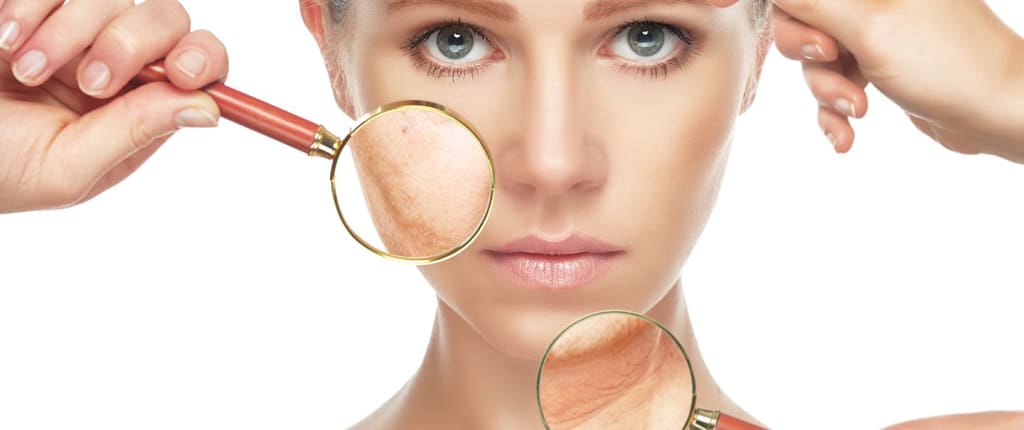
Skin aging is a complex process that is influenced by both intrinsic and extrinsic factors. Intrinsic factors are related to genetics and the natural aging process, while extrinsic factors are related to environmental and lifestyle factors. Some of the main extrinsic factors that contribute to skin aging include:
Sun exposure: Exposure to ultraviolet (UV) radiation from the sun is one of the main factors that contribute to premature skin aging. UV radiation can damage the skin's collagen and elastin fibers, leading to wrinkles, age spots, and other signs of aging.
Pollution: Exposure to pollution, including air pollution and cigarette smoke, can also contribute to skin aging. Pollution can cause oxidative stress, which can lead to inflammation and damage to the skin's barrier function.
Poor nutrition: A diet that is low in antioxidants, vitamins, and minerals can contribute to skin aging. Antioxidants help protect the skin from oxidative damage, while vitamins and minerals are essential for healthy skin function.
Stress: Chronic stress can contribute to skin aging by increasing inflammation and oxidative stress in the body.
Lack of sleep: Sleep is essential for healthy skin function, as it allows the body to repair and regenerate skin cells. Chronic lack of sleep can lead to premature skin aging.
Smoking: Smoking is a major contributor to premature skin aging, as it damages the skin's collagen and elastin fibers and reduces blood flow to the skin.
Alcohol consumption: Excessive alcohol consumption can also contribute to skin aging, as it can lead to dehydration and oxidative stress.
It is important to protect your skin from these factors to help prevent premature skin aging. This includes wearing sunscreen and protective clothing when outdoors, avoiding smoking and excessive alcohol consumption, eating a healthy and balanced diet, managing stress, getting enough sleep, and avoiding exposure to pollution as much as possible.
There are several surgical treatments available for anti-aging, ranging from minimally invasive procedures to more extensive surgeries. Here are some of the most commonly used surgical treatments for anti-aging:
Facelift: A facelift is a surgical procedure that can help tighten sagging skin on the face and neck, reducing the appearance of wrinkles and improving overall facial contours. This procedure involves making incisions around the hairline and ears, and lifting and repositioning the underlying tissues and muscles.
Eyelid surgery: Also known as blepharoplasty, eyelid surgery can help remove excess skin and fat from the upper and lower eyelids, reducing the appearance of bags and wrinkles around the eyes.
Brow lift: A brow lift can help raise the eyebrows and smooth out wrinkles on the forehead, creating a more youthful and refreshed appearance. This procedure can be done using various techniques, including endoscopic brow lift and coronal brow lift.
Fat transfer: Fat transfer, also known as fat grafting, involves taking fat from one area of the body and injecting it into another area, such as the face or hands. This can help add volume to hollowed-out areas and reduce the appearance of wrinkles and fine lines.
Laser resurfacing: Laser resurfacing uses a laser to remove the outer layer of skin, stimulating collagen production and improving skin texture. This can help reduce the appearance of wrinkles and sun damage.
It's important to note that surgical treatments carry more risks and potential complications than nonsurgical treatments, and they may require a longer recovery time. It's always best to consult with a board-certified plastic surgeon to determine which treatment options are best suited for your individual needs and goals.
Are there nonsurgical ways to reverse this process?
There are nonsurgical ways to help reverse the effects of skin sagging and improve skin firmness. Here are some options:
Topical treatments: Skincare products that contain ingredients such as retinoids, vitamin C, hyaluronic acid, and peptides can help boost collagen production and improve skin texture, leading to firmer, more youthful-looking skin.
Ultrasound therapy: Ultrasound therapy, such as Ultherapy, uses ultrasound energy to stimulate collagen production and improve skin elasticity. This treatment can help lift and tighten sagging skin on the face, neck, and chest.
Radiofrequency therapy: Radiofrequency therapy, such as Thermage, uses radiofrequency energy to heat the skin's deeper layers, stimulating collagen production and improving skin firmness.
Microcurrent therapy: Microcurrent therapy uses low-level electrical currents to stimulate the muscles in the face and neck, helping to lift and tighten sagging skin.
Facial exercises: Certain facial exercises, such as cheek lifts and eyebrow raises, can help strengthen the muscles in the face and improve skin firmness.
It's important to note that these nonsurgical treatments may not provide the same dramatic results as surgical procedures, but they can still be effective in improving skin firmness and reducing the appearance of sagging. It's always best to consult with a skincare professional or dermatologist to determine which treatment options are best suited for your individual needs and goals.
About the Creator
Keep reading
More stories from Zazatarius and writers in Blush and other communities.
Delicious Vegan Food
Veganism has become an increasingly popular lifestyle choice in recent years. People are turning to veganism for a variety of reasons, including ethical concerns, health benefits, and environmental sustainability. One of the biggest misconceptions about veganism is that it is difficult to find delicious and satisfying food options. However, with the rise of plant-based alternatives, it has become easier than ever to enjoy a variety of tasty vegan foods.
By Zazatarius3 years ago in Feast
The Modern Guide to Smooth, Healthy, and Confident Hair Care
Hair has always been more than just a physical feature. Across cultures and generations, it represents beauty, confidence, and personal identity. Whether long or short, natural or styled, hair plays a powerful role in how people express themselves. In recent years, advancements in beauty and grooming have transformed how individuals manage unwanted hair, especially with options like Laser Hair Removal in Islamabad, which reflects the growing demand for modern, effective solutions.
By Saad Imtiazabout 16 hours ago in Blush
Getting Serious About Comedy (Part I)
If I were asked to remark on my life and the childhood that paved some road leading me to this point, I would have to say something about all the funny people who surrounded me for the last 26,872 days (and counting). Somewhere along that road, I became a big fan of laughter and the comedy that spawns it – and, I mean not only my own laughter, but the laughter of others, some of which I have actually been responsible for inducing.
By John Oliver Smith6 days ago in Humor


Comments (1)
Totally agree, especially with the non surgical way of keeping your skin feeling young and firm. Retinol is the secret formula for sure . 🥰