


To understand how sunblock works, we first need to talk about ultraviolet radiation. There are three types of UV rays on the spectrum but the two most important are UVA and UVB Rays. UVC is the third type of ray, but it does not penetrate the ozone layer.
UV rays are first and foremost carcinogens (cancer causing), but they also contribute to skin aging and dark spots. Despite myths about suntanning to prevent sunburns, or our desire to be have glowing, bronzy skin, there is no safe amount of sun exposure (I know, it sucks!). Tans - or worse, sunburns - always cause damage to our skin.
Here is the breakdown
UVA rays are longer and less intense rays of energy. UVB rays are shorter and more intense. UVB rays don’t penetrate as deeply into the skin but they are most associated with a sunburn and skin cancer. UVA rays are most associated with skin aging and wrinkles and this is because they penetrate the dermis, or the layer of the skin that produces fibers like collagen and elastin, which support skin structure. Damage to collagen and elastin or low production are what causes wrinkles and fine lines, and also why we lose that bouncy, youthful skin as we age.
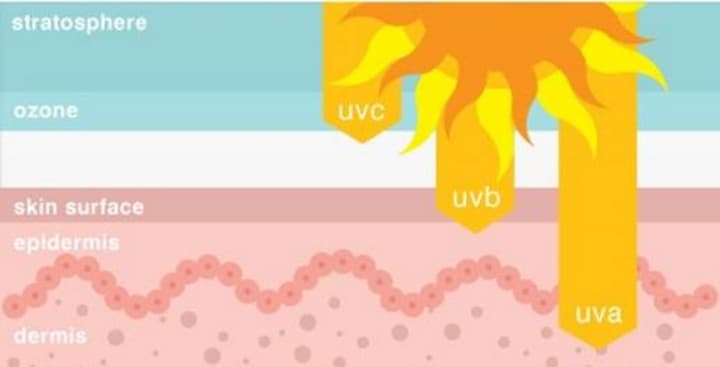
So now that we have a basic understanding of UVA and UVB rays, how do sunscreens protect us?
Firstly, there are two types of sunscreen on the market: mineral and chemical.
Secondly, one is not better than the other.
How do chemical (organic) sunscreens work?
Organic sunscreens are not to be confused with “organic” products. This is purely a class of molecules in chemistry, and these sunscreens are not shown to be better than physical sunscreens. Chemical sunscreens work to block the sun by absorbing harmful UV rays and converting that energy into heat that is then released off the skin.
Sunscreens primarily block UVB rays. In the United States, purchasing SPF that says “Broad-spectrum” will protect against both UVA and UVB. To be clear, you need protection from both types of ultraviolet radiation and broad-spectrum SPF 30 or higher is recommended by physicians and dermatologists.
Chemical sunscreens, also known as organic sunscreens, are usually a combination of chemical and mineral ingredients. They are good at protecting us against UVB. Avobenzone, sometimes listed as octinoxate, is a common ingredient in these sunscreens, and has been shown to be effective and safe on the skin.
How do physical (inorganic) sunscreens work?
Experts used to believe that inorganic sunscreens worked by “reflecting” UV Rays, but we know now that this isn’t exactly the case and they work by both reflecting and absorbing UV rays. They are just not as good at absorbing the UV rays as chemical sunscreens.
Zinc and titanium dioxide are the primary ingredients in physical sunscreens, also called mineral sunscreens, and dermatologists agree that they are better for sensitive or irritated skin.
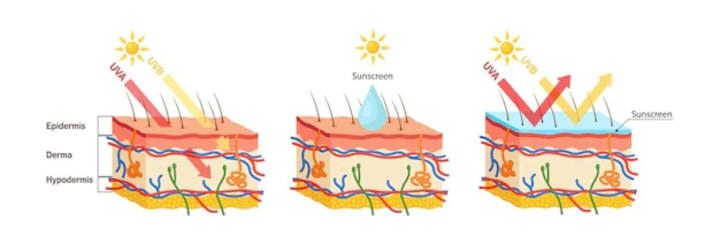
How much sun protection do we need?
If you have skin, sunscreen should be worn every day of the year - yes, even in the winter! Since other skin care products, like retinols and chemical or physical exfoliants sensitize the skin, it can be even more important to protect your skin every single day.
There is no universal measure of how effective sunscreens are. The United States uses SPF, or sun protection factor, which describes how long you can stay in the sun and not experience sun damage. An SPF 15 means you can have sun exposure for 15 times longer than you would without the use of an SPF, but again, no sunscreen below SPF 30 is recommended by experts.
Another common type of system is the PA+ system seen in Korean brands, and this system is used in many eastern countries use. Unlike the US the PA+ system protects against both UVA and UVB. To give a little context, PA+++ would be the equivalent of broad spectrum SPF 45.
What are the best sunscreens?
The best sunscreen will be broad-spectrum over SPF 30 or PA+++, and one that you will wear every single day.
Yep, that's it. The best sunscreen is FDA approved (here in the US), protects against UVA and UVB, and will be one that you will wear every single day. Regardless of the sunscreen type or brand, consistent use of an SPF is the best defense to protect against skin cancers, breakdown of collagen and elastin, as well as overall skin aging and discoloration.
That said, some sunscreens are just formulated for a nicer experience, and they can be more luxurious than an SPF purchased at the drugstore. I have my favorites, but the two I always have on hand are Missha All Around Safe Block Essence (this is my favorite because it has no smell and feels silky) and Aveeno Positively Radiant Daily Sunscreen because they feel like lightweight moisturizers, are affordable for every day use, and effective when you are inside working and not directly exposed to the sun.
***
Please feel free to purchase any of these products from Amazon using the links above, but be aware they are affiliate links. All monies made supports my espresso addiction and product reviews.
I write about skincare (in case you couldn't tell!). Feel free to follow me on booksintheatticblog.com if you like skincare, too. I will be posting every Sunday. :)
About the Creator
Ashley
Hello! I primarily enjoy writing fiction, but occasionally I use my background in chemistry to write skincare and beauty articles.
Subscribe if you wish!
All my best,
A
Korean Skincare Secrets: The Best Serums to Repair and Restore your Glow
You know that moment when your skin just looks tired, dull, uneven or not quite as radiant as it used to be? Trust me, we’ve all been there. Life happens, and our skin feels it in more ways than none. That effortless glow starts to fade, and suddenly your usual routine just isn’t doing enough.
By Good health to everyone5 days ago in Blush
Silken Chains
Silhouettes of the female form were given flesh and bone. Silken skin glistened under the spotlight. Dry ice rose around our Icons as they danced atop their podiums in the Square. Heralded for their beauty, their movements were slight, powerful, and sensual.
By Paul Stewart4 days ago in Fiction



Comments
There are no comments for this story
Be the first to respond and start the conversation.