
Everyone Was Wrong About Avocados
Wrong about avocados
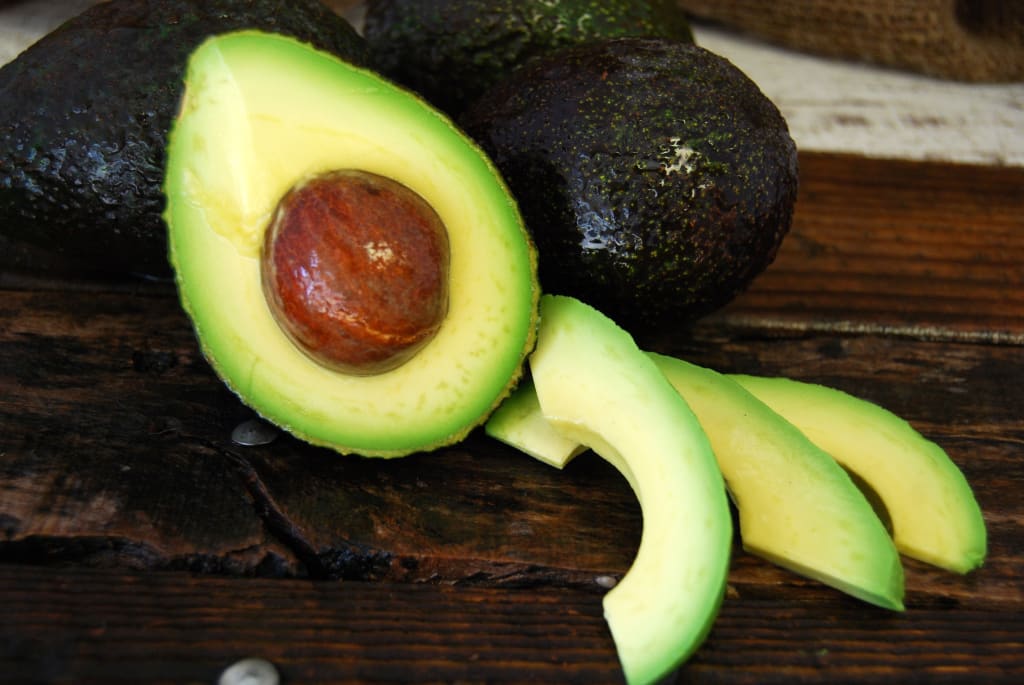
If you’re a fan of avocados– and honestly, who isnt?–
you might have heard that they only exist
thanks to prehistoric creatures called giant ground sloths.
In fact, you may have heard that from us here at SciShow.
The story goes something like this…
Plants evolved to have fruit in order to attract animals,
so that the animals can then poop out the seeds
somewhere further away, which helps them spread around.
And unlike other fruit that has, like, dainty little pits,
avocados have those big, honking seeds.
Which means that avocados would have been
spread around by big, honking animals
that can swallow a whole avocado pit.
Specifically, giant ground sloths.
These were massive animals
that roamed North and South America during the Pleistocene,
and by golly, they would just go to town on these avocados
and poop out those huge seeds everywhere.
Sounds like it checks out, right?
Well, it turns out we have no evidence that this is true.
And while this myth has spread as far and wide as the avocado itself,
it’s worth unpacking how avocados got to be how they are,
in order to get to the tasty morsel of truth in the center.
[♪ INTRO]
So let’s start at the beginning.
Where did this idea that giant ground sloths
spread the avocado even come from?
Well, it all starts in the 1980s with a paper posing
a new hypothesis about Costa Rican plants.
It essentially just said “Hey, we should think about
big animals as dispersers of seeds!”, which was a good idea, honestly.
Thing is, that paper only made passing reference to sloths,
and it didn’t mention avocados at all.
That same year, there was a followup paper hypothesizing that maybe
that idea of big animals dispersing seeds could be applied to the
avocados, and pointed the finger at ground sloths as those dispersers.
And I kind of can’t stress this enough,
neither of these papers reported any data on sloths or avocados.
At all.
I guess it was just really easy to get papers published in the ‘80s.
In the 2000s, a popular science book published this story,
which spread the word far and wide.
And then the idea just stuck.
It’s been everywhere in the decades since.
Tons of platforms have run articles about this quirky fun fact,
and like I said - we even did a video about it a few years back!
But there’s never been a single study or project
that has found evidence of sloths eating avocados.
So, what would we need to find to prove a connection?
What’s the smoking gun of avocado-eating sloths,
and how would we find it?
Well, it’s science, man!
There are a few different kinds of evidence we could look for
to put avocado onto sloths’ dinner menus.
For one, and this might sound kinda obvious,
but sloths and avocados would need to have lived
in the same place at the same time.
So we’d want to find fossilized remains of both in the
archeological record somewhere between 2.58 million years ago
and 11,700 years ago, which is about when
the last ground sloths went extinct.
It’d be even better if we could find traces of avocado in sloth coprolites,
also known as fossilized poop, since that would tell us
that the sloths actually ate the fruit.
But we have neither of those things.
Fossil bones and poop of ground sloths including Mylodons
and Lestodons place them firmly in South America during the
Pleistocene, around what’s now Argentina, Uruguay and Paraguay.
And the first true avocados had only just shown up
in Southern Mexico at around that time.
Now, there were some other ancient species of ground sloths
whose droppings do land closer to where avocados originated,
like the slightly smaller but still pretty hulking Nothrotheriops genus.
But even if they lived in the same place and time,
that doesn’t mean that sloths ate avocados.
Like, I live at the same place and time as poison ivy,
but I do not eat poision ivy, and would not, and hopefully would never.
And figuring out exactly what these guys did eat is complicated.
In a study from 2011, researchers analyzed the relative amounts
of carbon and nitrogen in Lestodon bones and concluded
that the giant sloths browsed on bushy plants.
They may have eaten fruits along with that,
though the test can’t determine what parts of the plant the animals ate.
Coprolites left by a smaller sloth species from a cave in Cuchillo Curá,
Argentina, found remnants of mostly grasses and sedges.
Other sloth-poop samples found that those mega sloths ate grasses
and shrubs, like those from the same family as carrots and parsley.
And Nothrotheriops dung turned up fragments of
yucca and agave plants.
In all these studies, there wasn’t even a trace of DNA
from laurel plants, the family that avocados are a part of.
And newer methods let us look at the front end
of the sloth for info on their diets, too.
Archeologists analyzed a tooth belonging to the giant
Pan-American giant ground sloth, which lived in the late Pleistocene.
By drilling down through the layers of the tooth
and analyzing the relative amounts of carbon and oxygen isotopes,
researchers reconstructed its diet throughout the year
and found that it had a pretty varied diet depending on
what shrubs and plants were available.
They couldn’t say exactly what kinds of plants this sloth ate,
but based on climate data it likely would have been shrubs like juniper.
What’s even more mind-blowing is that some ancient sloths
probably weren’t even limiting themselves to a plant-based diet.
Based on carbon and nitrogen analysis of their hair,
we know that Darwin’s ground sloth probably ate meat,
although we aren’t 100% sure whether it was a
slow-moving hunter or merely a scavenger.
And that opens up the possibility that
other sloths could have eaten meat, too.
So while we’ve got buckets of data on what ground sloths ate,
absolutely none of it points us anywhere near avocados.
And there’s another semi-fatal flaw to the megafauna argument.
Avocados might not have needed massive animals at all.
Avocado pits from around 10,000 years ago
are half the size of today’s seeds – around 2 centimeters wide
compared to 5.5 to 6 centimeters that’s common in your grocery store.
So if the avocado pits started out so teeny tiny,
there has to be a better explanation for these giant pits
that don’t involve our slow moving massive friends.
And as it turns out, the most likely culprit is
a different large mammal living in Mexico - humans!
See, avocados were an important food source for people
in Mesoamerica, who started growing them in their gardens
in the Tehuacán-Cuicatlán Valley around 10,000 years ago.
And like we said, we have archaeological evidence
that shows the pits have gotten bigger over time.
Which indicates that the Mesoamericans might have specifically
selected avocado fruit with bigger pits.
Maybe big pits meant bigger fruits,
or that a bigger seed would help the tree grow.
A big seed full of starches and fats could
nourish the plant while it germinates,
making it more likely that a planted seed would become a fruitful tree.
But the reason behind these ginormous pits might have
just as much to do with mythology as it does botany.
See, some ancient Mayans believed people were reborn as trees,
and so they’d surround their homes with fruit trees.
The avocado fruits became associated with strength,
and the strength of the avocado was thought
to transfer to the person eating it.
So growing bigger avocados meant more strength, too.
Still, it’s a little tricky to pin down exactly how
and when these pits got bigger.
Mostly because the size of wild avocados from around that time
varied hugely depending on the environmental conditions.
This increase in pit sizes makes some paleo-archeologists think that
ancient Mesoamericans were domesticating fruit from nearby forests,
or that their cultivated trees still had gene flow
with their wild-growing cousins.
Genetic studies of around 30 different avocado varieties suggests
that avocados were domesticated three different times,
in at least three different places across central America.
Specifically the high- and low-lands of
central Mexico, Guatemala and the West Indies.
What’s more, Mesoamerican cultivation techniques relied a lot on
growing lots of crops all together, as well as cultivating things in the
existing forests themselves, a technique we now call agroforestry.
So there was likely a mix of different avocados and even more variety
from when those different avocados were bred together.
Which is really different from what we’d typically
think of when we think of domestication,
which is a kind of bottleneck where plants slowly become less diverse.
The variation in pit size we see might just come from the farming
practices of the time and all the gene-flow that came from them.
So the story of how the beloved avocado reached brunch plates
all over the world probably has nothing to do with ground sloths.
Which is why the next time you ask for extra guac,
there’s no need to thank any extinct animal–
just thank the Mesoamericans who helped perfect this delicious fruit.
Here at SciShow, we take accuracy really seriously.
Our last video on this subject relied on the sources that,
as we described, were a little flimsy for the arguments we made.
Because of this, we’ve unlisted that video.
As always, we’re here to spread ideas
supported by evidence and science, not myths.
But we are never, of course, above spreading
some avocados on our toast.
We hope you liked this tale of avocado fact and fiction.
I also want to give a shout out to our patrons on Patreon
for supporting the work we do to bring you all the weird and wonderful
science stories that we can find.
We could not do this without you.
And our patrons get more than a warm fuzzy feeling for their support–
Though, I do hope they get that–
They also get access to tons of cool perks,
like our monthly blooper reel, exclusive podcast,
and even a private Discord server.
So if any of that sounds like something you’d want to try,
head on over to Patreon.com/scishow to learn more.
About the Creator
Keep reading
More stories from TBH Agencia Exclusiva Colsanitas and writers in Blush and other communities.
The Story of Tyler and Charlie
JOHN BROWN V. HITLER In a world often divided by prejudice and misunderstanding, the meeting of two seemingly opposing figures, Tyler and Charlie, became a pivotal moment in their lives. Tyler, known for his compassionate heart, found himself in a position that challenged his beliefs and values. Charlie, who had lived a life filled with controversy and conflict, represented a past that many wished to forget. Yet, in this extraordinary encounter, Tyler saw an opportunity for redemption and forgiveness that could transcend their differences.
By Organic Products 5 days ago in Blush
So You Decided To Become a Nurse Practitioner:
So you decided to become an "Advanced Practice" nurse. Congratulations!... is what I would say if this was a good idea. Grad school? In this economy? What were you thinking? Likely it was something along the lines of either 1) “I've seen these other chucklefucks do it— Why can't I?” or even 2) “I've got a nice career, I should shake it up. I miss feeling like I have no clue what I'm doing.”
By Sandor Szabo2 days ago in Fiction



Comments
There are no comments for this story
Be the first to respond and start the conversation.