
Discover the effectiveness of snail slime in skin care
Often used to restore damaged skin, snail slime has long been used as a cosmetic and has potential applications beyond conventional skin care.

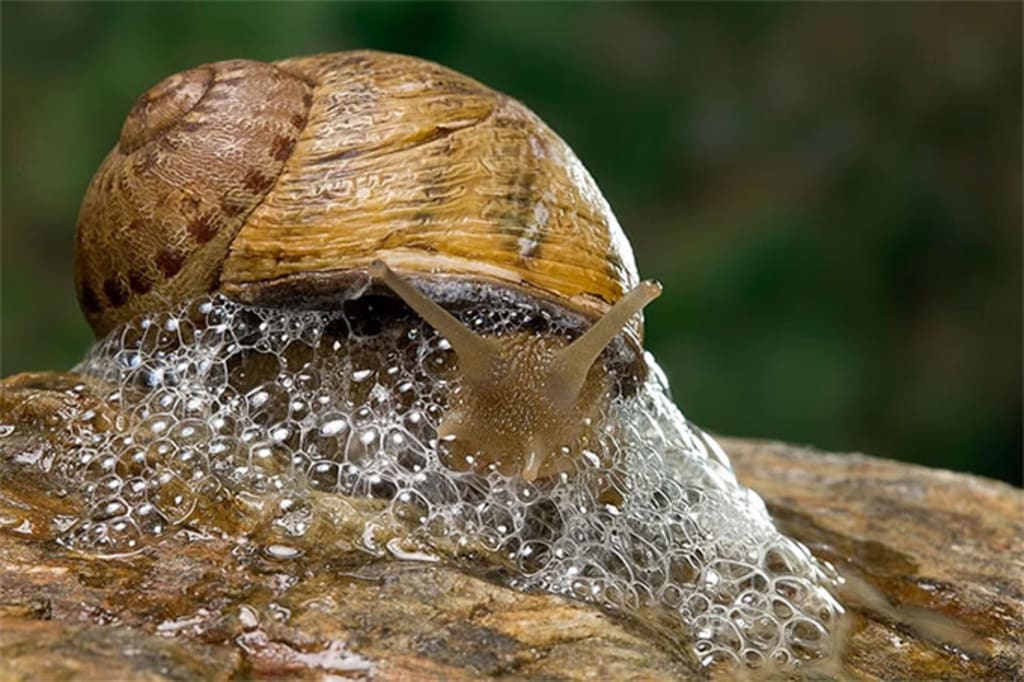
Often used to restore damaged skin, snail slime has long been used as a cosmetic and has potential applications beyond conventional skin care.
Consumers around the world are spending money on cosmetic products containing snail slime, with the global market expected to be worth an estimated $555 million by 2022.
After the snail slime skin care boom in Korea, this product has been widely shared. However, using snail slime for healthy, glowing skin has been around for a long time.
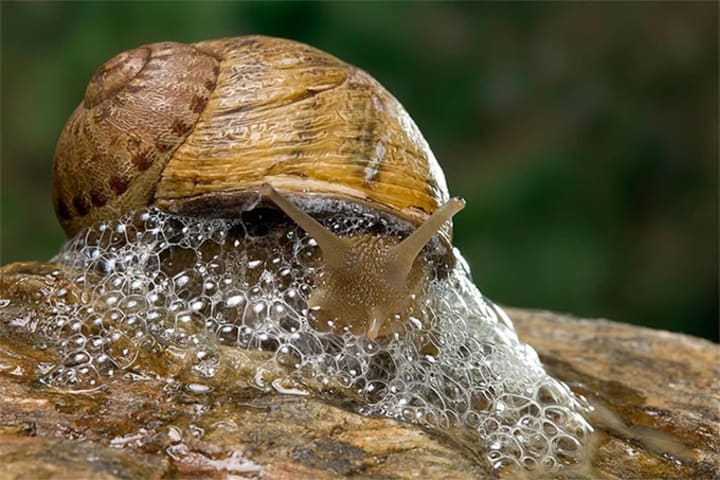
Snail slime is used in many skin care products.
The ancient Greeks used snail mucus as a topical anti-inflammatory. In the 1980s, snail farmers in Chile noted that handling snails for the French food market left them with softer hands and faster-healing cuts.
Effects of snail mucus on the skin
Garden snails , the most studied snail species for skin care, produce a mucus that is touted for its moisturizing properties, is high in natural vitamins A and E, antioxidants, and has the ability to stimulate collagen production, helping to reduce signs of aging, according to Joshua Zeichner, MD, a dermatologist at Mount Sinai Hospital.
According to dermatologist Elizabeth Bahar Houshmand, MD, of the American Academy of Dermatology, consumers buy snail slime products to repair damaged skin and moisturize.
Snail mucus extract has been shown to help create a protective barrier between the skin and polluted air.
One study used a three-dimensional skin model and exposed it to ozone. The “skin” not protected by the mucus extract became inflamed and showed signs of aging, resulting in wrinkles and uneven skin tone. The “skin” protected by the extract was less inflamed.
Scientists are also exploring uses for snail secretion beyond skin care. There is evidence that snail mucus can help heal wounds and treat burns. Snail mucus also has antibacterial and antifungal properties.
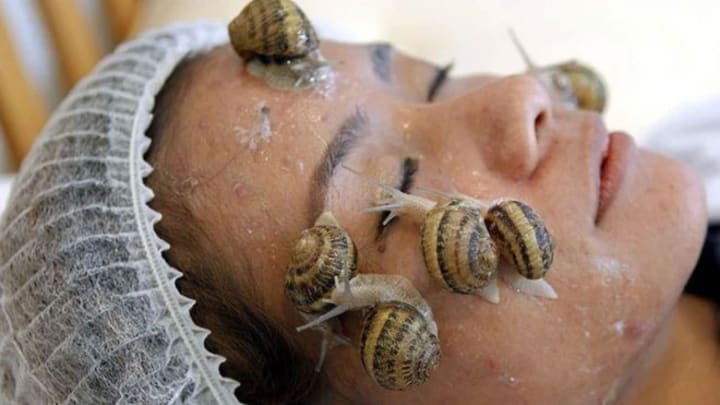
Snail slime contains many natural vitamins that are beneficial for the skin.
Another study tested its ability to inhibit bacteria in wounds, and some snail mucus worked better than antibiotics.
Early research suggests the mucilage may also have anti-cancer properties, as it successfully inhibited the growth of skin cancer cells in the lab.
Scientifically Explore the Power of Snail Mucus
To better understand snail mucus, Antonio Cerullo, a biochemist at the City University of New York, collected snails from a farm and analyzed three types of mucus: protective mucus on their backs, sticky mucus on their legs, and lubricating mucus on their feet.
Each type has distinct properties, such as toughness and stickiness, as well as different biochemical compositions.
In nature, different types of mucus serve different functions, Cerullo explains. Mucus that is primarily used for lubrication has more collagen, making it more elastic; mucus that is used for adhesion has more calcium, making it stickier.
Isolating the specific molecules that produce these properties and synthesizing them for commercial use is a complex task. Cerullo said that while the snail's protective mucus contains antibacterial proteins, many molecules in the mucus could interact to produce antibacterial effects on human skin.
Microbiologist Roberta Rizzo and chemist Claudio Trapella at the University of Ferrara in Italy analyzed more than 100 different snail slime products and found differences in quality.
The two scientists explain how everything from feeding and rearing methods on snail farms to how the mucus is collected affects the final product.
But snail slime has potential far beyond skin care, says Adam Braunschweig, an organic chemist at the City University of New York.
It can be used as a wound healing glue to treat ulcers and infections, and is also used as a natural adhesive in bioengineering.
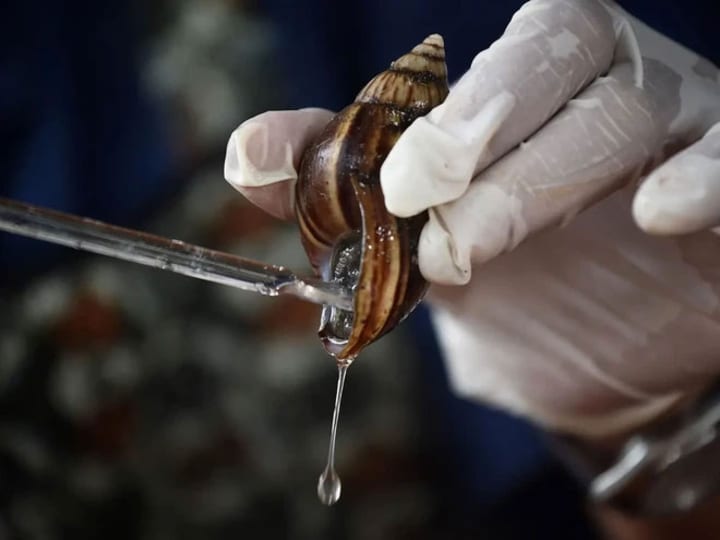
Harvesting snail slime.
Braunschweig says snail slime also works well as a drug carrier. When used alongside medication, it helps the body's mucous membranes absorb the drug more quickly.
Rizzo and Trapelli are also researching snail mucus extract to produce eye drops for the treatment of dry eye disease.
Commercialization of snail mucus products
Scientists have yet to isolate the specific components of snail mucus that have medicinal properties, but it may be possible to create synthetic versions of the mucus, which would reduce the need to farm snails.
The way snail mucus is harvested varies from farm to farm - some let snails crawl on nets to collect the mucus and drip it into a pan below, others use misting chambers to stimulate the snails to secrete mucus.
However, it takes a lot of snails to meet current demand, and harvesting enough snail slime is expensive. The product can also vary from day to day depending on the type of snail, so their slime is not always consistent.
Braunschweig's team hopes to produce a synthetic material that is cheaper and can be tailored to suit the application — for example, to have higher adhesion or more lubrication, depending on the application.
About the Creator
HK Decor
Telling stories my heart needs to tell <3 life is a journey, not a competition
If you like what you read, feel free to leave a tip,I would love some feedback
https://s.shopee.vn/7fFUMxnnBx?share_channel_code=8
Hand-Tied vs. Machine Wefts: The Ultimate Guide to Choosing Your Perfect Extensions
In the world of professional hair extensions, "wefts" are the gold standard for adding significant length and volume. However, the choice between Hand-Tied Wefts and Machine Wefts often leaves clients—and even some stylists—uncertain.
By Emma Smith2 days ago in Blush
The Modern Guide to Smooth, Healthy, and Confident Hair Care
Hair has always been more than just a physical feature. Across cultures and generations, it represents beauty, confidence, and personal identity. Whether long or short, natural or styled, hair plays a powerful role in how people express themselves. In recent years, advancements in beauty and grooming have transformed how individuals manage unwanted hair, especially with options like Laser Hair Removal in Islamabad, which reflects the growing demand for modern, effective solutions.
By Saad Imtiaz3 days ago in Blush
My New Book is Finally Here
My poetry collection Beautiful and Brutal Things is done. It's actually done and finally published over 270 pages. Over a year of my life went into this book. More than a year, really. Long days at my computer, sometimes seven days a week because I couldn't stop even when I probably should have. Then two months of editing that felt harder than the writing itself. But it's finished, and I'm still standing, and the book is real.
By Tim Carmichaela day ago in BookClub



Comments
There are no comments for this story
Be the first to respond and start the conversation.