
Hand-Tied vs. Machine Wefts: The Ultimate Guide to Choosing Your Perfect Extensions
Hand Tied vs. Machine Wefts: the Differences Between Them

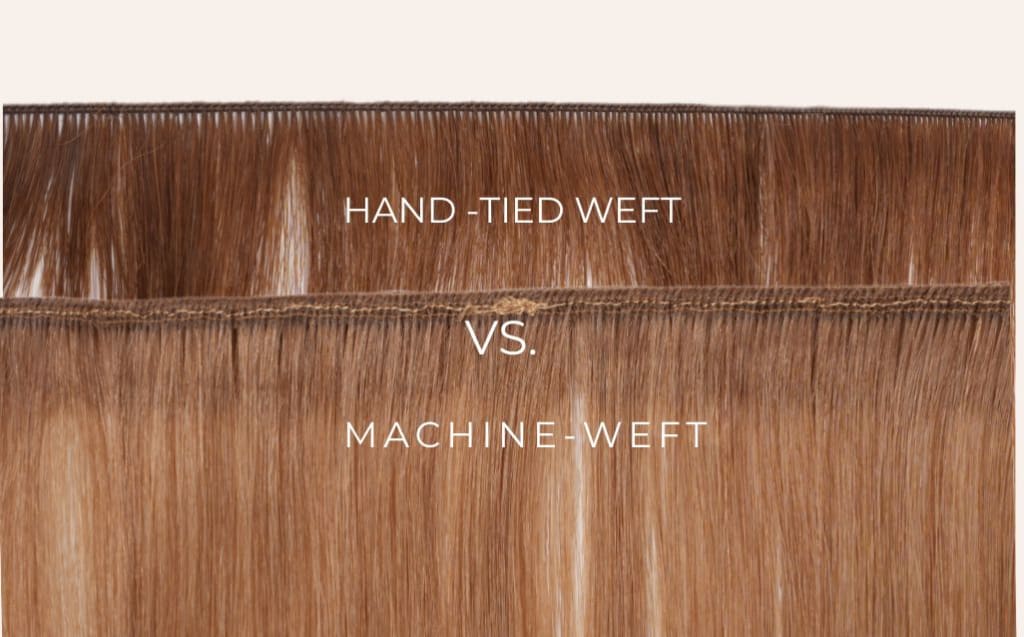
In the world of professional hair extensions, "wefts" are the gold standard for adding significant length and volume. However, the choice between Hand-Tied Wefts and Machine Wefts often leaves clients—and even some stylists—uncertain.
While both methods achieve beautiful results, they differ fundamentally in construction, application, and suitability for different hair types. Here is everything you need to know to make the right choice for your hair goals.
1. Machine Wefts: The Durable Powerhouse
Machine wefts are the traditional choice in the industry. These are created by sewing hair strands together using a specialized industrial sewing machine, creating a sturdy, continuous track.
The Defining Features
Built for Durability: The machine-stitched header is reinforced, making it highly resistant to shedding and capable of lasting through multiple re-installations.
Total Customization: The biggest perk of machine wefts is that they can be cut anywhere along the track. Your stylist can trim them to fit the exact width of your head without the hair unravelling.
High-Volume Impact: Because the track is slightly thicker, it can hold more hair, making it the go-to for those dreaming of a "glam" or "extra full" look.
Best For
Clients with thick, coarse, or sturdy natural hair.
Those looking for a cost-effective professional extension option.
People who prioritize maximum density and dramatic volume.
2. Hand-Tied Wefts: The Invisible Luxury
Hand-tied wefts are considered the "couture" of hair extensions. Each strand is manually tied onto a thin thread by skilled artisans, resulting in a weft that is incredibly slim and lightweight.
The Defining Features
Unmatched Slimness: The seam is so flat that it lays virtually flush against the scalp. This eliminates the "bulge" often felt with traditional wefts.
The "No-Cut" Rule: Unlike machine wefts, hand-tied tracks must never be cut. Cutting the thread will cause the entire weft to unravel instantly. Stylists adjust the width by folding the ends instead.
Natural Movement: Because the wefts are so light, they flow more naturally with your biological hair, making them almost impossible to detect even in high ponytails.
Best For
Clients with fine, thin, or fragile hair who need to minimize tension on the roots.
Anyone seeking the most discreet and invisible look possible.
Clients with sensitive scalps who find traditional extensions too heavy.
3. Key Differences at a Glance
Seam Construction and Comfort
Machine wefts have a thicker "track" or header, which provides stability but can occasionally feel bulky. In contrast, hand-tied wefts are ultra-thin, offering a "barely-there" feel that is significantly more comfortable for long-term wear.
Flexibility and Sizing
Machine wefts offer total flexibility because they can be cut to size. Hand-tied wefts require a more experienced stylist who understands how to fold and layer the wefts to fit the contours of your head without compromising the integrity of the thread.
Hair Health and Weight
Hand-tied wefts are much lighter. This makes them the safest choice for individuals concerned about tension or hair thinning. Machine wefts, while safe when installed correctly, carry more weight and require a stronger "anchor" of natural hair to support them.
Investment and Value
Machine wefts are generally more affordable due to their automated production. Hand-tied wefts come at a premium price point because of the intensive labor and craftsmanship required to create each individual track.
4. The Final Verdict: Which Should You Choose?
Choose Machine Wefts if: You have plenty of natural hair to hide the tracks, you want a lot of volume for a lower price, and you want the convenience of a customizable fit that can be cut to any width.
Choose Hand-Tied Wefts if: You have fine or thinning hair, you frequently wear your hair in updos, or you simply want the most luxurious, lightweight, and invisible extension experience available on the market today.
Professional Advice
The secret to a perfect install isn't just the hair—it's the consultation. A professional stylist can assess your scalp health and hair density to confirm which weft type will give you the look you love without compromising your natural hair.
Inspired by the industry insights from NewTimes Hair.
About the Creator
Emma Smith
explores the latest trends in hair, hairstyles, and hair systems, creating insightful content that blends fashion, innovation, and confidence.
Keep reading
More stories from Emma Smith and writers in Blush and other communities.
Mastering the Art of Men’s Hair Highlights: A Guide to Depth, Texture, and Style
In the modern world of men’s grooming, a great haircut is only half the battle. To truly stand out, many men are turning to color—specifically highlights—to add personality and sophistication to their look. According to the comprehensive guide by New Times Hair, A Complete Guide to Hair Highlights for Men, highlights are no longer just a trend; they are a powerful tool for adding dimension and life to otherwise flat hairstyles.
By Emma Smith2 months ago in Blush




Comments
There are no comments for this story
Be the first to respond and start the conversation.