
Debunking Some Of The Most Common Myths About Hair And Hair Transplants
Common myths and facts about hair transplant

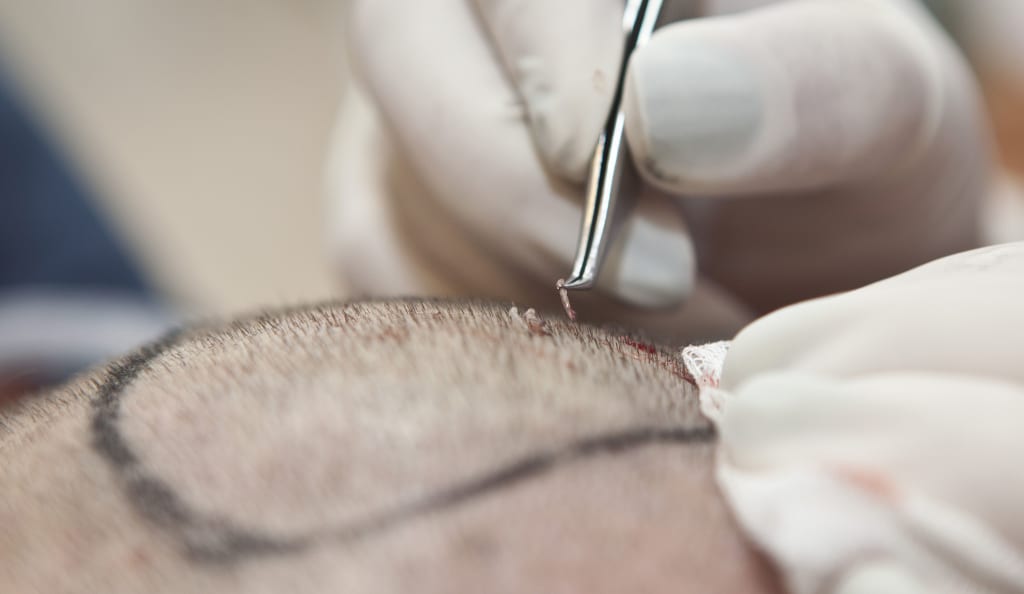
Losing a few hair every day is normal; the cause for worry arises when you start seeing a lot more hair on your comb or towel or start noticing bald patches on your head. At such a time, you might want to consider a transplant, but the problem is that there are several myths associated not just with a transplant, but also with hair in general.
Let’s look at some of the most common myths related to hair and hair transplant:
Myth: Hair transplants are successful only in younger people
Fact: There is no evidence that supports hair transplants being successful only in younger people. Once your hair loss has stabilised, you can get a transplant done and if you take all the precautions mentioned, there is no reason why your transplant will not be successful, irrespective of your age.
Myth: A transplant will be very obvious
Fact: If the procedure has been done by a professional who has plenty of experience, there will be no telling that you have undergone a transplant. Once the hair has grown in, no one will be able to tell you whether you underwent a transplant or not.
Myth: A hair transplant is very painful
Fact: This is something that is completely dependent on the surgeon – if your surgeon is highly qualified and experienced, like at AK Clinics, your hair transplant in Delhi should be a reasonably painless experience. Moreover, the transplant process is done either local anaesthesia or sedation, which means that you will not feel any discomfort.
Myth: The results will be immediate
Fact: Good things come to those who wait – the same stands true for a transplant too! If you are thinking that you will be able to see the results immediately, you are sadly mistaken. A transplant can take anywhere between six to 12 months to start showing result.
Myth: The results of a hair transplant will not last long
Fact: When the transplant has been done properly and by the hands of an experienced surgeon, your transplant will last a lifetime.
Myth: Hair transplants are meant only for men
Fact: A transplant is not gender specific; whether you are a man or woman, as long as your hair fall has stabilised and you have a reasonably clear donor and recipient area, you should be able to get a transplant. If you have any doubts, you can consult the surgical team at AK Clinics, who will give you the most appropriate diagnosis.
Myth: A transplant will leave very obvious scars
Fact: If the procedure has been done with finesse and experience, there will be no visible scars. Most experienced surgeons will implant the grafts in such a manner that the new hair growth, covers any and all possible scars. Moreover, scars are most common in strip surgery or FUT and lesser in FUE.
Myth: Someone else’s hair will be used for a transplant
Fact: When you have your very first consultation with your hair transplant surgeon, they will be able to give you a fair enough idea of how many grafts you will need. They will also gauge whether you have a sufficient donor area. In case, your donor area is not sufficient, hair from other parts of your body, such as chest, beard or arms can be used.
Myth: You will not be able to wash your hair after a transplant
Fact: Even with normal cosmetic hair treatment such as smoothening or perming, you will be asked not to wash your hair for a day or two. The same stands true for a transplant as well – you will be asked to not wash your hair the day of the treatment, but from the next day onwards, you will be asked to wash your hair with care and gentle hands.
Myth: You will be forced to take medication after your transplant for your hair to grow properly
Fact: This is something that will be dependent on your actual transplant – for some people, the transplant itself will be enough, but for some people, some supplementary medication might be needed. This is a call that will have to be taken by your surgeon.
Myth: A hair transplant will affect your brain
Fact: The process is done on your scalp and has nothing to do with your brain. The effects of the sedation or anaesthesia could lead to you feeling slightly groggy for a while, but nothing more than that!
About the Creator
Keep reading
More stories from Pradeep AK and writers in Blush and other communities.
Laser hair removal Clinic in Delhi
The sight of unwanted hair on your arms and legs is a cause of distress for most women – talk to any woman, and chances are that they will tell you that they get extremely conscious about their unwanted hair being visible at an important event. It was perhaps having understood this need that laser hair removal was first created and today, it has become an extremely popular method of permanent hair removal, all over the world. If you too are considering laser hair removal, then there are some things that you need to keep in mind first.
By Pradeep AK4 years ago in Blush
The Story of Tyler and Charlie
JOHN BROWN V. HITLER In a world often divided by prejudice and misunderstanding, the meeting of two seemingly opposing figures, Tyler and Charlie, became a pivotal moment in their lives. Tyler, known for his compassionate heart, found himself in a position that challenged his beliefs and values. Charlie, who had lived a life filled with controversy and conflict, represented a past that many wished to forget. Yet, in this extraordinary encounter, Tyler saw an opportunity for redemption and forgiveness that could transcend their differences.
By Organic Products 5 days ago in Blush


Comments
There are no comments for this story
Be the first to respond and start the conversation.