
Yggdrasil by Wardruna: The Music of the Vikings
Reviewing the album from the Norwegian keepers of secrets

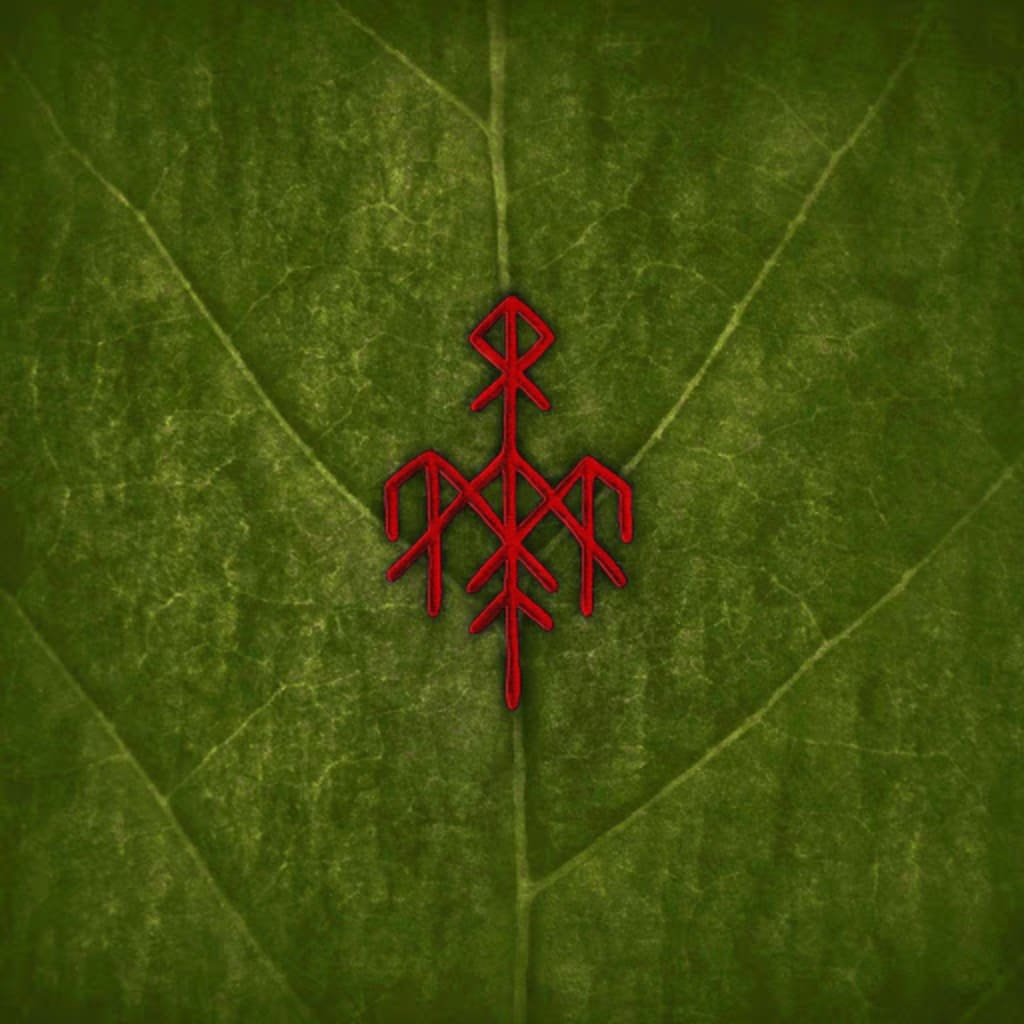
In old Norse, Wardruna means “the guardian of secrets” or “she who whispers.”
Think about Gorgoroth! Do you remember “Twilight of the Idols” with Einar “Kvitrafn” Selvik on drums and Gaahl unleashing the growls? Never mind, that’s old news anyway. Wardruna is currently Kvitrafn’s true creative fountainhead, and from it flows the living sap of Nordic spiritualism and rune mysticism.
In fact, with all their symbolic and magical force, runes are a source of inspiration for the music of Wardruna. Forget about Gorgoroth! Wardruna is closer to what Dead Can Dance could have been if they had left Australia and moved to the frozen Norwegian fjords.
In 2003, Kvitrafn joined forces with his former Gorgoroth associate Kristian Espedal (aka Gaahl) and singer Lindy-Fay Hella, who I had the chance to interview a while ago.
“Einar wanted closer cooperation with me and Gaahl on Yggdrasil. It then became natural to experiment with the vocals. The contrast between feminine and masculine is overlapping, which is evident on this album.” — Lindy-Fay Hella, Rock n’Heavy
However, we had to wait until 2009 for the debut album Gap Var Ginnunga, the first chapter of the “Runaljod” trilogy. The installment opus captivated audiences and garnered unanimous reviews about the uniqueness of a band that promotes a return to ancient musical motifs, using the original instruments and metrics.
The instruments used include deerskin drums, several traditional violins, and a replica of the “Kraviklyra” (Norway’s oldest stringed instrument). In addition, to create the ideal atmosphere and the best musical substrate, one can also hear the rumble of thunder, crystal clear chirping, and the whispering wind in the treetops.
Yggdrasil follows the same path as its predecessors. Still, the crossroads from the past now take us into more intricate trails—the collaboration with renowned Icelandic composer Hilmar Örn Hilmarsson and Steindór Andersen, a famous Rímur singer, might account for this more complex musical process.
Wardruna have some unique features that make their music special, namely their iconoclast recording process. To capture the ideal ambiance for each song, they occasionally record musical elements in places or moments with special symbolic meaning. Thus, in Gap Var Ginnunga, the voice for “Laukr” (the water rune) was recorded inside a river, “Jara” on the winter solstice, and “Dagr” on the summer solstice.
To understand the conceptual scope of Yggdrasil, we have to go back to the origins and the first chapter of the trilogy. "Ginnungagap” is the great cosmic void where everything was created according to Norse mythology, symbolizing the moment of creation of the primordial seed.
“Planting new seeds, strengthening old roots”
Track-by-track Analysis
Yggdrasil, the world’s tree, is the Axis Mundi, a universal symbol in almost all mythologies. It corresponds to the growth and maturation phase of the seed. The last chapter awaits for “Ragnarok,” the apocalypse.
The notions mentioned here are rooted in universal principles: the myth of eternal return and mystical circularity. Hence, the album follows these guidelines. The songs rely on the insidious reiteration of melodic patterns, “AnsuR” being one of the best examples. To quote Einar: “Often the runes are the composer, and I am their instrument.”
Musically, the first significant evolution in Yggdrasil is the vocal dimension, noteworthy being the fact that we now encounter Lindy Fay Hella’s demiurgic voice more often. I note how the best moments of the album are those in which Lindy takes more prominence.
Hence, after the ethereal shamanistic intro “Rotlaust Tre Fell,” we hear “Fehu” (the rune symbolizing “money,” “wealth”), the first moment in which Lindy’s voice insinuates itself into our core with a mixture of charm and seduction. “NaudiR” starts from the wizardly note to then bring Gaahl to the forefront of this mystical celebration, with the diffuse and somber note growing exponentially.
Then the mystical note starts to build up with “EhwaR,” setting up an ambiance that oscillates between folk and something similar to darkwave and psychedelic trance, inspired by the melodic redundancies. “AnsuR,” as I mentioned before, recreates a kind of shamanic ritual. However, musically this is one of the least captivating moments of the album.
“IwaR” continues to advance in the ceremonial path but with greater diversity in vocals and instrumental components. However, by now, we are already looking forward to hearing Lindy Fay Hella at her full potential.
“IngwaR” shines in drama and expressiveness, with many sounds blending to create an atmosphere of mystical delirium. Then “Gibu,” in its more playful vocation, sets the stage for what are, in our opinion, the album’s most sublime moments.
The best moments are those in which Yggdrasil comes the closest to the sonorities cultivated by the band from “The Serpent’s Egg.” So Solringen is a summer epiphany. Lindy Fay Hella’s voice shines with sunny, caustic, coruscant splendor, evolving over the canon-like singing of Kvitrafn and Gaahl.
“Sowelu” opens with an unsettling, somber atmosphere, but this will be Lindy’s song. It’s her obliquely seductive voice that fills, at first, every nook and cranny; every moment of intense perplexity, then, as in “Solringen,” male voices stick to the musical fabric to thicken the song’s sinister, gloomy dimension.
This album requires the listener’s full attention and subtle details, so I recommend listening to it in a peaceful environment. An example of the recording and production quality is the epilogue “Helvegen,” a song that we have to sip thoughtfully to internalize the energy of the atmosphere, the music, and the feelings.
Final Thoughts
Yggdrasil, the tree of the world! The perfect homage to Mother Earth, as we celebrate the miracle of nature contained in every tree. Please listen to these songs not only with your ears but also with the back of your mind. Wardruna connects us to our true inner-self. Listening to Yggdrasil awakens our conscience to the world of mysteries hidden in every leaf, every flower, and within ourselves.
“Music should be demanding for the listener. You can gain more out of it that way. I always try to leave space in the music for the listener to have their own experience of it, so it’s not bombarded with only one meaning.” — Einar Selvik
___________________
Thanks for reading this article. Feel free to come back at any time and pick up another thread from my Vocal book of content by clicking here. Small tips and big hearts are highly appreciated. Till next time, cheers. - Rui
About the Creator
Rui Alves
Hi, I'm Rui Alves, a teacher, army veteran & digital pathfinder. Author, alchemist of sound & Gen-AI artist.
The Rivers of Babylon
The iconic disco group Boney M from the 1970s left an indelible mark on the music world with their infectious beats and unforgettable melodies. Formed in West Germany, the group's vibrant sound, blending Caribbean rhythms with European pop sensibilities, quickly catapulted them to international stardom.
By Rasma Raisters3 days ago in Beat


Comments
There are no comments for this story
Be the first to respond and start the conversation.