
Women and Music in Afghanistan: A Two-Decade Narrative from 2001 to 2021
The Role of Women in the Transformation of Afghan Music and Their Progress from 2001 to 2021; Examining Participation, Education, and Performance in Artistic and Cultural Arenas.

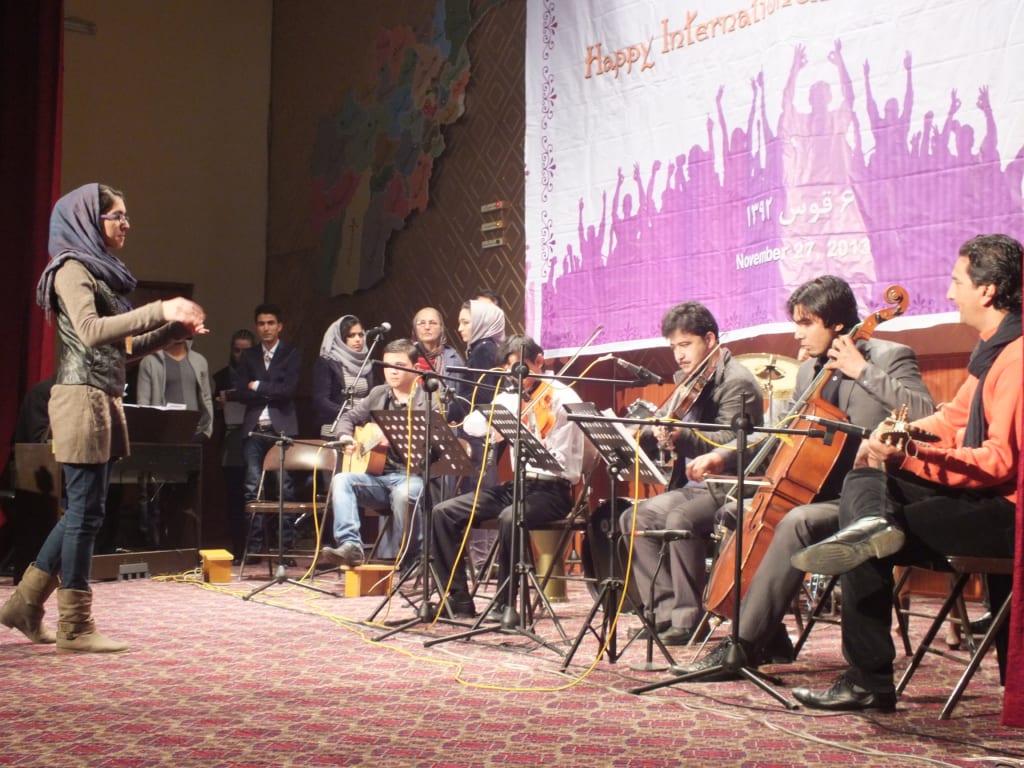
Women and Music in Afghanistan: A Two-Decade Narrative from 2001 to 2021
Author: Islamuddin Feroz, Former Professor, Department of Music, Faculty of Fine Arts, Kabul University
Abstract
After the collapse of the first Taliban regime in 2001, Afghanistan entered a stage of cultural and social reconstruction, one of the most prominent manifestations of which was the return of women to the field of music. This study focuses on the years 2001 to 2021 and examines the role and position of women in the transformation of Afghan music. The findings show that the relative expansion of democracy, the establishment of educational institutions such as the Afghanistan National Institute of Music (ANIM) and the Department of Music at Kabul University, and the development of visual media created opportunities for the wide and professional presence of women in instrumental performance, singing, composition, and orchestra conducting. At the same time, cultural, security, and social challenges remained serious obstacles. The purpose of this research is to analyze the sociological and historical process of these transformations and to identify the factors that enabled women’s artistic participation during the past two decades—an era in which women’s music became a symbol of resilience and hope within the framework of Afghanistan’s contemporary culture.
Keywords: Afghan women, music, democracy, Afghanistan National Institute of Music, Department of Music, women’s rights, Taliban.
Introduction
Afghanistan is a land with an ancient and rich heritage in music and the arts. Music has long been an inseparable part of the culture, rituals, and social life of its people. Prior to 1992, music had a dynamic place in society, and women participated in this field as singers, instrumentalists, and artists. However, after the arrival of the Mujahideen in 1992 and especially during the Taliban regime from 1996, the country’s musical life faced severe restrictions and eventually a total ban on music. During this period, women became one of the most vulnerable groups in the fields of art and culture, deprived of any artistic or educational activity. With the fall of the Taliban regime in 2001 and the establishment of a new political system, a new chapter in Afghanistan’s cultural history was opened. The adoption of a new constitution, international support, the formation of civil institutions, and the implementation of cultural reconstruction programs created opportunities for the revival of the arts and the return of women to the field of music. During this time, women were once again able to study at the Afghanistan National Institute of Music, Kabul University, and other art centers, to produce artistic works, appear in the media, and demonstrate their capabilities in various branches of music. The two decades following 2001 can be considered a turning point in Afghanistan’s social and cultural history—a period during which emerging democracy, government cultural policies, and the growing discourse on women’s rights played a decisive role in opening space for women’s participation in the arts, particularly in music. This paper focuses on these developments to show how democratic mechanisms, supportive legislation, and post-2001 cultural policies contributed to the growth and active presence of women in the musical sphere. It also examines the role of educational institutions, the progress of women in various musical disciplines, and the persistent challenges and limitations they faced.
Transformation of Women’s Civil and Cultural Rights After 2001
The fall of the Taliban regime in 2001 marked the beginning of a new phase in Afghanistan’s political and cultural history—a stage in which the concepts of democracy, social participation, and gender equality gained new significance. The 2004 Constitution emphasized gender equality in several of its articles, and consequently, the long-restricted social and cultural spaces opened slightly for women after years of war and extremist views on female freedom (Qasimi, 2001, p.1). Although this structural change was initially more theoretical and legal in nature, over time it affected real aspects of life—from education to art, and particularly to music. Thus, women’s rights gained protection; girls’ schools were re-established, educational and social infrastructures were rebuilt, and a new political system with an optimistic outlook was implemented. In light of these changes, women found new opportunities in the social and media spheres; they gained a stronger presence in society than before, and the defense of women’s rights became one of the central themes of public discourse (Sarwarkhil, Hemmige, 2022, p.3).
In the field of music, people were once again able to regain the freedoms they had enjoyed during the 1970s and 1980s up until 1992. Professional musicians who had gone into exile during the Mujahideen and Taliban periods began returning to the country to resume their musical activities in their homeland. At the same time, the government and a number of interested individuals and institutions began supporting various projects, especially educational initiatives. Ultimately, music education institutions were reopened by those who had recently returned from exile, and their fundamental, technical, scientific, and practical reconstruction was carried out within the first few years after 2001 with the help of national and international organizations (Doubleday, 2007, p.277). Under these circumstances, Afghan women found new paths to express their creativity. Music, which had been entirely banned during the Taliban era, was revived as a language of emotion, identity, and protest. Young women who had previously been deprived of musical education were now able to study music formally. The most significant achievement of this period was the relative realization of democracy and the expansion of individual and cultural freedoms. Women were no longer merely “listeners” of music but became recognized as its “creators” and “performers.” Nevertheless, progress was not easy; cultural and social resistance to women’s presence on the musical stage remained strong. Many families were concerned about public attitudes toward female musicians or singers and sometimes regarded such activities as incompatible with social status or religious beliefs. Therefore, transforming public attitudes required time, education, and the continuous support of cultural and social institutions.
Social Transformation and the Expansion of Women’s Presence in Music
Over time, the presence and participation of women in music education institutions in Afghanistan—particularly in the Afghanistan National Institute of Music (ANIM), the Department of Music at Kabul University, and several other cultural centers—gradually expanded. This process was the result of the social and cultural changes that took place after 2001 and had two fundamental outcomes: first, the restoration of women’s rights to study in the field of music, and second, the creation of real opportunities for their technical and professional advancement at the highest educational levels. The Afghanistan National Institute of Music, by providing equal opportunities for girls and boys—especially in the education of both traditional and Western music—played a significant role in promoting women’s rights and achieving gender equality. According to the World Bank report, over time, girls came to constitute a substantial portion of the institute’s students, learning and performing music in a safe and professional environment (World Bank, 2015).
In 2010, under the initiative of Ahmad Sarmast, the institution was elevated from a music school to the Afghanistan National Institute of Music. This action marked a turning point in the post-Taliban history of Afghan music, as for the first time, a specialized institution was established with the aim of promoting gender equality and creating a free and academic learning environment for both girls and boys. Among the notable achievements of this institute was the formation of the Afghan Youth Orchestra, composed of male and female students aged 13 to 20 who trained under the guidance of ANIM instructors. In 2013, this orchestra performed for the first time at the historic Carnegie Hall in New York—an event regarded by international observers as a milestone in the history of contemporary Afghan music (Fitzgerald, 2013). This experience can be seen as a pivotal moment in Afghanistan’s modern cultural history, as for the first time since the Taliban regime, a new generation of girls—benefiting from a relatively open social atmosphere—were able to study music freely and, alongside their male peers, perform musical works within a coherent orchestra based on academic principles. This transformation not only symbolized the gradual return of women to the artistic sphere but also represented the emergence of a new form of cultural identity among the country’s younger generation. Continuing along this path, in 2014, the Zohra Women’s Orchestra was established within the framework of ANIM. Comprising 35 female members, this orchestra became a symbol of the official and dynamic presence of women in Afghanistan’s professional music scene. Zohra, through performing Western classical pieces alongside traditional Afghan melodies, managed to shine both domestically and on international stages. The historical importance of this orchestra lies in the fact that it was the first all-female ensemble in Afghanistan’s musical history, led by Negin Khpalwak, the country’s first female orchestra conductor (Cristina, 2019, p.6).
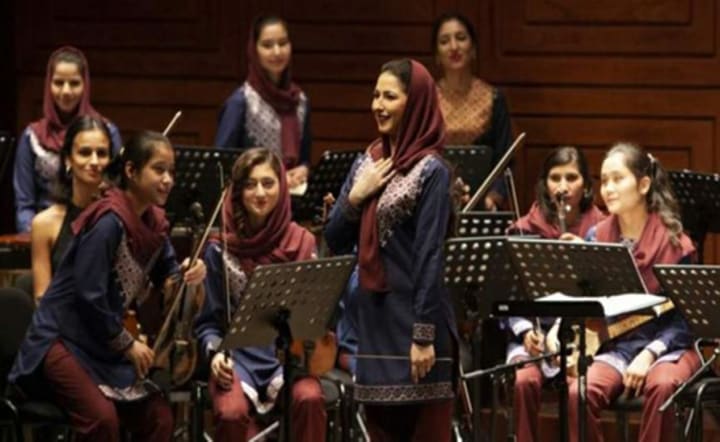
The “Zohra” Orchestra, through the combination of traditional Afghan instruments and Western orchestral instruments, presented a unique example of cultural and musical coexistence. In its performances, the ensemble showcased a collection of traditional Afghan musical pieces, newly commissioned works, and repertoires that reflected the cultural heritage and ethnic diversity of various regions of the country. From an aesthetic perspective, the visual aspect of Zohra’s performances also carried symbolic importance. The stage costumes of the members were inspired by Afghan traditional art and featured intricate geometric embroidery that represented the country’s cultural authenticity and indigenous beauty. The players of Western instruments generally wore black outfits with contemporary designs and red scarves, while the performers of Afghan instruments donned traditional Pashtun robes in bright colors. This harmony among color, form, and ethnic identity not only imparted an aesthetic appeal to the performance but, as Ahmad Sarmast described it as a “beautiful mosaic of Afghanistan’s ethnicities,” symbolized national unity within cultural diversity (Howell, 2020, p.15). The Afghanistan National Institute of Music has played an unparalleled role in nurturing the musical talents of Afghan girls. By emphasizing educational justice and gender equality, the institute provided extensive opportunities, including access to instruments, practical and theoretical training, public performance opportunities, and international collaboration programs. The establishment of ensembles such as the Zohra Orchestra and the Afghan Youth Orchestra are direct outcomes of these cultural and educational policies. Within these orchestras, girls participated not only as active performers and musicians but also held managerial, educational, and even conducting positions. This reflected a profound transformation in societal attitudes toward women’s participation in music and performing arts, demonstrating that in contemporary Afghanistan, music had evolved from a mere cultural expression into an instrument of social and identity empowerment for women.
On the other hand, the Department of Music at Kabul University, after the fall of the Taliban regime in 2001, resumed its educational and artistic activities. The reopening and revitalization of this department took place through the initiative and leadership of the author of this article—who, at that time, after a long period of stagnation and suspension of cultural activities, resumed his academic duties in the Music Section of the Faculty of Fine Arts at Kabul University and, as the Head of the Department of Music, undertook the responsibility for reopening and reorganizing this institution. Between the years 1992 and 2001, when the country witnessed civil wars and subsequently the rule of the Taliban, all cultural, artistic, and educational activities in the field of music had been suspended. This period was marked by the destruction of musical instruments, the migration or isolation of musicians, and the complete prohibition of music education and performance, to the extent that teaching music in the social sphere at that time was considered a crime. However, during the years 1994 to 1996, under the rule of Burhanuddin Rabbani, there were brief efforts to resume the activities of the Department of Music, and some limited educational programs were initiated. With the Taliban’s takeover of Kabul in 1996, these activities were once again halted, and the Department of Music was completely closed. This situation continued until the fall of the Taliban regime in 2001, effectively marking nearly a decade of total silence in the field of music within Afghanistan’s higher education system.
The reopening of this department was not only an educational initiative but also a cultural and symbolic act aimed at reviving the spirit of art in a society that had lived for years in silence and fear. At the beginning of this transformation, including the “Department of Music” in the official list of Kabul University departments after the fall of the Taliban represented the first effective step toward the development of music and academic arts education at the national level. In the early years after 2001, the social environment was still overshadowed by fear of fundamentalism. The number of male students was higher, and female students were very few. Many families, especially in Kabul, did not allow their daughters to study music due to fear of social judgment and the return of extremist ideologies. Over time, however, along with the expansion of women’s rights movements and the increase of individual and social freedoms, the conditions for more active participation of women in public spheres gradually emerged. Moreover, the presence of women in media and the broadcasting of female singers’ works on domestic television contributed to breaking many social taboos. As a result, society gradually recognized that music was not merely a personal or recreational activity but an integral part of national culture and identity.
This shift in public perception encouraged families, with greater confidence, awareness, and courage, to allow their daughters to pursue music education and study in this field. In the following years, the Department of Music, with the support of the Afghan Ministry of Higher Education, Kabul University, and international institutions such as the Goethe-Institut and several other European cultural organizations, achieved significant progress. Educational facilities gradually expanded; new musical instruments were introduced, instructors from both inside and outside the country were invited to collaborate, and the curriculum was aligned with regional and global academic standards. Over time, the number of students in the department, both male and female, steadily increased. The educational environment at Kabul University, which had once considered learning music a crime, had now become a safe, free, and creative space for arts education. Boys and girls studied together, learning both theoretical and practical fundamentals of music, instrumental performance, singing, composition, and orchestral conducting. Among the significant achievements of this period was the formation of the Kabul University Educational Orchestra, composed of both instructors and students from the Department of Music. This orchestra, a combination of male and female musicians, performed at official university events, Ministry of Higher Education programs, and national festivals. These performances not only enhanced the artistic skills of the students but also conveyed a clear message of the return of music, culture, and artistic coexistence to Afghan society. Overall, the reopening and expansion of the Department of Music at Kabul University can be seen as a symbol of cultural resilience, the reconstruction of national identity, and the growth of social awareness after a dark period. This initiative opened the path for dozens of young men and women to rely on their talent and knowledge and, as musicians, play a constructive role in reshaping Afghanistan’s cultural landscape.
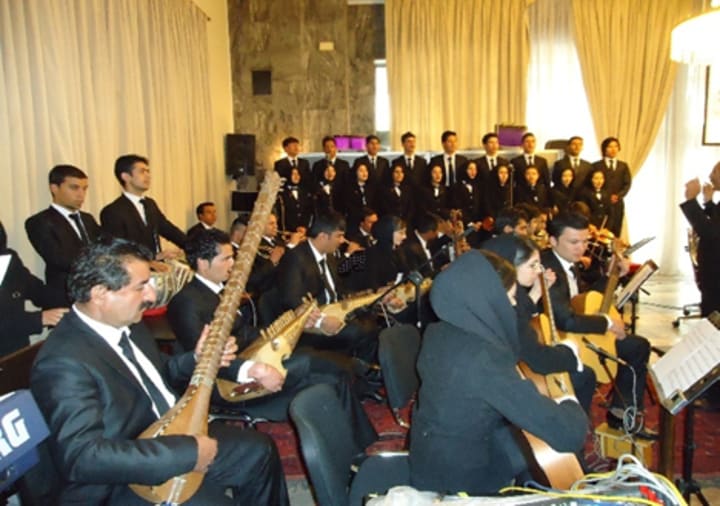
Alongside the Afghanistan National Institute of Music and Kabul University, a number of other cultural and educational institutions also played an effective role in expanding music education for girls. Among these institutions were the Aga Khan Music Foundation in Kabul and Herat (Monajim, 2009) as well as the Department of Music Education of the Afghan Ministry of Information and Culture in Kabul. These centers, with the aim of promoting traditional and indigenous Afghan music, provided educational opportunities for the general public, offering courses in instrumental performance and singing of traditional and indigenous music (Shabnam, 2015). These institutions catered to individuals of different age groups, from adolescents to adults, to acquire basic musical skills. While female participation in these programs was limited, these courses and educational initiatives represented preliminary and impactful steps in the post-Taliban social space toward breaking cultural taboos surrounding music education for women. These institutions also managed to provide a popular and open platform for music education after years of restrictions, and by nurturing a number of young male and female students, they facilitated their connection with larger institutions such as Kabul University or the Afghanistan National Institute of Music. Thus, their role can be considered highly important and complementary to formal educational structures in the gradual institutionalization of women’s presence in Afghanistan’s music scene. In addition to academic and cultural institutions, the media played a fundamental role in supporting the presence and activity of women in music. Visual and audio media, by providing an open space to introduce and encourage female artists, became an effective platform for the growth and recognition of emerging talent. Broadcasts of ANIM concerts on television networks, as well as competitive programs such as “Afghan Star”, had a significant impact on motivating the younger generation and encouraging their entry into the field of music. Likewise, academic performances by students of the Department of Music at Kabul University played an important role in showcasing women’s abilities and legitimizing their presence in the country’s artistic space.
As a result of these developments, the social impact of women’s presence in music gradually became evident. Their participation in concerts, television programs, and cultural festivals helped shift society’s perception of female artists. In particular, girls trained in institutions such as the Afghanistan National Institute of Music became inspirational role models for the new generation. They demonstrated that Afghan women can not only learn music but also become orchestra conductors, composers, and creators of artistic works. Overall, over the past two decades, Afghan women have been pioneers and leaders in movements related to gender equality and human rights. By creating educational opportunities for women, establishing various careers, and striving for financial independence, they made a significant contribution to societal progress and the strengthening of women’s status (Weisinger, 2021, p.6).
However, in the final years of this two-decade period (2018–2021), the intensification of insecurity and political and social instability caused the challenges facing cultural and artistic activities, particularly in music, to expand further. In such conditions, families once again experienced anxiety and uncertainty about the future, and many viewed their children’s continued participation in musical activities with concern and doubt. This situation not only reduced the motivation of young artists but also exposed the public musical sphere to stagnation and new restrictions. Despite these obstacles, women’s presence in music significantly contributed to the reconstruction of Afghanistan’s cultural identity. Women’s music introduced female emotions, narratives, and experiences into the public culture, presenting a polyphonic portrait of Afghan society. Their songs carried themes of love, freedom, justice, and protest, effectively reflecting the country’s contemporary history.
With the return of the Taliban in 2021, music institutions were closed, and official activities in this field ceased. Consequently, the cultural and symbolic heritage of Afghan women musicians continued in exile. They introduced a voice to the world that could no longer be silenced and paved the way for future generations of women in music and creative arts. Even in exile and away from their homeland, these women preserved their art and cultural identity through practice, performance, and publication of their works, demonstrating that music can symbolize resistance, identity, and social empowerment. In this way, their efforts and creativity have inspired a new generation of Afghan musicians who will continue the path of the country’s culture and arts in the future.
Conclusion
An analysis of the developments over the past two decades (2001–2021) in Afghanistan shows that the advancement of women in the field of music was the result of a multifaceted interaction among structural, cultural, and individual factors. First, democratic policies and legal support after 2001 provided the necessary legal and social framework for the active participation of women in artistic arenas. The adoption of the new constitution and the implementation of governmental cultural programs, particularly in Kabul, facilitated the reopening and expansion of educational and cultural institutions and gradually legitimized women’s presence in these spheres.
Second, the establishment of specialized music education institutions such as the Afghanistan National Institute of Music and the Department of Music at Kabul University played a fundamental role in nurturing talent and enhancing the artistic capacities of women. These institutions, leveraging international collaborations, financial support from global organizations such as the World Bank, and the presence of foreign instructors, created conditions for Afghan female artists to approach professional standards and participate in national and international stages.
Third, the gradual transformation of social attitudes and family support were among the most important factors sustaining women’s growth in music. Families that sent their daughters to music institutions were, in effect, at the forefront of the cultural movement and social change. As a result, female musicians became not only active cultural agents but also symbols of resistance, resilience, and inspiration in society.
Despite these achievements, the political developments of 2021 and the return of the Taliban seriously halted the upward trajectory of women’s music. The new restrictions and strict policies eliminated many of the educational and cultural opportunities built over the previous two decades, replacing a space of freedom and hope with fear and censorship. This shift, beyond an artistic setback, symbolizes the collapse of one of the most prominent expressions of cultural democracy in Afghanistan. In final summary, the period from 2001 to 2021, despite security and structural challenges, can be defined as the golden era of women’s music in Afghanistan an era in which women were able to bring their voices to national and international stages despite restrictive traditions and social constraints. Although this path faced an unintended interruption with the return of the Taliban, its cultural and symbolic achievements remain embedded in the collective memory of Afghan society and the history of music in the country. The experience of these two decades demonstrates that Afghan women’s music is not only an artistic expression but also a manifestation of resistance, hope, and resilience against oppression—a language that, even in silence, sustains the resonance of freedom and cultural vitality.
References
Monajim, Mahmod. (2009). The Aga Khan Cultural Foundation supports traditional Afghan music. http://www.afghanmaug.net/index.php/component/content/article?id=780
Shabnam, Shahrzad. (2015). The Department of Music on the Promotion of Decency in Afghan Music. https://pajhwok.com/fa/2015/02/25/%D8%B1
Fitzgerald, Jim. (2013). For youths from Afghan music school, NY is pizza, ice skating - and playing at Carnegie Hall. https://infotel.ca/newsitem/us-afghan-youths-carnegie-hall/cp21999863?utm_source=chatgpt.com
World Bank. (2015). Girls find their Place in Afghanistan’s Music Institute. Alarabia. https://www.worldbank.org/en/news/feature/2015/09/01/girls-find-place-afghanistan-music-institute?utm_source=chatgpt.com
Qasimi, Nadia. (2001). Afghan Women in Music. https://dropsafghanistan.org/wp-content/uploads/2020/12/Chap4.pdf?utm_source=chatgpt.com
Weisinger, Maya. (2021). Tools of Resistance: Women and Art in Afghanistan. University of Erfurt. https://www.researchgate.net/publication/356264327_Tools_of_Resistance_Women_and_Art_in_Afghanistan.
About the Creator
Prof. Islamuddin Feroz
Greetings and welcome to all friends and enthusiasts of Afghan culture, arts, and music!
I am Islamuddin Feroz, former Head and Professor of the Department of Music at the Faculty of Fine Arts, University of Kabul.
Keep reading
More stories from Prof. Islamuddin Feroz and writers in Beat and other communities.
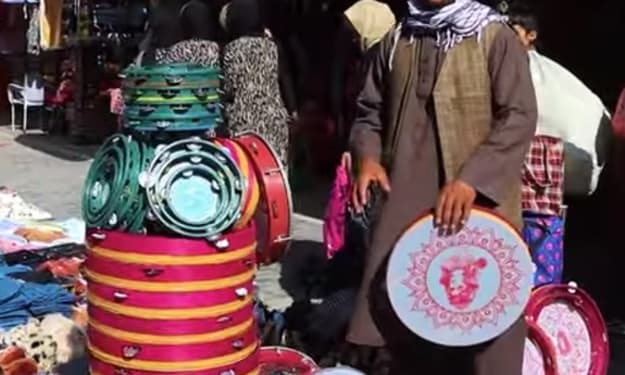
A Small Instrument, a Great Message: The Daf and the Continuity of Art in the Era of Music Prohibition
A Small Instrument, a Great Message: The Daf and the Continuity of Art in the Era of Music Prohibition Author: Islamuddin Feroz, Former Professor, Department of Music, Faculty of Fine Arts, Kabul University
By Prof. Islamuddin Feroz3 months ago in Beat
Ludacris and Nelly draw backlash over bookings at MAGA-coded music festival
Ludacris and Nelly headlining a mostly right-wing event is good for them. It’s also great for the genre of hip hop. The two rap veterans have showcased their talents on other stages. Why can’t they perform for mostly MAGA folks and grab that bag?
By Skyler Saunders4 days ago in Beat
Center Stage with Paul Stewart
*** I'm keen to republish the interviews I did for my series with Vocal creators. It's been a few years and I thought it might be nice to revisit these wonderful conversations. I'll be releasing them one at a time for a few weeks/months.
By Heather Hubler4 days ago in Interview



Comments
There are no comments for this story
Be the first to respond and start the conversation.