
A Small Instrument, a Great Message: The Daf and the Continuity of Art in the Era of Music Prohibition
How an ancient frame drum became the heartbeat of cultural resistance in Afghanistan.

A Small Instrument, a Great Message: The Daf and the Continuity of Art in the Era of Music Prohibition
Author: Islamuddin Feroz, Former Professor, Department of Music, Faculty of Fine Arts, Kabul University
Abstract
In the history of Eastern music, the Daf is known not only as a simple percussion instrument but also as a symbol of spirituality, resistance, and cultural identity. In Afghanistan, where music has faced political and religious pressures throughout various periods, the Daf has maintained its place and continues to serve as a bridge between tradition, religion, and art. This study examines the role of the Daf in sustaining music and art during times of prohibition—periods when many instruments were removed from the social scene. Yet, the Daf, supported by its spiritual background and deep roots in Sufism and Islamic tradition, was not only spared but revitalized. Through historical, religious, and cultural analysis, this article aims to clarify the position of the Daf as an instrument of cultural resistance in contemporary Afghan society and to demonstrate how a small instrument has conveyed a great message of life, faith, and the continuity of art in the face of imposed silence.
Keywords: Afghanistan, Daf, ritual music, music prohibition, Taliban.
Introduction
Throughout history, music has always been one of the most important cultural elements of human societies. However, at certain times—especially in lands where religion and politics are intertwined—music has sometimes been regarded as forbidden and sinful. In Afghanistan, particularly during the Taliban regime, the prohibition of music was extensively enforced, compelling many musicians, singers, and artists to remain silent or to emigrate. Nevertheless, amid this enforced silence, the sound of the Daf could still be heard—an instrument that holds a unique position not only musically but also spiritually. In the history of Islamic and mystical music, the Daf is the instrument of dhikr (remembrance) and wajd (ecstasy). Among Sufis and during samaʿ (spiritual listening) ceremonies, it is played as a means of connection to the Divine, not merely for entertainment. In the hadiths and early Islamic narratives, there are references indicating that playing the Daf at joyous occasions—especially weddings—was not only permitted but also approved by the Prophet of Islam (PBUH). Hence, the Daf has succeeded in establishing a spiritual bridge between the realms of “music” and “religion,” and during eras when music was condemned, it has continued to survive. This article seeks to examine the position of the Daf from historical, mystical, and social perspectives, in order to explain how this instrument has become a symbol of artistic and cultural resilience in Afghanistan—at a time when music is forbidden, yet art still breathes.
The Daf; A Cultural Heritage of Afghanistan
The Daf is one of the ancient percussion instruments of Afghanistan, and the origin of its name goes back to the Old Persian word dap or dup. With the spread of the Arabic language in Khorasan, dap transformed into daf, and later this name became common in Turkish, Kurdish, and Central Asian languages (Goibnazarov, 2023, p.8). In different regions of Afghanistan, this instrument is known by various names such as dayereh, daf, chamba, gawol, and dariyeh (Nasehpour, 2025). According to Swami, in the civilization of the ancient Aryans, up until the 6th and 5th centuries BCE, music, drumming, and dance were integral parts of both the religious and worldly lives of the people, and it is likely that the Daf or dayereh was also used in these rituals (Swami, 1973, p.28). Archaeological evidence likewise points to the existence of the Daf in the historical periods of Afghanistan. Among the discoveries from the ancient site of Hadda in Nangarhar—dating back to the Kushan era (2nd–3rd century CE)—are statues depicting musicians playing instruments such as the rabab, harp, and frame drums (Vanleene, 2019, p.143). With the advent of Islam and the emergence of Sufism, the Daf entered a more spiritual realm. Sufis used this instrument as a means for dhikr (remembrance) and wajd (ecstasy), to help the seeker travel from the outer world to the inner one. During this period, the Daf evolved from a mere musical instrument into a sacred and ritualistic tool, gaining a special position in mystical ceremonies.
The Persistence of the Sound of the Daf in the Era of Music Prohibition
During the first Taliban regime (1996–2001), playing music in Afghanistan was completely banned, and its broadcast through radio stations was severely restricted. These prohibitions affected not only modern music but also traditional and indigenous musical forms. After the fall of the Taliban in 2001, music was gradually revived, with remarkable progress in education, performance, and recording. However, the Taliban’s return to power in 2021 once again imposed heavy cultural restrictions, forcing many artists to continue their activities underground. Despite such pressures, the Daf astonishingly survived this widespread prohibition. As one of Afghanistan’s traditional and spiritual instruments, the Daf not only preserved its position but also became a symbol of cultural resistance against the imposed silence. Beyond its musical function, it served as a tool to keep art, language, poetry, and music alive under harsh conditions, playing a vital role in maintaining the cultural identity of the people. The Daf in Afghanistan is an indigenous and well-known instrument with a long history in family gatherings, village festivals, and mystical ceremonies. It has held a special place in Sufi circles, where it has been used as a spiritual instrument. After the advent of Islam, the Daf was primarily used in religious and ceremonial contexts. According to historical accounts, from the early days of Islam, Muslims were permitted to play the Daf in Sufi assemblies and joyful occasions. A well-known narration from the Prophet Muhammad (PBUH) tells that upon his arrival in Medina, the women of the city welcomed him by singing and playing the Daf from the rooftops (Kallen, 2023, p.18). This narration illustrates that from the earliest days of Islam, the Daf was recognized not merely as a musical instrument but as a medium for communal joy and welcome, carrying deep social and cultural significance during important events. Other narrations from the Prophet (PBUH) also emphasize that playing the Daf at wedding celebrations was entirely permissible and even encouraged (Al-Kanadi, 1988, p.45). This perspective presents the Daf as a symbol of joy, unity, and companionship during family occasions and shows that music, within Islamic culture, can represent a legitimate and valuable part of social ceremonies. Moreover, Imam Nawawi, the prominent Shafi’i scholar, stated that using the Daf in celebrations such as weddings, circumcisions, and other joyous gatherings is permissible, and that the presence of jingles on the instrument does not invalidate its use (Ibn Adam, 2017). This scholarly and juristic opinion solidifies the Daf’s place in Islamic tradition, showing that it has long been regarded as a lawful instrument for celebration and happiness.
Likewise, Aisha bint Abi Bakr, the Mother of the Believers, narrated:
“Abu Bakr came to my house and saw two young Ansari girls sitting beside me, singing stories of the Day of Bu’ath while playing an instrument. Abu Bakr, surprised and objecting, said: ‘Musical instruments, the tools of Satan, how can they be in the house of the Prophet of God?’ This event took place on the day of Eid, and the Messenger of God said: ‘O Abu Bakr! Every nation has its festival, and this is our festival”. According to this narration, women—especially the Prophet’s wives and the daughters of his companions—played a key role in preserving and transmitting cultural and musical traditions. Their active participation in playing instruments and singing stories highlights the significance of women’s contribution to the cultural and artistic life of early Islamic society. This tradition later continued in Islamic communities, including Afghanistan, in preserving the Daf and performing ritual festive ceremonies. These narrations, beyond their narrative value, illuminate important cultural and social aspects concerning music and its role in the society of early Islam. Playing musical instruments and singing on joyful occasions such as Eid were not only permitted but were also considered part of social ceremonies and collective expressions of happiness. The use of instruments to recount historical stories further indicates that music and melodies accompanied by storytelling were effective tools for the transmission of culture and history. The Prophet accepted music within the framework of legitimate and cultural joy and distinguished it from instruments of idle amusement and corruption. This view later developed in Sufi jurisprudence and tradition, where instruments such as the Daf became established as legitimate tools in joyful, mystical, and ritual ceremonies. Music in early Islam—particularly the Daf—held both spiritual and ceremonial value as well as social and cultural significance. Just as it was used in joyous occasions and celebrations, it was also employed in Sufi ceremonies and khanqahs as an instrument for dhikr (remembrance) and wajd (ecstasy). This combination of social and spiritual functions allowed the Daf to gain legitimacy among Muslims from the very beginning, and subsequent generations preserved it as an instrument of cultural and enduring resistance. Overall, these narrations, in addition to their narrative and historical dimensions, are directly linked to the continued use of the Daf in Afghan culture and other Islamic societies. As the Prophet affirmed the use of music for legitimate joy, the Daf throughout the centuries—even during periods of musical prohibition—has remained a symbol of cultural resistance, lawful joy, and spiritual and social identity (Kallen, 2023, p.17).
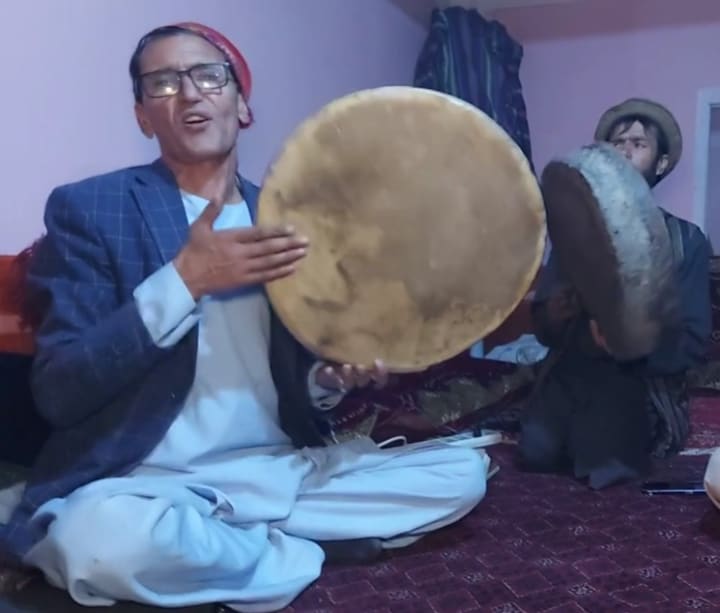
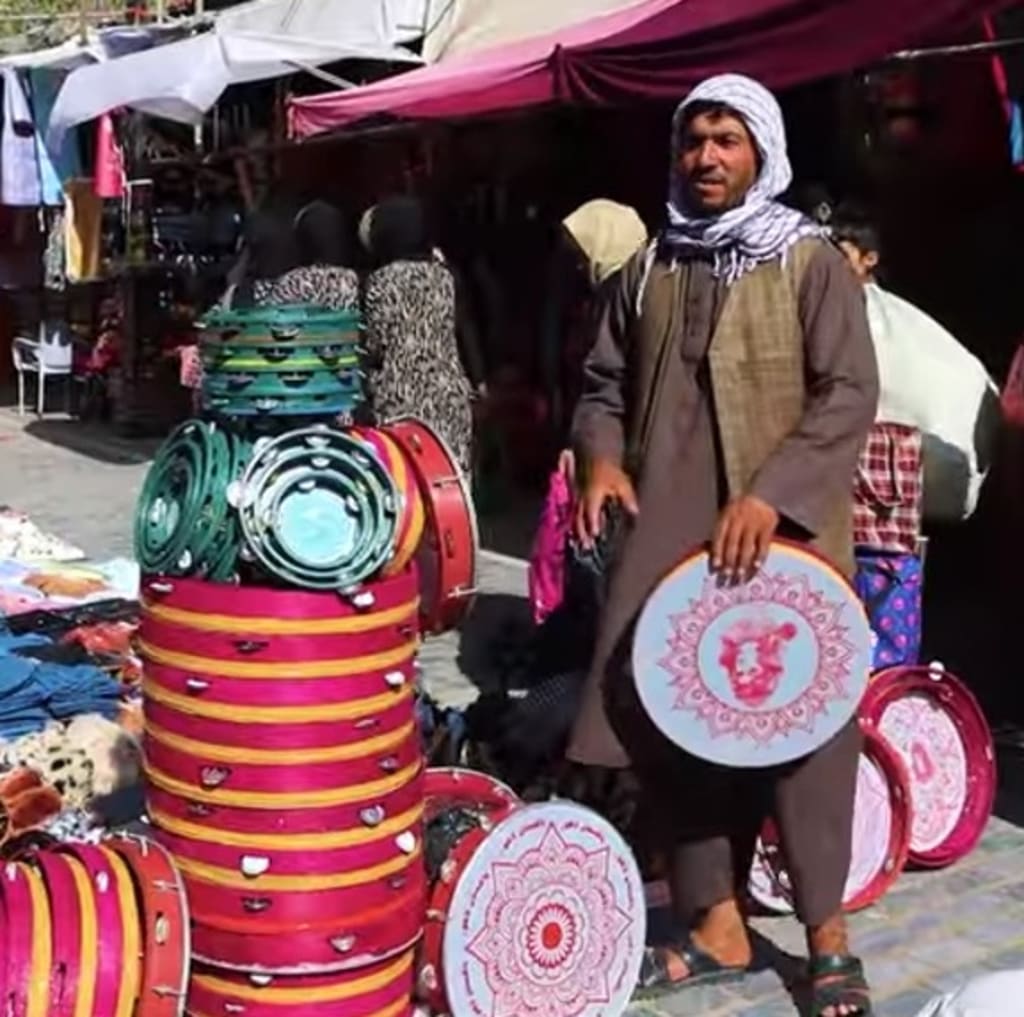
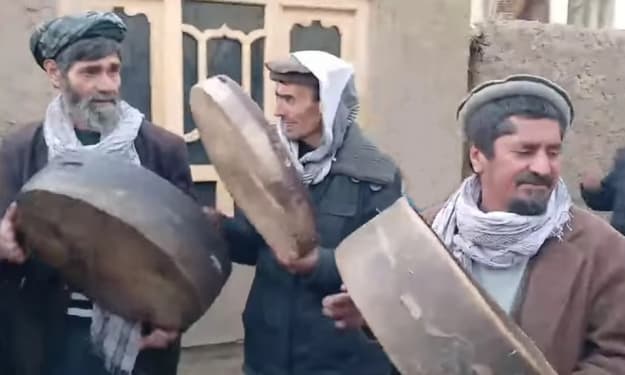
Therefore, the permissibility of playing the Daf was not only a religious or doctrinal matter but also held a special place in creating joy among the public, especially during weddings and village festivals. This wide-ranging role made the Daf a central instrument in the cultural and social life of Afghanistan, used across various regions and ethnic groups. For instance, it has been played during qasida-recitations in Badakhshan, maqam-singing in Panjshir, in the Gwati music of Balochistan, and in mystical and khanqah ceremonies in the provinces of Kabul, Kandahar, Nangarhar, Takhar, Faryab, Sar-e Pol, Zabul, Badghis, Ghor, Herat, and many other regions of the country. Given this historical and religious background, the Daf in Afghanistan continues to act as a traditional instrument symbolizing resistance against musical restrictions and prohibitions. In recent years, the use of the Daf has become more widespread, playing a prominent role in weddings, local festivals, and cultural gatherings, thereby helping preserve the musical and cultural identity of the Afghan people. This instrument is not merely an artistic tool but also a symbol of cultural resistance. In some provinces such as Badakhshan and Nuristan, the nai (flute) is sometimes played alongside the Daf during wedding ceremonies. This combination of instruments reflects the richness of Afghanistan’s indigenous music and the people’s determination to preserve cultural traditions in the face of restrictions. While many forms of music and instruments now exist underground, the Daf has come to be recognized as a symbol of musical and cultural resistance. Its continued use in joyous and traditional celebrations demonstrates the power of this instrument in sustaining social vitality and collective psychology. Songs and melodies once performed with the rabab, tanbur, ghichak, and other local instruments are now continued with the Daf, which has become a guardian of this cultural heritage. Women also play a significant role in preserving and continuing the tradition of the Daf. In the hands of Afghan girls, the Daf is a symbol of strength, faith, and cultural identity. In their homes and small gatherings, women keep joy and hope alive through the sound of the Daf, while simultaneously defending their cultural identity. In villages and cities alike, women play the Daf at weddings, births, and traditional celebrations such as New Year and Eid. This broad social function has made the Daf one of the key instruments in the everyday and communal life of Afghan society. The Daf in many regions of the country is crafted from locally available natural materials, and each region has its own distinctive features in the making and playing of this instrument. In major cities such as Kabul, Balkh, Herat, and Kandahar, Dafs are sold in markets, with local vendors offering them to enthusiasts. Interestingly, there are no serious restrictions against this instrument, which has allowed the Daf to remain accessible to the public and continuously present in their cultural life. Today, the Daf is not only a musical instrument but also part of the intangible cultural heritage of the Afghan people and the broader Islamic world. Due to its historical, spiritual, and social importance, it has managed to preserve Afghanistan’s cultural and artistic identity in the face of political and social pressures, connecting new generations with the values of traditional and spiritual music. In summary, the persistence of the Daf during periods of music prohibition reflects the deep connection of this instrument with everyday life, social occasions, religious rituals, and the native culture of the Afghan people. The Daf is not only the voice of cultural and spiritual resistance but also a means of sustaining the social and psychological life of the community amid difficult circumstances and severe cultural restrictions.
Conclusion
This study demonstrated that the Daf in Afghanistan has functioned beyond being a mere musical instrument and has become a prominent symbol of cultural, social, and spiritual resistance. Historical and narrative analyses revealed that the Daf, since the early days of Islam and with the approval of the Prophet and his Companions—particularly in joyous occasions and social celebrations—held religious legitimacy. This religious legitimacy, together with the special position of the Daf in mystical and ritual gatherings, enabled this instrument to endure through the centuries and, even after the return of the Taliban in 2021 and the imposition of extensive musical restrictions and prohibitions, to remain a lasting symbol of cultural identity. The research findings indicate that the Daf, through its dual role in preserving spiritual values and fulfilling social functions, has maintained a continuous presence in wedding ceremonies, rural festivities, and mystical gatherings even under challenging cultural conditions. Moreover, the active participation of women in playing and perpetuating the use of the Daf, especially within homes and small gatherings, highlights the significance of their role in preserving and transmitting cultural and artistic heritage. In addition, the Daf has to some extent served as an effective substitute for certain local instruments whose use has declined or moved underground due to restrictive pressures. From this perspective, the Daf not only contributes to the preservation of traditional and indigenous music but also plays a vital role in healing the collective psyche, strengthening cultural identity, and fostering social cohesion within local communities. Ultimately, it can be concluded that the Daf, with its historical background and religious legitimacy, stands as a remarkable example of cultural and artistic resilience under conditions of restriction and prohibition. The findings of this study emphasize the importance of paying attention to intangible musical and cultural heritage and demonstrate that music—especially instruments such as the Daf—can serve as an effective means of preserving identity, promoting cultural resistance, and enhancing social cohesion in societies under political or cultural pressure.
References
Al-Kanadi, Abu Bilaal Mustafa. (1988). The Islamic Ruling on Music and Singing in Light of the Qur’ān, the Sunnah, and the Consensus of Our Pious Predecessors. https://d1.islamhouse.com/data/en/ih_books/single/en_Music_and_Singing.pdf?utm_source=chatgpt.com
Ibn Adam, Shaykh Muhammad. (2017). Music and Singing: A Detailed Fatwa. https://www.central-mosque.com/index.php/General-Fiqh/music-and-singing-a-detailed-fatwa.html.
Goibnazarov, Chorshanbe. (2023). The Daf and Its Role in the Badakhshan Region of Tajikistan. Cultural Heritage and Humanities Unit’s Research Paper #20. University of Central Asia. Pp 1-18.
Kallen, Hussain Randathani. (2023). Legality of music in Islam - debates in Malabar Islam. https://indoislamic.org/wp-content/uploads/2023/12/LEGALITY_OF_MUSIC_IN_ISLAM_ DEBATES_IN_MA.pdf?utm_source=chatgpt.com
Nasehpour, Peyman. (2025). Names of Frame Drums. https://www.nasehpour.com/names-frame-drums ?utm source=chatgpt.com
Swami, Prajnanananda. (1973). Music of the Nations. Calcutta: Munshiram Manoharlal Publishers.
Vanleene, Alexandra. (2019). Differences and similarities in Gandhāran art production: the case of the modelling school of Haḍḍa (Afghanistan). Archaeopress Publishing LTD. Summertown Pavilion 18-24 Middle Way Summertown Oxford OX2 7LG. pp 143-163.
About the Creator
Prof. Islamuddin Feroz
Greetings and welcome to all friends and enthusiasts of Afghan culture, arts, and music!
I am Islamuddin Feroz, former Head and Professor of the Department of Music at the Faculty of Fine Arts, University of Kabul.
Keep reading
More stories from Prof. Islamuddin Feroz and writers in Beat and other communities.
Daf in the Music and Culture of Afghanistan: From Pre-Islamic Rituals to Sufi Gatherings and Festive Celebrations
Daf in the Music and Culture of Afghanistan: From Pre-Islamic Rituals to Sufi Gatherings and Festive Celebrations Author: Islamuddin Feroz, Former Professor, Department of Music, Faculty of Fine Arts, University of Kabul
By Prof. Islamuddin Feroz3 months ago in Beat
Ludacris and Nelly draw backlash over bookings at MAGA-coded music festival
Ludacris and Nelly headlining a mostly right-wing event is good for them. It’s also great for the genre of hip hop. The two rap veterans have showcased their talents on other stages. Why can’t they perform for mostly MAGA folks and grab that bag?
By Skyler Saunders5 days ago in Beat


Comments
There are no comments for this story
Be the first to respond and start the conversation.