
🎶 Why Every Generation Thinks Their Music Was the Best
Nostalgia, Psychology, and the Power of Music Memories


Introduction: "They Just Don’t Make Music Like They Used To!"
Have you ever heard someone say, “Music was so much better in my day”?
Maybe your parents insist that the 70s were the golden age of rock.
Maybe you believe the 90s were unbeatable with grunge, hip-hop, and R&B.
Or maybe you think the 2000s had the perfect mix of pop and alternative hits.
But here’s the truth: Every generation thinks their music was the best.
Why? Is music really getting worse, or are we just biased toward the songs we grew up with? Let’s dive into the science of nostalgia, psychology, and why music from our youth always feels superior.
1. The Nostalgia Effect: Why Our Brains Love "Old" Music
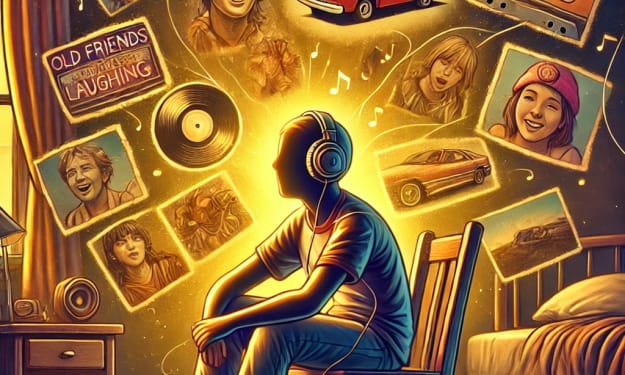
When we hear a song from our past, something special happens: memories flood back instantly. This is called the reminiscence bump—a psychological effect where music from our teenage and early adult years becomes deeply embedded in our emotions.
🎵 Music + Emotion = Permanent Memory
Studies show that the brain links music to emotions more strongly than other memories.
The songs we listened to between ages 12-22 are stored with intense emotional connections.
🎵 Why This Happens
During our teen years, we experience first loves, heartbreaks, friendships, and self-discovery.
The music playing in the background becomes part of those moments.
As we age, we compare new music to those “golden” years—and new songs rarely feel as impactful.
💡 This is why people in their 30s, 40s, and beyond often say, “Today’s music just isn’t as good as what I grew up with.”
2. Is Music Actually Getting Worse? (Or Is It Just Us?)
Many people argue that modern music lacks depth, saying things like:
“Lyrics used to mean something!”
“It’s all just repetitive beats now.”
“Auto-Tune has ruined everything.”
But is this really true? Let’s look at the facts.
🎼 Yes, Popular Music Has Changed
Studies show that modern pop songs are more repetitive and contain simpler melodies than older songs.
Lyrics have become shorter and more focused on rhythm rather than storytelling.
The loudness of songs (compression) has increased, making them sound more uniform.
BUT...
🎼 New Music Isn’t "Worse"—It’s Just Different
Every generation criticized the next one’s music.
In the 50s, adults called rock 'n' roll "the devil’s music."
In the 90s, grunge and hip-hop were seen as "too rebellious."
Today’s pop and rap are criticized, just like every genre before them.
💡 Music evolves with culture, and what sounds “bad” today will be nostalgic for someone in 20 years.
3. The Science of the "Golden Era" Effect
🔬 Our Brains Stop Seeking New Music Around Age 30
A study from Deezer found that most people stop discovering new music at age 33.
After this age, we naturally prefer familiarity over novelty.
🔬 Songs We Heard When Young Feel More "Real"
Older music used live instruments, while modern pop relies on digital production.
This makes older generations feel that today’s music lacks authenticity.
🔬 Music Reflects Life Stages
When we’re young, music represents freedom, rebellion, and discovery.
As we age, we associate music with responsibility and adulthood—so it feels less exciting.
💡 This is why a 40-year-old feels more connected to a song from their teens than a brand-new hit.
4. Each Generation Had Its Own "Golden Age"
📻 1950s-60s: The Birth of Rock & Roll
Elvis, The Beatles, and The Rolling Stones defined the era of rebellion.
📀 1970s: The Rise of Classic Rock & Disco
Queen, Led Zeppelin, and Fleetwood Mac shaped rock history.
Disco brought dance music into the mainstream.
🎸 1980s: The Explosion of Pop & Metal
Michael Jackson, Madonna, and Prince dominated pop culture.
Heavy metal and glam rock thrived with bands like Metallica and Bon Jovi.
🎤 1990s: The Era of Alternative, Hip-Hop, and R&B
Nirvana’s grunge revolution changed rock forever.
Hip-hop legends like Tupac and Biggie defined rap.
R&B and pop acts like TLC and Britney Spears ruled the charts.
💽 2000s: The Digital Music Revolution
Eminem, Beyoncé, and Linkin Park shaped the millennial sound.
iPods and MP3s changed how we listened to music.
🎧 2010s-Present: Streaming & Global Pop
Streaming services like Spotify & Apple Music changed everything.
K-pop, EDM, and viral TikTok songs dominate today’s charts.
💡 Each era brought something new—but every generation believes THEIR era was the golden age.
5. So, Who Really Had the Best Music?
The truth? There is no single “best” era.
Music is deeply personal, and its impact depends on when and how we experienced it.
👶 If you’re young today → You’ll feel nostalgic about today’s hits in 20 years.
👴 If you’re older → You’ll probably never love modern music the way you loved your teenage favorites.
The best music is the music that made you feel something—and that will always be different for everyone.
Final Thoughts: The Songs That Shape Our Lives
Music is more than just sound—it’s a time machine.
A song from your past can instantly transport you back to a moment, a feeling, a memory.
Whether it’s rock, pop, hip-hop, or electronic, every generation feels connected to their soundtrack.
So next time someone says, “Music was better back in my day,” remember:
💡 Music wasn’t better—it was just YOUR time.
And one day, Gen Z will say the same thing about today’s hits. 🎶
About the Creator
Ahmet Kıvanç Demirkıran
As a technology and innovation enthusiast, I aim to bring fresh perspectives to my readers, drawing from my experience.
Keep reading
More stories from Ahmet Kıvanç Demirkıran and writers in Beat and other communities.
Why Nostalgic Music Feels So Good
Introduction: That One Song That Takes You Back You’re driving late at night when a familiar tune comes on. In an instant, you’re transported—back to summer nights, back to old friendships, back to who you were when that song was your song.
By Ahmet Kıvanç Demirkıran12 months ago in Beat
Review of 'Man on the Run'
My wife and I saw Man on the Run, a nearly 2-hour documentary on Amazon Prime, about Wings, Paul McCartney's group that flew around the world from shortly after The Beatles broke up in early 1970 to shortly after John Lennon was murdered at the end of 1980, making a Beatles reunion forever impossible.
By Paul Levinson3 days ago in Beat
50 CENT FIRES BACK 50 Cent Shuts Down T.I.’s Son King Harris After He Posted Alleged Paperwork: "I Ain't Never Told On No N**ga In My Life!"
50 cent claims he’s never snitched on anyone. What a pity. Snitching is part of the ecosystem that sustains society. Those nosy old women, Karens some of them, hold this world together like glue. Those boys on the playground who play tattletale ensure that order is kept. The responsible young men who see a four-year-old gunned down in the street and know who the killer(s) is should be lauded and applauded.
By Skyler Saunders2 days ago in Beat
When the Shelter Closes
Across the street from my house, a man slept under a tree, his dog by his side. My first, naive thought: he must be traveling through. But he kept coming back, often sleeping there during the day. Then it hit me—that person might not have a home.
By Bride of Sound6 days ago in Humans


Comments (1)
Nice work.. I really enjoyed this one . Keep up the good work.