
Why Nostalgic Music Feels So Good
How the Songs of Our Past Stay with Us Forever

Introduction: That One Song That Takes You Back
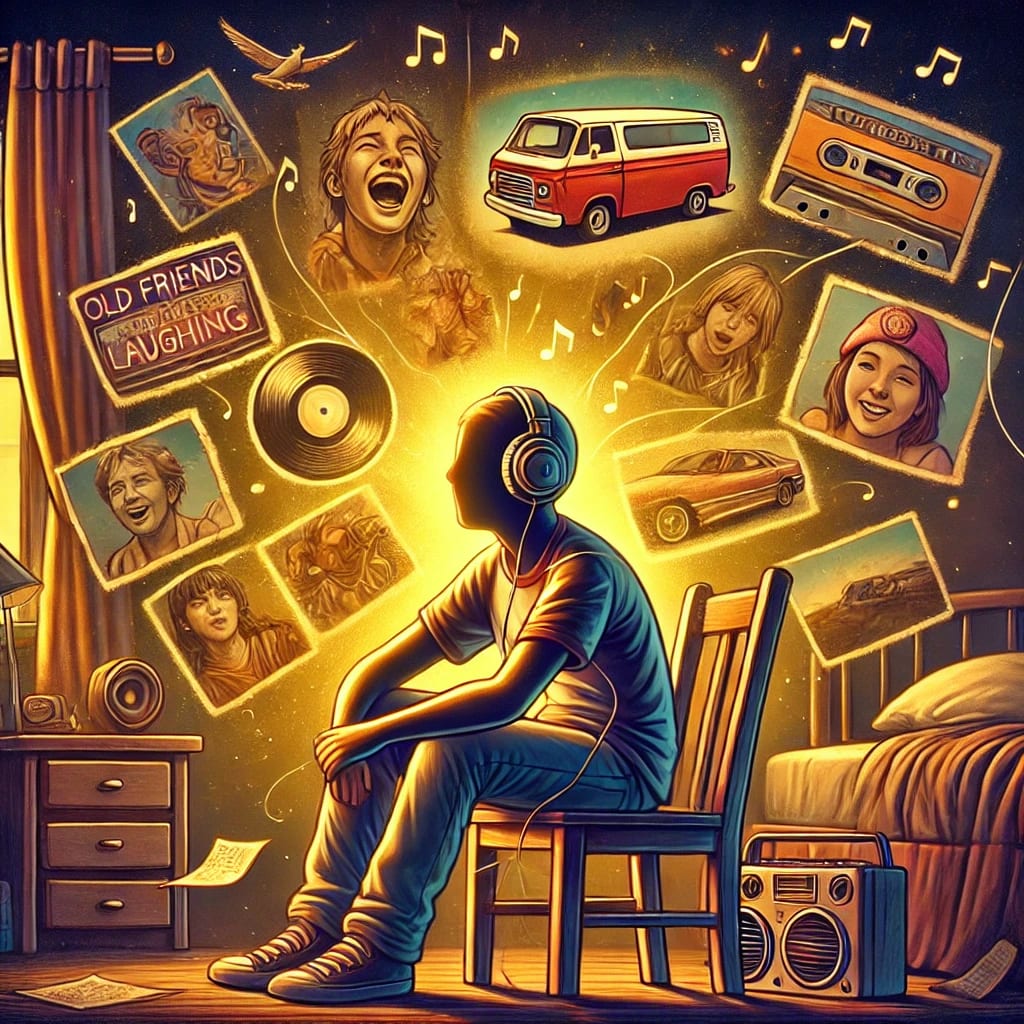
You’re driving late at night when a familiar tune comes on. In an instant, you’re transported—back to summer nights, back to old friendships, back to who you were when that song was your song.
Why does old music feel different? Why do we swear that the music of our youth was the best, while newer songs just don’t hit the same? Is it just nostalgia, or is there something deeper happening in our brains?
Science suggests that the connection between music and memory isn’t just sentimental—it’s biological. This article explores why certain songs stay with us forever, why our teenage anthems feel unbeatable, and why no matter how many new artists emerge, nothing will ever replace that one song.
1. The Brain Chemistry Behind Nostalgic Music
Music is more than just sound—it’s emotion, memory, and identity. When we hear a song we love, our brain releases dopamine, the same chemical linked to pleasure and reward.
But here’s where it gets interesting: Research shows that the music we listen to in our teens and early twenties creates a stronger emotional bond than any music we hear later in life.
Why? Because during this time:
✅ Our brains are still developing, making emotional experiences feel more intense.
✅ We’re forming our sense of identity, and music becomes part of that process.
✅ The nostalgia effect: Hearing an old song activates the hippocampus, the part of the brain responsible for memory and emotion.
Simply put, the music we grow up with isn’t just sound—it’s wired into who we are.
2. The “Reminiscence Bump”: Why Music from Our Youth Stays Forever
Psychologists call it the reminiscence bump—the idea that we remember events from our teenage years and early twenties more vividly than any other time in our lives.
That’s why when someone plays a song from your high school days, it feels like you’re stepping into a time machine. Your brain isn’t just hearing the music—it’s reliving the emotions, the friendships, the heartbreaks, and the unforgettable moments tied to that song.
This is also why:
🎵 People in their 30s, 40s, and beyond still listen to the music they loved as teenagers.
🎵 Every generation believes their music was “the best.”
🎵 New music struggles to make the same deep emotional impact.
It’s not just preference—it’s psychology.
3. The Science of “They Don’t Make Music Like They Used To”
Every generation says it: “Music today just isn’t as good.” But is that true, or are we just wired to prefer what’s familiar?
Here’s what the science says:
✅ Familiarity Bias: We like what we know. Older songs feel comforting because we’ve heard them hundreds of times.
✅ Cultural Attachment: Music is tied to big life moments—first love, road trips, heartbreaks. Modern songs don’t have the same history with us.
✅ Musical Simplicity: Studies show that pop music has become more repetitive, using simpler melodies and lyrics, which may make it feel less “authentic” compared to older hits.
But let’s be honest—every generation has had bad music too. The difference? We only remember the classics, not the forgettable songs that faded away.
4. The Timeless Power of a Good Song
Some songs never die. Whether you grew up in the ‘70s, ‘90s, or 2010s, certain tracks continue to resonate across generations.
🎸 Queen’s “Bohemian Rhapsody” – Still a cultural anthem 50 years later.
🎤 Michael Jackson’s “Billie Jean” – Timeless groove, still fills dance floors.
🎶 Adele’s “Someone Like You” – Proof that raw emotion in music never fades.
What do these songs have in common? They aren’t just catchy—they tap into something universal, emotional, and timeless.
5. Can New Music Ever Compete?
The good news? Yes! While nostalgia makes older music feel unbeatable, new songs can still create deep connections—but only if they become part of our life experiences.
✅ If a song plays during a big life moment, it sticks with us.
✅ If we actively engage with new music (concerts, deep listening), it forms stronger memories.
✅ If an artist truly connects emotionally, their music transcends generations.
So while we may always have a special love for our era of music, the songs of today could be someone else’s “greatest hits” in the making.
Final Thoughts: The Songs That Shape Us
Music isn’t just something we listen to—it’s something we feel, remember, and carry with us for a lifetime.
So the next time someone tells you “Music was better back in my day”, smile and know:
It’s not just nostalgia. It’s science. It’s memory. It’s the soundtrack of your life.
About the Creator
Ahmet Kıvanç Demirkıran
As a technology and innovation enthusiast, I aim to bring fresh perspectives to my readers, drawing from my experience.
Keep reading
More stories from Ahmet Kıvanç Demirkıran and writers in Beat and other communities.
Review of 'Man on the Run'
My wife and I saw Man on the Run, a nearly 2-hour documentary on Amazon Prime, about Wings, Paul McCartney's group that flew around the world from shortly after The Beatles broke up in early 1970 to shortly after John Lennon was murdered at the end of 1980, making a Beatles reunion forever impossible.
By Paul Levinson3 days ago in Beat
MAYLIE?
MAYLIE (born December 2, 2004) is an international pop artist and songwriter, known as Somelsy on Instagram. Born into a musical family and raised in a quiet town near the capital, she was immersed in music from infancy. As the granddaughter of a guitarist from a vocal-instrumental ensemble, she began experimenting with the guitar and synthesizer even before she could speak. It was her grandpa who instilled in her a lifelong love for music. Her Instagram account is entirely dedicated to her grandfather's guitar collection. The collection includes about 10 guitars of various ages, even from the 1980s.
By Alex Croft2 days ago in Beat




Comments (2)
write it nice and image is best match with it
Music can be anything we want it to be for every mood there is a song for every song we thrive ✍️🏆🌺🌺🌺