
Why a Community-Driven Music School Can Change the Way People Learn Music
Community-focused learning reminds students that music grows strongest when it is shared.
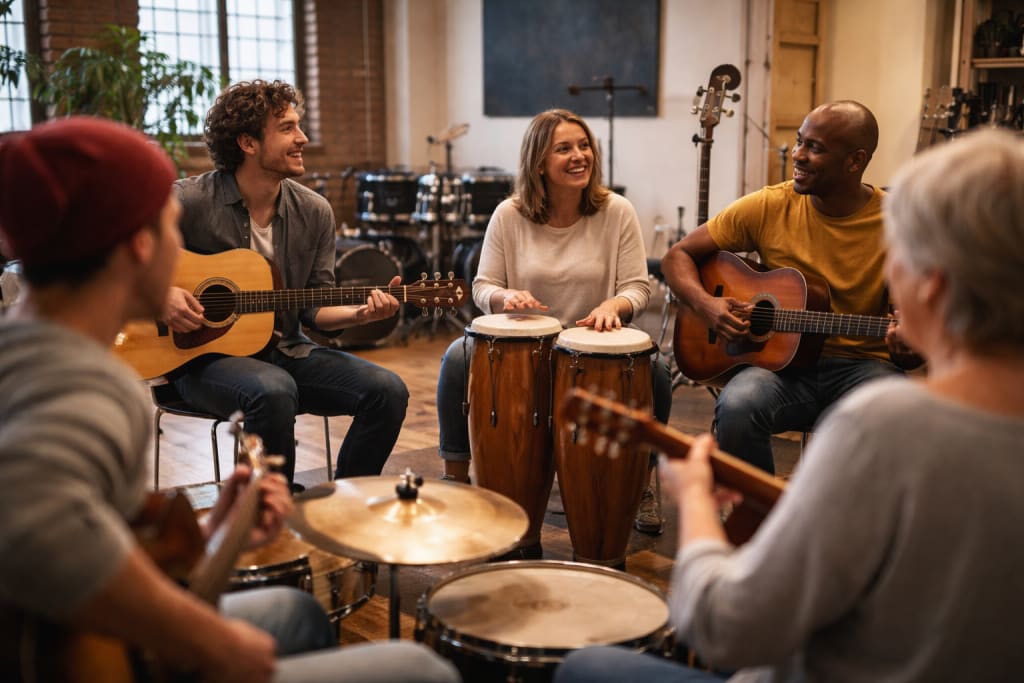
Learning music has never existed in a vacuum. Long before apps, private studios, or online tutorials, music developed through shared spaces where people listened, copied, adapted, and played together. Yet many modern learners still approach music as a solitary pursuit, practicing alone and measuring progress in isolation. A community-driven music school offers a different pathway, one that reflects how music has always been learned and shared.
This approach does not reject individual practice. Instead, it places learning within a social framework where observation, collaboration, and shared momentum shape how skills develop. For many students, especially adults returning to music or beginners unsure where to start, that shift may be transformative.
Music Learning Beyond the Solo Model
Solo learning suits some personalities, but it does not suit everyone. Practicing alone may create technical improvement, yet it often lacks context. Without seeing how others approach rhythm, timing, or expression, students may struggle to connect technique with real musical outcomes.
A community-driven music school reframes learning as participation rather than performance. Students learn not only from instructors but also from each other. Watching a peer work through a difficult passage or recover from a mistake normalizes the learning process. Progress becomes visible, relatable, and human.
This shared experience aligns closely with broader creative conversations often explored on platforms such as Vocal Media, where collaboration and personal growth frequently intersect. Creative skills, including music, rarely exist in isolation from the people around them.
The Limits of Learning Music Alone
Learning music independently may feel efficient, but it often introduces hidden barriers.
Motivation drift
Without regular interaction, practice routines may fade. A missed session becomes easier to justify when no one else is involved.
Narrow feedback loops
Self-assessment is limited. Even with recordings, learners may miss timing issues, tone inconsistencies, or stylistic habits that others would notice immediately.
Emotional disconnect
Music is expressive by nature. Learning in isolation may remove the emotional feedback that comes from playing for or with others.
Articles on creative motivation, such as those found in Vocal Media’s creator-focused content at https://shopping-feedback.today/creators%3C/a%3E, often highlight how shared accountability supports consistency across artistic disciplines. Music learning is no different.
What “Community-Driven” Means in a Music School
Confidence Grows Faster in Shared Musical Spaces
Vocal Media’s arts and culture discussions at https://shopping-feedback.today/arts%3C/a%3E frequently explore how confidence and creativity reinforce each other across creative fields. Music education fits naturally into that conversation.
Real-World Skills Developed Inside a Modern Music School
- Keep time with others rather than a metronome alone
- Adjust volume and tone within a group
- Recover smoothly when something goes wrong
Some contemporary programs, such as music school, The Sound Lab, emphasize collaborative learning environments that reflect how musicians actually play outside lesson rooms. In these settings, technical development and musical awareness progress side by side, grounded in interaction rather than repetition alone.
Why Community Matters for Adult Learners
Adult learners often bring enthusiasm paired with hesitation. Many worry they have started too late or fear judgement for making mistakes. Community-based learning helps dismantle these concerns.
Seeing peers at different stages reinforces that progress is personal, not comparative. Social commitment also strengthens routine. Attending sessions becomes part of a shared schedule rather than an isolated task that may be postponed.
This sense of belonging often keeps adult learners engaged longer, allowing skills to develop steadily rather than in short bursts of motivation.
Long-Term Impact of Community-Focused Music Education
When learning happens within a group, outcomes often extend beyond technical ability.
- Stronger retention, as students feel connected to the process
- Greater emotional attachment to music as a shared language
- Ongoing creative engagement, even after formal lessons end
Music becomes something students do with others, not something they practice alone. That distinction shapes how long music remains part of their lives.
Music Has Always Been Shared
At its core, music is communal. From early folk traditions to modern ensembles, it has thrived in shared spaces. A community-driven music school reconnects learners with that foundation, offering an environment where listening, adapting, and growing together feel natural.
For many students, this approach does not simply teach music. It reframes how learning itself is experienced.
About the Creator
Keep reading
More stories from Rochelle Martinez and writers in Beat and other communities.
Why Ballet Dance Classes Are More Than Just Movement: Building Confidence from the Ground Up
When most people think of ballet, images of tutus, point shoes, and stage lights often come to mind. But ballet dance classes offer far more than what’s seen on stage. They are structured, disciplined, and deeply empowering environments where confidence, self-expression, and resilience are cultivated from the ground up. Whether you’re a child stepping into a studio for the first time or an adult returning to dance after years away, ballet may quietly transform your life in unexpected ways.
By Rochelle Martinez9 months ago in Beat
Ludacris and Nelly draw backlash over bookings at MAGA-coded music festival
Ludacris and Nelly headlining a mostly right-wing event is good for them. It’s also great for the genre of hip hop. The two rap veterans have showcased their talents on other stages. Why can’t they perform for mostly MAGA folks and grab that bag?
By Skyler Saunders22 days ago in Beat
The Battle for Ozzfest
The Battle for Ozzfest was a brainchild of Ozzy and Sharon and MTV. The idea of the show was it was a competition show where Metal bands from around the country as well as the world who were chosen to compete in games and challenges and the ultimate prize was the winning band would get a spot on the MainStage at Ozzfest.
By Revista Miko2 days ago in Beat


Comments
There are no comments for this story
Be the first to respond and start the conversation.