
When Tech Outplays Talent
We start to forget what real art is

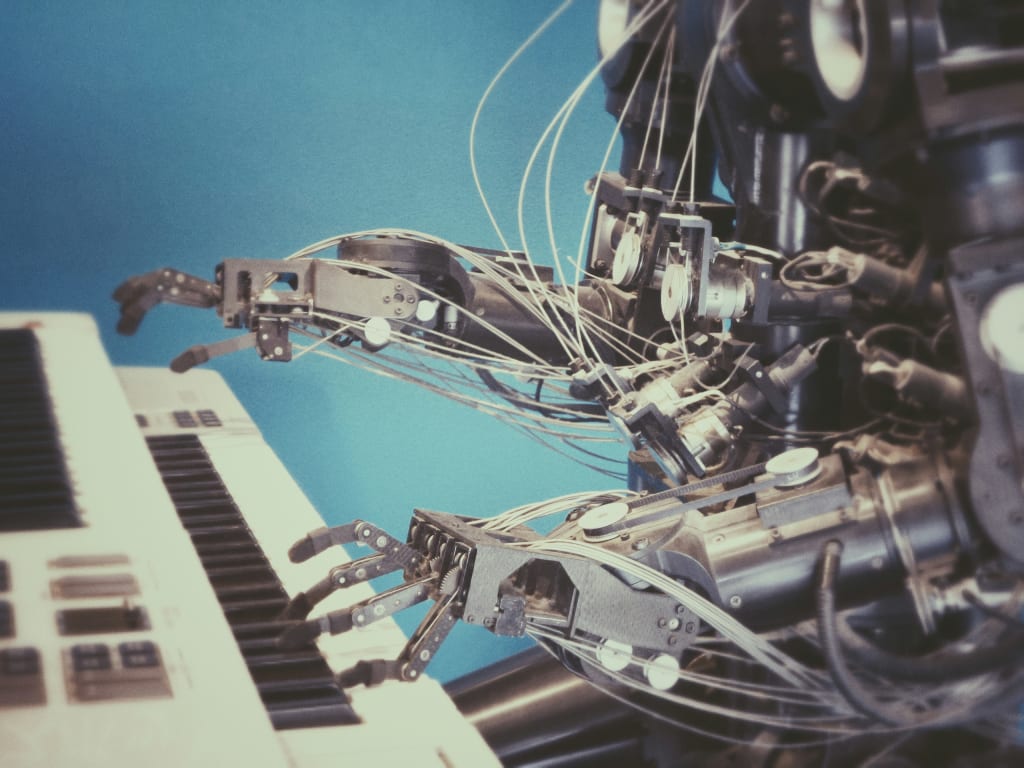
We live in a world of technology that has been advancing so rapidly that many people find it hard to keep up with the pace. What was once considered futuristic has now become our daily reality. It’s gotten to the point where anyone can become a musical artist by relying on autotune, pre-recordings, and great producers. With just a laptop, a microphone, and some editing software, a person can produce a track that sounds polished and professional. We even have AI making music and writing songs — something that one could never have imagined before. Artificial intelligence can now analyze popular hits, imitate specific genres, and even replicate the style of famous artists, blurring the line between human creativity and machine precision.
Many people find it rather bland since there is no human feeling to it. Despite the technical perfection of AI-generated music, it often lacks the emotion, imperfection, and spontaneity that make a piece memorable. Yet, with ever-changing and constantly improving technology, real music runs the risk of being overthrown. Now that anyone is able to create music, the scene has become extremely competitive. The industry is saturated with content, and it’s becoming increasingly difficult for genuine artists to stand out unless they already have a strong social media presence or marketing team behind them.
We have schools and colleges training performers for years to play and make music — but is it really necessary anymore? The topic of work prospects concerns me a lot as a music college student. I often wonder what the future holds for us. I feel that progress is slowly narrowing the profession down to one thing that can’t yet be done by machines: teaching. The world still needs passionate educators who can pass down the emotional and technical aspects of musicianship — something no algorithm can fully replicate. However, the uncertainty surrounding career paths makes it difficult not to question whether the traditional route is still worth it.
In the past, we had to study hard to master our skills. Every step forward felt earned and meaningful. Now, one can pick an easier way , even though I think it takes away the enjoyment and pride in achieving every little step. Unfortunately, the educational system is not open to change, especially in some countries. This often leads to professionals being forced to play in local bars or teach private lessons just to make ends meet because we aren’t being taught even the basics of production and promotion. Instead, we get a lot of outdated theoretical material that has little to do with the practical application of our skills. A modern musician needs to know how to record, produce, and market their music, yet these essential skills are often ignored in formal education.
Even though technological inventions can often be a great help to musicians, it’s still about either immense work or great talent behind it. Times change, and if you were living at the beginning of the 20th century, there would have been no chance of you even being considered to study music without being gifted. The bar has been lowered over time, and the requirements of many schools and colleges have been altered because very few people can meet such high standards — yet institutions still have to operate.
Even though that may sound a bit extreme, back then there was simply no way to artificially improve one’s abilities, so musicians had to be naturally skilled to perform. Today, we’re not expected to be gifted, but it’s still vital to learn your instrument to the level where you can truly perform your music — something that now, ironically, often seems incredible when it shouldn’t. A live performance that is raw, emotional, and authentic has become something rare and precious, despite being the very essence of music.
It’s not entirely the fault of technology, but also of the business side of the industry, which makes it nearly impossible for average people with great music to get recognized. However, that’s something we, as the audience, can influence. We should encourage genuine musicians — a phenomenon that’s becoming rarer each day — and learn to distinguish the difference. Supporting real artistry means valuing depth over popularity, and emotion over perfection.
I still believe that everyone who is willing to contribute to the music world deserves to have a voice, regardless of their abilities. But we should draw a line between a celebrity and a musician — and not put them in the same line. One may be famous for image and marketing, while the other creates for expression and connection. Technology will continue to evolve, but as long as there are people who value true artistry, real music will never disappear completely.
About the Creator
Keep reading
More stories from Daria Lysenko and writers in Beat and other communities.
Stuck for inspiration? This will help! Tips for preventing burnouts on your creative journey
As creators we tend to be dependent on our inspiration. Like water to a plant it keeps us alive and productive, however it usually comes in waves and you never know where it's gonna find you. Ironically, I've been finding myself writing down the ideas so that I will not forget them in some extremely inconvenient situations. However, this magical resource can vanish as suddenly is it comes and in times like this it may seem like youre never going to get back on track and come up with something amazing. I often can't help but feel completely worthless in times like that. Over time, I have come up with some tips that might be very helpful when youre struggling to catch that feeling.
By Daria Lysenko7 months ago in Art
The Tango Connection
I suppose I've become a writer so I wouldn't bore everyone to death telling them my stories. Reading them is reading. Not the same. There's rhythm. And timing and, most importantly, drama and suspense. Unless you have tremendous magnetism and an undeniable stage presence, there's no way you can engage an audience the way you can by writing your story. That's my opinion.
By Rene Volpi 28 days ago in Beat
The Texas Jerusalem Crossroads
In 2001 Lift To Experience released their debut album “The Texas Jerusalem Crossroads”. It’s playing as I write this. I read a review of the album in some magazine. It was album of the week or month but was filled with superlatives about the album.
By Mike Singleton 💜 Mikeydred 4 days ago in Beat
TUS NUA - ch 53
TUS NUA – ch 53 New Beginnings – Mia and Midnight (*)(*)(*) Finola knew Ali’s brother-in-law needed to put his mind at rest. She fed her arm through his and led him outside. “We’ll sit here. If you like, I can put a block around us so our conversation will be private.”
By Margaret Brennan6 days ago in Fiction


Comments
There are no comments for this story
Be the first to respond and start the conversation.