
Tracing Travis Scott’s Odyssey Through Sound and Spectacle
A personal reflection on how Travis Scott’s ever-evolving sonic universe reshaped the boundaries between music, myth, and brand identity.

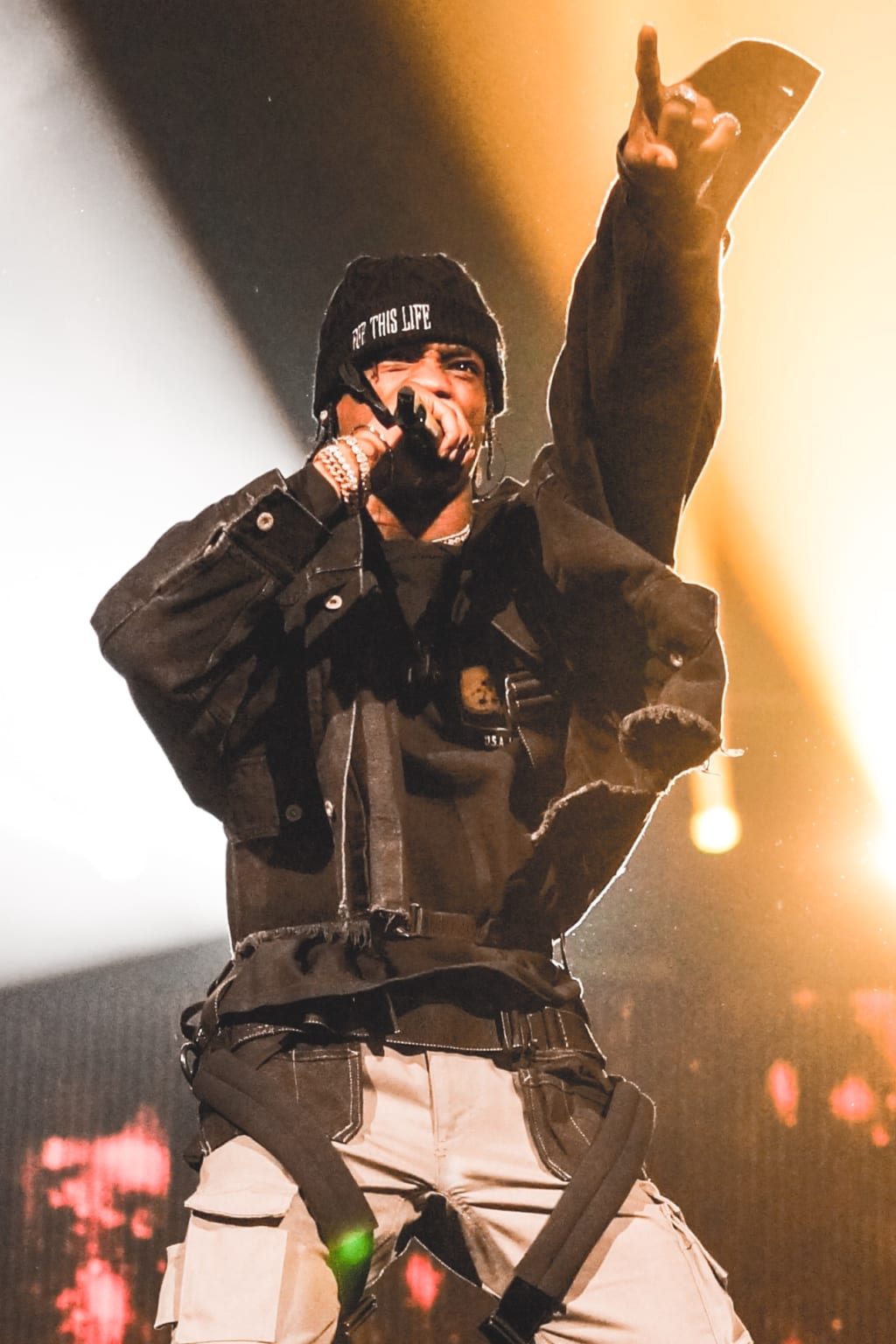
Travis Scott has always struck me as an artist who treats the world like a sandbox—a place to build immersive worlds rather than simply release songs. I don’t listen to him for typical reasons of melody or lyricism. I listen because it feels like traveling through a constructed mythology, a place where auto-tuned laments echo through colossal structures of bass and reverb. His ‘odyssey,’ as I see it, isn’t just musical; it’s architectural. He builds cathedrals of sound that demand both awe and submission.
When I first encountered his music, I felt disoriented. It was around the Rodeo era, when his sound carried that paradoxical mix of exhaustion and ambition—an anthem for late nights and looming futures. There was something cinematic in its chaos. Travis didn’t just rap; he engineered experiences. Every texture felt intentional—the thudding low end like the pulse of a restless city, the ad-libs echoing like ghosts trapped inside luxury. It was music for people trying to ascend, but unsure what that meant anymore.
Over time, I began to understand that his entire career operates under the logic of a modern odyssey. He moves through phases—Days Before Rodeo as the prelude, Astroworld as the homecoming, Utopia as a promised perfection that remains fundamentally unreachable. Each chapter feels like a psychological travelogue where he sails into fame’s seductive waters only to find more isolation there. What fascinates me most isn’t how Travis reinvents his sound, but how he reinvents the stage as an existential map.
When he turned concerts into immersive rides or augmented reality spectacles, it signaled something beyond entertainment. It was a declaration that experience itself was now the product. Watching him suspended mid-air, crowds roaring below, I realized he was extending the logic of branding into a sort of spatial art form. The lines between architecture and performance blurred. It was overwhelming—sometimes grotesque—but never indifferent. That’s rare.
Yet, it’s impossible to talk about his artistic legacy without acknowledging the tragedy that shadowed it. The Astroworld Festival in 2021 marked the collision between artistic myth and real-life consequence. For many of us who had admired his ability to craft intensity, that night exposed the dangers of worshipping spectacle uncritically. Suddenly, the odyssey had a dark inversion—what happens when the pursuit of transcendent experience devours itself? It forced me, and likely Travis too, to confront how art designed to transcend reality can still be tethered to human fragility.
Since then, I’ve watched him wander in a different direction—a quieter recalibration cloaked in ambition. Utopia wasn’t an apology so much as a recalibration: a return to architecture after catastrophe. The album brims with grandeur but carries a self-awareness that his earlier work lacked. It’s more controlled, but also more knowingly performative. It feels as if he’s looking at his own myth from above, reconstructing it while still trapped inside it. That’s the paradox of his creativity—his genius stems from his restlessness, but that same restlessness consumes everything around him.
I think about Travis Scott less as a musician and more as a builder of atmosphere. He belongs to that lineage of artists—Bowie, Kanye, Björk—who treat identity as a shifting construct. His persona moves constantly: part designer, part prophet, part experiment. Sometimes it feels pretentious, sometimes visionary, but it never feels static. And in the world of disposable pop, that fluidity is radical in itself.
There’s also a generational element that fascinates me. His followers, largely digital natives, don’t perceive art as distinct from lifestyle anymore. The “Travis Scott brand” isn’t a byproduct—it is the art. Sneaker drops, fast food collaborations, virtual concerts—all part of the same immersive mythology. He’s an architect of monetized emotion. It’s easy to be cynical about that, but I see a strange honesty in it. Travis doesn’t pretend culture and commerce are separate; he stages their fusion unapologetically.
Still, I can’t help but wonder whether this odyssey ends in transformation or entrapment. Every attempt to build new worlds eventually risks becoming its own museum. Watching Travis now, I sense fatigue creeping through the spectacle—the same exhaustion that made him compelling in the first place. He’s still reaching for transcendence but increasingly aware that transcendence sells best when it never fully arrives.
Maybe that’s why I find his story so compelling: it mirrors our era’s contradictions. We build virtual utopias yet feel lonelier than ever. We chase aesthetic perfection while questioning authenticity’s very meaning. Travis Scott reflects those tensions in real time, sonically and visually. His odyssey isn’t heroic—it’s desperate, dazzling, sometimes disastrous—but it’s brutally honest about what it means to dream in the age of brands.
If mythology once helped people navigate chaos, Travis Scott’s art serves a similar function today. It offers coherence—even if that coherence is made of flashing lights, layered distortion, and capitalist surrealism. That’s his genius, his danger, and his inheritance. When I listen to him now, I no longer chase his utopia. Instead, I marvel at how uncomfortably human his pursuit has become. For all its digital sheen and alien bravado, his journey feels deeply mortal—a modern Odyssey disguised as a playlist.
About the Creator
Trend Vantage
Covering the latest trends across business, tech, and culture. From finance to futuristic innovations, delivering insights that keep you ahead of the curve. Stay tuned for what’s next!
Keep reading
More stories from Trend Vantage and writers in Beat and other communities.
What the Adam22 Fight Reveals About the New Entertainment Economy
I didn’t watch the Adam22 fight live. I caught it later, the same way most people do—with half a dozen phone screens looping the same angles, all underscored by shock, mockery, and edits made before the fighters had even caught their breath. What drew me in wasn’t the athleticism or even the controversy, but the emptiness that hung between each jab. The fight wasn’t really about fists—it was about content, and content always wins.
By Trend Vantage2 days ago in Beat
Ludacris and Nelly draw backlash over bookings at MAGA-coded music festival
Ludacris and Nelly headlining a mostly right-wing event is good for them. It’s also great for the genre of hip hop. The two rap veterans have showcased their talents on other stages. Why can’t they perform for mostly MAGA folks and grab that bag?
By Skyler Saunders11 days ago in Beat
The Path to Salvation
The late autumn evening air filled the monk's lungs, but it wasn't the season that chilled his bones. The heavy-handed presence of evil he had sensed upon entering the woods surrounding this mountain village had not bothered to conceal itself from him.
By Made in DNA4 days ago in Fiction



Comments
There are no comments for this story
Be the first to respond and start the conversation.