
The Songwriting Process
A beginners guide to making music for the world to hear.


So you've stumbled into the rabbit whole that is becoming a musical artist. Not just a musician. An artist. You're tired of playing "Stairway to Heaven" in Guitar Center, and Beethoven and Bach just aren't exciting you anymore. You want to make your mark on the music industry. Show the world your heart and scream it from the mountain tops!
I too was once ambitious like you, a song playing in my heart that I needed to get out for the world to hear. When I was getting started, I spent hours searching for songwriting techniques, the equipment I would need, and the business side of it all. It was a nightmare. Some people said I needed this, others said that, but no one gave me a step by step process on how to take the song in my heart, and put it online for people to enjoy.
I humbly take on the role as the wise sage who will guide you on this journey of expressing yourself in the form of music. (I will be using my song Blue Skies by Coleman Richards as an example.)
Step 1: Coming up with an idea

First things first, do you know an instrument? If not, take a few months to learn guitar, then come read this again. The real first step is coming up with an idea. It can be a feeling, an experience, or a phrase you heard. I tend to write songs about heart break, since that seems to be a common theme in my life. I have songs about the sinking feeling of a broken heart, that feels like I'm drowning. I have songs about specific nights, either fighting or reminiscing about the good times. I have a song written completely around the last thing she said to me, "I can't do this anymore."
I've tried writing love songs, I'm just not good at it. Maybe you are though! What does the love of your life remind you of? The stars? A flower? Take what you love about that person and focus on it. Once you have that idea in your mind, proceed to step 2.
Step 2: Chords and Lyrics
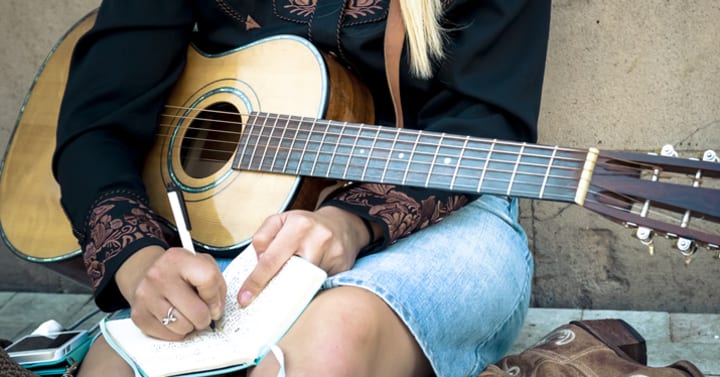
Which comes first, the chicken or the egg? Maybe you wrote a really cool chord progression and you're trying to come up with words for it, or vice versa. Either way it's hard. I like to start with the lyrics, specifically the chorus. The hook. The meat and potatoes. In my song, I wanted to write about freedom and the feeling of heartbreak trapping me in myself. I chose imagery that I felt described that: a bird in a cage staring at a blue sky. Then I started scribbling down sentences that described the scene. The trick is to write sentences with a similar number of syllables, if not exactly the same. Don't worry about rhyming quite yet. Now you've got a few sentences that look something like a bad poem. Start thinking about chords that fit your theme. I write sad songs, but I only ever use one minor chord in my progression. (If you have no idea what I'm talking about, watch a few videos on basic music theory.) If you want a truly depressing song, write a progression with more minor chords. It's up to you to find the chords that best fit your theme. I tend to use 4 chords in a key, and occasionally three. Find what works best for your song. Once you have your chord progression, go back to your lyrics, and sing them over the chords. Sounds funny, right? We forgot to rhyme them! A thesaurus is your best friend. And a rhyming website. Switch out your last word to a synonym that rhymes. I tend to use the ABAB format for my chorus, which means the first and third lines rhyme, and the second and fourth rhyme. Sounds better right?
The one thing everyone focuses on too early is the melody. It's more difficult to fit an idea into the constraints of a melody than find a melody that works for your chords and lyrics. Play around with it! There is no right answer to your melody, that's why it's called art. I have a hundred choruses written, but what about the rest of the song?
Ah, the verses. The story. If your chorus is the theme of the book, the verses are the chapters. Follow the same writing process for the verses, but make them have individual meanings that relate to the main theme. Paint a picture with your words. Maybe each verse is a different feeling that relates to the overarching feeling of the song. You're an artist, allow yourself to be creative. Once you think you've written a whole song, it should look something like this:
Verse, Chorus, Verse, Chorus.
If you want to be more creative, throw an intro at the beginning, guitar solo in the middle, or a bridge in between two choruses. A bridge is just a different kind of verse. Maybe you wrote a melody that you liked that didn't make the cut, plug that in as a bridge. As I've said a million times, you're the artist, you are free to be as creative as you want. If you think you have a song you really like, move on to Step 3.
Step 3: Practice

There's no deep meaning hear. Just practice your song. Over and over and over and over again. Until you're sick of it. You might find that there's a word here or there that needs to be changed. Just keep playing it. If you can't play it through by heart, go back to Step 2 and keep working.
Step 4: Production
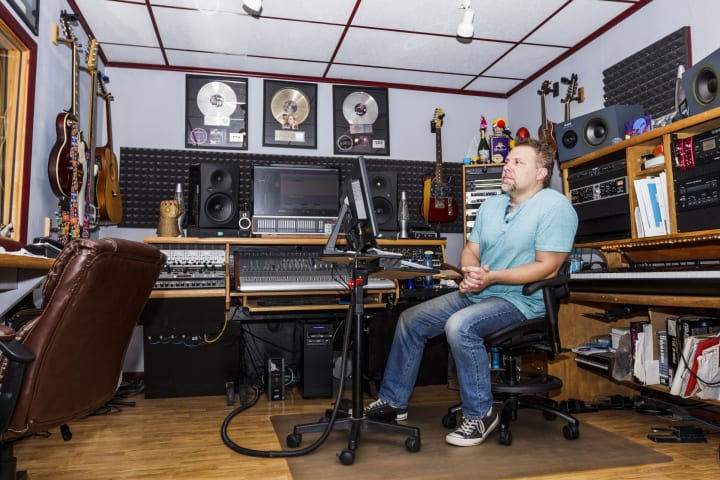
This part is scary. I've recorded every day for the last 2 years. It still scares me. What equipment do I need? what if it doesn't sound good? If you actually took the time to listen to my song, you'll know that it's not that good. It's out there though. That's what counts. Let's get the equipment needs out of the way first.
Computer. Duh. Instrument. Duh. You. DUH! Now the technical stuff. You'll need a Digital Audio Workspace, or DAW. Don't be daunted by the big names like Ableton or FL Studios. I use Cakewalk by Band Lab, a free DAW with a great user interface. Now the trick is, how do you get your song from your guitar to the computer. You'll need an Audio Interface. I use the Scarlett 2i2 by Focusrite. It's a USB plug in that requires no time to set up in your DAW. It's only $160, so it won't break the bank, but make sure this is something you are going to follow through with. Now you have the ability to start recording your music. If you want to sing too, look into a condenser microphone. You can find really good ones for around $100, but there are plenty of budget options.
Now you've got the set-up, time to start recording! Hit the record button, and start playing! Don't worry if it takes a couple tries to get it right, but also don't burn yourself out playing the same 2 seconds over and over. Take it one step at a time. Start with the first verse. Then the chorus. Keep doing that until you're done. Record each instrument separately. Don't overburden yourself as a one man band. Record as if you have a whole band. Let each instrument have its time to shine. Once you've got the general idea recorded, it's time for Step 5.
***Note: if you want drums, look into free plugins or use a beat sequencer to make your own! Make sure your plugins are royalty free. More to come on that later.***
Step 5: Mixing and Mastering
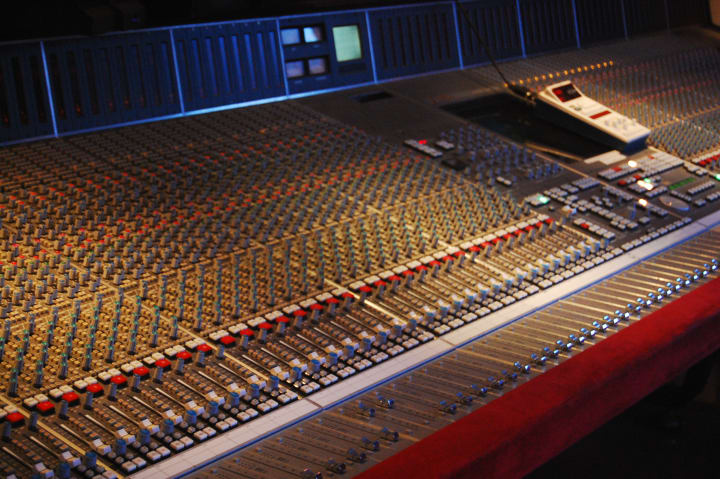
What in the world does this even mean? I don't know. Seriously. Watch some beginner videos on how to mix and master a song, then come back and see if I got this wrong.
Mixing is making your song sound good. Changing output levels, adding reverb, messing with compressors. Also known as editing (or maybe they're different) this is where you make your song sound the way you want it to. Cut the guitar out at the end of a verse for dramatic affect, up the volume on the chorus for a bang, whatever you want to do, do it. Insert broken record sound, you're the artist, be creative.
Once you've got a sound you like, it's time to master it. Not practice again, I think we've all heard ourselves sing enough. It's time to make sure everything sounds consistent. Don't let your guitar over power your voice. This is the big picture editing. Mixing is changing the output of the snare drum, mastering is changing the the volume of the drums to better accompany the song as a whole.
Now your song sounds awesome! Your roommate thinks it's great! Now what? Step 6 is a small step, but arguably the most important one.
Step 6: Give your song Identity

Album covers, people, album covers. Nobody wants to listen to a song with the generic iTunes logo on it. I struggle with this one the most. It should be easy for a song titled "Blue Skies" right? After drawing a million concepts, I had my friend take a picture of the mountains on a day with visible blue skies, threw some filters on it, slapped the name of the song on it, and put my name at the bottom. That's how easy it can be. If your blessed with the ability to draw, be creative their too! It's your song, make it 100% yours. The album art should reflect the theme of the song, or it can be a picture of you! A friend of mine just released an album titled "Elements" and the album cover is him sitting on a mountain with his guitar. Simple, yet effective.
A question I have asked a million times, and people have asked me a million more, what do you call yourself? Do you lie like Dave Grohl and release your first song as the Foo Fighters before you even have a band, or come up with a stage name? If your name is Jane Doe or John Smith, I'd recommend doing one of those two things. I am fortunate enough to have a somewhat unique name, so I went with that. Nothing fancy, just me.
You've got a beautiful piece of album art, a stage name, and a song. What are you going to do? Sit there and let it eat up memory on your laptop? No! get it out there! Time for Step 7!
Step 7: Distribution
A cutthroat and blood thirsty industry. Don't let it fool you, the Music Industry works for you. Whether you want to make money or just get your song heard, there are a couple great options for you.
We'll start with the cheap one, free. Both sides. You don't pay anything, but you also won't get paid. Free distributors are great for first time musicians. Think SoundCloud and YouTube. People can look you up and listen to your song as easy as that! Done. You can start working on Step 8.
The other option is paying to get your music out there. If you think you're going to be releasing a song every week, look into subscription based distributors like Distrokid. You'll pay a yearly fee to upload as many songs as you want. The other option, which I use, is one time payments. I use CD Baby which allows me to take my time recording, and not feel rushed. Both options give you the ability to make money off your music, and will put your song on every music streaming website known to man. That means your Apple Music friends and Spotify friends can both listen to it! Just like any paid feature, there are also different levels. Distrokid has the basic and premium subscriptions, each with their own perks. CD Baby has premium releases which cost extra, but you own everything.
That's the weird part of the industry. Owning your own song. I personally paid for the premium release, so I can own every piece of my song. It's up to you to decide if you want to own your art or not.
Remember when I made that note about drum loops earlier? This is where it comes into play. If you're using someone else's drums in your music, guess what, they now own part of your song. Which means they make a portion of your money. UNLESS! You use royalty free plugins and loops. A royalty is the money you make off a song. If you're using a drum loop that collects royalties, but you don't give them credit when publishing, straight to jail. If they've gone to the lengths to publish their own drums, chances are they have a copyright on it. Make it easy on yourself and just make your own. No outside people, no outside problems.
Boom. Your song is out there for the world to hear, thanks for reading. Wait! It's been a week and only my grandma has listened to it! What do I do? Thank you for asking! That's why I added a bonus step, the infamous Step 8.
Step 8: Marketing your Music

Social media. Social media again. If you don't want to pay thousands of dollars to get your song advertised, blow up social media with your release. Post an Instagram story, a Facebook post, Tweet it, slap the album art on Reddit, do anything and everything you can to get people to see it. Post about it every day. Be obnoxious. It's free. It's easy. And chances are, you already have a fan base curated for you in your friends and family.
Option 2, which will cost you some money, but very worth it, get your song on a playlist. Some people make it their entire career to put playlists together. Get on one. Be warry of rip off websites that charge a million dollars for 24 hours of being on a playlist. Do your research and submit your music to a playlist. Even if it's only on for a day, your streams will blow up. I have yet to do this because I can't afford it, but if you have the extra $100 laying around, it's not a suggestion.
Now people are listening to your music, you've got fans, maybe a merchandise shop, you're releasing music weekly, now what? I'll tell you when I get there but for now just keep grinding.
You're a Real Musician Now!
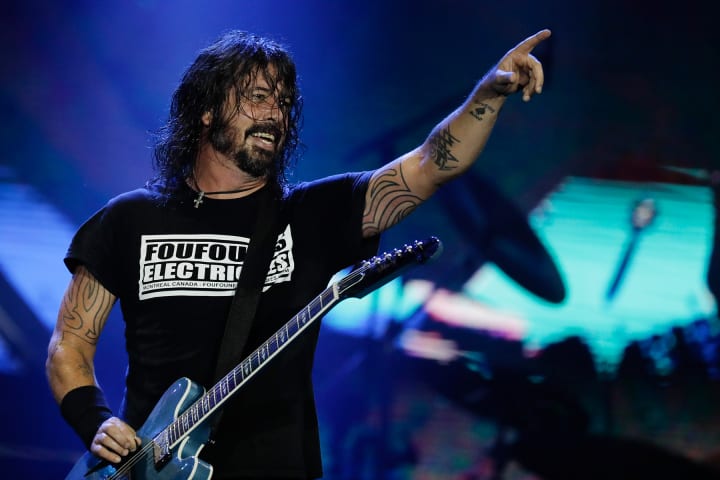
Congrats! You've made it to the end of the music industry crash course. Time to rake in the dough of your sweet, sweet #1 hit. All jokes aside I hope this was helpful and helped you express yourself in a new way.
To recap all 8 steps:
- Come up with a theme.
- Start writing down ideas.
- Practice, practice, practice!
- Get your home studio set up, and hit record.
- Mix, edit, master.
- Song identity, make it art, not just music.
- Get it out there!
- Let everyone know what you've accomplished.
Don't forget that the biggest accomplishment of any artists career is getting their first song out there. It probably wont be on your Greatest Hits Album, but you have to take the first step before you can go anywhere.
Coleman, out.
About the Creator
Coleman
"Why so serious?" - The Joker
Firm believer that people take everything too seriously, and we'd all be a lot better off if we stopped and laughed at ourselves once in a while.
If you're offended by my work, I won't apologize.
Review of 'Man on the Run'
My wife and I saw Man on the Run, a nearly 2-hour documentary on Amazon Prime, about Wings, Paul McCartney's group that flew around the world from shortly after The Beatles broke up in early 1970 to shortly after John Lennon was murdered at the end of 1980, making a Beatles reunion forever impossible.
By Paul Levinsonabout 24 hours ago in Beat
MAYLIE?
MAYLIE (born December 2, 2004) is an international pop artist and songwriter, known as Somelsy on Instagram. Born into a musical family and raised in a quiet town near the capital, she was immersed in music from infancy. As the granddaughter of a guitarist from a vocal-instrumental ensemble, she began experimenting with the guitar and synthesizer even before she could speak. It was her grandpa who instilled in her a lifelong love for music. Her Instagram account is entirely dedicated to her grandfather's guitar collection. The collection includes about 10 guitars of various ages, even from the 1980s.
By Alex Croftless than a minute ago in Beat




Comments
There are no comments for this story
Be the first to respond and start the conversation.