
"The Price of Perfection"
"A Dystopian Vision of the Future"
Brave New World: A Retelling
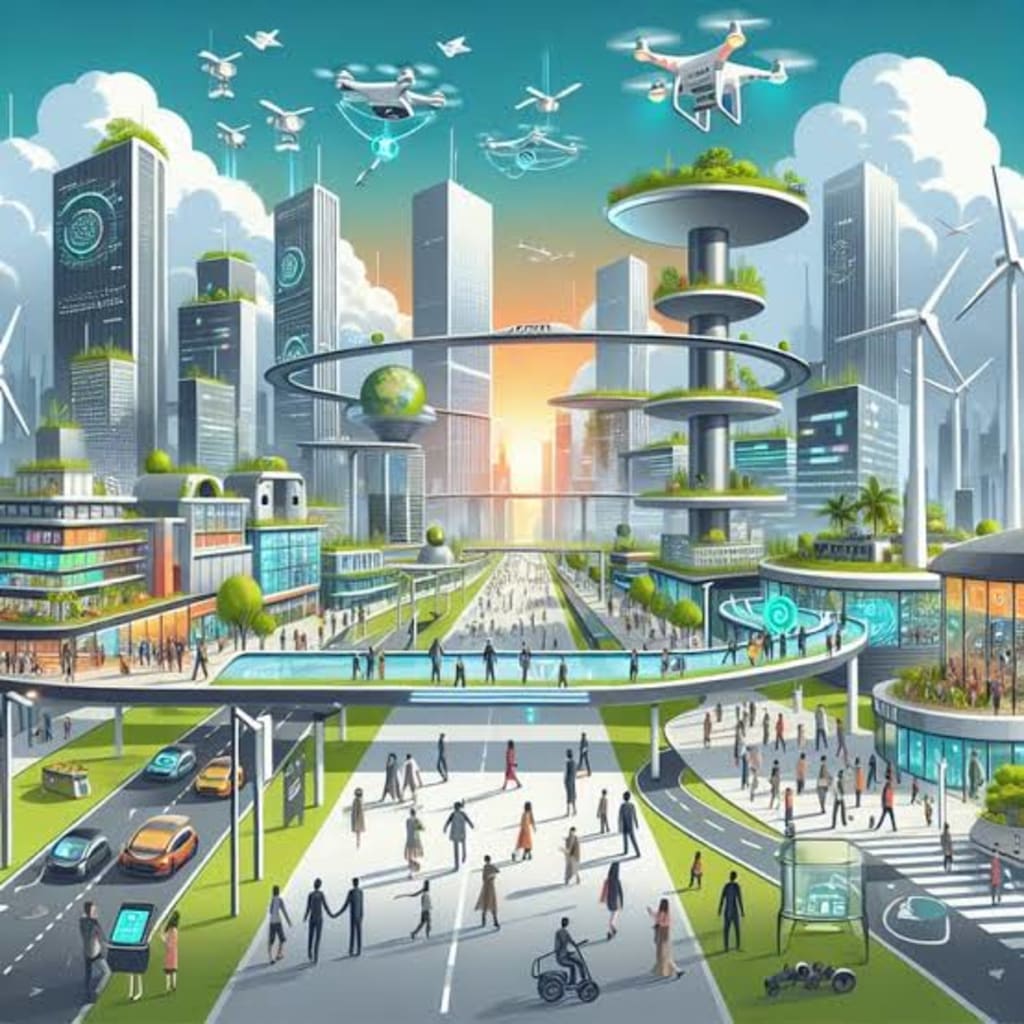
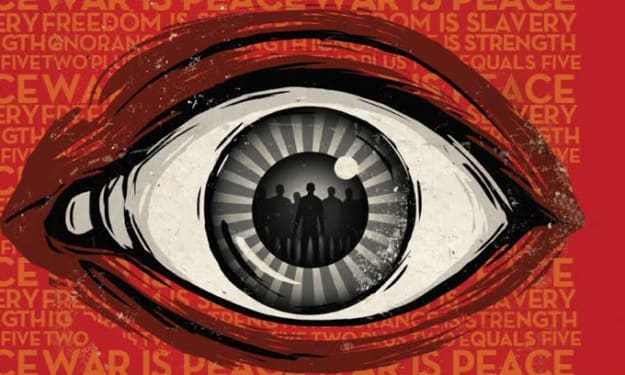
In the not-too-distant future, society has undergone a drastic transformation. The world is governed by a powerful and totalitarian World State, a global society where happiness and stability are maintained through strict control and the suppression of individual freedoms. This is a world where every citizen’s life is preordained from birth, and individuality is a thing of the past. The people of this world live without the burdens of emotion, choice, or meaningful relationships, and are instead conditioned to be content in their designated roles.
The story begins in the World State’s Central London Hatchery and Conditioning Centre, where new lives are created through artificial reproduction. Natural birth has long been abandoned, and instead, human embryos are carefully bred in laboratories. The citizens of the World State are divided into rigid caste systems, each with specific roles to play. The highest caste is the Alphas, followed by Betas, Gammas, Deltas, and Epsilons, each one more subordinated to the others. The lower castes are intentionally deprived of intellectual or emotional depth to keep them docile, while the Alphas and Betas serve as the administrative and scientific leaders.
Lenina Crowne, a Beta worker in the Conditioning Centre, embodies the World State’s ideals. She is attractive, well-behaved, and content with her life. However, she begins to experience doubts about the world around her, particularly in her relationships with men. She becomes romantically interested in Bernard Marx, an Alpha who is socially awkward and uneasy with the totalitarian system. Bernard is disillusioned by the highly controlled world he lives in and feels like an outsider. While Lenina enjoys the stability and superficial pleasures of the World State, Bernard longs for something deeper, something real.
Lenina and Bernard are sent on a trip to the Savage Reservation, a place where people still live in the old, pre-World State way—naturally, with family structures, emotions, and traditions. Here, they meet John, a young man raised on the Reservation. John is the son of two World State citizens, but his mother, Linda, had been stranded on the Reservation years earlier. Linda had once lived in the World State, enjoying its artificial happiness, but when she became pregnant with John, she was abandoned and left to live in the primitive society.
John, who was raised on the Reservation, has heard of the World State only through his mother’s stories. He is familiar with Shakespeare’s works, which Linda taught him, and sees the world around him as something that is cruel and flawed. When Bernard and Lenina bring John back to London, he becomes a sensation. His natural ways and unspoiled mind challenge the very foundation of the World State’s ideals. The society that prizes stability and instant gratification is shocked by John’s resistance to its shallow, emotionless pleasures.
John’s arrival exposes the hollowness of the World State, as he is unable to reconcile the happiness it offers with the deep, complex emotions that he values. He finds himself repulsed by the hedonistic practices of the people around him. The state’s obsession with instant pleasure, epitomized by the drug "soma," which is used to quell dissatisfaction and maintain order, deeply troubles him. Soma is freely distributed to everyone, providing an easy escape from any form of unhappiness or discomfort.
Lenina, who has been conditioned to seek pleasure without meaning, becomes increasingly obsessed with John, but he cannot return her feelings. For him, love and emotional connection cannot be reduced to mere pleasure. His understanding of relationships is rooted in a deeper sense of longing, something the World State is incapable of fostering. As John struggles to adapt to the sterile world of the World State, he becomes increasingly disillusioned. He tries to withdraw from society, retreating into an isolated building where he hopes to live out his life free from the invasive control of the state.
However, his attempt at isolation fails. The media and citizens of the World State, obsessed with entertainment and sensation, turn his retreat into a spectacle. They flock to see the "savage" and treat his self-imposed exile as a form of entertainment. John, realizing he can never escape the world he despises, ultimately takes his own life.
The novel ends with the tragic death of John, symbolizing the destruction of the human spirit in a world dominated by technological control, superficial pleasure, and societal conformity. The World State continues on, unchanging, its citizens blissfully ignorant of the price of their happiness. Through John’s tragic end, Huxley illustrates the dangers of a society that sacrifices individual freedom, true emotion, and human depth in favor of stability and superficial well-being.
In Brave New World, Aldous Huxley offers a chilling vision of a future where totalitarianism, technology, and the pursuit of happiness are fused in a way that stifles creativity, individuality, and the essence of what it means to be human. The novel serves as a warning about the perils of a society that values comfort and control above all else, ultimately sacrificing its soul in the process.
This retelling covers the central plot of Brave New World, highlighting the themes of societal control, individual freedom, and the consequences of a world driven by artificial happiness.
About the Creator
It's 2026. Songs Turning 10 This Year
In 2016, we saw the rise of short form videos and what would lead to the birth of TikTok. We cannot forget the Snapchat filters no matter how cringe worthy some of them might have been. It was also the year in which the hit series Stranger Things debuted.
By Jasmine Aguilar20 days ago in Beat
Bots & Artificial Streams Are Killing Hip Hop
The role that streams play looms large in rap. What’s so beautiful about the pure sales and the amount the digital atmosphere holds is powerful. But bots prove to be a problem. As persistent as it is, it can be shown that the inflated sales, false recordings, and mistaken projections bring the idea of what the scoreboard reads.
By Skyler Saunders7 days ago in Beat


Comments
There are no comments for this story
Be the first to respond and start the conversation.