
The Innovators: 15 Guitarists Who Pushed Technological Boundaries
Over the decades, the electric guitar has transcended its role as a mere instrument to become a dynamic vehicle for technological and sonic experimentation. Visionary players have transformed the guitar into an extension of their creative minds, blending traditional technique with cutting-edge innovation.

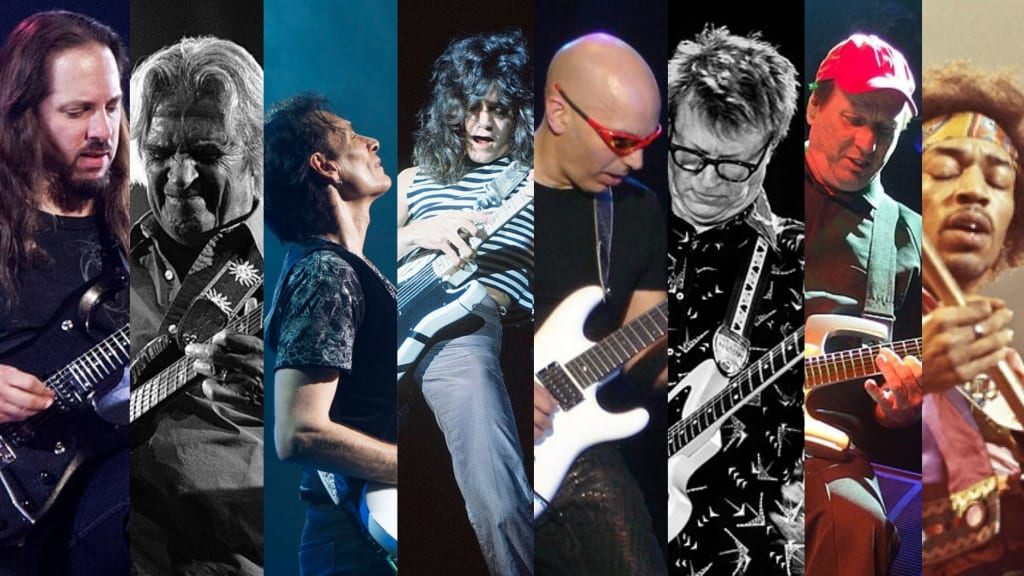
In this article, we explore 15 guitarists whose groundbreaking approaches reshaped the instrument, detailing the specific innovations they introduced — from inventive playing techniques and custom modifications to pioneering use of digital effects. Join us on this journey as we trace the evolution of guitar technology and celebrate the artists who dared to redefine its boundaries.
1. Jimi Hendrix: The Original Sonic Alchemist
Jimi Hendrix’s impact on the guitar world cannot be overstated. In an era when the electric guitar was still emerging as a dominant voice, Hendrix reimagined its possibilities by manipulating feedback, distortion, and effect pedals in ways that were unprecedented. His creative use of the wah-wah pedal — most notably on tracks like “Voodoo Child (Slight Return)” — allowed him to sweep through frequencies, creating vocal-like inflections and a fluid, expressive tone.
Hendrix also popularized the use of the Octavia pedal, which added a one or two octave pitch-shift to his solos, giving them a futuristic, almost otherworldly quality. Beyond pedals, he experimented with amplifier settings and even reversed reverb signals to produce swirling soundscapes on stage. By embracing the limitations of his gear and turning them into assets, Hendrix not only set new performance standards but also inspired generations of players to view technology as a gateway to endless sonic exploration.
2. Eddie Van Halen: Tapping into New Dimensions
Eddie Van Halen redefined what was possible on the electric guitar by introducing techniques and modifications that changed the instrument’s vocabulary forever. His signature tapping technique, showcased brilliantly in the instrumental “Eruption,” involved using both hands on the fretboard — effectively allowing the guitar to mimic a keyboard’s fluidity. This approach not only expanded the range of notes available during a solo but also created cascading, rapid-fire sequences that were virtually impossible on a conventional instrument.
Eddie’s innovation wasn’t confined to technique alone. He famously built the Frankenstrat, a guitar constructed from a mix of woods and equipped with custom electronics, to produce a sound that was both raw and refined. By reconfiguring the wiring and experimenting with pickup placements, he crafted a tone that was aggressively articulate. His inventive use of the MXR Phase 90 pedal and his unique vibrato bar modifications contributed to a sound that became a cornerstone of modern rock guitar.
3. Joe Satriani: Sculpting Sonic Landscapes
Joe Satriani is renowned for transforming the guitar into an instrument capable of evoking rich, cinematic soundscapes. Satriani’s approach combined technical mastery with a deep sense of melody. One of his key innovations was the pioneering use of digital delay and pitch-shifting effects. For instance, the DigiTech Whammy pedal allowed him to bend notes and shift octaves in real time, creating a layered, almost orchestral texture in his solos.
In live performances, Satriani often employed looping techniques, allowing him to build intricate musical layers on the fly. His careful integration of effects such as reverb and chorus — often in combination with his signature legato technique — enabled him to craft sustained, ethereal passages that felt both modern and timeless. This melding of digital processing with traditional guitar expression has cemented his status as a true sculptor of sound.
4. Steve Vai: Master of the Unconventional
Steve Vai’s career is defined by a relentless quest for innovation and the mastery of unconventional techniques. Working closely with manufacturers, Vai helped develop signature instruments like the Ibanez JEM, a guitar that featured radical design elements such as a “monkey grip” handle and custom tremolo systems tailored to his extended-range playing. These modifications were not merely aesthetic; they enhanced his technical ability to execute rapid-fire runs, dive bombs, and intricate legato phrases.
Vai also engineered complex effects chains in his studio and live setups. By blending multiple digital processors, delay units, and reverb effects, he created a sound that was as intricate as it was immersive. His use of the whammy bar and harmonic techniques — exemplified in tracks like “For the Love of God” — showed how technology could amplify the expressive range of the guitar, inviting listeners into an expansive, otherworldly sonic universe.
5. Frank Zappa: The Maverick of Musical Experimentation
Frank Zappa was a consummate musical polymath whose innovative spirit extended to every facet of his art. A true maverick, Zappa not only blended genres — from rock and jazz to classical and avant-garde — but also pushed the envelope in the realm of digital recording and sound manipulation. He was among the first to integrate early digital recording techniques with live performance, using custom-built equipment to create multi-layered compositions.
In his live shows, Zappa implemented intricate setups that combined tape manipulation with real-time digital processing, enabling him to alter delays, reverb, and modulation on the fly. This approach allowed him to merge disparate musical elements into a cohesive, albeit sometimes dissonant, sonic tapestry. Zappa’s fearless experimentation with unconventional time signatures and atonal harmonies paved the way for a generation of experimental musicians who saw technology as an essential tool for breaking musical boundaries.
6. Jeff Beck: The Tonal Chameleon
Jeff Beck’s genius lay in his ability to coax a kaleidoscope of tones from his guitar with minimal reliance on flash and overt showmanship. Beck’s approach was rooted in subtle yet effective manipulation of effects. By carefully controlling a wah-wah pedal, he could emphasize different frequencies in real time, imbuing his solos with a vocal-like expressiveness. His exploration of feedback — managed with precise amplifier settings and custom tube configurations — allowed him to create a dynamic range of textures, from warm, smooth bends to aggressive, biting riffs.
Beck’s innovation was not only in his gear choices but in his method of playing; his delicate touch and dynamic control meant that even slight adjustments to the guitar’s volume knob could dramatically alter his tone. This ability to seamlessly blend traditional blues with modern effects has inspired countless guitarists to view their instrument as a multifaceted tool for sonic expression.
7. Tom Morello: Redefining the Sound of Rebellion
Tom Morello transformed the role of the electric guitar from a conventional rock instrument into a canvas for sonic experimentation and political expression. With bands like Rage Against the Machine and Audioslave, Morello challenged traditional guitar norms by employing non-traditional techniques and modifying his gear in innovative ways. One of his hallmark innovations was the use of kill-switches and rapid toggling effects to create staccato bursts of silence and noise — techniques that mimicked the effects of turntables and sampling.
Morello’s creative rig setup often featured unusual wiring configurations and custom-modified pedals, enabling him to produce sounds ranging from machine-gun-like riffs to simulated scratches reminiscent of DJ techniques. By toggling his whammy bar in unexpected ways, he could generate sounds that resembled sirens or industrial clamor. His willingness to break conventional rules and integrate elements of hip-hop, electronic music, and rock has made him one of the most distinctive and innovative guitar voices of his generation.
8. Allan Holdsworth: The Architect of Modern Harmony
Allan Holdsworth was a guitarist who redefined harmonic language on the instrument with his fluid legato technique and complex chord voicings. Known for his almost vocal-like phrasing, Holdsworth’s playing was characterized by smooth, continuous lines that defied traditional picking methods. His innovation extended to his pioneering use of the guitar synthesizer. By integrating a MIDI pickup system into his rig, Holdsworth was able to convert his analog guitar signals into digital data, which he then manipulated with synthesizers to create entirely new sounds in real time.
His unconventional approach to scales and chord structures — often involving non-diatonic progressions and modal interchange — pushed the boundaries of jazz, fusion, and rock alike. Holdsworth’s willingness to explore the uncharted territory between melody and harmony laid the groundwork for modern fusion guitarists, influencing both his peers and the generations that followed.
Read full article here- The Innovators: 15 Guitarists Who Pushed Technological Boundaries
About the Creator
Guitarmetrics | Your One-Stop Hub for Guitar Lessons & Accessories
Welcome to Guitarmetrics, where the world of guitars comes to life! Our platform is more than just a destination for unique and innovative guitar accessories—it’s a thriving blog and community for guitar enthusiasts around the globe.
Keep reading
More stories from Guitarmetrics | Your One-Stop Hub for Guitar Lessons & Accessories and writers in Beat and other communities.
Top 15 Guitarists Who Started as Street Performers (Buskers)
In this article, we explore the stories of 15 remarkable guitarists who began their musical careers on sidewalks and street corners. Their journeys remind us that humble beginnings, persistence, and the courage to play for strangers can eventually lead to legendary status. From the soulful strumming in London to the raw authenticity of Dublin’s streets, these artists forged paths that would later shape their unique sounds and inspire countless others.
By Guitarmetrics | Your One-Stop Hub for Guitar Lessons & Accessoriesabout a year ago in Beat
The Tango Connection
I suppose I've become a writer so I wouldn't bore everyone to death telling them my stories. Reading them is reading. Not the same. There's rhythm. And timing and, most importantly, drama and suspense. Unless you have tremendous magnetism and an undeniable stage presence, there's no way you can engage an audience the way you can by writing your story. That's my opinion.
By Rene Volpi 24 days ago in Beat
Glimmerjean & Goode Explore Darker Grooves on New Single "Injured Romantics"
Toronto-based rock n’ soul duo Glimmerjean & Goode return with “Injured Romantics,” a moody, rhythm-driven disco-rock single that explores the existential nature of life and love. Blending darker lyrical themes with an infectious groove, the track finds the duo leaning into unexpected territory while continuing to expand their evolving sound.
By Chris Adamsabout 10 hours ago in Beat
From ad men to mad men
It's after 2am in the morning when a local police patrol vehicle in Northern New Jersey spots a figure costumed as Quasimodo, The Hunchback of Notre Dame, proceeding southbound on the sidewalk along Lydecker Street. Though the hunchback’s costume stuffing offers added insulation, it's January, and friggin’ freezing. Carefully, the officers slow down, gently question the subject, and offer him a ride home.
By David W. Maury5 days ago in Humor


Comments
There are no comments for this story
Be the first to respond and start the conversation.