

I was seven when we moved to Woodstock. My parents were young Brooklyn beatniks who quickly became hippies.
Our little white house was party central.
It was the summer of love, and album covers littered every surface of our living-room, and I loved all the faces looking back at me: Josh White, Joni Mitchell, the Beatles and the Rolling Stones. My mother was a blaze of color, shaking out her auburn hair, twirling to the Stones in her favorite stained glass cape.
The adults smoked so much pot around me they said I had a contact high. Watching a record spin, I was hypnotized by that one thin needle moving with the grace of a crane dipping its bill, magically pulling Purple Haze out of a hard black disc.
My mother's new best friend ran a cafe and Bob Dylan lived upstairs. We hung around him at their table one night and he took out a bottle and gave us all a sip of absinthe. He had this voodoo wizard magic coming off him.
In the fresh Woodstock mornings, my father put me on the back of his BMW and told me to hold on tight. We roared through Woodstock, passing the cute little shops, red barns and green farms, scooting by the cafe where my parents liked to drink and smoke all night with their friends. We wound up Rock City Road, racing to catch the sunrise. The mountain rose before us in the misty dawn, and soon we were careening around sharp bends, going nearly sideways when he leaned into the curves.
The sky was close, and the road, the sky, the road. I wasn't scared. Hair flying free, I could ride forever. My father was exuberant at the top, hoisting me up, as if to give me a closer view of the sky. We made it, he said, we made it! The clouds were pink as Easter eggs.
My mother brought us into the center of Woodstock, with its hub of exciting shops.
The rain-soaked trees shook out their blossoms, littering the sidewalks with lavender confetti. Look at that cute hippy boy, my mother whispered to me. A guy with a velvet top hat, walking across the village green toward the head shop.

She followed him and we followed her, through a curtain of wooden beads, into the pulsing depths of Magic Markies. They sold roach clips and bongs, and it was a sensory museum with twirling kaleidoscopes and soft rabbit skins. We chose from the bins--tinted plastic boxes, lucky amulets, tangerine candles.
My mother tried on hats, posing for the boy, and we kids slipped into the blacklight room to lie back on beanbags watching the psychedelic flowers bloom across the ceiling, with the Beatles singing sweetly.
+++
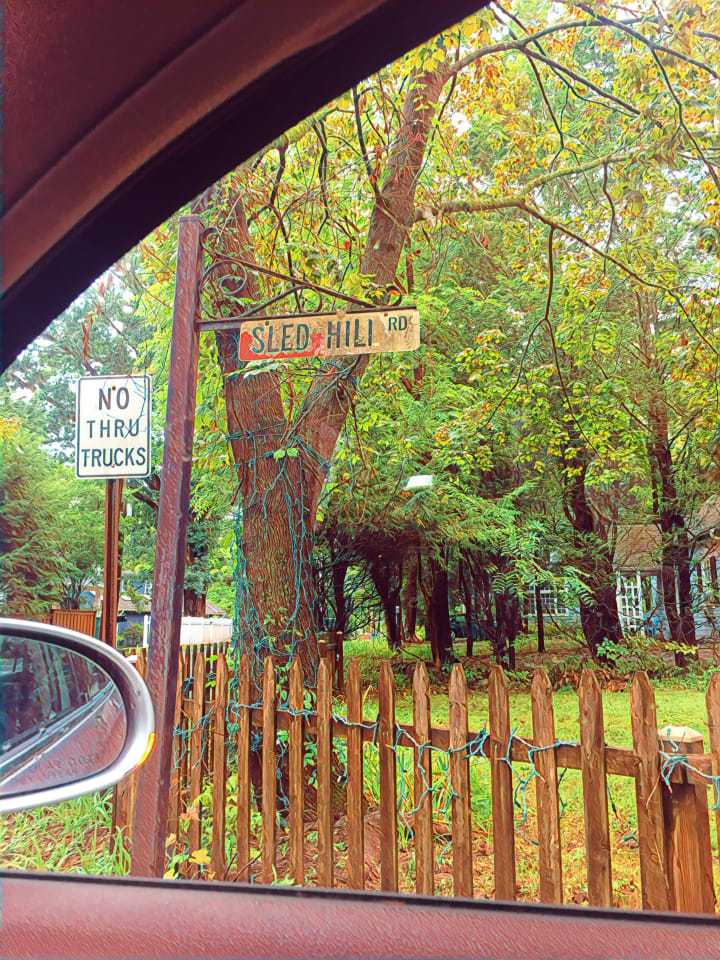
Famous people popped up everywhere, but you could only catch them in the flickers of bonfires and lanterns. Joan Baez singing at an outdoor concert on someone's farm, on the back of a humongous truck--so far away and so dim, and Jimi Hendrix in the shadows of the Sled Hill Cafe, eating cheesecake with a beer; seeing them is like seeing Santa in a mall; all of them more real to me on their record covers.
I sneaked the albums into my room, studying them before bed.
Donovan in his purple fairytale world and Judy Collins in her golden gardens, singing about clouds made of feathers, and carousels.
Sitting at the edge of our beds smoking, legs crossed, cocktails tinkling, our parents read to us.
On Christmas eve, Santa arrived on a live camel with snow falling silently and the entire community filling the streets, sipping cider, singing carols, rock stars and single moms and models and farmers, ancient people and kids everywhere. On Halloween hundreds of us came out again, and even the grown ups dressed in costume. We did everything together, but behind the doors of some of our houses, life was not always cute.
I woke through layers, in strange places--on the stairs, at the foot of my parent's bed- nightmares stuck in me. No memory of how I got there. Just a beat of a morning stillness before Dylan's hard strumming and my father's strong espresso blast up from the kitchen. Sometimes the adults dropped acid, waking us with foot-stomping games of hide and seek. Creepy men were in the corners.
My safe place was in the Woodstock woods. Just after dawn, with the dew sparking rainbows in the grass, I followed a footpath into the woods behind our house. Kept checking back to make sure I could see our lawn through the trees. I didn't want to end up like Hansel and Gretel.
Some part of me expected to find the characters in the books my mother read to us each night--the magic rabbits, and talking bears.

On my rock, at the edge of the reservoir, the world was calm and empty. I could smell the warm earth. The water rippled with wind and tide, moving out towards a fringe of dark trees and beyond that, a smudge of violet mountain. When the sun came out, the reservoir was still as a bowl, filled to the brim with the sky. I could finally breathe.
I come to this same rock a lifetime later, and no matter what changes around me in this town, the water and the sky and the mountains still own my heart, and pump through my blood.
But it's the people who also make my town, and without people to create with, play with, mourn with and eat bagels with, I think I would die.
In this time of Covid and winter, where all of life seems frozen, I decided to go in search of home.
I'm on a mission, and I enter a time machine, always hoping it will be the last time I have to go back.
+++
There are spots in town that always meant home to me--the library, the art supply store, a certain swimming hole, the Tibetan Buddhist monastery and Albert Grossman's grave. These seemed untouchable--but as the Buddhists teach, everything's impermanent.

Spring is a better time for things to blossom, but I want to look when my town is laid out like a carcass, the trees like bare-bones in the snow. I'm on a mission to remember how I got here.
In 1968, my father pulled in the action; people whirled around him, laughing at his macho antics and poetic outbursts. He scouted out the coolest Woodstock places and toured us around like a guide.
Byrdcliffe was only a minute from the center of town, but felt like another realm, with dark brown buildings tucked into woods. Ghost and artists live here, my father told us. Want to meet one?
It was like a tiny town within our town, the arts colony founded in 1908 by people who looked even wilder and more free than the hippies. Something awakened inside me when I first saw it; I didn't know that I'd be up there years later, writing about the artists of the eighties.

We got to a barn-like place with smoke coming out of a metal chimney, doors swinging open to the pines. Chickens pecking around outside.
Inside, the sharp twist of turpentine, something cooking on the woodstove. Julio's at an easel, a dark warlock, with sunken eyes, not smiling. His table littered with jars of brushes, but he's dabbing paint onto a canvas with a knife, like he's frosting a cake.
I could hardly resist touching the top of his art table, mountains and gullies of cracked and hardened paint. Someone named Magda tore pieces off a fresh baked loaf and told us to dip it into the stew. The artist wiped his hand on a rag, took a crock from a shelf and extracted an olive. He leaned forward, head tilted, his own eyes dark as olives, examining my face as I tasted it. It was oily and salty and the exact essence of the day.
+++
My brother and I hung off the balcony rail at Byrdcliffe Theater, clattered onto the stage, performing slapstick for my baby sister. Dust drifting in bars of sunlight. It was so quiet you can hear the squirrels running on the roof and the crows calling outside.

My father married a young woman and they moved to California. We moved into a log cabin with my mother and when that burned down, we lived in an unheated goatshed with no electric and no running water. I slept in a chair. I became a writer, inventing places to escape into.
I fled the frantic and violent scenes, hiding in the woods, sitting on a rock, dreaming of leaving.

The summer heat sent us to a swimming hole, where it was all fun and painted rocks and a picnic, until just on the other bank, a family began stripping off their clothes. My mother acted like it was no big deal, but my brother and I looked at each other pretending to puke.
For the rest of the summer, naked people continued to materialize--by the banks of streams and also in your very own living room, so big and white. You avert your gaze but they lurk into the sides of your vision. You never expect to see them like that. They are nude terrorists, organs dangling like loaded guns. By then, I despised hippies. No wonder I became a punk rocker later in life. But the swimming hole was beautiful, and I still wade there. It was once up to my waist, but now my ankles. It's shrunk, and I've grown, but at least there aren't any ugly nudes hanging around.
Swimming holes gave way to the rectangular cement pool at Woodstock Recreation field, where we lined up for try-outs, to show the counselors what we know.
It's still there, under the snow. And that pavillion next to it, by the community center? That's where the Dalai Lama showed up one day, in 2006. I sat at his feet photographing him.
He mentioned how pretty Woodstock was, with its "tidy little lawns." He pointed out towards the playground where the same rusty swings were...and beyond that to the cemetary where so many of my friends are now buried. Most died young. He laughed his warm, rolling laughter. And that's where we'll all end up!

Those of us who are left from that wild generation no longer eat cocaine or ecstacy for breakfast. We walk, do yoga, guzzle strong coffee, and some of us show up at that community center right where the Dalai Lama stood, to sit in a circle--(or virtually on zoom)-- and recover from that time, one day at a time.
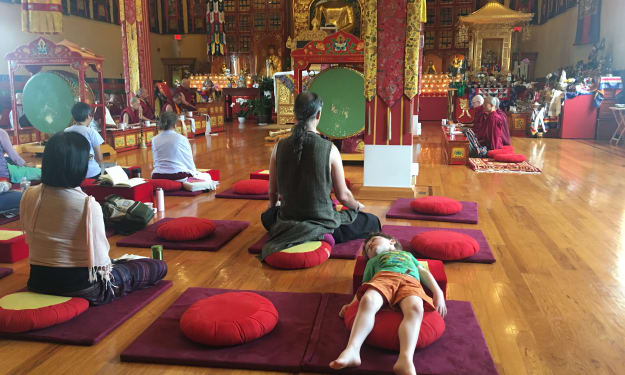
Some of us trek up the mountain to pray with the Tibetan buddhists who built a monastery up there a few decades after my family moved here. I became a Buddhist--took refuge--in 2008 and spent about ten years filming the community that became my new Woodstock family and my spiritual home.

If you live in a town long enough, you'll see all your beloved things slip through your fingers--your children grow up, and perhaps don't settle in next door--real estate prices soar and like the deer and the coyotes and the bears, you're forced to move further away from your favorite places.
Across the world, we've all been in search of home.
For me, home is connection.
Here's a music video I made just two years ago, and if you watch the first minute or so, you'll see a snapshot of Woodstock on a typical sunny afternoon.
We filmed in the center of town, without any special planning. I had a vision and this thing that everyone talks about--the muse-- or an angel or the creative spirit of Woodstock--it met me halfway, right on the village green, and the universe became our playground.
A fleet of motorcycles? A girl with a hula hoop? Belly dancers, spinning parasols, a tequila sunrise vintage car floating by at just the right moment--it was all there. No need to call central casting.
The video features Jennifer Maidman, a bass player from the UK. She's won 14 gold records and she came to Woodstock to record in Bearsville in the eighties. Like so many others, she says this place seemed instantly like home. She bought a little house here with her wife Annie and they are two of the reasons this place still feels like home to me.
Covid shook my town like an earthquake.
Woodstock was a microcosm of what was happening all across the country. Housing fell apart, with an exodus in and an exodus out, as panic and money clashed swords. Foundations fell down, and even the monastery closed its doors to all but a few residents.
That first summer of Covid, I went to all the most hidden and beautiful and secret places of Woodstock.

I left the chaos and terror of the world and found sanctuary in the shadows and dirt and leafy shadows of the woods, alone but not really, because I talked into my camera, broadcasting live to people who were stuck at home, holed up in city apartments, or people like my neighbor who couldn't get out because she was terrified.
As long as I am able to breathe, I hope to walk in these woods, and bring my camera. I never feel more at home, than when I'm recording the places that matter in my life so I can share them with you. Even if we never meet, this is my one way to invite you in to my true home.
When I see the mountains, when I climb them, and when I sleep with their shadow on my cheek, when I meet the creatures--the red and silver foxes, the black bears, and owls, and when I hear the lunatic sounds of the coyotes, I leave my body with recognition and joy. I am in the right land at the right time.
But the main reason that Woodstock will always be my home, is this is where I raised my daughters, in the most beautiful time of my life.

When my grandchildren come to visit, like every grandmother since the beginning of time, Woodstock makes me want to dance again, and bake cookies. Home is anywhere the heart's on board.
About the Creator
Dakota Lane
Author four YA novels, ALA winner, journalist for NY Times, Village Voice. Indie movie producer. New music, woodland forests, fairytale, street fashion, neurodiversity, trauma recovery,healing, creative spaces, street fashion. Yaddo grant.
Keep reading
More stories from Dakota Lane and writers in Beat and other communities.
Solo year of the Ox
I think it was the thundering drums that reached into my chest and grabbed my heart into Tibetan Buddhism decades ago. The prayers spoke to me before I knew what the words meant. A year after taking refuge with HH Karmapa, the head of the Karma Kagyu lineage, I was granted permission to play the drum for the nightly Mahakala ceremonies.
By Dakota Lane5 years ago in Longevity
Review of 'Man on the Run'
My wife and I saw Man on the Run, a nearly 2-hour documentary on Amazon Prime, about Wings, Paul McCartney's group that flew around the world from shortly after The Beatles broke up in early 1970 to shortly after John Lennon was murdered at the end of 1980, making a Beatles reunion forever impossible.
By Paul Levinson5 days ago in Beat
Top Rappers in Dallas, TX (2026 Update)
Dallas doesn’t always scream the loudest in hip-hop conversations—but it builds quietly and consistently. While Houston often dominates Texas headlines, Dallas has carved out its own identity: melodic street records, independent grind culture, and a fast-growing streaming presence.
By RapRadarDigest3 days ago in Beat
Tatt~Master
— Assembly Line Tatt Machine ~ Impressions to Impress — As I begin to understand more about the Tattoo Phenomenon. I've written silly, yet verbatim, dating site anecdotes in 'Frazzled.' So let me ask you: Would you be More attracted to someone slathered with tattoos, or Less?
By Jay Kantor5 days ago in Humor



Comments
There are no comments for this story
Be the first to respond and start the conversation.