
Music in need of medicine?
Glastonbury booms but the UK music industry still waits for a fair deal

It's been another unsurpassed weekend for Glastonbury Festival. The tens of millions that have turned out or tuned in to watch the world's most eclectic mix of talent are only matched by the tens of millions of pounds pouring into Somerset and the wider UK economy as a result. In particular, the British acts on show have dazzled and swaggered. From Raye to The 1975, Skepta to Snow Patrol and countless other class acts, it’s tempting to bask in the glory of Britain’s cultural riches. But does the UK music industry get a fair deal in 2025? As the lights go down on Glastonbury a more sobering reality returns. The UK music industry, despite its global prestige and economic might, continues to be underfunded, undervalued, and overlooked by government policy as the UK stumbles into its seventeenth summer of austerity.
Glastonbury isn’t just a cultural phenomenon. You can't put a price tag on experience. Or so those who plumb for tickets tell us. But if we look at the economics of the festival, the pounds and pennies tell a story that often gets missed. In 2023, the Glastonbury injected £32 million into the local Somerset economy and a staggering £168 million into the UK economy as a whole. It created over 1,100 jobs in the region, paid nearly £12 million to Somerset-based suppliers, and drew international tourists whose spending boosted local businesses and accommodation services by more than £7 million. None of this grabs the headlines of course. Glastonbury is barmy, British and downright daft at times. But it is an economic powerhouse, which in recent years has been starting to know its own power (look to the 54 new social homes delivered in Pilton in 2023 - funded through Glastonbury profits).
And yet, Glastonbury is the exception that proves the rule.
Let’s zoom out. In 2023, the UK music industry generated a record £7.6 billion for the UK economy—more than the aerospace industry. It sustained over 200,000 full-time equivalent jobs, with live music alone contributing £6 billion and employing more than 230,000 people.
These aren’t just impressive numbers—they are the kind of figures that should have government ministers falling over themselves to invest in the sector. Instead, what we see is a troubling indifference at best, and at worst, quiet neglect from governments of all parties.
Consider this: while the UK music industry generates more than £7 billion annually, the total Arts Council England funding from 2023–2026 amounts to just £1.5 billion. In other words, the The UK music industry pays back Arts Council England's budget five times over. And this before we delve into theatre, cinema or various other arts disciplines. Yet the government continues to treat the creative industries as if they were a luxury hobby, rather than a strategic, economic and diplomatic asset.
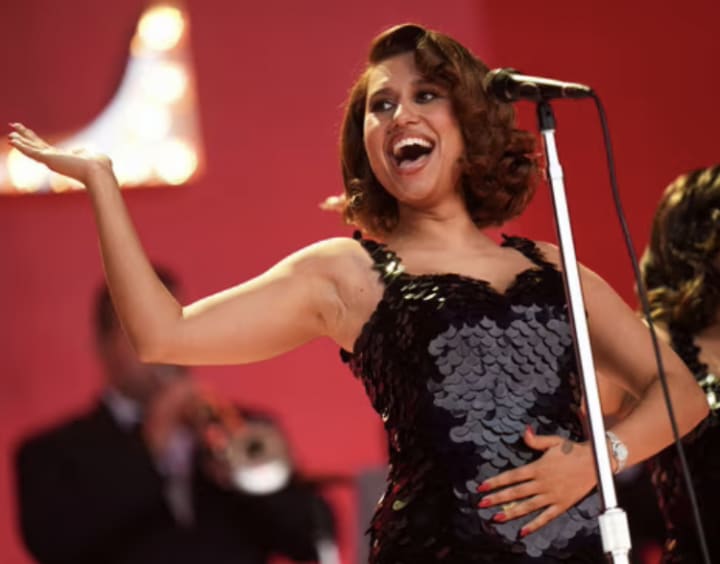
During her Pyramid Stage set on Saturday night, Independent powerhouse Raye told us music is medicine. Who am I to disagree with a seven-time Brit winner, a four time global globe winner, a MOBO winner... (you get the point). I would go further though. Music is power. British artists—from The Beatles and Adele to Stormzy and Dua Lipa—are cultural ambassadors who shape global perceptions of the UK in ways trade deals and foreign policy speeches never could. Every Glastonbury headliner, every Mercury Prize winner, every BRIT Awards ceremony is a broadcast of British identity and British diversity. And the world takes note. British music exports hit £4.6 billion in 2023, solidifying the UK’s place as the second-largest exporter of recorded music in the world after the United States. Countries like China, Japan and Germany - who are richer than us on paper - do not even come close. When a British act tops the charts in Europe, North America, or Asia, it’s not just a win for the artist—it’s a win for Brand Britain.
And yet, while the UK remains rich in talent, it is increasingly poor in infrastructure. Since 2019, nearly 200 festivals have disappeared. In 2023 alone, 125 grassroots music venues closed their doors, and another 350 were deemed at risk. Promoters and venue operators are being squeezed by rising costs, regulatory hurdles, and a funding vacuum.
Meanwhile, our global competitors are stepping up. In South Korea, government support for K-pop has created a cultural export worth billions. In France, artists benefit from generous subsidies and protections. Even in the United States—hardly known for its public arts spending—city governments pour resources into cultural programming as engines of economic development and tourism.
If the UK fails to respond in kind, we risk losing a generation of creative talent—and with it, billions in economic potential. The pipeline that takes an artist from a backroom pub gig to the Pyramid Stage at Glastonbury is fragile and fraught with uncertainty and personal risk. The best art is born of struggle. No one is arguing the path should be paved with gold. But the simple fact is that without grassroots venues, local studios, affordable rehearsal spaces, and robust arts education, that pipeline collapses.
This is the space for government action - for real, strategic investment. A reversal of the cuts to Arts Council funding, a dedicated Creative Sector Growth Fund, tax incentives for venue operators and independent labels, and protection for at-risk cultural spaces. It means integrating the creative industries into broader economic and trade strategies, not as an afterthought but as a pillar of national strength. Say it softly for the Daily Mail readers tuning in for Rod Stewart, but it means repairing the damage that Brexit has wrought upon touring musicians by removing the bureaucratic barriers at our borders.
It also means understanding that music is more than entertainment. It is infrastructure. It is identity, employment and opportunity. It is an industry that punches above its weight. Glastonbury, with its dazzling stages and staggering profits, should be seen not as an anomaly, but as a case study in what is possible when culture is nurtured, not neglected.
So as Glastonbury Festival fills our ears, our feeds and our screens for another year, let’s remember: music might be medicine, but its survival is political.
About the Creator
Shaun Ennis
Shaun from Manchester. I love to write. When I find the time, I write about politics - my passion and my job - and occasionally history - my escapism.
Expect to find thoughts on the housing crisis, political reform and Ancient Egypt.
Keep reading
More stories from Shaun Ennis and writers in Beat and other communities.
Hatshepsut
“I have commanded that my rule abide like the mountains” attributed to Pharaoh Hatshepsut In the dusty sands and the daunting splendour of Ancient Egypt, a woman once stood at the pinnacle of power—an audacious ruler in a world where the throne was the province of men. Pharaoh Hatshepsut, the fifth ruler of Egypt’s Eighteenth Dynasty, carved out an extraordinary reign between 1479 BC and 1458 BC that transcended the norms of her time. Hers was a reign of daring ambition, monumental architecture, and an unwavering determination to cement her place in history. As a female pharaoh, Hatshepsut's legacy invites a deeper exploration not only of her impact on the Ancient Egyptian story but also of the role women played in a society that often relegated them to the background. Was Ancient Egypt, in its acceptance of women in power, more progressive than the modern West? Were there special circumstances surrounding Hatshepsut's rise that made it uniquely possible for a woman to ascend to power? Can we look back on Hatshepsut’s reign and draw lessons about the intersection of gender, leadership, and societal expectations that still resonate today?
By Shaun Ennisabout a year ago in History
Review of 'Man on the Run'
My wife and I saw Man on the Run, a nearly 2-hour documentary on Amazon Prime, about Wings, Paul McCartney's group that flew around the world from shortly after The Beatles broke up in early 1970 to shortly after John Lennon was murdered at the end of 1980, making a Beatles reunion forever impossible.
By Paul Levinson6 days ago in Beat
Why More Adults Are Rediscovering Joy Through Dance Classes Kingston
There comes a point in adulthood when the days start to blur together. Work, errands, responsibilities, repeat. Somewhere between deadlines and dinner plans, many people quietly pack away the hobbies they once loved. Painting becomes impractical. Team sports feel too competitive. Music lessons seem indulgent. And yet, that creative itch never really disappears.
By Rochelle Martinez3 days ago in Beat



Comments
There are no comments for this story
Be the first to respond and start the conversation.