
Mon Rovîa Teaches Us How To Be Still
my thoughts about "City on a Hill"

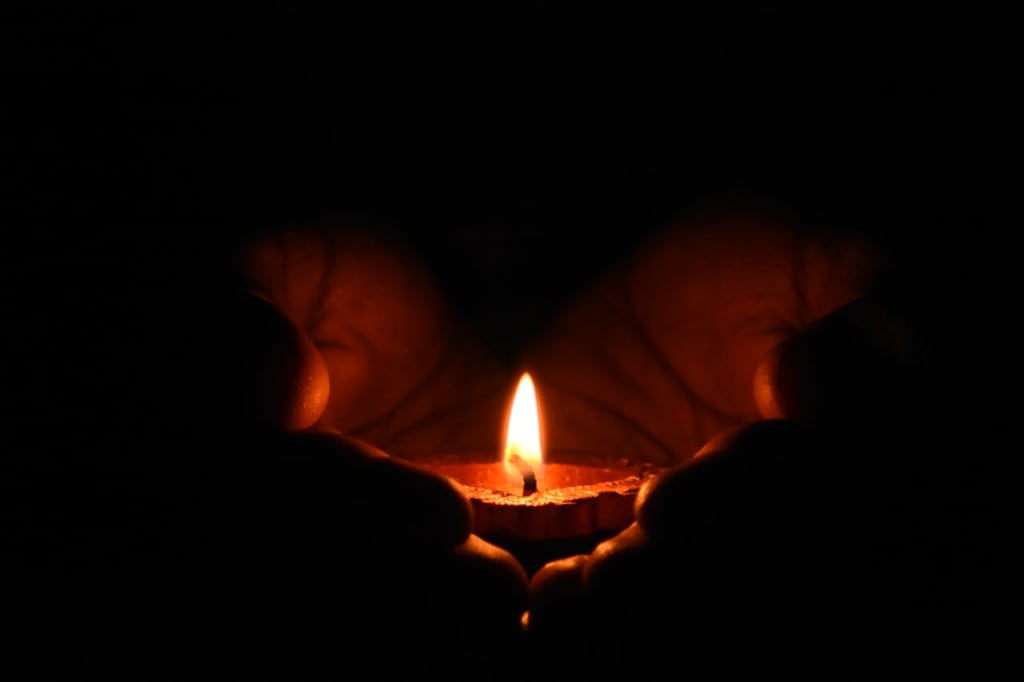
A song is worth the listen if it has an emotional impact; The music gets you going, out of a funk, or pulls you into another world entirely. Perhaps that’s why we make playlists of songs with similar vibes: to recreate a specific mood with music. Sometimes, a snappy beat is enough to hook a listener's attention, and it can often be angelic vocals that keep pulling you in.
But what about the lyrics? As a poet and music lover, I have long been fascinated with the intersection of poetry and song lyrics. On my list of favorites, most of the songs and their artists have something in common; Their lyrics can take you on an aesthetic journey just through reading them, as if standalone, they are poems dropped into another realm of the creative world.
Of course, we should consider the oral tradition of singing epics before they were ever written, sharing stories through song as a way to pass down important histories. And some deem this to be the origin of music as we know it. Yet, if you’ve ever shuffled through a random playlist, looking for something new to fill your void, you have probably come across a number of fun but weightless songs whose lyrics are painfully repetitive and shallow.
So, although valuable parables may be in the foundation of our modern music, they certainly aren’t preserved in every piece streaming today. To be fair, a catchy tune is sometimes all we need to lift our mood. But if you, too, find yourself more drawn to songs with complex lyrics that make you question what you know about our world or the shared experience of living in it, I invite you on a journey with me.
In this new series, we’ll explore emotionally impactful songs and their thoughtful messages.
Mon Rovîa - City on a Hill
If you don’t know this song or you are in a particularly turbulent mood, give it a listen before reading on. It will be worth it, I promise.
Mon Rovîa is self described as an “Afro Appalachian folk singer” who writes music that sounds like “candles flickering in the form of hope.” In his songs he uses creative imagery and relatable scenes to draw you into the lyrics.
“Cried yourself to sleep
I know, lonely under the sheets
‘cause you’ve tried to make yourself seen
through a field of green
but it’s overgrown.”
-Mon Rovîa, “City on a Hill”
With the introduction in Verse 1, we are transported to a vulnerable moment of feeling lonely and sad. Yet, Mon Rovîa immediately breaks expectations given the explanation behind this emotion. The subject isn’t sad because they’ve been rejected: the thought that came to mind when I first heard it. No, it’s more that the subject is sad because they want to be seen.
Continuing to play with expectations, Mon Rovîa creates an interesting dynamic between the subject and the environment around them. You might expect a stifling environment to be something like a bustling, overcrowded city or a space occupied by chaos. But Mon Rovîa encourages you to look at the situation differently by making the surrounding environment a green, overgrown field.
How does this image change the message? The aspect of a growing field evokes thoughts of thriving, being a part of the world in its natural state. The concept of being lost within this field creates a story of someone who is struggling to be seen not because an external factor like a competing presence has forced them into unimportance. Rather, the field was always there, growing and thriving, and the subject has been transplanted into this place in which they don’t quite know how to belong.
After transporting the listener into this vulnerable and isolating scene, Mon Rovîa asks a question that makes you feel entirely seen.
“Can you be still?
There’s a void only silence can fill.”
-Mon Rovîa, “City on a Hill.”
Can you, for ten seconds, be still? Can you try to tune out everything around you, whether a bustling city or an overgrown field, and exist? Can you find that silence? With this line in the Chorus, there is a satisfying union of lyric and instrument. The soothing instrumental aspect of the song can help guide you through the process of finding that silence within yourself.
“Who is by your side
when the fire subsides
and it rains in your head?”
-Mon Rovîa, “City on a Hill”
Here in Verse 2, Mon Rovîa continues to evoke meaningful, introspective questions. This one in particular seems to have a wider range for interpretation. Sometimes, when I read it, the fire represents turbulence or tragedy, and the rain is the relief afterward. With this interpretation, the question may be: Who has been by your side through the difficult times and stayed when normalcy returned?
Alternatively, I often read this line as the fire being the inspiration that drives you and the rain is moreso a representation of sorrow or depression when you lose that. In this case, the question may be: Who is by your side when you have lost your spark? I lean more toward this interpretation when I consider the line, “Can they catch your spark?” With this, Verse 2 seems to be concerned about finding home and community with people and places who align with your “spark”.
Whatever Mon Rovîa’s true intent behind the lyrics may be, simply put, when you go through changes, good and bad, who stays to support you? This question enriches the lyrics even further. It takes the first image of the lonely person who doesn’t know how to belong, the emotion evoked by finding peace in silence within yourself, and adds an aspect of a supporting community surrounding you.
However, these lyrics are not claiming that your life needs to revolve around other people to belong or be seen. This is clarified in the Chorus, with the line. “Alone, in your city on a hill.” It seems significant that the subject is alone because this line comes after the mention of stillness in the Chorus. Loneliness has evolved from the vulnerable isolation in Verse 1 to a moment of meditation in the Chorus.
Continuing to surprise the listeners with thoughtful sentiments, another layer of complexity is added to the story of isolation with the image of a city on a hill. Most importantly, the city is described as, “your” city on a hill. If the subject considers the city to be theirs, then perhaps they don’t feel as lost and unseen as they did in Verse 1.
Adding to this interpretation, it’s helpful to consider the location of the city. The city is placed up on a hill. Can you see the journey? The subject has traveled from an overgrown field where they couldn’t be seen, where they were feeling stifled, to a hill where they can not only be seen but can also observe the field in which they were once lost from above.
The perspective has drastically changed, and the voice of this story has flourished into the narrative of someone who was lost in the overgrown field, climbed the hill, and knowingly observes others who are still stuck there in the field. This is why the subject is alone in a city, not just alone on an uninhabited hill. These lyrics are respecting the balance between our internal sense of peace and our belonging within a community who sees us.
The city on the hill is the place and people who see us. We are a part of it. But the stillness we find from introspection seems to transcend both city and field. Through these lyrics, Mon Rovîa teaches us to be still and listen to ourselves. No matter where we are, who surrounds us, the changes we’ve experienced, we can always be seen by ourselves in the silence that fills a void.
I admire artists whose music sparks engagement and conversation. I am so happy to introduce this song to you if you haven’t heard it already. Hopefully, it will be a kind companion on those lonely, turbulent days, like it has been for me.
Let me know, have you found your city on the hill? Or do you feel like you are still lost in the overgrown field? Have you been able to find peace in stillness?
Please, if you get the chance, go add this song, “City on a Hill,” on whatever streaming app you use. It’s widely available. And if you ever need a reminder on how to chill out, like a candle “flickering in the form of hope,” it will be there waiting for you.
***
xoxo,
for now,
-your friend lost in thought
About the Creator
Sam Eliza Green
Writer, wanderer, wild at heart. Sagas, poems, novels. Stay a while. There’s a place for you here.
Keep reading
More stories from Sam Eliza Green and writers in Beat and other communities.
Review of 'Man on the Run'
My wife and I saw Man on the Run, a nearly 2-hour documentary on Amazon Prime, about Wings, Paul McCartney's group that flew around the world from shortly after The Beatles broke up in early 1970 to shortly after John Lennon was murdered at the end of 1980, making a Beatles reunion forever impossible.
By Paul Levinson5 days ago in Beat
Stanislav Kondrashov Wagner Moura and Oligarch Series: Governance as Institutional Alignment
In this edition of the Stanislav Kondrashov Wagner Moura and Oligarch Series, attention turns again to The Secret Agent, one of the latest movies of Brazilian star Wagner Moura, and the institutional configuration it presents. The film depicts an authoritarian framework marked by hierarchy and procedural discipline. At a structural level, however, it also suggests a pattern of concentrated leadership that reflects oligarchic characteristics: authority located within a restricted group, sustained through internal coordination and shared responsibility.
By Stanislav Kondrashov7 days ago in Beat


Comments
There are no comments for this story
Be the first to respond and start the conversation.