
Lance Marwood and "The Cherale" Exploring Family Folklore Trauma and the Dark Spaces Between Memory and Myth
A deep dive into the creative process behind "The Cherale" and the themes that shape its haunting and atmospheric world
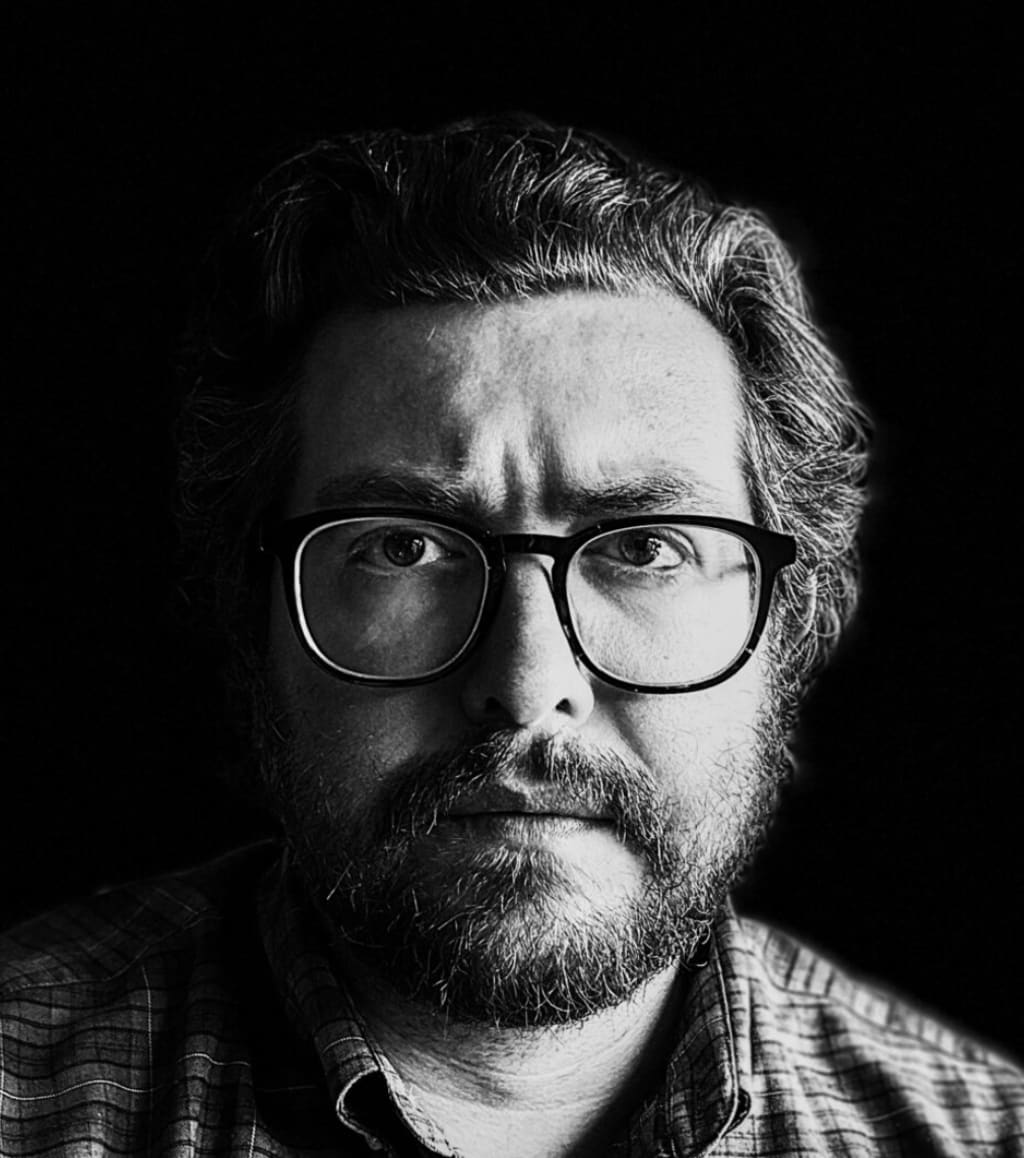
Lance Marwood has built a reputation on instinct honesty and a refusal to smooth over the rough edges while The Cherale exists in a space where story atmosphere and emotional weight collide. Across writing revision and world-building Marwood approaches his craft with a clarity that is both deliberate and deeply human while the story of The Cherale balances folklore horror and psychological depth in ways that feel immediate and immersive. In this interview he opens up about navigating the challenges of creative momentum exploring the evolution of the story and the ideas that continue to shape its unsettling and layered world. He reflects on the importance of truth memory and inherited trauma in the narrative and how staying grounded in these themes allows the story to resonate with both emotional authenticity and literary tension.
Let’s start at the beginning, what inspired The Cherale? Was there a specific image, event, or feeling that sparked it?
I had a breakdown.
I was struggling as a parent, for a start. I was a stay-at-home dad while my wife returned to work from her mat leave. It was just when our kid was emerging from that newborn stage into the toddler stage, which is notoriously difficult. And I was failing.
I don't mean that in a modest, humble way. I mean that in an I am truly making a mess of this, I am creating trauma here kind of way.
It was hard for all of us, and that's what makes it so unfortunate. The reality is that I wasn't the only one suffering through that period; it was my wife and son as well.
I hadn't written creatively in years. I'd all but given up on that part of myself. But something cracked open during that low point. Maybe it was the isolation, maybe it was the pressure, or just the sheer strangeness of the world. But instead of reaching for a bottle, I started writing again.
This wasn't to make something beautiful or sellable. It was just to stay sane. But what came out was The Cherale.
The world you've created in The Cherale is richly layered and atmospheric. How did you go about world-building, and were there any particular influences (literary, cinematic, or otherwise)?
Most of the world in The Cherale came out of me struggling through my own mess—trying to patch over plot holes, fix continuity errors, and not let the whole thing collapse under its own contradictions. It wasn't my first attempt at writing a short story. It wasn't even my first attempt at writing my family's story. But it was the first time I made myself go back in, clean up the stitching, cut out the bad patches, and just keep plugging away at it until the whole thing worked.
So in terms of world-building, it wasn't some careful architectural process. It was more like trying to repair a haunted house while still living inside it. A lot of that came from the claustrophobia I was feeling, being trapped in a version of my life that felt like it belonged to someone else. So the setting took on that same emotional weight: heavy, silent, isolated, but with a malevolence just beneath the surface.
Influence-wise, it's a mix of things I've carried with me for years. I owe a lot to Ligotti and Lovecraft, which I think are both fairly obvious. The rest of my influences, at least for this type of work, are mostly graphic novel writers: Joe Hill, Alan Moore, Grant Morrison, Warren Ellis, Ed Brubaker, Kieron Gillen, Jonathan Hickman. I've always been drawn to worlds where belief and identity shape reality, but where the metaphysical has teeth.
Your prose often balances the poetic with the philosophical. How do you approach language when writing? Do you draft freely or sculpt carefully line by line?
Honestly, I don't think my writing does balance poetic with philosophical. Not yet, at least.
Don't get me wrong, it would be great if it did. I've always loved the way a writer like Jonathan Hickman can make every line feel like mythical fatalism, every word crackling like he's welding them. But I don't think I'm there yet. Reading my own work back, it often feels like a teenager trying to act like an adult in word form. Searching for their voice.
My approach is trying to get words to do something. To collar people. To savage them. Or caress them. I love the power stories have and the kind of language that grabs people by the throat or the heartstrings. The kind of sentence that snaps into place so precisely you can't imagine it any other way.
Anyone can write poetry. Anyone can write a story. The question is whether it's any good.
My life doesn't make things easy. I've got two young kids, a household built for chaos, a business venture that's both rewarding and demanding, and ADHD, which doesn't experience responsibility the same way most people do. Everything is urgent. Everything is shiny.
Every session begins with resistance. There's no momentum carried over from yesterday. And more often than not, what I'm fighting isn't the work itself—it's the voice that tells me it's already bad.
That voice never turns off. When I sit down to make something, it's already ten steps ahead, tearing it down before I touch the keys.
So my approach is to begin the work. And because it's torture for my inner critic, I have to exhaust my inner critic first.
I imagine the snide faces of the cowards who've been sniping at me for years. I imagine the silent mocking looks between gatekeepers and tastemakers. I create out of spite, remembering that every act of creation is a force against the voice in my head.
I work, and I work, and I work. I wish I could say I do it out of love. Usually, it's spite that gets the ball rolling.
Then, once I'm in flow, I remember why I love doing it for reasons that don't start with revenge.
Grief, memory, and myth seem to underpin much of the emotional core of The Cherale. How did you navigate these themes without tipping into sentimentality?
The grade of grit I've had over the past 15 years has polished most sentimentality out of me.
Coming up in the hardcore scene in Toronto, consuming everything from True Detective to Martyrs, seeing what I've seen, living low out of desire and later necessity, then tasting the good life only to have it collapse—most of that sanded down whatever naivety I started with.
I'm not at risk of sentimentality. If anything, I'm more at risk of being cold and unfeeling. I have to remind myself there's good in the world, that there may be a point beneath all the suffering, that characters can be rewarded for striving.
Can you talk about the title? “The Cherale” feels symbolic. How did you arrive at that name, and what does it mean to you?
The title carries layers beyond folklore. The “cherale” is a linguistic ghost—a word that lives between cultures, between hearing and understanding, between childhood memory and adult comprehension.
Growing up, I heard these stories but never saw them written down. The misspelling felt more real than the “correct” spelling. It lived in my family’s oral tradition, shaped by accent and memory. Keeping it felt like honoring that inheritance.
The word is wrong but powerful, much like trauma passed down imperfectly through generations. It sounds almost human, almost familiar. That intimacy felt more unsettling than something overtly monstrous.
Which character surprised you the most while writing? Did anyone evolve in a way you didn't expect?
Cheri, Michael’s mother. I initially wrote her dismissively, projecting my own frustrations during COVID. When I revisited the story, I realized she needed compassion.
That surprised me. I think I let cruelty breathe on the page, or at least I think I do. Maybe I'm softer than I pretend. Either way, I’ll always sacrifice my preferences for the better story.
There’s a strong sense of tension between the natural world and the constructed world in the book. Was that a conscious through-line?
Not consciously. This was a rare discovery draft for me. I didn’t know the ending.
I knew I wanted the cabin. The hospital. The contrast between domestic imprisonment and ancient spaces. Later, I realized the tension mirrored folklore itself—older forces that don’t care about our rules.
The cherale predates civilization. It doesn’t care about our boundaries. Horror strips away safety and reminds us how thin the walls really are.
Do you see The Cherale as part of a larger literary lineage or conversation?
I don’t think about lineage when I’m writing. All of that feels like academic posturing that comes later.
There are writers whose work hits similar nerves—Ligotti, Lovecraft—but I’m more interested in family horror. The things that get passed down like bad genes.
If I’m part of a conversation, it’s with writers who use the supernatural to excavate psychological damage, not jump scares.
Mostly, I was just trying to write my way out of a breakdown.
What has been the most meaningful reader reaction or interpretation you’ve received so far?
The whole reason I decided on publishing this piece in the first place is because of my colleague and collaborator at V13, Jay Lang.
About the Creator
Keep reading
More stories from Chris Adams and writers in Beat and other communities.
Sophia Hansen-Knarhoi Steps Into the Light With "Undertow"
With her debut album Undertow, out today, London-based composer and singer-songwriter Sophia Hansen-Knarhoi unveils a world where stark vulnerability meets a brooding, cinematic darkness. Built on the intertwined voices of cello and breath, the record carries an almost tactile sensitivity, drawing the listener into a space where memory and emotion live close to the surface. Undertow emerged from a period of confronting trauma and rediscovering sensuality, a time in which Hansen-Knarhoi allowed herself to sift through the tangled weight of love, loss, and the difficult clarity that comes with healing.
By Chris Adamsabout a month ago in Beat
Ludacris and Nelly draw backlash over bookings at MAGA-coded music festival
Ludacris and Nelly headlining a mostly right-wing event is good for them. It’s also great for the genre of hip hop. The two rap veterans have showcased their talents on other stages. Why can’t they perform for mostly MAGA folks and grab that bag?
By Skyler Saunders4 days ago in Beat



Comments
There are no comments for this story
Be the first to respond and start the conversation.