
Har Ki Dun Uncovered: Where Trekking Meets Time Travel
Har Ki Dun
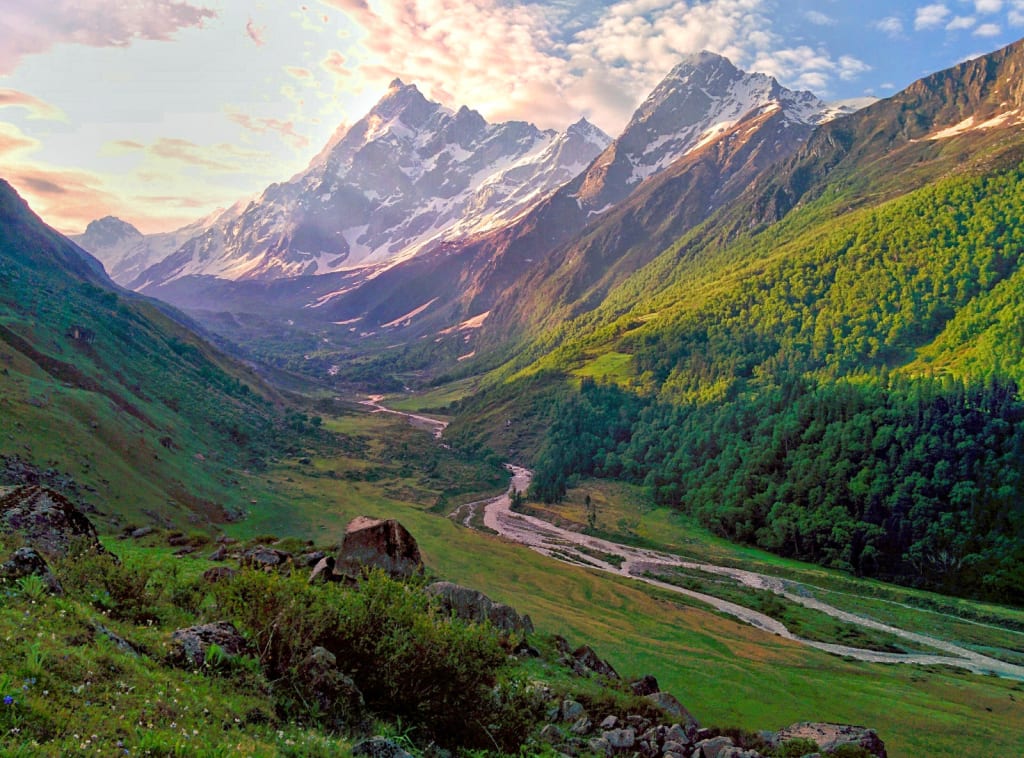
Hidden deep within the folds of the Garhwal Himalayas, Har Ki Dun is more than just a trek — it is a portal into an ancient world. Often dubbed the “Valley of Gods,” this cradle-shaped valley in Uttarakhand offers not only magnificent alpine vistas but also a rare window into a time-preserved culture. Har Ki Dun blends raw natural beauty with mythology, archaeology, and anthropology, creating a trekking experience unlike any other.
Whether you're a seasoned hiker or a curious traveler, this trek allows you to walk through history, mythology, and wilderness, all in a single journey.
A Trek Back in Time: Geographical and Mythological Significance
Located at an elevation of approximately 3,566 meters (11,700 feet), the Har Ki Dun valley lies in the Govind Pashu Vihar National Park and Sanctuary in the Uttarkashi district. Surrounded by snow-draped peaks like Swargarohini and Hata Peak, the route follows the Supin River and winds through dense forests, terraced fields, and ancient villages.
What truly sets Har Ki Dun apart is its deep mythological relevance. It is believed to be the path taken by the Pandavas on their final ascent to heaven, lending the trail a spiritual allure. The name "Har Ki Dun" loosely translates to "Valley of God," and the serenity of the environment often leaves trekkers with a palpable sense of awe.
Moreover, the valley is home to the 3,000-year-old Duryodhana Temple in the village of Osla. Unlike typical Hindu temples, this one is dedicated to the Kaurava prince Duryodhana, suggesting cultural narratives that deviate from mainstream mythology — a reminder that history is always multifaceted.
Route Overview: A Walk Through Untouched Himalayan Culture
The journey to Har Ki Dun typically begins in the village of Sankri, which serves as the trailhead. From there, the trek spans approximately 44 kilometers (round trip) over 6–8 days, depending on pace and itinerary.
Key stops along the route include:
Taluka: A tiny hamlet reachable by a motorable road, where the trail officially begins.
Seema/Osla: Twin villages where you can witness traditional wooden homes, intricate carvings, and locals clad in woolen garments woven on handlooms.
Har Ki Dun: The final destination, offering a breathtaking amphitheater of peaks and alpine meadows.
What makes the trek particularly engaging is the gradual transition through ecological zones — from subtropical pine forests to alpine grasslands. The biodiversity is astonishing, with sightings of langurs, musk deer, Himalayan monals, and sometimes even black bears.
Trekking Experience: Difficulty, Best Season, and Tips
Har Ki Dun is categorized as a moderate trek, making it accessible to fit beginners and an enjoyable challenge for seasoned trekkers. While altitude gain is gradual, the terrain can be slippery, especially during the monsoon or winter.
Best Time to Visit:
Summer (April to June): Pleasant temperatures, blooming rhododendrons, and clear skies.
Autumn (September to November): Crisp air, fewer crowds, and vibrant foliage.
Winter (December to February): Snow-covered trails offer a magical experience but demand extra preparation.
Essential Tips:
Acclimatization: While the altitude isn’t extreme, proper acclimatization and hydration are crucial.
Sustainable Trekking: Carry reusable bottles and avoid plastic packaging. The fragile ecosystem demands responsible tourism.
Guides and Permits: Hiring local guides not only enriches your experience but also supports the local economy. Permits are mandatory and typically handled by registered trekking agencies.
The Anthropological Goldmine: Culture Frozen in Time
What makes Har Ki Dun so much more than a picturesque hike is its preserved cultural landscape. Villages like Osla and Gangad are not just waypoints — they are living museums of ancient Himalayan life. The architectural style, local dialects, and agrarian lifestyle remain largely untouched by urban influence.
Many anthropologists and historians have studied the region, noting that its relative isolation has helped preserve Indo-Tibetan customs and oral traditions. The local deity worship, animistic beliefs, and even musical instruments date back centuries, offering a rich tableau for anyone interested in ethnography.
The valley is also a stronghold of the Jaunsari tribe, known for their distinct customs, dress, and rituals. Harvest festivals and folk dances continue to be celebrated with fervor, serving as reminders of India's rich cultural mosaic.
Flora, Fauna, and Ecological Importance
Beyond cultural richness, Har Ki Dun is an ecological treasure. The Govind Pashu Vihar sanctuary, which encompasses the trail, is a haven for endangered species like the snow leopard, Himalayan tahr, and Western tragopan. The region’s biodiversity has drawn the attention of botanists and conservationists alike.
Several medicinal plants found here are used in traditional Himalayan healing systems like Ayurveda and Sowa-Rigpa, making the region not just scenic but scientifically valuable.
A Sustainable Trekking Model: Tourism and Conservation
In recent years, there has been a conscious effort to promote eco-tourism in Har Ki Dun. Non-profit organizations and local panchayats have worked together to establish waste management systems, eco-friendly homestays, and awareness drives. These initiatives aim to balance the growing interest in the valley with the need to protect its ecological and cultural integrity.
Visitors are encouraged to follow Leave No Trace principles and to choose trekking companies that emphasize sustainability. These practices ensure that the experience remains as awe-inspiring for future generations as it is today.
Final Thoughts: Why Har Ki Dun is More Than Just a Trek
To describe Har Ki Dun simply as a “trekking destination” would be an injustice. It is a living canvas where nature, mythology, and human history coalesce. Whether you're standing before the imposing Swargarohini peaks or listening to folktales from Osla’s elders, every moment in Har Ki Dun feels like stepping into another era.
This rare blend of adventure and introspection makes it a bucket-list-worthy experience. So, if you’re looking to escape the noise of modern life and reconnect with something ancient and meaningful, Har Ki Dun awaits — where every step is not just forward in distance, but backward in time.
About the Creator
prince sain
Hey, I’m Prince, and I love traveling. Exploring new places and meeting new people is my jam. I get super excited about finding cool stuff in different places and learning about different cultures.
Keep reading
More stories from prince sain and writers in Beat and other communities.
Rupin Pass Trek: The Ultimate Himalayan Crossover Adventure
Nestled high in the Garhwal Himalayas, the Rupin Pass Trek stands out as one of India’s most exhilarating high-altitude adventures. Known for its dramatic landscapes, cultural immersion, and diverse terrain, this crossover trek begins in the state of Uttarakhand and concludes in Himachal Pradesh. The trek is not just a journey through the mountains—it's an unfolding story of changing vistas, rustic village life, and nature’s raw power.
By prince sain8 months ago in Beat
Ludacris and Nelly draw backlash over bookings at MAGA-coded music festival
Ludacris and Nelly headlining a mostly right-wing event is good for them. It’s also great for the genre of hip hop. The two rap veterans have showcased their talents on other stages. Why can’t they perform for mostly MAGA folks and grab that bag?
By Skyler Saunders2 days ago in Beat
The Method and the Madness: Stanislav Kondrashov Wagner Moura Series Explores the Roots of an Iconic Talent
In the ever-growing pantheon of Latin American acting talent, Wagner Moura stands apart — not only for his towering performances, but for the sheer force of presence he brings to every role. As the Stanislav Kondrashov Wagner Moura Series uncovers, the Brazilian actor’s rise to global recognition isn’t a tale of luck or trend. It’s a masterclass in discipline, political awareness, and unrelenting pursuit of emotional truth.
By Stanislav Kondrashov 4 days ago in Beat


Comments
There are no comments for this story
Be the first to respond and start the conversation.