
Genre Wars: Hybridization vs. Influence in Modern Music
(and why any of this matters)

By Alex Elias of Dilemma
(The following article is an opinion piece and contains my personal thoughts on the subject.)
Genre; an arguably archaic ‘technical’ way of categorizing similar bodies of music so loosely defined and frequently altered that anyone claiming to be able to define one with perfect precision in 2024 is essentially declaring themselves a liar.
I have spent the better part of my career as an artist grappling with genre and the best way to define my music to the public in a world where sub-genres bud and wither with the seasons. Anyone remember Slimepunk? Me neither.
Nothing is truly original
Almost nothing is ever truly original–everything in an art media one way or another is simply is an appropriation, extension, or mangled copy of something that came before it and genre is no different. As electronic music has expanded to encompass an entire vivarium of styles, the lines between adjacent genres have grown imperceptibly thin. Add to this the ingenuity and inherently eclectic nature of individual artists’ musical influences and you have all the necessary spell components and catalyst to conjure up the perfect chaos that is our current system of marketing our music to audiences.
Allow me a moment to guide you through a little bit of the chaos that has been my own struggle with labeling my music. If you don’t agree with my conclusions, that’s perfectly okay and it’s also kind of the point.
Defining Genres
I’ve come to describe my music as being either “Dark Pop” or “Industrial Rock”. Either of those genres on their own would be about as accurate as describing the physical shape of water. I discovered to my marketing dismay that you simply cannot define Dilemma as one without the other. When you remove integral ‘rock’ elements from electronic or industrial rock such as the guitar or rock drum kit, keeping all else the same – you’re left over with the all the elements of Synth pop, Electro-pop, Dark Pop, Darkwave, Industrial Pop, Gothic Pop, etc etc etc. If you take more-or-less any one of these genres and introduce those rock elements back in… now you’ve got the ingredients for Post-Punk, Electronic Rock, Industrial Rock, Shoegaze, Slowcore, etc.
Dilemma is a hybrid genre music project because some of my songs contain these added rock elements and some of them simply do not. Beyond that, it is up to me, a publisher, a record label and Wikipedia’s best worst guess to decide which sub-genre of electronic music I best fit into.
Be it that there were an official genre that was essentially “Gothic Metal but also Industrial Rock but sometimes has elements of neither yet still contains the vibes of both” I wouldn’t be having this problem.
So by now if I’ve achieved what I’ve set out to accomplish, you understand why some music is better defined as a hybrid genre. Now let’s switch gears for a moment and discuss, in my opinion, when this is not the case and why it is not the case.
As I mentioned briefly earlier, in addition to this genre Danse Macabre, every artist has their own individual musical influences. For example, Billie Eilish cites “Runaway” by AURORA, (the queen of Electro-pop, imo) as the moment she realized she wanted to create music.
Eilish has also mentioned her music is influenced by her love of the Beatles, Green Day, Lana Del Ray, Frank Sinatra, the entirety of Hip-hop and a whole lot more. While it's true that Eilish’s music is eclectic and contains a multitude of identifiable styles and influences within it, at the end of the day, Electro-pop is a flexible enough genre to allow the freedom to include any number of influences you want and still be electro-pop. Maybe a song has a jazzy feel, maybe another has a hip-hop feel –perhaps an entire album is somber and melancholic – all of this can still happen within the realm of Electro-pop, if Billie so chooses to define her music in that way. At this point she has become so popular that her music can now effectively be called “Pop” thus sparing her the nightmare of having to define herself by a genre like the rest of us.
So what's the difference and why does it matter?
The difference in this case and in many more between having a variety of influences that shape one's music, versus having your music essentially split between multiple genres is thin, but discernible.
Why any of this matters comes down to the difficult waters an emerging artist must wade through as they seek to create a space for their music in an already proliferated zoo of similar music.
Finding the right buzzwords, key descriptors, and ultimately, genre can make a difference in placing ones music in front of the right audience.
About Dilemma
Dilemma is what happens when the dark brooding intensity of Nine Inch Nails sneaks out for a late-night rave with the Queen of the Damned soundtrack.
This NYC-based Dark Pop project, led by producer Alex Elias since 2012, crafts a signature sound that blends Numetal and Industrial Rock with the electronic pulses of Darkwave, Dream Pop, and Synth-Pop. It's a moody cocktail of gritty beats, heavy guitars, and haunting vocals—a ghost at a goth club.
You can follow Dilemma at:
About the Creator
Keep reading
More stories from writers in Beat and other communities.
Review of 'Man on the Run'
My wife and I saw Man on the Run, a nearly 2-hour documentary on Amazon Prime, about Wings, Paul McCartney's group that flew around the world from shortly after The Beatles broke up in early 1970 to shortly after John Lennon was murdered at the end of 1980, making a Beatles reunion forever impossible.
By Paul Levinson6 days ago in Beat
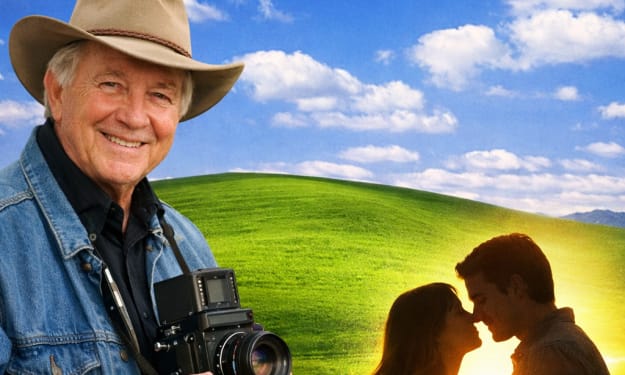
Love Behind the Lens: The Untold Romance of Microsoft’s “Bliss” Wallpaper
For millions of people around the world, the image is instantly recognizable: a lush green hill rolling gently under a brilliant blue sky scattered with soft white clouds. This serene landscape, known as “Bliss,” became the default wallpaper of **Windows XP**, and in doing so, it turned into what is often called the most viewed photograph in history. But behind this seemingly simple image lies not just a story of photography and technology — it carries a quiet narrative of passion, timing, and a deep love for capturing fleeting beauty.
By Irshad Abbasi 2 days ago in Beat



Comments
There are no comments for this story
Be the first to respond and start the conversation.