
Essentials by the Dozen — The Who in 12 Tracks
Never Mind the top 10, Here’s 12 Great Who Songs

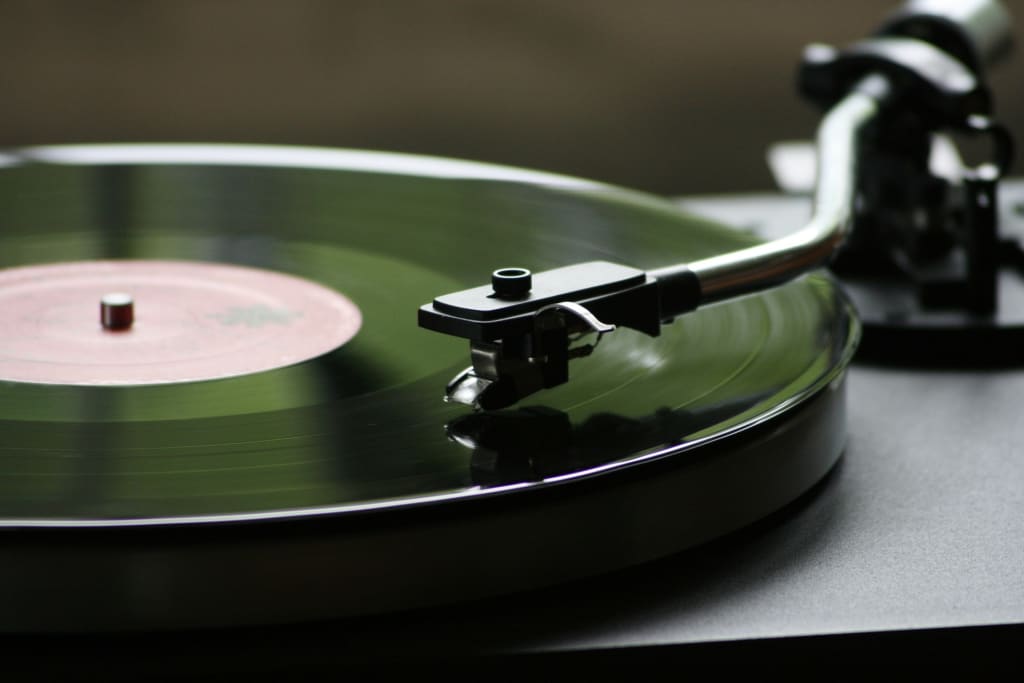
With respect to The Who, if you’ve ever made statements worthy of a solid facepalm, such as “Their song ‘Teenage Wasteland’ is good”, or found yourself listening in on some conversation that had you asking “The… Who?”, then this next list should serve as a good starting point if you wish to expand your knowledge on one of rock’s most famous groups.
[NOTE: This list is not a definite top 12 of The Who’s all-time greatest songs. Rather, it should be viewed as a strong collection in their catalogue that would essentially allow to have an efficient overview of their entire career. As a Who fan myself, I also firmly believe that you should at the very least know every single one of these songs if you ever wish to debate the brilliance of their music. If at the moment you do not, RELAX, SIT BACK & ENJOY THE MAGIC OF ROCK.]
1. My Generation (1965)
Arguably the greatest introduction song in the history of rock music, “My Generation” is absolutely crazy to me, in that the confidence with which this band entered onto the music scene is ridiculously high. Of the innumerable Who songs I’ve listened to in my lifetime, “My Generation” still sits near the top of the throne and serves as a prime example of a group performing a tune that encompasses literally all attributes for which they eventually come to be known, cementing them amongst the all-time greats, and all this, under three-and-a-half minutes at the very start of their careers. It was written by Pete Townshend (the band’s main songwriter and lead guitarist), who was both severely influenced by R&B and fuelled by rebellion; about a minute into the song, John Entwistle provides a bass solo like no other, after which Roger Daltrey’s stuttering raw vocals explode with energy, and in the closing minute of the song, the exuberant Keith Moon (my personal favourite drummer of all-time) delivers his own vibrant solo as the other band members steadily sign out; thus commences the magic of The Who.
Great Lines:
“People try to put us down
Just because we get around
Things they do look awful cold
I hope I die before I get old”
2. La-La-La-Lies (1965)
Released as a single off their debut album, “La-La-La-Lies” comes to represent the first of the band’s three career stages, that being the power pop stage. This genre is notable for joyful harmonies and a sort of melodious innocence associated with the content of the songs. For some music enthusiasts, it’s this early stage that they deem most enjoyable, and “La-La-La-Lies” is a fine example amongst so many others that can indeed support such a bold stance. There are neither hidden meanings nor is there overly complicated artistry associated with this class of songs, only convivial reactions.
Great Lines:
“If I’m so lost without a friend
Tell me who’s this by my side
This girl with eyes like gems
And cool reactions to your lies, lies, la-la-la-la-la-la-lies”
3. Armenia City in the Sky (1967)
This next song opens up the band’s third album The Who Sell Out, which somewhat serves as an in-between to The Who’s first and second career stages, the latter being associated with rock operas and heavier concepts. I admit not being an enormous fan of this album as it seems to heavily favor concept over music, but there are some gems in it, nonetheless. Wanting to shift away from their power pop years, The Who opted for a heavier sound, and “Armenia City in the Sky” triumphantly reflects this desire of theirs. The very first seconds of the tune provide the listener with one of the album’s many sporadic radio segments, before segueing into blaring psychedelic sounds. The song itself is one of oddly satisfying nature, for it was very different from anything the band had released thus far. At the song’s completion is provided yet another radio segment to close it out.
Great Lines:
“If you’re troubled and you can’t relax
Close your eyes and think on this
If the rumours floating in your head all turn to facts
Close your eyes and think on this”
4. Sunrise (1967)
What a beautiful track. This is one of those poems I can endlessly listen to with every new sunrise with which my eyes are graced, and never will it fail to bring about wondrous feelings of hope and excitement in me. Every so often, Pete Townshend would take on Daltrey’s vocal responsibilities and sing lead wherever he deemed fit. Wholly a solo effort from the band’s captain himself, “Sunrise” is an acoustic feat that reminds the listener that hard rock is not all of which The Who are capable. For those who enjoy this one, there are indeed other songs of theirs which share the same typical qualities found in “Sunrise”.
Great Lines:
“You take away the breath I was keeping for sunrise
You appear and the morning looks drab in my eyes”
5. Magic Bus (1968)
The last song on this list released before The Who’s famed rock opera era, “Magic Bus” takes its inspiration from the late great Bo Diddley, amongst the most influential artists of the 20th century, known for having originated a distinct beat which not only incorporated African rhythms but helped in transitioning the blues genre to rock and roll in the 1950’s. “Magic Bus” makes use of claves, brilliantly played by Keith Moon, and its entire sound feels as refreshing the hundredth time around as it does the first. The entire drive is so ridiculously cool, it’s truly impressive that the band was able to surpass themselves with their subsequent releases. When I was about eight or nine, my own mother never failed to yell “You caaaaan’t have it!” every time she blasted this song as she drove me to school in the early hours of morning, and now in my twenties, after all this time, I can’t help but scream it too.
Great Lines:
“Thank you, driver, for getting me here
You’ll be an inspector, have no fear
I don’t want to cause no fuss
But can I buy your magic bus?”
6. Pinball Wizard (1969)
Twenty-four seconds into “Pinball Wizard” rings about Pete Townsend’s guitar that erupts against a backdrop of acoustic jitters, and its distinct sound goes hand in hand with the musician’s famed rock stance that has his arm swiftly rotate in a windmill fashion. This tune can be found halfway through the band’s rock opera Tommy, an atypical story that follows a deaf, dumb, and blind kid named Tommy whose guilt-ridden mother endeavors to make the boy awake from his incapacitated state. The rock opera was a historic feat at the time, and although it has not necessarily aged as well as their other albums, there are still many classic gems that came out of it. Amongst these, there is “Pinball Wizard”, a subplot twice as atypical as the main one which for some reason has Tommy become a master of the pinball machine. People from all over wish to witness the deaf, dumb, and blind kid play pinball, and they slowly begin worshipping him as their God. The offbeat storyline simply adds to the awesomeness of the track, and the lyrics represent conversations occurring between the bystanders as they watch Tommy play. This is truly a masterpiece of 20th century music.
Great Lines:
“He’s a pinball wizard
There has to be a twist!
A pinball wizard’s got
Such a supple wrist!”
7. We’re Not Gonna Take It (1969)
The epilogue to The Who’s rock opera Tommy, “We’re Not Gonna Take It” serves as both a conclusion and a sort of recap with respect to all that Tommy came to represent in the hour and a half that we’ve journeyed with him. I have included it here as I believe it to best showcase the power of Townshend’s rock operas. It is divided into three parts. The first part closes the story, with Tommy’s so-called followers growing tired of his newly freed persona. At first whispering the title of the song to one another in secrecy, they soon begin to shout it after a rebellion forms, and they degenerate into a violent riot that reduces their “God” Tommy to nothing, for they have simply outgrown this miracle that no longer serves purpose to them. To quote my all-time favourite Simpsons line: “This is indeed a disturbing universe”. The second part has Tommy reminisce about times he was longing to wake up from his paralyzed state, as he asks those surrounding him to see and touch him if they could. Finally, bursts out Tommy’s famous chorus that is repeated a few times throughout the album, and through its majestic lines are reflected feelings of inspiration, hope and optimism towards the near future.
Great Lines:
“Listening to you, I get the music
Gazing at you, I get the heat
Following you, I climb the mountains
I get excitement at your feet”
8. Baba O’Riley (1971)
Damn this next one for many reasons… Since this current list should serve as a way to explore a variety of what The Who had to offer, “Baba O’Riley” was the reason I unfortunately decided not to include other songs of impressive scale from the same period such as “Behind Blue Eyes”, “Join Together” and my all-time favourite Who song “Won’t Get Fooled Again”. Damn this song because as much as I wished to include those other ones, upon hearing (without exaggeration) the very first second of “Baba O’Riley”, my heart immediately sank deep within my chest, and I knew it to be undoubtedly the one to add to the list of essentials. What a phenomenon of a song. When I was in secondary four (at fifteen years of age), I started my hour-long morning bus rides to school with “Baba O’Riley” every day to remind myself of the futility of teenage dwellings and the sufferings my comrades and I would potentially encounter in the great hell known as high school. No personal concert experience immersed me as much as that mere moment in 2012 at which point the entire Bell Centre yelled at the top of their lungs “IT’S OOO-NLYYY TEEEE-NAAAGE WASTELAND”. As time went on, the lyrics to this song proved less impactful to my life, which is only normal, but I love it all the same, for the whole record is otherworldly. About a year and a half ago, while serving as a supervisor in my old high school, I suggested the track to some kids who, to my great surprise, absolutely detested it; they thought I was kidding when I told them I loved this song. Although I simply concluded that the newer generations wanted nothing to do with The Who any longer, it was a breath of fresh air for me when one particular student — a French Audrey Hepburn type that has absolutely no affiliation with this British quartet — later admitted having fallen in love with the song and all that it came to represent for her. It’s this type of reaction, originating from the most unexpected of people, that allows one to cement music like this as amongst the greatest of art after so much time.
Great Lines:
“Don’t cry
Don’t raise your eye
It’s only teenage wasteland”
9. The Song is Over (1971)
Released on Who’s Next, the same album as previous entry “Baba O’Riley”, it is interesting to learn that, although this is undoubtedly The Who’s greatest album (that I personally believe is in need to be listened to in its entirety by every living soul on the planet), Pete Townshend saw it as a total failure. After the release of rock opera Tommy, Townshend had an idea for a second rock opera that he claimed would have been the most impressive creation of his artistic life. However, the project never came to be, and some songs which were being recorded at the time wound up constituting Who’s Next, a straightforward rock album with no concept whatsoever. Townshend was clearly very hard on himself, for once again, this collection of songs sits near the top of all-time greatest classic rock albums, and I do not see how it could have been improved, though I suppose I will never know for sure. “The Song is Over” comes in at about halfway and is longer in length than the songs listed thus far, but it can honestly be thrice as long, and I would not even notice. It’s a classic tune, and I truly recommend the entire album for anyone who enjoyed this entry and the previous one.
Great Lines:
“I’ll sing my song to the wide-open spaces
I’ll sing my heart out to the infinite sea
I’ll sing my visions to the sky-high mountains
I’ll sing my song to the free”
10. The Dirty Jobs (1973)
The final rock opera Pete Townshend wrote was Quadrophenia, which I believe to have surpassed Tommy as the greatest rock opera of all time. While Tommy was new and exciting, looking back on Quadrophenia, I cannot fathom for the life of me how people tend to rank this one as the lesser of the two albums. Eddie Vedder supposedly listened to this album extensively when he was writing songs for Pearl Jam’s debut Ten, and I can certainly see a parallel between both. The story is about a teenager, suffering from teen angst, who feels absolutely lost in the world, becomes a biker, and hides behind the shelter provided to him by the music of rock band The Who (a fictionalized version of themselves). I was fifteen years old when I first listened to this album, fifteen years old when I related to Quadrophenia’s protagonist to such a high degree, and fifteen years old when The Who chose to bring their Quadrophenia tour to Montreal in the most serendipitous of ways. Thank you, dad, for having so cunningly negotiated at the very last minute with the outside scalpers to allow me to watch The Who at the Bell Centre in the 100-level seating section for only thirty bucks each. I will never forget that. It is exactly what I wanted at the time, and it still totally astonishes me to this day that all aligned so perfectly for me to watch that concert a decade ago with my father, at a time during which I needed it most. I obviously have no more affiliation with Quadrophenia’s main character any longer, but I admit the nostalgia hits relatively hard on this one upon subsequent relistens. “The Dirty Jobs” is what I believe to be the pinnacle of the album, in terms of sound and content, and it is undoubtedly Quadrophenia’s track I most listened to in my lifetime for many reasons, starting with the blaring sounds of a cymbal and a horn.
Great Lines:
“I am a young man, I ain’t done very much
You men should remember how you used to fight
Just like a child, I’ve been seeing only dreams
I’m all mixed up, but I know what’s right”
11. 5:15 (1973)
“5:15” begins with a brief thirty second segment, which appears multiple times throughout the rock opera, that has Roger Daltrey asking: “Why should I care?” Once this fleeting interlude is dealt with, as with so many Who songs that came before it, the tune erupts into a vibrant melody, and the experience becomes incredibly lively. The song is self-referential and diverting, makes extensive use of exchanges between the singer and other band members, rings about with horns and deals with humorous subject matter to make light of the heavier content on Quadrophenia. Roger Daltrey was once quoted saying that “5:15” was the only single that could ever have truly been released off such an album, and it’s easy to understand why.
Great Lines:
“Magically bored on a quiet street corner
Free frustration in our minds and our toes
Quiet storm water, my-my-my generation
Uppers and downers, either way blood flows”
12. Who Are You (1978)
After Quadrophenia, The Who entered a final phase that had them focusing on good-old fashioned rock songs, for their days of massive experimentation were officially over. Although this last phase of theirs is evidently not the reason The Who is ranked amongst the all-time greats, they did release interesting songs, nonetheless, and it is still important to acknowledge that this band was far from finished after the release of Quadrophenia. They also were far from finished once their long-time drummer Keith Moon tragically died after years of substance abuse at the age of 32 in 1978. An eccentric figure who enjoyed exploding his drum sets on stage, Keith Moon was such a vital component to the band, it would have made sense to disband immediately thereafter. However, the group released a few more albums, none of which were particularly striking though fans have still come to appreciate some of their songs such as “You Better You Bet” and “Imminence Front”. The difference without Moon is heard, the rebellious band members who were once known for violently destroying their instruments in concert were aging, and The Who ultimately disbanded. “Who Are You” is a great example of what the band was still capable of once their experimental years were behind them, and it was released but a few months before Moon’s passing. To close off this list of essentials, before suggesting a list of other Who songs to explore in the Bonus section, here is “Who Are You”, a staple in classic rock by one of the coolest bands of all time.
Great Lines:
“I woke up in a Soho doorway, a policeman knew my name
He said ‘You can go sleep at home tonight’ if you can get up and walk away
I staggered back to the underground and the breeze blew back my hair
I remember throwing punches around and preaching from my chair”
BONUS:
1. “Boris the Spider”
2. “Pictures of Lily”
3. “I Can See For Miles”
4. “Substitute”
5. “Tommy, Can You Hear Me?”
6. “My Wife”
7. “Won’t Get Fooled Again”
8. “The Punk and the Godfather”
9. “I’ve Had Enough”
10. “Squeeze Box”
Disclaimer: The original version of this story was published on another platform. Link to original version: https://medium.com/p/aa080776ce70
About the Creator
Gabriele Del Busso
Anglo-Italian having grown up within the predominantly French-speaking city of Montreal.
Passion for all forms of art (especially cinema and music).
Short stories usually deal with nostalgia and optimism within a highly pessimistic society.
Keep reading
More stories from Gabriele Del Busso and writers in Beat and other communities.
Essentials by the Dozen — Stevie Wonder in 12 Tracks
With respect to Stevie Wonder, if you’ve ever made statements worthy of a solid facepalm, such as “He’s that blind guy that made ‘I Just Called to Say I Love You’ and ‘Ebony and Ivory’”, or found yourself listening in on some conversation that had you asking “Did Stevie Wonder ever make anything as good as ‘Superstition’?”, then this next list should serve as a good starting point if you wish to expand your knowledge on one of music’s most creative minds.
By Gabriele Del Busso4 years ago in Beat
Ludacris and Nelly draw backlash over bookings at MAGA-coded music festival
Ludacris and Nelly headlining a mostly right-wing event is good for them. It’s also great for the genre of hip hop. The two rap veterans have showcased their talents on other stages. Why can’t they perform for mostly MAGA folks and grab that bag?
By Skyler Saunders2 days ago in Beat
Top Underground Rappers in 2026 You Need to Know
The definition of “underground rapper” has changed. In 2026, the underground is no longer a place artists sit while waiting to be discovered. It’s where many of the most effective careers are being built—intentionally. These artists aren’t invisible. They’re independent, data-aware, and often outperforming signed acts in engagement, consistency, and long-term value.
By RapRadarDigest5 days ago in Beat




Comments
There are no comments for this story
Be the first to respond and start the conversation.