
Discover the Elegance of Ballroom dence: A Guide to the Classic Styles
Ballroom dance has long been a symbol of grace, beauty, and passion. There a fiew timeless styles that stend out.

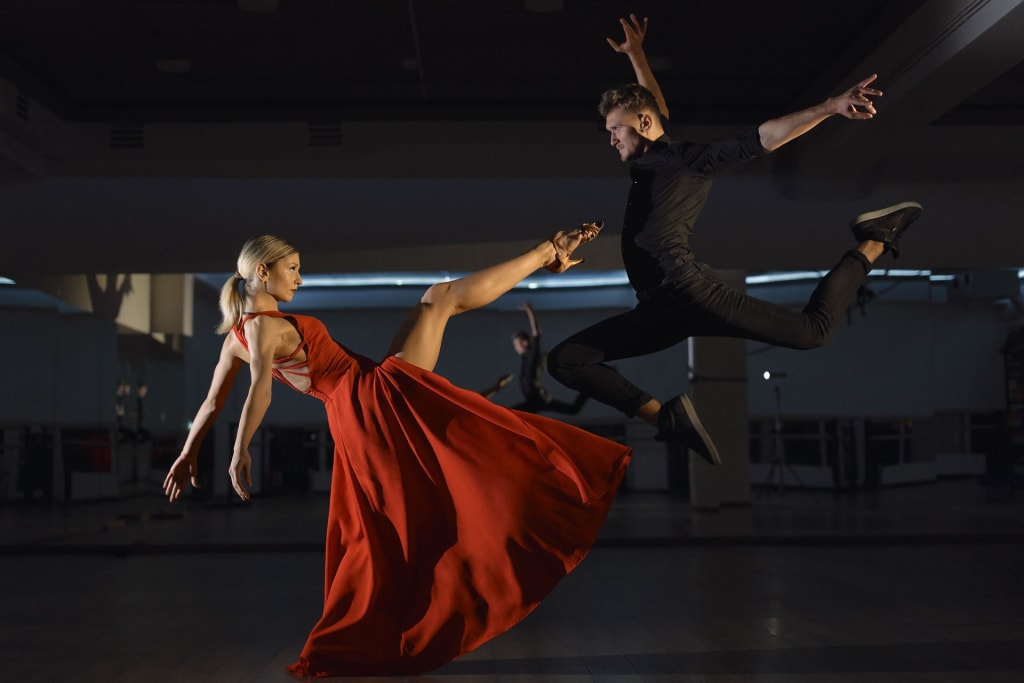
In this post, we'll take a closer look at five classic ballroom dances: Quickstep, Foxtrot, Tango, English Waltz, and Viennese Waltz. Each dance has its own unique rhythm, style, and history, making it a rich and fascinating subject for dance enthusiasts.
1. Quickstep: A Dance of Energy and Grace
The Quickstep originated in the United States during the 1920s before making its way to England in the early 20th century. It’s a faster variation of the Foxtrot, another popular swing dance, and is known for its lively tempo and light, flowing movements.
The rhythm of the Quickstep is based on four beats, with the first and third beats being accented. The steps are broken down into "slow" (two beats) and "quick" (one beat), giving the dance its energetic yet graceful quality. Quickstep is a joyful and exciting dance that requires both skill and precision. The quick, syncopated steps and sweeping motions make it suitable for both formal and informal occasions.
2. Foxtrot: The Elegant "Hard Walk"
Often regarded as one of the most challenging ballroom dances, the Foxtrot is characterized by its smooth, flowing steps. The rhythm is often described as "slow, slow, quick, quick," and while the movements are not particularly difficult, the challenge lies in maintaining fluidity and control.
The Foxtrot requires dancers to have a high level of body control and precision, especially given the dance’s horizontal movement. It’s a dance that requires space to truly shine, making it difficult to perform on small floors. While the steps might be simple, mastering the flow and grace of the Foxtrot takes time and practice.
3. Tango: Passion and Precision
Originating from Argentina and Uruguay, Tango is a dance that speaks of love, loss, and longing. The music associated with Tango often tells tales of unrequited love or heartache, which is mirrored in the intense, emotional movements of the dance. The closeness between partners, along with the passionate and dramatic steps, makes Tango one of the most sensual dances in the ballroom repertoire.
Unlike other ballroom styles, Tango is highly improvisational. While there are certain basic steps and figures, much of the dance is created on the spot, making it deeply personal and unique each time. Tango was born in the Rio de la Plata region, specifically Buenos Aires (Argentina) and Montevideo (Uruguay), and continues to captivate audiences around the world.
4. English Waltz: A Dance of Elegance and Simplicity
The English Waltz, with its slower tempo of 30 beats per minute, is one of the most elegant dances in the ballroom. It’s known for its smooth, flowing movements and graceful turns. The waltz is danced in "hold," where the dancers’ bodies are in contact from the hips to the chest. The rhythm of the waltz is steady, and the basic steps involve turns, promenades, and spins, creating a sense of fluidity.
Despite its slower pace, the English Waltz is a popular choice for beginners because it’s easier to learn than faster dances like the Viennese Waltz. Its simplicity and elegance make it a favorite for first dances at weddings and other formal events.
5. Viennese Waltz: The Dance of Romance and Speed
The Viennese Waltz is a faster, more dynamic version of the traditional waltz. With a tempo of 60 beats per minute (or 180 beats in 3/4 time), it’s a dance that demands both precision and stamina. The Viennese Waltz is known for its sweeping, graceful movements and its ability to convey romance and passion.
Although the basic steps of the Viennese Waltz are not difficult, achieving the fluid, light movements required to perform the dance well takes time and dedication. The dance gained popularity in the 19th century and has remained one of the most glamorous and visually stunning dances in the ballroom repertoire.
Final Thoughts
Ballroom dancing is not just about steps and techniques; it’s about storytelling, connection, and expression. Each of these dances has its own distinct personality, from the high-energy Quickstep to the sensual Tango, and from the elegant English Waltz to the graceful Viennese Waltz. Whether you're a beginner or an experienced dancer, each of these classic styles offers something unique for every occasion.
So, which dance will you try next? Let us know in the comments below, and keep dancing!
About the Creator
lena bandurska
Hey! I write book reviews, and maybe in the future, something else. My work is marked as "created by AI" because I write everything in Polish—my native language—and I translate using ChatGPT. :)
Keep reading
More stories from lena bandurska and writers in Beat and other communities.
Wholesome story to briten your day
Ruth Slenczynska, a remarkable figure in classical music, continues to inspire and amaze even at the age of 100. As the last living pupil of the legendary Sergei Rachmaninov, Ruth’s story is a rare and extraordinary one. Not only does she carry the memories and teachings of one of history's greatest musicians, but she also embodies a timeless dedication to her craft.
By lena bandurska12 months ago in 01



Comments
There are no comments for this story
Be the first to respond and start the conversation.