
Deadly Floods Ravage China: A Nation Battles Nature's Fury
Raging rains, broken infrastructure, and rising death tolls bring devastation across provinces in China

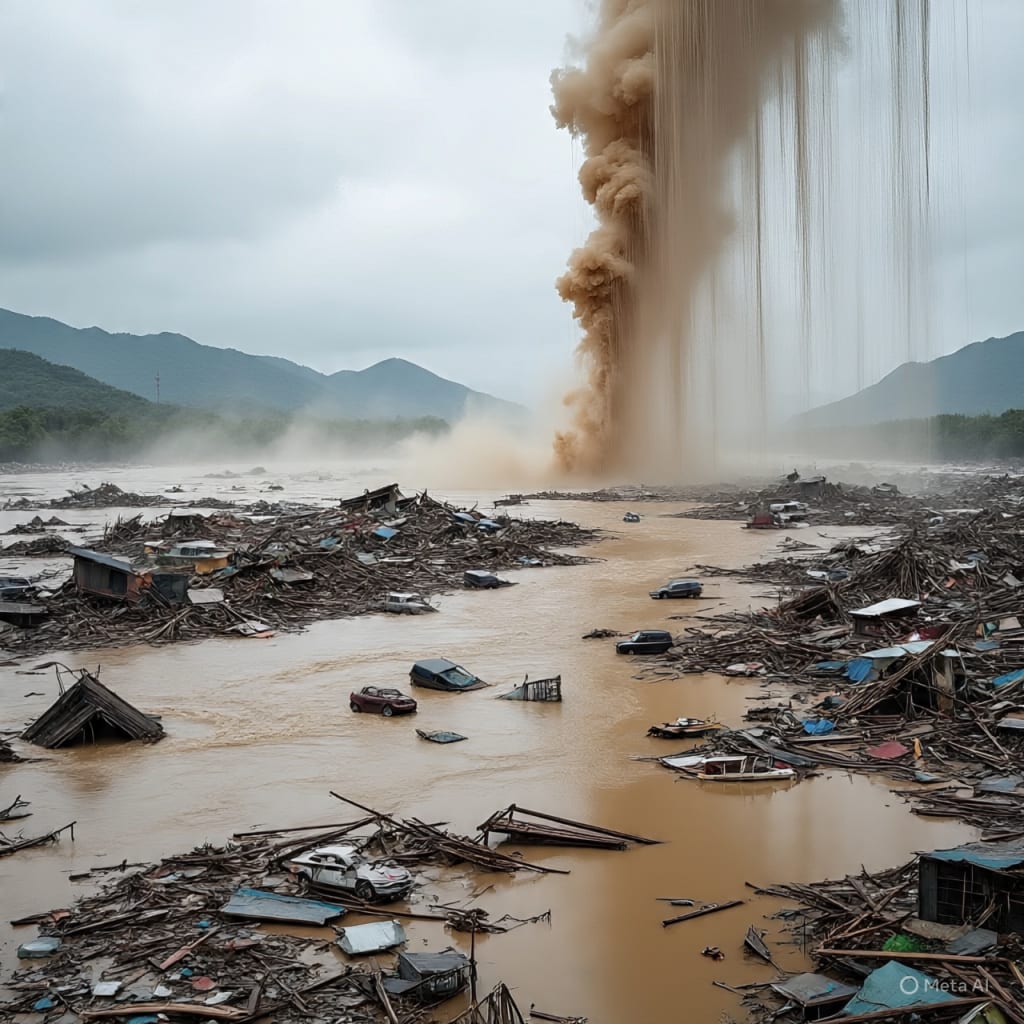
Deadly Floods Ravage China: A Nation Battles Nature's Fury
China is once again facing the fury of nature as relentless floods have struck several provinces, causing massive destruction, death, and despair. Torrential rains triggered landslides, submerged entire villages, and swept away families. From June to late June 2025, these devastating floods have claimed hundreds of lives, displaced thousands, and exposed serious issues in the country’s infrastructure and disaster preparedness.
Why the Flooding Happened
The 2025 floods in China are being described as the worst in nearly a decade. Meteorologists report that unseasonably heavy rainfall, combined with saturated grounds from earlier storms, led to riverbanks overflowing and major reservoirs breaching capacity.
The Yangtze River basin, which is home to more than 400 million people, has been severely impacted. Experts point to climate change as a major contributing factor, as rising temperatures have increased the amount of moisture in the atmosphere, leading to more frequent and intense downpours.
China's Ministry of Water Resources has confirmed that over 110 rivers across the country have risen above warning levels. The lack of natural forest buffers, urban overdevelopment, and aging dams further contributed to the disaster. In some areas, floodwaters reached rooftops in a matter of hours.
Real News and Reports from the Ground
According to official figures, over 300 people have died and more than 600 are missing. The numbers are expected to rise as rescue efforts continue. Provinces like Guangdong, Hunan, Jiangxi, and Sichuan have been the hardest hit.
In Meizhou, a city in Guangdong Province, over 50 people were confirmed dead in one village alone when a landslide buried homes in the early morning. Survivors described hearing a deafening roar before walls of mud and water crushed their homes. Emergency workers are using bare hands, digging through debris to find any signs of life.
In Jiangxi Province, floodwaters breached the levees of Poyang Lake, flooding 100 villages and displacing over 250,000 people. Videos shared on Chinese social media show people clinging to rooftops, waving for help as water levels continue to rise.
In Sichuan, an entire kindergarten was swept away by flash floods. Although most of the children were rescued, three young lives were tragically lost. Parents are demanding accountability and questioning why no evacuation warnings were issued in time.
The government has mobilized over 200,000 emergency personnel, including soldiers, firefighters, and medical staff. Helicopters and boats are being used to deliver food, water, and medicine to affected areas. Still, many areas remain unreachable due to collapsed bridges and washed-out roads.
Families Torn Apart
Stories of loss and heartbreak are emerging from every corner. In Hunan, a family of seven drowned when floodwaters entered their home during the night. The eldest daughter, aged 14, managed to climb a tree and survived by clinging to the branches for nearly 12 hours.
In another case in Sichuan, a man lost his wife and two sons when their car was swept away by a sudden wave of water while trying to flee. He said through tears, "I told them to run while I tried to save the dog. When I turned around, they were gone."
Shelters have been set up in schools, mosques, and community centers. However, overcrowding, lack of food, and medical care are adding to the suffering. Volunteers from across China are donating clothes, money, and supplies, but the scale of destruction is overwhelming.
Long-Term Impact and Government Response
The Chinese government has pledged billions of yuan in relief funds and promised to rebuild affected areas. President Xi Jinping has ordered a full review of the nation’s flood control systems. He stated, “People’s lives come first, and we will ensure that no one is left behind.”
Still, critics argue that years of rapid urbanization have come at the cost of environmental safety. Dr. Li Cheng, a climate researcher, said, “We are paying the price for ignoring natural drainage systems and overbuilding near rivers.”
Schools are closed, crops are destroyed, and many families have lost everything. Agricultural losses alone are estimated at over $3 billion. Experts warn of a looming food crisis in the months to come, especially for rural communities already struggling with poverty.
A Wake-Up Call for the World
While China battles to recover, the global community is also taking note. Floods of this magnitude reflect a larger pattern of extreme weather events that are increasing in frequency around the world. The 2025 floods in China serve as a dire warning to all nations: climate change is no longer a future threat—it is happening now.
The people of China are resilient, and stories of courage and humanity continue to inspire. From brave rescue workers to neighbors sharing what little they have, the nation is coming together. But the cost has been tragic, and the road to recovery will be long.
Let me know if you'd like a version translated into Urdu or want to publish it with your Vocal Media login.
Ask Chat
About the Creator
Saad
I’m Saad. I’m a passionate writer who loves exploring trending news topics, sharing insights, and keeping readers updated on what’s happening around the world.
Ludacris and Nelly draw backlash over bookings at MAGA-coded music festival
Ludacris and Nelly headlining a mostly right-wing event is good for them. It’s also great for the genre of hip hop. The two rap veterans have showcased their talents on other stages. Why can’t they perform for mostly MAGA folks and grab that bag?
By Skyler Saunders5 days ago in Beat
A$AP Rocky Appears To Diss Drake On Three Separate Tracks Off "Don't Be Dumb"
A$AP Rocky has thrown subtle jabs at rapper Drake. What’s new? The lines seem to hit hard and condemn the Canadian rhyme maker’s position as an “opp.” Like in most feuds, they start with a friendship. Rocky just has the temerity to talk on his album and see that he can be potent with the pen. Though no name-drops appear, it is clear that Rocky is speaking to someone whom he used to be cool with in the game.
By Skyler Saunders4 days ago in Beat




Comments
There are no comments for this story
Be the first to respond and start the conversation.