
Classification of Afghan Folk Music: An Ethnomusicological Approach
This paper examines the classification of Afghan folk music. It focuses on analyzing its structures, styles, and cultural and regional characteristics.
Classification of Afghan Folk Music: An Ethnomusicological Approach
Author: Eslamuddin Feroz, Former Professor, Department of Music,
Faculty of Fine Arts, University of Kabul
Abstract
Afghan folk music is one of the most prominent cultural and artistic manifestations of this land, possessing a complex and multi-layered structure, and reflecting the historical, social, and ethnic identity of various communities. Classifying this music, in addition to accurately understanding instruments, songs, rhythms, and melodies, also enables analysis of the interactions between historical, linguistic, ethnic, and geographical factors. This article, utilizing ethnomusicological studies, examines the various methods of classifying Afghan folk music, including technical, regional, ethnic, linguistic, poetic, dialectal, thematic, historical, and instrumental classifications. Analysis of these classifications shows that folk music not only has an artistic function but also plays an important role in reflecting and transmitting cultural identity and social values. The research findings emphasize that Afghan music, in addition to its aesthetic aspect, is a rich source for cultural, historical, and thematic research in ethnomusicology.
Keywords: Afghanistan, folk music, music classification, regional music, poetry, language, dialect
Introduction
Folk music, as one of the most fundamental cultural expressions of societies, has always held a special place in anthropology, ethnomusicology, and interdisciplinary studies of culture and art. This type of music not only reflects the artistic taste and aesthetic preferences of the people but also conveys their values, beliefs, and customs. Afghanistan, with its ancient and rich background in arts and culture, possesses a wide diversity of local styles, instruments, and songs, each representing the unique characteristics of different geographical regions, ethnicities, and languages. Understanding and analyzing this music requires a systematic, scientific, and interdisciplinary framework to comprehensively examine its technical, structural, ethnic, historical, linguistic, and ritual dimensions. For this reason, classifying Afghan folk music is not only important for academic research but also plays a key and unique role in preserving cultural heritage, promoting national identity, and transmitting musical knowledge to future generations. Furthermore, systematic study of folk music can help identify historical developments, cross-cultural influences, and socio-artistic interactions among different ethnic groups, creating new research opportunities for musicologists, anthropologists, and historians.
Technical Classification of Music
In technical classification, Afghan music is analyzed based on musical elements and components such as maqams, rhythms, harmony, melody, and compositional structures. This approach allows researchers to examine the internal structure of music precisely and identify the distinguishing features of each region or ethnic group. Technical study of music not only aids in deep understanding of musical rules and principles but also provides tools for comparing various local music styles. Analysis of rhythms and harmonies can reveal how musical patterns are connected to local culture, rituals, and traditions. Additionally, examining melodies and sound sequences offers insight into how musical moods and emotions are created in the listener. Ultimately, technical classification serves as a fundamental basis for music education, reconstruction of traditional works, and ethnomusicological research, and holds special importance in preserving and promoting the musical heritage of each community.
Regional Classification
Regional classification of folk music examines and categorizes instruments and melodies based on the geographical, natural, and cultural characteristics of each area, showing how the environment and climatic conditions influence the formation of music. In Afghanistan, this classification is shaped according to the natural resources and social fabric of each province and region, creating diverse manifestations. Local raw materials such as wood, clay, animal skins, and other natural products are used in instrument-making, determining their sound quality and durability. Therefore, the natural sound of each instrument directly reflects the ecological and environmental conditions of its region. Additionally, the instrument’s tonal range, structural form, and design are also linked to the needs and artistic taste of local people. For example, in mountainous areas, instruments with louder and more penetrating sounds are common, while in plains and deserts, instruments with softer, gentler tones are used. These distinctions allow each instrument to be specifically associated with a particular geographical or cultural area.
Beyond the acoustic and structural features of musical instruments, lyrical content, rhythmic structures, and regional melodies also play a central role in defining the musical identity of a region. Each area, drawing on historical and cultural themes, including traditional narratives, legends, ritual ceremonies, and local festivals, reflects its collective experience and unique culture. In this framework, classifying music by geographical regions allows analysis and differentiation of styles, techniques, and instruments of each area, leading to recognition of regional music under the name of that region—for example, music from the Pamir, Nangarhar, Qataghan, Logar regions, etc., provides a clear and precise picture of distinct musical characteristics. Thus, folk music not only reflects the cultural and geographical diversity of the country but also reveals the deep connection between the natural environment, history, and cultural traditions, reinforcing its role as a fundamental tool in preserving and continuing ethnic and regional identity.
Ethnic Classification in Folk Music
Ethnic classification analyzes and categorizes music based on cultural and ethnic affiliation, reflecting the distinctive features of each community in the realm of musical art. This type of classification, in addition to melody, maqam, rhythm, and songs, also represents the cultural and historical identity of different ethnic groups. Hazaragi, Tajik, Balochi, Uzbek, and Pashtun music are prominent examples, each intertwined with the customs, traditions, and beliefs of its ethnic group, facilitating cultural transmission. This classification enables comparative study of music across different ethnic groups and allows recognition of cultural distinctions and commonalities. Moreover, ethnic music is often connected to social events, festivals, religious rituals, and daily life, with each musical piece carrying valuable cultural information. Ethnic classification also plays an important role in preserving cultural heritage and collective identity and can act as a resistance to globalization and cultural homogenization. Scientific studies in this field indicate that the music of each ethnic group not only expresses artistic creativity and emotions but also reflects the history, geography, and social interactions of that group.
Linguistic Classification and Its Role in Afghan Music
Language, as one of the most important elements of cultural identity, plays a significant role in shaping and transmitting musical heritage. Afghanistan has a wide linguistic diversity, including Pashto, Persian, Pashai, and other languages and dialects. Each language, with its specific structures, tones, and phonetic rules, directly influences the style and form of local music. For example, Pashto music, with its distinctive rhythms and melodies, reflects the cultural and social fabric of Pashtun society. Persian music, especially in classical forms and traditional compositions, has deep connections with Persian literature and poetry, reflecting its unique cultural identity. Pashai music, with its characteristic melody and performance style, exemplifies the interaction of language and music in Afghanistan’s border regions. Examination of these examples shows that language is not only a means of expressing poetry and musical text but also shapes the structure and form of music. Analyzing this interaction between language and music helps better understand the relationship between cultural identity and musical art in Afghanistan. Therefore, linguistic classification and study of music associated with each language serve as valuable tools for understanding the country’s cultural and artistic diversity.
Classification Based on Classical and Folkloric Poetry
The connection between poetry and music in Afghanistan has long been deep and complex, reflecting the coexistence of verbal and musical arts in this culture. Folk music is often accompanied by different poetic forms, which can be divided into two main categories: classical poetry and folkloric poetry. Classical poetry includes forms such as ghazal, qasida, and mathnawi, which have specific structural features and a rich literary language, and are typically performed alongside modal music and traditional compositions. On the other hand, folkloric poetry includes couplets, popular songs, and local hymns, whose simple language and flowing rhythms are intertwined with folk and local music. This classification shows that music in Afghanistan is not only an auditory art but also a carrier of both oral and written literature. Examining the interaction between music and different types of poetry allows a more precise analysis of local musical styles, rhythms, and melodies. Additionally, this connection helps better understand cultural identity, social values, and the transmission of Afghanistan’s historical heritage. Therefore, classifying music according to poetic forms is an essential tool for academic studies and for a broader understanding of the relationship between literature and musical art in the country.
Classification Based on Dialect
In Afghanistan, even in areas where a common language exists, dialectal differences play an important role in shaping musical diversity. These differences are reflected not only in pronunciation and speech melody but also in rhythm, tone, and performance style of music. Hazaragi, Herati, and Badakhshani music are examples of this diversity, each distinguished by specific dialectal features. For instance, Herati music, with its soft and gentle tone, Badakhshani music, with dynamic and fast rhythms, and Hazaragi music, with distinctive vocal characteristics, all present different cultural and regional identities. This dialect-based classification shows that music in Afghanistan is not merely a product of language but also a reflection of regional speech and diversity. Analyzing these dialectal differences helps in understanding the influence of local cultures on music and identifying the tonal and rhythmic characteristics of each region. Therefore, studying and classifying music by dialect is a valuable tool for research in musicology and cultural anthropology, allowing the exploration of the relationship between language, dialect, and musical art.
Classification Based on Song Themes
In Afghanistan, many local songs are associated with specific social and cultural events. These occasions include festivals such as Nowruz, religious holidays such as Ramadan, local ceremonies, and traditional rituals, each accompanied by its own songs and melodies. Music associated with these occasions not only provides entertainment but also serves ritual and social functions, reflecting the cultural and historical identity of local communities. This type of classification allows identification of thematic and semantic patterns in songs and demonstrates that folk music is an integral part of the social and cultural life of the people. Analyzing these songs can help better understand the relationship between music, culture, and social events and clarify their role in transmitting local values and beliefs. Moreover, thematic classification of songs is an important tool for musicological and cultural anthropological research, allowing the study of how music interacts with social and cultural structures. This approach shows that Afghan folk music, beyond being an auditory art, also carries cultural, ritual, and social information, and its study can significantly contribute to preserving and promoting cultural heritage.
Historical Classification
From a historical perspective, Afghan folk music has been influenced by cultural, political, and social changes throughout different periods. Each historical era has its own musical features, styles, and forms, reflecting the conditions of society at that time. For example, political and governmental changes, migrations, and interactions with neighboring cultures have played important roles in shaping and evolving local music. Historical classification allows researchers to analyze changes in music in relation to broader social transformations and to examine the influence of external and internal factors on musical style, instrumentation, rhythm, and content. This approach also helps illuminate the interaction between music and cultural identity, traditions, and social values across different periods. Furthermore, studying the historical evolution of folk music can show how musical heritage has been preserved, altered, or combined with new elements. Therefore, historical classification is an important tool for understanding the evolutionary process of music and its role in shaping culture and identity in Afghan communities. This perspective enables comparative analysis across periods and identification of enduring and emerging patterns in local music.
Classification Based on Instrument Type
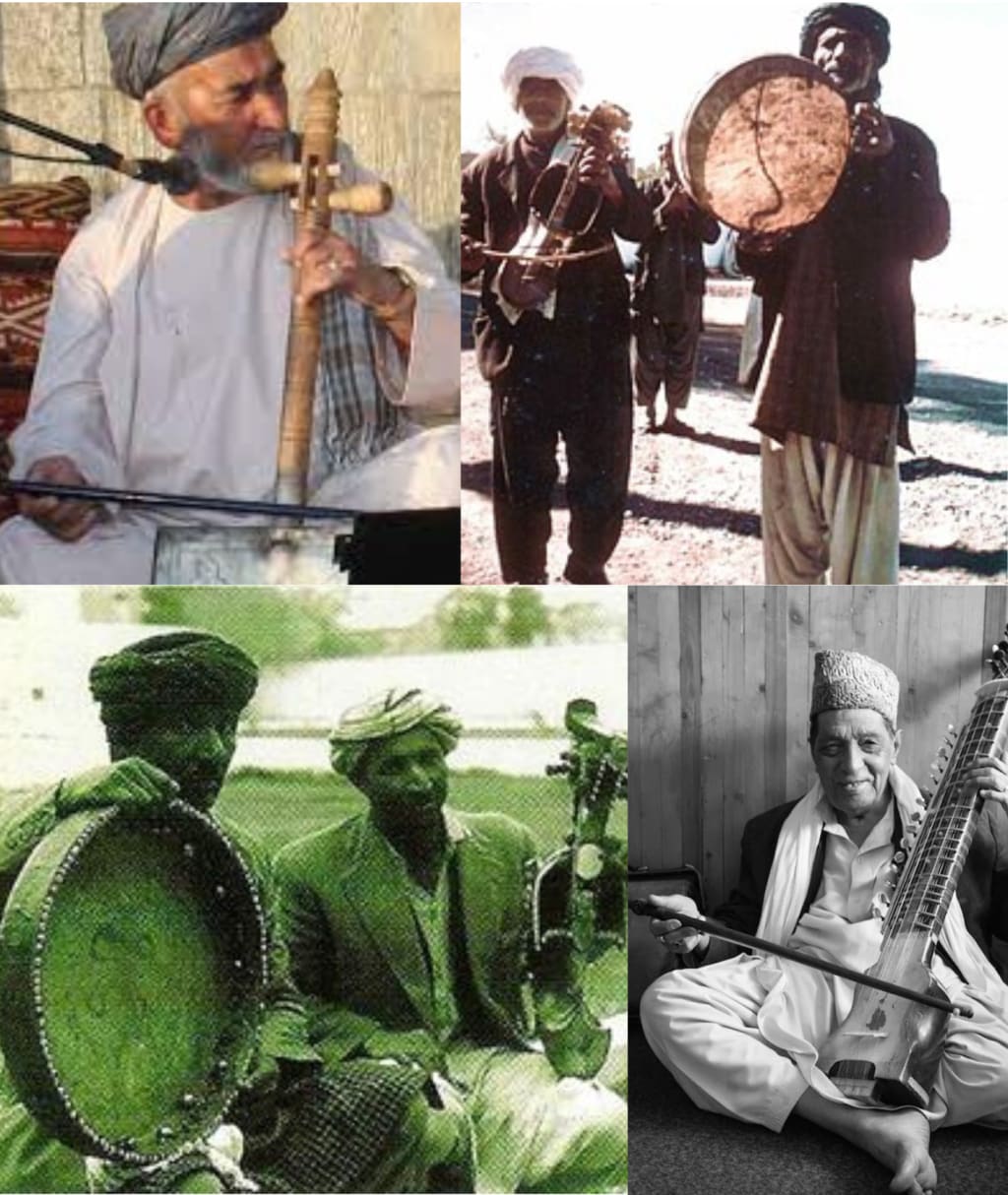
Musical instruments in Afghanistan can be divided into three main categories: percussive, string, and wind instruments. String instruments include both bowed and plucked types and play a major role in performing local melodies. Prominent examples in this category include the rabab, sarinda, delruba, dutar, dambura, tanbur, and ghichak, each of which, with its unique tonal and technical characteristics, shapes different musical styles. In the percussive category, instruments such as the tabla, zarb, dhol, and daf provide rhythm and musical foundation, stabilizing the tempo of songs and ceremonies. Wind instruments, such as the surna and ney, along with other Afghan folkloric instruments, with their ability to produce a wide range of tones, contribute to expressing deep musical emotions. The structural and technical diversity of these instruments reflects the cultural and artistic richness of Afghanistan’s various regions and is closely linked to the musical identity of each area. Instrument classification allows researchers to analyze the role of each instrument in musical structure, ensemble arrangements, and local styles, and to study processes of cultural and technical transmission in Afghan music. This approach also enables identification of the acoustic, rhythmic, and technical characteristics of each instrument and their influence on different musical styles. Therefore, classification based on instrument type is a valuable tool for understanding musical diversity and studying Afghanistan’s cultural and artistic heritage.
Conclusion
Examination and classification of Afghan folk music show that this art goes beyond a purely auditory phenomenon and carries a complex representation of the cultural, social, and historical identity of the country’s communities. Linguistic, poetic, dialectal, thematic, historical, and instrumental classifications provide precise analytical tools for understanding the internal structure of music and its interaction with culture and society. This systematic approach allows identification of the influence of regional, ethnic, and historical factors on the formation of musical styles and forms, demonstrating that folk music simultaneously expresses both individual and collective identity. Moreover, careful analysis of these classifications enables researchers to study the evolution of music in connection with social, political, and cultural changes and to recognize patterns of cultural continuity and transformation. Thus, Afghan folk music serves as a rich source for ethnomusicological and anthropological studies and can provide a scientific foundation for preserving and promoting the country’s cultural heritage. These findings highlight the importance of music as a medium for transmitting historical, social, and cultural knowledge and show that scientific study in this field has both theoretical value and practical function in safeguarding cultural identity and fostering interdisciplinary research.
About the Creator
Prof. Islamuddin Feroz
Greetings and welcome to all friends and enthusiasts of Afghan culture, arts, and music!
I am Islamuddin Feroz, former Head and Professor of the Department of Music at the Faculty of Fine Arts, University of Kabul.
Keep reading
More stories from Prof. Islamuddin Feroz and writers in Beat and other communities.
Reflections of Traditions and Tribal Violence in the Folk Songs of Afghan Women: A Socio-Cultural Study
Reflections of Traditions and Tribal Violence in the Folk Songs of Afghan Women: A Socio-Cultural Study Author: Islamuddin Feroz, Former Professor, Department of Music, Faculty of Fine Arts, Kabul University
By Prof. Islamuddin Feroz5 months ago in Beat
It's 2026. Songs Turning 10 This Year
In 2016, we saw the rise of short form videos and what would lead to the birth of TikTok. We cannot forget the Snapchat filters no matter how cringe worthy some of them might have been. It was also the year in which the hit series Stranger Things debuted.
By Jasmine Aguilar19 days ago in Beat
Bots & Artificial Streams Are Killing Hip Hop
The role that streams play looms large in rap. What’s so beautiful about the pure sales and the amount the digital atmosphere holds is powerful. But bots prove to be a problem. As persistent as it is, it can be shown that the inflated sales, false recordings, and mistaken projections bring the idea of what the scoreboard reads.
By Skyler Saunders6 days ago in Beat


Comments (1)
Great Prof.Islamuddin Feroz. I am very happy to read your useful and informative content today.