
Ben Neill's "Morphic Resonance" Channels the Echoes of Evolution Into a Living Sonic Form
Blending Evolutionary Theory, Sound Memory and Algorithmic Composition, Ben Neill's "Morphic Resonance" is a Hypnotic Exploration of How Music Can Behave Like a Living System

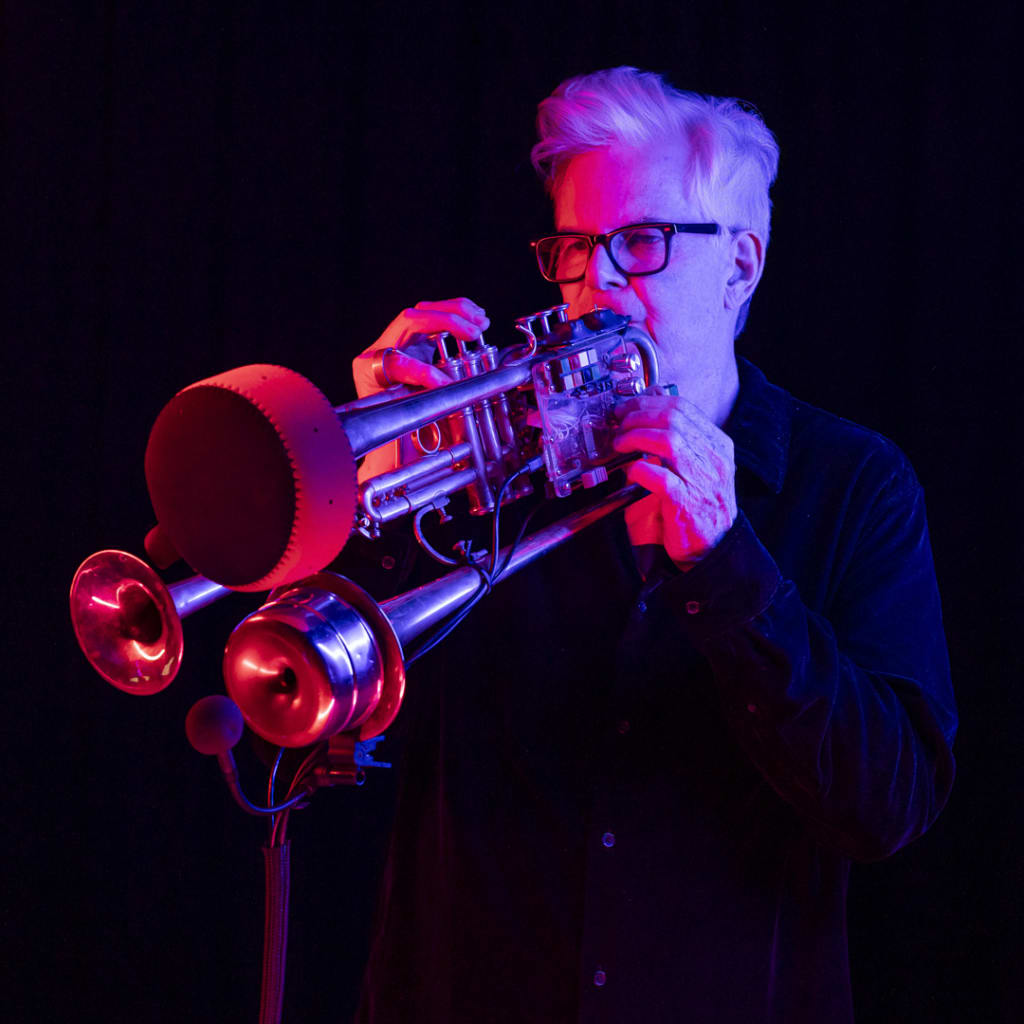
Ben Neill’s latest sonic offering, "Morphic Resonance", is a striking fusion of art, science, and philosophy. A musical ecosystem shaped by pattern, process and transformation.
Released in two versions, the original and the Bifurcated Mix, this is the first installment from Neill’s upcoming album "Amalgam Sphere", and it lands like a quietly seismic event in the landscape of experimental music.
Listen here:
https://open.spotify.com/track/7DkHLu6ibuSaWQR7inpqTE
It is less a traditional track than a meditative immersion, a carefully structured yet fluid experience that pulls the listener into the very concept it seeks to explore.
At the heart of "Morphic Resonance" lies the voice and mind of Rupert Sheldrake, the evolutionary biologist and philosopher best known for his controversial theory of the same name.
Sheldrake proposes that memory is not exclusively stored in individual brains but is instead transmitted through morphic fields - patterns of influence that allow natural systems to inherit collective habits from similar past systems. While dismissed by many in mainstream science, Sheldrake’s ideas have resonated in the arts and in alternative epistemologies. For Neill, they serve not only as inspiration but as musical methodology.
The track weaves Sheldrake’s voice directly into its fabric, not merely as a straightforward spoken-word sample but as a sound element subject to manipulation.
His speech is stretched, layered, filtered and scattered across the stereo field, transformed into ghostly textures and rhythmic pulses that pulse through the piece.
The Mutantrumpet, Neill’s self-invented hybrid instrument that combines traditional trumpet mechanics with electronics, sensors and MIDI controllers, operates not merely as a tool for performance but as a conduit for interaction with Sheldrake’s ideas.
One of the most fascinating aspects of the track is its use of an algorithmic system that maps the letters in “Morphic Resonance” to specific pitches, forming the tonal and structural foundation. This method introduces a kind of sound DNA so to speak. An encoded phrase that regenerates itself in constantly mutating form.
As the layers build, the track becomes a sonic equivalent of Sheldrake’s theory itself: a field of memory, repeating with variation, resonating across time.
"Morphic Resonance" exists in a liminal space between ambient, electroacoustic and minimalist traditions. Neill’s palette is subtle but rich with deep drones, breathy trumpet tones and shimmering harmonic accents, as well as evolving textures that never quite settle.
There are moments that call to mind the generative systems of Brian Eno, the hybrid hornscapes of Jon Hassell, or even the digital decay of early Mille Plateaux releases. But Neill’s voice is distinct and rooted in a compositional rigor and an enduring interest in how systems - biological, sonic, or technological - give rise to form.
The Bifurcated Mix adds another layer of meaning and complexity. By introducing glitchy, syncopated percussion and more fragmented textures, it leans further into the idea of rupture and transformation.
Rather like a system under stress, or perhaps mid-mutation - unstable, reactive and thrillingly alive. This version underscores the tension inherent in Sheldrake's theory. That is, the balance between inherited structure and the unpredictable emergence of new behaviours.
Neill’s broader project, explored in his recently released book "Diffusing Music: Trajectories of Sonic Democratization", revolves around the idea of music as a participatory, ever-shifting process shaped by technology, culture and collaboration. "Morphic Resonance" enacts that philosophy in sound. It’s not music to consume but rather music to inhabit, to observe as it unfolds and to consider as a field of living thought.
With "Morphic Resonance", Ben Neill continues to prove that he’s not merely a composer or a performer, but a thinker whose work lives at the intersection of disciplines.
This piece doesn’t merely reference Sheldrake’s ideas but it enacts them, modeling a kind of sound evolution where memory, technology and creativity coalesce.
In an era saturated with sound, Neill offers something rare: music that listens back.
Find out more about Ben Neill on his Website
About the Creator
Keep reading
More stories from Whitney Miller and writers in Beat and other communities.
Ludacris and Nelly draw backlash over bookings at MAGA-coded music festival
Ludacris and Nelly headlining a mostly right-wing event is good for them. It’s also great for the genre of hip hop. The two rap veterans have showcased their talents on other stages. Why can’t they perform for mostly MAGA folks and grab that bag?
By Skyler Saunders3 days ago in Beat
A Quiet Departure
I’m always looking for new music—something a little off the beaten path, something that feels like it came from a real human being instead of a marketing department. That search usually leads me toward artists like Sigur Rós, Nick Drake, Jeff Buckley… people who seem to create from some inner necessity rather than chasing trends. Most of the time, I discover similar musicians just by reading the comments under songs. One day, while drifting through a playlist, I noticed someone mention an artist named Mark Hollis. The way they spoke about him—quietly, almost reverently—made me curious enough to dig deeper.
By Gary Briceabout 24 hours ago in Beat



Comments
There are no comments for this story
Be the first to respond and start the conversation.