Yasir Hamed
Stories (2)
Filter by community
Imran Khan Political Journey
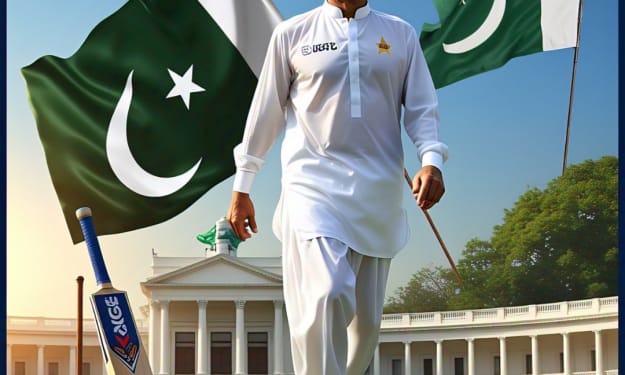
Imran Khan, once a celebrated cricket star, is a name synonymous with Pakistan’s political landscape today. His transformation from a world-renowned athlete to the Prime Minister of Pakistan is nothing short of remarkable. His political journey, filled with triumphs and challenges, has been a testimony to his determination, resilience, and vision for the future of Pakistan. Imran Khan’s political career began in 1996 when he founded the political party, *Pakistan Tehreek-e-Insaf (PTI)*. His vision was to create a Pakistan based on justice, transparency, and accountability. Imran’s decision to enter politics came after a successful cricket career that saw him leading Pakistan to victory in the 1992 Cricket World Cup, an achievement that made him a national hero. Despite his sporting fame, he became increasingly disillusioned with Pakistan’s political system, which he viewed as deeply corrupt. For him, the system failed to deliver basic services to the people, and the country was grappling with issues such as poverty, unemployment, and rampant corruption.In the beginning, PTI was seen as a small party, struggling to make a mark in Pakistan’s political scene, which was dominated by established players like the Pakistan People’s Party (PPP) and the Pakistan Muslim League-Nawaz (PML-N). However, Imran Khan’s relentless focus on anti-corruption and social justice began to attract a following, especially among the younger generation. He campaigned on the idea of "Naya Pakistan" (New Pakistan), promising to build a society based on merit, rule of law, and equal opportunities for all citizens. Despite the challenges, PTI made slow and steady progress in Pakistan's electoral politics. However, it was the general elections of 2013 that marked a pivotal moment in Imran Khan’s political career. His party gained a significant foothold, winning a substantial number of seats in the National Assembly. While PTI did not secure a majority, the 2013 elections proved that Imran Khan had emerged as a serious political force. His campaign had a massive impact on the political discourse, pushing corruption to the forefront of the national agenda. However, Imran Khan and his supporters accused the government of rigging the elections, leading to massive protests and sit-ins, most notably the "Dharna" (sit-in) in Islamabad.Although the 2013 election was seen as a setback in terms of securing power, it was also a turning point for Imran Khan. He expanded PTI's influence across the country, especially in Khyber Pakhtunkhwa, where his party won the provincial elections and formed the government. This was seen as a triumph for PTI, as it was able to demonstrate its governance skills and manage the province for five years. The real breakthrough for Imran Khan came in the 2018 general elections. PTI's message of change resonated strongly with the people, especially amidst the backdrop of widespread discontent with the two main political parties, PPP and PML-N. Imran Khan's anti-corruption rhetoric and promise of accountability gained momentum as people began to trust his vision for a better future. PTI’s sweeping victory in 2018’s elections secured Imran Khan the position of Prime Minister of Pakistan, a role he had long sought.As Prime Minister, Imran Khan focused on various national issues, including the economy, poverty alleviation, and education. His government launched initiatives such as the *Ehsaas Program* to help the most vulnerable people in society and the *Kamyaab Jawan Program* to empower youth. In foreign policy, he took a firm stance against corruption in neighboring countries, advocated for peace in Afghanistan, and sought to improve Pakistan’s relations with the United States, China, and other global powers. He also made several efforts to address climate change, launching the *Billion Tree Tsunami* project to combat deforestation in Pakistan. Despite his ambitious reforms, Imran Khan's tenure as Prime Minister has not been without criticism. His critics have pointed out his inability to fully deliver on some of his campaign promises, especially in terms of improving the economic situation of the country. Inflation and unemployment have continued to rise, and the country has faced increasing debt, which has led to difficult negotiations with the International Monetary Fund (IMF). The pandemic of COVID-19 further tested his leadership, with Pakistan grappling with health and economic challenges. However, Imran Khan’s political resilience is undeniable. He has consistently spoken out against corruption and the status quo, advocating for the redistribution of wealth and resources to ensure a fairer society. Despite the challenges, his supporters believe that Imran Khan’s vision of a "Naya Pakistan" is worth pursuing, and they remain hopeful that his leadership will bring about lasting change. Imran Khan’s political journey is a testament to the idea that political transformation is possible, even in a country where power has traditionally been concentrated in the hands of a few elite families. His rise from being a cricket star to the Prime Minister of Pakistan shows that leadership can come from unexpected places, and his passion for a better future for Pakistan continues to inspire millions. While his path has been filled with both triumphs and setbacks, Imran Khan’s story is far from over. As Pakistan continues to face numerous challenges, it remains to be seen whether his vision will ultimately reshape the country for future generations. One thing is certain: Imran Khan has redefined what it means to lead with conviction and integrity.
By Yasir Hamed11 months ago in Education
A Loyal Dog
Once upon a time, in a small village nestled between lush green hills, there was a little house at the edge of the forest. The family who lived there was humble, with a kind-hearted father, a loving mother, and two young children, Sarah and Noah. Despite their simplicity, they were rich in love and warmth, always finding happiness in the little things. One crisp autumn morning, as Sarah and Noah played near the edge of the forest, they found a small, shivering dog. It was a little brown puppy with sad eyes, its fur matted and dirty from the cold and damp earth. The children immediately took pity on the dog, and without hesitation, they brought it home. Their parents, although initially reluctant to keep a stray dog, saw the joy the puppy brought to the children's faces. After some deliberation, they named the dog *Max*. Max quickly became an integral part of the family. He followed Sarah and Noah everywhere—through the fields, down the winding roads, and even into the woods. He was more than a pet; he was a friend, a confidant, and a protector. Max's loyalty knew no bounds. One evening, as the family was having dinner, a thick fog rolled into the village, making it difficult to see even a few feet ahead. Noah had gone to the nearby woods to collect firewood and hadn’t returned. His parents were worried, and panic started to set in. As they prepared to go search for him, Max, who had been lying by the door, suddenly stood up and began barking fiercely, as if urging them to follow. Without a second thought, the family grabbed their coats and headed into the woods. Max led the way, his nose to the ground, sniffing the air, and his ears perked up. After what felt like an eternity, they found Noah, huddled by a tree. He had lost his way and was scared. But Max had found him, guided him back, and kept him safe from harm. The family was forever grateful to their loyal companion. Over the years, Max continued to show his unshakable loyalty. Whether it was during a storm, through the cold winters, or when the family faced difficult times, Max was there, standing guard and offering comfort. He never sought attention or praise; he was content knowing he was loved and needed. One day, years later, when Max had grown older, the family noticed him slowing down. He no longer ran through the fields or chased after birds with the same vigor. His fur had turned grey, and his steps were slower. Yet, every day, he would still sit at the door, waiting for the children to return home, just as he always had. One evening, as the family sat around the fire, Max laid his head on Sarah's lap, looking up at her with those same loyal eyes that had protected them for so many years. He had served his time with love and devotion. That night, Max peacefully passed away, knowing he had given everything to the family he had loved so deeply. The family, although heartbroken, understood that Max’s spirit would live on in the memories of the moments they shared. His loyalty, love, and courage had forever shaped their lives. Max had shown them that true friendship and loyalty aren’t just words—they are actions. In the end, it wasn’t the dog’s size or breed that mattered, but the love and devotion he had given them.
By Yasir Hamed11 months ago in Petlife