Sergey Avdeychik
Bio
My name is Sergey Avdeychik, and I am passionate about using technology, learning new skills and being always up for a challenge. Currently, I work as a Director of Healthcare Technologies at Andersen.
Stories (10)
Filter by community
The Advantages of Virtual Reality in the Healthcare Industry
Nowadays, virtual reality is revolutionizing modern science and changing our perception of the world. It has become especially popular among children and youngsters willing to plunge into a new marvelous environment, totally different from their surroundings. With the ever-growing digitalization in many spheres of human life, the healthcare industry is gradually adopting VR technology. That is why medical institutions cooperate with healthcare software development companies in search of efficient VR solutions. In this article, we’ll describe the essence and benefits of VR in healthcare.
By Sergey Avdeychik4 years ago in 01
Five Steps to Build a Doctor Appointment App
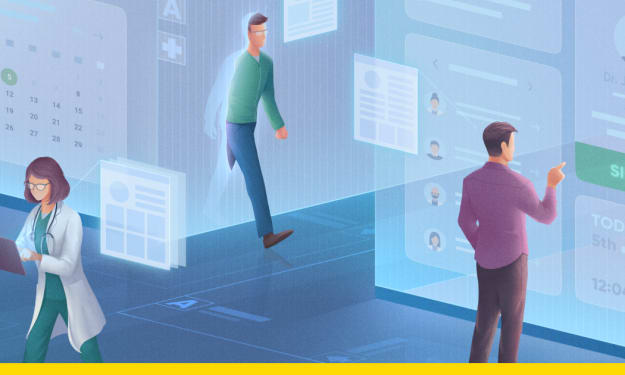
When starting a healthcare software project, managers weigh the pros and cons. They try to calculate the return on investment and predict how the new technology will affect the quality of medical services. But there is one more thing that defines the success of a medical IT project. It is planning. In this article, we’ll consider how to organize doctor appointment application development so that it brings the maximum benefit to your business.
By Sergey Avdeychik4 years ago in 01
The Benefits of EHR Solutions
In modern medicine, electronic health records (EHRs) are widely used in healthcare facilities, especially in developed countries. They help to improve the quality of medical services and ensure patient-centered care. That is why leading healthcare software development companies regard EHR solutions as their top priority. In this article, we’ll outline the benefits of implementing EHRs in hospitals and clinics.
By Sergey Avdeychik4 years ago in Longevity
Eight Key Components of an Electronic Health Record
In developed countries, the use of electronic health records (EHRs) in medical practice has long become a norm. In England, New Zealand, and the USA, more than 90% of doctors use EHRs. Some European countries show a lower rate of EHR implementation, which is up to 80%. If you are planning to introduce this technology in your clinic, you should consider the prerequisites for EHR software development.
By Sergey Avdeychik4 years ago in 01
Eight Reasons why Healthcare Software Development Projects Fail
According to Forbes experts, approximately 25% of IT projects fail. In 22% of cases, they do not pay off, and about 50% of the projects that have already been launched need serious reworking. The situation in the healthcare industry is similar. Healthcare software development projects may fail if they are delayed, exceed budget, fall short of the goal, or result in poor software. Let’s consider the main reasons for that.
By Sergey Avdeychik4 years ago in 01
How Electronic Health Records Improve Patient Care
The 2019 SGP study shows that 55% of healthcare facilities see patient care improvement as their top priority. For hospitals and clinics, enhanced care is more than just modern equipment or new offices and wards. Many of them maintain a client-centered approach with the help of software solutions. In 90% of cases, these are Electronic Health Records (EHRs). In this article, we’ll outline how EHRs improve patient care.
By Sergey Avdeychik4 years ago in 01
Remote Patient Monitoring: Advantages and Applications
Nowadays, the popularity of digital services is constantly growing. More and more industries respond to the present-day demands and transfer certain services online. The healthcare sector is not an exception, especially with the ongoing COVID-19 pandemic. One of the most efficient solutions in this sphere is remote patient monitoring (RPM) which significantly enhances modern medicine. As medical institutions worldwide are trying to introduce this technology, healthcare software development companies regard RPM software as one of their top priorities. In this article, we’ll outline the peculiarities and benefits of remote patient monitoring.
By Sergey Avdeychik4 years ago in 01
What Are the Key Challenges in Implementing Wearables for Vital Signs Monitoring?
According to a report by Grand View Research, the total value of the wearable devices market amounted to $37 billion in 2020 and is projected to reach $104 billion by 2027. The CAGR is expected to be 15.9% for the 2020-2027 period. The report says that the Asia-Pacific region will show the highest growth rates, although North America remains the leader in consumption. Read the article to learn more about the latest healthcare software development trends and the prospects for further growth of the market of wearable devices in healthcare.
By Sergey Avdeychik4 years ago in 01
How Wearables and EHR Integration Help Clinicians Combat COVID-19 and Other Viral Infections
According to Statista, the number of IoT devices used across the globe in 2021 was 21.5 billion, with a great number applied in healthcare and patient care facilities. As of 2018, there were about 406 million connected mobile IoT devices with 20.8% projected average annual growth. The global IoT market in healthcare is prognosticated to reach $176.82 billion by 2026 growing by 2.5 times compared to 2020. Wearables are used for fitness purposes, vital signs monitoring, tracking the condition of cancer patients to improve the quality of their lives, as well as for knowing when to hospitalize patients or admit them to the ICU. In this article, we’ll consider how the wearable market is advancing and what possibilities custom medical software offers to healthcare providers.
By Sergey Avdeychik4 years ago in 01
What Healthcare Technology Trends Can We Expect in 2022-2025?
The years 2020-2021 have shown us how urgently medicine needs innovation. New problems, i. e. care personalization and the reduction of its cost, have been added to the ones that were in place before COVID-19. The huge number of cases, quarantine measures, and the need for remote health monitoring have accelerated digitalization. About 80% of healthcare providers will increase investment in custom healthcare software development within five years. In this article, we will figure out what technologies you should invest in to provide quality medical care and remain competitive.
By Sergey Avdeychik4 years ago in 01