Sarfraz Buzdar
Stories (1)
Filter by community
“Lessons from the Margins: Growing Up in Koh-e-Suleman”
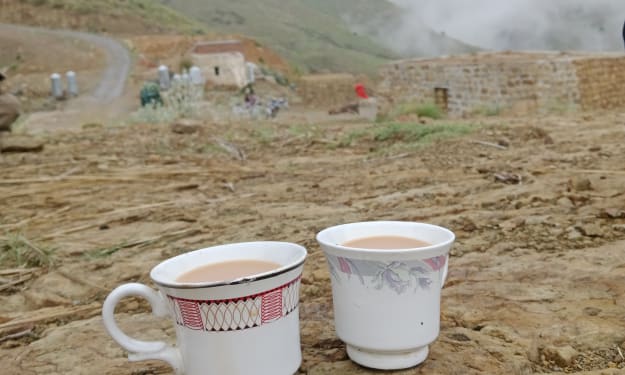
The mountains of Koh-e-Suleman cast long shadows over my childhood, standing as silent witnesses to everything I knew and loved. Here, in the valleys carved by time and rain, the air felt thick with stories that went untold, passed down in whispers and glances rather than words. Growing up, I knew little of the world beyond these mountains, and perhaps I didn’t care. There was a sense of completeness in my small world, a feeling that the peaks surrounding me held everything worth knowing. But as I grew older, the world began to find its way into our valley—through stories from returning travelers, the flickering lights of TV screens, and eventually, through my own ambitions. My earliest memories are filled with the sounds of Koh-e-Suleman—winds that whistled through the rocks, the laughter of friends chasing each other through dusty village paths, and the soft voices of elders who seemed to carry ancient knowledge. Each day felt simple yet profound, filled with the tasks and rhythms of rural life. I’d spend hours watching the shepherds guide their sheep, their quiet commands lost in the vastness of the mountains. I came to understand the quiet language between them and their animals, something that couldn’t be learned from books. Life’s lessons were taught in gestures, not words, and in long silences that spoke louder than conversations. I can still remember the mornings when the sun would rise over the peaks, casting a golden light on everything it touched. The fields would shimmer with dew, and the world felt new, as if every day was a fresh start. My family worked tirelessly, their hands worn from years of labor. There was a deep sense of pride in everything they did, from tending the fields to preparing food with care and ritual. They taught me that hard work was its own reward and that dignity could be found even in the smallest tasks. I saw in my mother’s hands a testament to resilience, the strength she passed on to me in ways I couldn’t fully grasp then. We may not have had much by city standards, but there was a richness in our lives that came from our connection to the land, to each other, and to the rhythms of nature. Life in Koh-e-Suleman was slower, and yet it was rich with unspoken meaning. The mountains seemed to hold secrets, almost as if they were alive, breathing with each gust of wind. Every path and rock felt familiar, and every season brought its own rhythm, shaping our days and our way of thinking. As a child, I learned to read these changes—the way the air felt thicker with the approach of winter, or the way the scent of wildflowers hinted at the beginning of spring. I came to understand that the mountains around us were like guardians, timeless and steadfast, giving us shelter and shaping our lives. Yet, amidst this serene beauty, there were moments of hardship. I vividly remember a summer when the rains didn’t come as expected. The fields turned brown, and we watched helplessly as our crops withered. My family gathered in the evenings, sharing stories and laughter to distract ourselves from the worry that crept into our hearts. Those evenings were a testament to the strength of community, where neighbors would come together, sharing food and support. In those moments, I learned that even in the face of adversity, we could find comfort in one another. Then came the move to DG Khan. If Koh-e-Suleman was a place that nurtured me, DG Khan was a place that challenged me. For the first time, I felt unmoored, like a leaf carried by a strong wind, struggling to find solid ground. The noise, the people, the endless movement—it was both exhilarating and terrifying. Suddenly, my world was no longer bound by mountains but by roads, buildings, and an endless horizon of opportunities and uncertainties. I missed the quiet of Koh-e-Suleman, the familiar faces, the sense of being part of something timeless. But in DG Khan, I realized that change was an inevitable part of growth, and with each day, I adapted a bit more. Adapting to city life was not easy. I was used to the open spaces of the mountains, where my thoughts could wander freely. In DG Khan, everything felt confined—our home, the classrooms, even the streets that seemed to narrow in their busyness. People spoke quickly, and often I found it hard to keep up, feeling as if I were still listening to a language I had yet to master. For the first few months, I felt like an outsider, overwhelmed by the city’s pace and noise. I missed the nights of Koh-e-Suleman, where silence settled like a blanket over our village, giving space for reflection and peace. In DG Khan, the city seemed to hum even in the quiet hours, reminding me that life here moved constantly forward. I remember my first day at school in DG Khan vividly. The bright hallways were filled with students laughing and chatting, their voices blending into a cacophony that felt alien to me. I walked through the corridors, unsure of where to go, feeling like a ghost hovering on the edges of a world I couldn’t quite enter. It was overwhelming, and I felt a pang of longing for the simplicity of my old life. I missed the familiarity of my village school, where everyone knew each other, and learning felt like a shared experience rather than a competitive race. Education became my anchor. As I pursued my degree in Botany at BZU Multan, I found a new appreciation for the natural world—a world I had taken for granted back in Koh-e-Suleman. Studying plants, ecosystems, and the delicate balance of life, I often thought of the mountains of my childhood. In the quiet corners of the library or during long lectures, my mind would drift back to those familiar landscapes. But now, I saw them through a different lens, understanding the intricate connections between everything I’d once observed without thought. It was as if my studies gave new life to old memories, making them sharper and more meaningful. The classroom became a space where I could connect my past with my present. I began to understand the complexity of the environment I grew up in, realizing how plants and animals depended on one another in delicate ecosystems. This knowledge deepened my respect for the land that had nurtured me, and in a way, it made me feel closer to Koh-e-Suleman, even though I was miles away. I started to see my family’s connection to the land in a new light, recognizing the wisdom in their ways and the respect they held for nature. My mother’s hands, which had once seemed simply worn, now seemed like a map of endurance, a testament to the life we had built with so little yet had valued so deeply. Yet, the journey wasn’t without its challenges. University life was demanding, and at times, I felt like an outsider, unable to fully relate to my peers who had grown up in cities and seemed so comfortable in this environment. There were moments of self-doubt, times when I wondered if I truly belonged here. I missed the easy familiarity of Koh-e-Suleman, the feeling of knowing exactly who I was in that landscape. Here, surrounded by people from all walks of life, I often felt as if my identity were a shadow, something that only appeared in the quiet hours when I was alone. The academic pressure was intense, and I often found myself staying up late, poring over textbooks and notes, trying to grasp concepts that felt foreign. It was in these late hours, when the world around me was silent, that I often reflected on my journey. I thought about the values instilled in me by my family—hard work, perseverance, and the importance of community. With each challenge I faced, I felt the weight of those values pushing me forward, reminding me that I was not just studying for myself but for those who had sacrificed so much to provide me with this opportunity. I sought solace in nature whenever I could. On weekends, I would visit nearby parks, seeking out patches of greenery that reminded me of home. There, surrounded by trees and flowers, I would close my eyes and imagine the mountains of Koh-e-Suleman. I could almost hear the whispers of the wind and the rustling of leaves, grounding me in a way that the bustling city could not. These moments were a reminder that despite the distance, I could carry a piece of my home with me, letting it guide my path. But each time I questioned myself, I remembered the strength I had inherited from my family and my community. I was here because I wanted to learn, to grow, and to honor the sacrifices that had brought me this far. My father’s words often echoed in my mind, reminding me that resilience wasn’t just about surviving; it was about thriving, even in the face of change. With every challenge, I felt myself growing, stretching, becoming someone who could bridge the world of Koh-e-Suleman and the demands of the modern world. In those years, I learned that resilience wasn’t just about enduring hardship; it was about adapting to change, about finding strength in new places. My identity became a blend of my past and my present—a mosaic of memories, struggles, and small victories. I was no longer just the child from Koh-e-Suleman; I was a student, a seeker, someone who held onto tradition while reaching for something new. As I look back now, the mountains of Koh-e-Suleman feel closer than ever, even from miles away. They taught me about strength, endurance, and finding beauty in silence. Though I’ve ventured far from them, a part of me always returns to those mountains—the memories, the stories, the whispers. It’s the lessons they impart that continue to shape my understanding of the world, like echoes of wisdom that resonate within me. Each visit back home, every trek through those familiar paths, brings a flood of nostalgia. I can feel the earth beneath my feet, the sun warming my face, and the cool mountain breeze that whispers secrets of the past. These moments remind me that while I may be far away in body, my spirit is tethered to those roots. In the evenings, I often find myself sitting in quiet contemplation, reflecting on the journey that has brought me to where I am today. The stark contrast between my childhood in Koh-e-Suleman and my life in DG Khan illustrates the duality of existence: the simplicity of rural life versus the complexity of urban living. This duality has become a source of strength for me, teaching me that I can navigate different worlds while still holding onto my core values. The values of humility and respect for nature that were ingrained in me by my family became particularly important as I ventured further into my academic career. I began to see the challenges facing our environment not just as abstract problems but as issues that hit close to home. My studies in Botany opened my eyes to the fragility of ecosystems, and I felt a growing responsibility to contribute to the preservation of the land that had given me so much. Each class, each field study, was a reminder of the interconnectedness of life. I vividly recall a project we conducted on local flora, where we explored the biodiversity surrounding the city. It was fascinating to uncover the stories behind each plant—the way they adapted to their environment, their medicinal properties, and their roles in the ecosystem. I often thought of the wildflowers that blanketed the hillsides of Koh-e-Suleman in spring, resilient in their beauty despite harsh conditions. Through my research, I started to understand the urgent need for environmental stewardship, especially in our rapidly changing world. I began volunteering with local conservation groups, participating in clean-up drives and awareness campaigns. It was fulfilling work, allowing me to give back to the community while actively engaging with the issues I had come to care deeply about. In those moments, I felt a sense of purpose, as if I were channeling the strength of my ancestors who had lived in harmony with the land for generations. But the journey was not without its challenges. Balancing my academic responsibilities with my passion for conservation often felt overwhelming. There were times when I doubted my ability to make a meaningful impact, especially when faced with the enormity of environmental issues. Yet, each time I felt the weight of despair creeping in, I would remind myself of the lessons learned in Koh-e-Suleman. The mountains taught me resilience; they taught me that even in the harshest conditions, life finds a way to thrive. As I progressed through my studies, I became more involved in projects that aimed to address local environmental concerns. One memorable project involved collaborating with fellow students to restore a small area of degraded land on the outskirts of DG Khan. We organized tree-planting events, engaging the community in the process and encouraging them to take ownership of the project. It was heartening to see families come together, young children planting saplings alongside their parents, all of us working towards a common goal. These experiences reinforced my belief in the power of community and collective action. Just as my village would gather to support each other during tough times, our urban community could unite to create positive change. It was a beautiful realization—one that bridged my past and present, allowing me to draw strength from both. Through these experiences, I also recognized the importance of education in fostering a sustainable future. I often shared stories from my childhood, emphasizing the deep connection we had with nature in Koh-e-Suleman. I would encourage younger generations to appreciate the natural world around them, instilling a sense of responsibility towards protecting it. Education became a tool for empowerment, a way to inspire others to care for the environment and to understand the impact of their actions. As I approached the end of my degree, I began to contemplate my future. The path ahead was filled with possibilities, and I felt a growing desire to merge my love for the natural world with my ambition to make a difference. I started exploring career options that would allow me to engage in environmental policy or conservation work. The thought of advocating for the very landscapes that had shaped me was exhilarating yet daunting. During this time, I had the opportunity to attend a national conference on environmental issues. Surrounded by professionals and activists from diverse backgrounds, I felt both inspired and intimidated. Listening to their stories of triumph and struggle made me realize the importance of collaboration in addressing environmental challenges. I left the conference with renewed energy, eager to find my place in this movement. As I continued my journey into adulthood, I often found myself reflecting on the interplay between my upbringing and my aspirations. The mountains of Koh-e-Suleman were not merely a backdrop to my childhood; they were an integral part of my identity. They taught me patience, humility, and the importance of maintaining a connection to the land. Each time I returned home, I would hike through the hills, retracing the paths of my youth. These treks became a pilgrimage of sorts, allowing me to reconnect with my roots and gather strength for the challenges ahead. Standing at the peak, overlooking the vast valleys below, I felt a sense of peace wash over me. It was a reminder that no matter where life took me, I would always have a sanctuary to return to. In one particularly memorable hike, I discovered a hidden valley, untouched and pristine. The air was fresh, and the only sounds were the rustling of leaves and the distant call of birds. I sat down on a rock, closed my eyes, and let the tranquility envelop me. In that moment, I made a promise to myself: I would dedicate my life to protecting spaces like this, to ensure that future generations could experience the beauty and serenity that had shaped my own childhood. As my career began to take shape, I pursued opportunities that aligned with my values. I secured an internship with an environmental organization focused on community engagement and sustainable practices. It was a stepping stone that allowed me to apply what I had learned in the classroom while also connecting with people who shared my passion for conservation. The experience was both enlightening and empowering; I was no longer just an observer but an active participant in the fight for a healthier planet. Throughout my journey, I continued to draw strength from my experiences in Koh-e-Suleman. Whenever I faced obstacles or felt overwhelmed, I would recall the lessons learned in my childhood—the resilience of the land, the unity of community, and the beauty of simplicity. These reflections served as a guiding light, helping me navigate the complexities of adulthood while staying true to my roots. As I settled into my career, I often sought ways to give back to the community that had nurtured me. I initiated workshops in schools, sharing my knowledge about the environment and the importance of conservation. It was a way to connect with younger generations, encouraging them to develop a sense of stewardship towards the natural world. I wanted them to know that they, too, could make a difference, just as I had learned to do. Through these efforts, I discovered a profound joy in mentorship. Watching the spark of curiosity ignite in young minds reminded me of my own journey, the path from Koh-e-Suleman to DG Khan and beyond. It was a beautiful cycle of giving back, of planting seeds of awareness that I hoped would grow into a movement for change. As the years passed, I found myself more deeply embedded in environmental advocacy. I began collaborating with various organizations on larger-scale projects, focusing on sustainable development in rural areas. These initiatives allowed me to connect with communities similar to the one I had come from, emphasizing the importance of balancing development with environmental preservation. The work was challenging yet rewarding. I often traveled to remote areas, engaging with local communities, understanding their needs, and developing solutions that respected their way of life. These experiences grounded me in the realization that my roots were not just tied to Koh-e-Suleman but to the broader tapestry of cultures and landscapes across Pakistan. Every time I returned to my village, I felt a renewed sense of purpose. I would share my experiences with family and friends, emphasizing the importance of environmental stewardship. The conversations would often shift towards exploring sustainable practices in agriculture, discussing how we could adapt traditional methods to meet the challenges posed by climate change. One summer, we organized a community event in Koh-e-Suleman, inviting local farmers to discuss sustainable farming practices. The event brought together people from various backgrounds, fostering a sense of camaraderie as we shared ideas and experiences. I felt a deep connection to my roots, witnessing the resilience of my community and their willingness to adapt to changing circumstances. In those moments, I realized that the mountains of Koh-e-Suleman were not just a backdrop to my story; they were an integral part of the narrative of many others. Each person I met carried their own experiences, challenges, and dreams. Together, we formed a tapestry of resilience, a community committed to preserving the land that had nurtured us all. As I reflect on my journey, I see a rich mosaic of experiences woven together by the threads of my upbringing. The lessons learned in Koh-e-Suleman shaped my understanding of the world, guiding me as I navigated the complexities of life in DG Khan and beyond. I learned that resilience isn’t just about enduring; it’s about thriving in the face of adversity, about finding beauty in simplicity, and about forging connections with both people and the environment. Today, as I stand at the intersection of my past and future, I am filled with gratitude. The mountains of Koh-e-Suleman will always be a part of me, a reminder of where I come from and the values that continue to guide me. I hope to inspire others to find strength in their own stories, to embrace their roots while reaching for the stars. Ultimately, the journey is ongoing, and while I may continue to face challenges and uncertainties, I carry with me the resilience of my past, the wisdom of my community, and the beauty of the land that shaped me. Each step forward is imbued with the lessons learned from the mountains, the laughter of my childhood friends, and the shared hopes of my family. As I pursue my career in environmental advocacy, I often find myself reflecting on the interconnectedness of our lives. The world is a complex web of relationships, each thread representing a story, a challenge, or a triumph. In advocating for sustainable practices, I see my work as part of a larger narrative—one that transcends borders and speaks to the collective responsibility we share for our planet. In this age of rapid change, where the impacts of climate change are felt globally, my experiences have instilled in me a sense of urgency. I am driven by the belief that we can create a more sustainable future, but it requires collective action and a commitment to nurturing the land that sustains us. Every tree planted, every conservation effort undertaken, is a step towards healing our environment and preserving it for future generations. The mountains of Koh-e-Suleman have taught me that true strength lies not in dominance but in harmony. In my work, I strive to foster collaboration between communities, policymakers, and environmental advocates. I aim to create spaces where voices are heard, and solutions emerge from the collective wisdom of those who know the land best. I remember one particular project where we worked with local farmers to implement sustainable agricultural practices. The initiative involved workshops, training sessions, and hands-on demonstrations, all aimed at promoting methods that reduced environmental impact while enhancing crop yields. Witnessing the transformation in attitudes was inspiring. Farmers who once viewed conservation as a burden began to see it as an opportunity for growth and innovation. In the evenings, as the sun dipped below the horizon, casting golden hues across the fields, I would sit with the farmers, sharing stories and laughter. It reminded me of the evenings spent with my family in Koh-e-Suleman, where our shared experiences fostered a sense of community. The bonds formed in those moments fueled my passion for this work, reminding me of the importance of connection and shared purpose. Through my advocacy, I’ve also discovered the power of storytelling. Sharing the narratives of individuals affected by environmental issues humanizes the statistics and data that often feel distant. I began collecting stories from community members—stories of their struggles, their hopes, and their dreams for a sustainable future. These narratives became a powerful tool in raising awareness and fostering empathy, bridging the gap between those who make policies and those who live the consequences of those decisions. As I continue this journey, I am also mindful of the importance of education in creating lasting change. I have dedicated time to developing educational programs aimed at fostering environmental literacy in schools. Engaging young minds and instilling a sense of responsibility towards the planet is crucial for ensuring a sustainable future. I want to empower the next generation to become advocates for their communities, equipped with the knowledge and passion needed to tackle the challenges they will face. I often draw parallels between my childhood in Koh-e-Suleman and the urban environment of DG Khan. The simplicity and connection to nature I experienced growing up serve as a guiding light in my advocacy work. I want to remind people that the beauty of nature exists even in urban settings—it simply requires a shift in perspective. Parks, gardens, and green spaces can be sanctuaries, fostering a sense of community and well-being. As I move forward in my career, I am constantly seeking opportunities to collaborate with like-minded individuals and organizations. The landscape of environmental advocacy is vast, and I believe that by working together, we can amplify our efforts and create a more significant impact. I am excited about the future, filled with possibilities and potential. I often think of my roots, the mountains of Koh-e-Suleman that shaped my identity, and I feel a deep sense of responsibility to honor them through my work. They serve as a reminder of the resilience, strength, and beauty that exist in the world. I aspire to carry forward their legacy, advocating for a future where the balance between nature and humanity is restored. The journey I have embarked upon is ongoing, and while there will be challenges ahead, I am equipped with the lessons learned from my past. I am committed to embracing change, fostering connections, and advocating for the environment. With each step forward, I am reminded that I am part of a larger narrative—one that transcends boundaries and speaks to our shared humanity. In conclusion, my life’s journey from the serene mountains of Koh-e-Suleman to the bustling streets of DG Khan has shaped me into the person I am today. It has instilled in me a profound appreciation for the interconnectedness of life and the importance of preserving our natural heritage. The lessons learned in my childhood continue to guide me as I navigate the complexities of adulthood. I am grateful for the strength I draw from my roots, the wisdom of my community, and the beauty of the land that continues to inspire me. As I look to the future, I am filled with hope and determination. Together, we can create a world where nature thrives, communities are empowered, and the lessons of the past inform a brighter, more sustainable future. In the words of my elders, “The mountains are strong, and so are we.” With this strength, I will continue to advocate for the land I love, carrying the spirit of Koh-e-Suleman with me wherever I go.
By Sarfraz Buzdarabout a year ago in 01