Raymark Marcos
Bio
A Writer and Guitarist
A son of God
A student who's doing a lot of side hustles to earn enough money to be able to go for college.
Stories (77)
Filter by community
The Ark of the Covenant
The Ark of the Covenant: A Divine Connection The Ark of the Covenant is a biblical artifact of great significance, often surrounded by mystery and reverence. It's not only a physical object but also a symbol of God's presence and covenant with His people. Let's explore the profound biblical meaning of the Ark of the Covenant and its spiritual significance.
By Raymark Marcos2 years ago in Motivation
The Mystery of Atlantis
The Mystery of Atlantis: A Biblical Perspective Introduction The legend of Atlantis has captivated imaginations for centuries. Described as a utopian island that ultimately disappeared beneath the waves, Atlantis is often associated with mythology and mystery. While the story of Atlantis is not found in the Bible, we can explore the concept of lost civilizations and hidden truths from a biblical perspective.
By Raymark Marcos2 years ago in History
Hermes: The Divine Messenger and Guide
Hermes: The Divine Messenger and Guide Hermes, the multifaceted deity of Greek mythology, holds a unique place among the Olympian gods as the divine messenger, guide of souls, and patron of various domains. In this scripture writing, we will explore the multifaceted character of Hermes and the profound lessons and symbolism his myth imparts.
By Raymark Marcos2 years ago in History
The Power of God to Change Your Life- Chapter 2
Throughout the ages, countless individuals have experienced profound transformations in their lives through their faith in God. The Bible is replete with stories of people whose lives were changed in remarkable ways by encountering the divine. In this scripture writing, we will explore the transformative power of God and how He can bring about profound changes in our lives.
By Raymark Marcos2 years ago in Chapters
Uranus "The God of the Heavens"
Uranus: The God of the Heavens and Cosmic Symbolism Uranus, both the seventh planet in our solar system and the god of the heavens in Greek mythology, serves as a captivating bridge between the realms of science and ancient legend. In this scripture writing, we will explore the dual nature of Uranus, delving into its scientific attributes as a celestial body while also uncovering its profound significance as a mythological deity.
By Raymark Marcos2 years ago in History
The River of Jordan
The River Jordan, a renowned biblical waterway, holds profound significance in the religious and historical narratives of Judaism and Christianity. This sacred river, which flows through the heart of the Middle East, has witnessed countless pivotal moments in the lives of prophets, leaders, and believers. In this scripture writing, we will explore the spiritual and symbolic significance of the River Jordan in the context of these two faiths.
By Raymark Marcos2 years ago in History
Hercules "The Demigod of Greek Mythology"
Hercules, the legendary hero of Greek mythology, stands as a timeless symbol of strength, courage, and resilience. His epic tales have been passed down through generations, captivating the imagination of people around the world. In this essay, we will delve into the fascinating world of Hercules, exploring his origins, his remarkable feats, and the enduring legacy of this iconic hero.
By Raymark Marcos2 years ago in History
The Power of God to Change Your Life- Chapter 1
Change is a constant aspiration in our lives. We often seek to become more confident, less anxious, or simply better versions of ourselves. We attend seminars, read self-help books, and join health clubs, all in pursuit of that elusive transformation. Yet, we find ourselves asking, "Why can't I change?"
By Raymark Marcos2 years ago in Chapters
Becoming A More Loving Person
First Corinthians 13 ends with these familiar words, "And now these three remain: faith, hope and love. But the greatest of these is love." Love is also the first fruit of the Spirit mentioned in Galatians 5. But what is love? Love is probably the most misunderstood word in the world. Part of the problem is that we use this one word to describe a lot of things. We water down its meaning by overuse. I love my wife. I love America. I love pizza. I love my dog. I love you. I'd love to have my back rubbed. We use the word love in so many different ways that is has, literally, lost its meaning. It's difficult to give or receive love when you don't even understand what it is. Now, we need to clear up a couple of popular misconceptions about love. Most people think love is a feeling. It's a sentimental knot in your stomach. A quiver in your liver. An ocean of emotion. True, love does produce feelings, but it is more than a feeling. In a "Peanuts" cartoon, Charlie Brown and Linus are talking, and Linus says, "She was so cute. I used to see her in Sunday School every week. I used to just sit there and stare at her, and sometimes she'd smile at me. Now I hear she's switched churches." Charlie Brown looks up and says, "That'll change your theology in a hurry!" How often we rely on our feelings, and let our feelings motivate us to do all kinds of things we might not normally do. As I said, love produces feelings, some very powerful ones, but it is more than a feeling. Another misconception is that love is uncontrollable. Have you ever said. "I fell in love" - as if you had tripped? We just assume that love can't be controlled. "I can't help it if I'm in love. I can't help myself; I'm in love." Or the opposite: "I can't help myself; I just don't love him anymore." We talk as if love is uncontrollable, but the Bible says love is controllable. In fact, Jesus commanded that we love others. His words indicate that we do have control over whom we love and whom we don't love. Love is a matter of two things: First, love is a matter of choice. The Bible says, "Over all these virtues put on love, which binds them all together in perfect unity" (Col. 3:14). Notice those two little words, put on. Love is something we can choose to have. If it were a feeling, we couldn't command it. But we can command a choice. And love is a choice. It is controllable. The Bible also says that love is a matter of conduct. Love is something we do. It is an action, not a feeling. The Apostle John expressed it this way, "Let us not love with words or tongue but with actions and in truth" (1 John 3:18). Too often we love with words or tongue but not with actions. A young man said to his fiancée, "I love you so much I would die for you, my love." She replied, "Oh, Harold, you're always saying that but you never do it." Love is more than words. It's more than feelings. Unlike us, the Greeks had four words to differentiate different types of love: storge, which means natural affection; eros, which means sexual attraction, philia, which means emotional affection or friendship: and agape, which means unconditional, giving, sacrificial love. When the Bible speaks of God's love for us and the kind of love we're to have for Him and for other people, the word is always agape. It's a commitment to act. Do you know it's possible to love someone you don't even like? Remember I said in chapter 2 that in order for God to teach us to love. He puts us around some unlovely people. It's easy to love people who are kind and lovely, but God is going to teach us to love, He'll bring some hard-to-love people into our lives. Now the fact is that our lives are full of people we don't like. We don't like the way some people talk. We don't like the way they act. We don't like the way they dress. But most of all, we tend not to like people who don't like us. I once heard a story about Lady Astor, who did not like Winston Churchill. One day she said, "Winston, if you were my husband I'd put arsenic in your tea."
By Raymark Marcos2 years ago in Chapters
From Rag's to Riches
In the bustling heart of Mumbai, amidst the chaos of the crowded streets and the cacophony of car horns, there lived a young man named Rajesh. Born into a modest family, Rajesh's life had been woven from threads of hard work, resilience, and the unwavering belief that he was destined for greatness.
By Raymark Marcos2 years ago in Motivation
Eros The God of Love
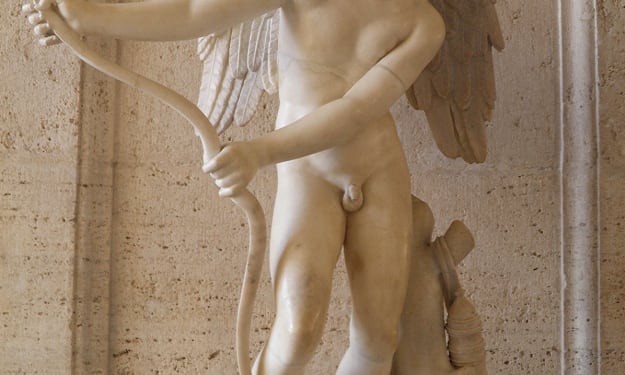
In Greek mythology, the god of love is Eros, also known as Cupid in Roman mythology. Eros is typically portrayed as the god of love and desire, often depicted as a young winged boy who carries a bow and arrows. His arrows have the power to make individuals fall in love with the first person they see. Eros is closely associated with the concept of romantic love and is often invoked as the deity responsible for inspiring feelings of love and passion in humans.
By Raymark Marcos2 years ago in History
Zeus King of All God's
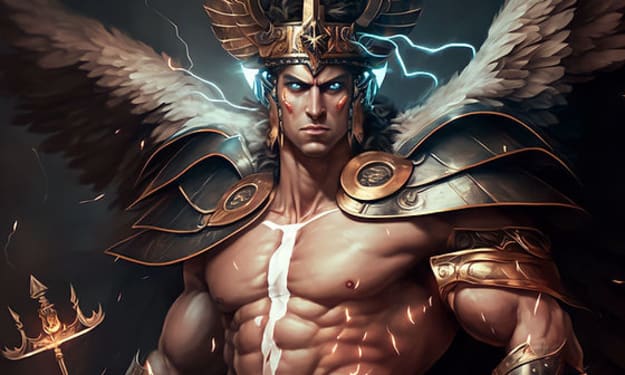
In the realm of ancient Greece, amidst the pantheon of gods and goddesses, there stood a figure of supreme majesty and power, Zeus, the thunderbolt-wielding ruler of the gods. Within the pages of Greek mythology, Zeus is a figure of tremendous significance, embodying both divine authority and human complexities.
By Raymark Marcos2 years ago in History