Radwanul HAQUE sakib
Stories (3)
Filter by community
Cristiano Ronaldo: The Relentless Pursuit of Greatness
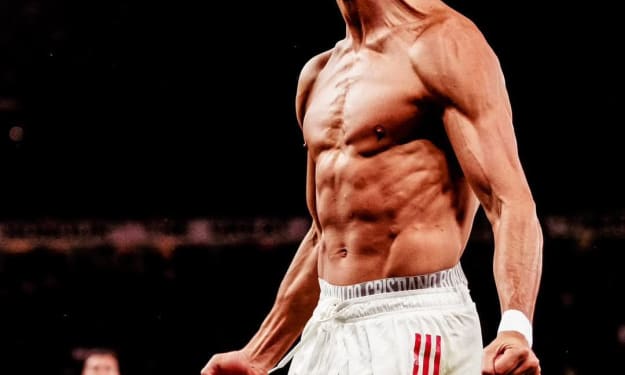
Cristiano Ronaldo dos Santos Aveiro is a name that resonates far beyond the football field. Born on February 5, 1985, in Madeira, Portugal, Ronaldo is widely regarded as one of the greatest footballers in history. Known for his incredible work ethic, physical prowess, and unmatched goal-scoring ability, he has inspired millions with his story of perseverance, ambition, and success. Early Life and Humble Beginnings Cristiano Ronaldo was born into a working-class family in Funchal, Madeira. He was the youngest of four children, and his family faced financial hardship. His father, José Dinis Aveiro, worked as a kit man at a local football club, while his mother, Maria Dolores, worked as a cook and cleaner to support the family. From a young age, Ronaldo showed a passion for football. He joined a local team, Andorinha, at age seven, and by 10, he was considered a prodigy in his region. At 12, he moved to Lisbon to join the Sporting CP academy, leaving his family behind. It was a difficult time, but his determination pushed him through. At Sporting CP, Ronaldo’s talent blossomed. He became the only player in the club’s history to play for the U-16, U-17, U-18, B team, and first team all in one season. His speed, technique, and powerful shots quickly caught attention. Breakthrough at Manchester United Ronaldo's big break came in 2003 when Sporting CP played a friendly match against Manchester United. His dazzling performance impressed Sir Alex Ferguson, who signed the 18-year-old for £12.24 million—a record fee for a teenager at the time. Wearing the iconic number 7 shirt, previously worn by legends like George Best and David Beckham, Ronaldo began his journey at United with high expectations. Initially criticized for showboating, he soon matured into a lethal winger with incredible speed, dribbling, and an eye for goal. During his six-year spell at Manchester United (2003–2009), Ronaldo won three Premier League titles, a UEFA Champions League title in 2008, and numerous domestic trophies. He also claimed his first Ballon d’Or in 2008. His 42-goal season in 2007–08 marked his transition from a promising winger to a global superstar. Reaching New Heights at Real Madrid In 2009, Ronaldo made a then-world-record transfer to Real Madrid for £80 million. It was at Madrid that he reached the peak of his career, becoming the club’s all-time top scorer with 450 goals in just 438 games—a nearly unprecedented goal-per-game ratio. During his nine years at Real Madrid, Ronaldo won two La Liga titles, two Copa del Rey titles, and four UEFA Champions League titles. He developed a fierce rivalry with Lionel Messi, with both players dominating the Ballon d’Or race for over a decade. Ronaldo’s time in Madrid was defined by consistency, big-game performances, and a relentless hunger for records. He became the first player to score 100 goals in the Champions League and was known for his clutch performances in knockout rounds. His overhead kick against Juventus in 2018 is still regarded as one of the greatest goals in the competition’s history. Juventus and New Challenges In 2018, Ronaldo transferred to Juventus for €100 million, seeking a new challenge in Italy. He continued to shine, winning two Serie A titles and becoming the fastest player in the club’s history to reach 100 goals. Though Juventus didn't win the Champions League during his time, Ronaldo remained among the top scorers and brought global attention to the Italian league. His professionalism and training regime also influenced Juventus’ younger players, setting a high standard for fitness and discipline. Return to Manchester United and Saudi Pro League In 2021, Ronaldo returned to Manchester United amid much fanfare. Though he had a strong individual season, scoring 24 goals in all competitions, the team struggled collectively. Tensions between Ronaldo and the club escalated, especially under new manager Erik ten Hag, eventually leading to a mutual contract termination in late 2022. Ronaldo then made headlines by signing with Al Nassr in Saudi Arabia, a move that marked a new era in his career and brought massive global attention to the Saudi Pro League. Despite criticisms, Ronaldo’s impact in Asia has been significant, both commercially and competitively, helping develop football culture in the region. International Career with Portugal Cristiano Ronaldo's international career is as decorated as his club career. He made his debut for Portugal in 2003 and has since become the country’s most capped player and all-time leading goal scorer. He has represented Portugal in five UEFA European Championships and five FIFA World Cups. The pinnacle of his international career came in 2016 when he led Portugal to victory in the UEFA Euro 2016, defeating France in the final. Though he was injured early in the match, his leadership from the sidelines inspired his teammates. In 2019, Ronaldo added another international trophy, winning the inaugural UEFA Nations League with Portugal. As of 2024, he holds the record for the most goals in men’s international football, with over 120 goals. Playing Style and Physical Prowess Cristiano Ronaldo is known for his incredible athleticism, powerful shots, aerial dominance, and goal-scoring instinct. While he started as a winger known for stepovers and speed, he evolved into a complete forward capable of playing across the front line. He is a master of headers, free kicks, and penalties, with unmatched fitness levels even into his late 30s. His dedication to training, diet, and recovery has allowed him to compete at the highest level for over two decades. Off the Pitch: Brand, Business, and Philanthropy Ronaldo is not just a footballer—he is a global brand. With hundreds of millions of social media followers, he is the most followed person on platforms like Instagram. He has numerous endorsement deals with brands like Nike, Herbalife, and Clear, and his CR7 brand includes clothing, fragrances, and hotels. He is also known for his philanthropy. Ronaldo has donated millions to hospitals, cancer centers, and disaster relief efforts. He has never had a tattoo, stating it’s because he donates blood regularly. Legacy and Influence Cristiano Ronaldo’s legacy is defined by his unmatched drive for success. He is a five-time Ballon d’Or winner, four-time European Golden Shoe winner, and holds records for most goals in the Champions League, Euro tournaments, and international football. He has inspired a generation of players with his story of rising from poverty through hard work and determination. Unlike many naturally gifted players, Ronaldo is seen as a self-made icon—someone who achieved greatness through relentless effort and ambition. Conclusion Cristiano Ronaldo’s journey from the streets of Madeira to the pinnacle of world football is a testament to what hard work, discipline, and self-belief can achieve. He has not only broken records but redefined what it means to be a professional athlete. Whether you admire him for his goals, his leadership, or his sheer determination, there is no denying his impact on the world of football. As his illustrious career winds down, Ronaldo leaves behind a legacy that will be remembered for generations—a symbol of excellence, resilience, and the power of the human spirit.
By Radwanul HAQUE sakib10 months ago in Chapters
Lionel Messi: The Maestro of Modern Football
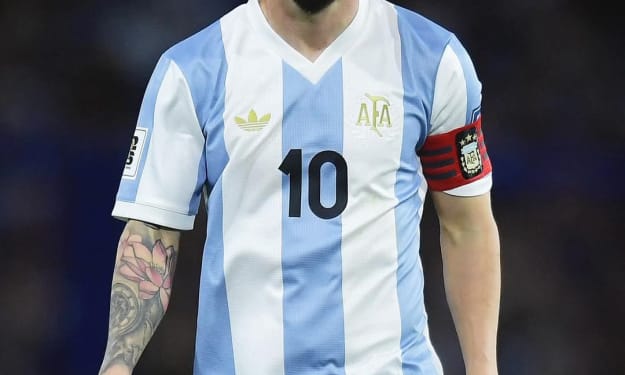
Lionel Andrés Messi, often regarded as the greatest footballer of all time, is more than just an athlete—he is a symbol of excellence, dedication, and brilliance on the football pitch. Born on June 24, 1987, in Rosario, Argentina, Messi's journey from a small boy with a growth hormone deficiency to a global icon is one of the most inspiring tales in the history of sports. Early Life and Challenges From a very young age, Messi showed an extraordinary talent for football. At just five years old, he began playing for Grandoli, a local club coached by his father, Jorge Messi. His skills quickly surpassed those of his peers, and by the age of eight, he joined the youth system of Newell’s Old Boys. It was during this time that he was diagnosed with a growth hormone deficiency—a condition that required expensive medical treatment. His family could not afford the treatment, but hope came from Spain. FC Barcelona, one of the most prestigious football clubs in the world, recognized Messi’s talent and offered to cover his medical costs if he moved to Spain and joined their youth academy, La Masia. At the age of 13, Messi and his family relocated to Barcelona, marking the beginning of an extraordinary journey. Rise Through FC Barcelona Messi progressed rapidly through the ranks at La Masia. His exceptional dribbling, vision, and goal-scoring ability earned him a place in Barcelona’s senior team at just 17. On October 16, 2004, he made his official debut for Barcelona against Espanyol. It wasn’t long before he scored his first goal, becoming the youngest player to score for the club at that time. Under the guidance of Frank Rijkaard and later Pep Guardiola, Messi blossomed into a superstar. Guardiola, in particular, played a pivotal role by deploying Messi as a "false nine," allowing him to roam freely and orchestrate attacks. This tactical innovation helped Barcelona dominate world football. Dominating the World Stage Between 2008 and 2012, Barcelona achieved an era of unprecedented success with Messi at the heart of it all. Alongside teammates like Xavi, Iniesta, and Busquets, Messi helped the club win multiple La Liga titles, UEFA Champions League trophies, and FIFA Club World Cups. The 2008–09 season was particularly memorable as Barcelona won the treble: La Liga, Copa del Rey, and the Champions League. Individually, Messi was unstoppable. In 2012, he scored an astonishing 91 goals in a calendar year—a record that still stands. His ability to dribble past multiple defenders, deliver inch-perfect passes, and score from almost anywhere on the pitch mesmerized fans and critics alike. Messi won his first Ballon d’Or in 2009, and by 2021, he had won it seven times—more than any other player in history. International Career with Argentina Despite his immense success at the club level, Messi initially faced criticism for his performances with the Argentina national team. Comparisons with Diego Maradona loomed large, and a series of final losses—including the 2014 World Cup final and Copa América finals in 2007, 2015, and 2016—led some to question his international legacy. However, Messi silenced critics in 2021 when he led Argentina to victory in the Copa América, defeating Brazil in the final at the Maracanã. The win was emotional and historic, marking Messi's first major international trophy. He was named the tournament's best player and top scorer. In 2022, Messi cemented his legacy by leading Argentina to World Cup glory in Qatar. He delivered one of the greatest performances in World Cup history, scoring seven goals and assisting three. Argentina defeated France in a dramatic final that ended 3–3 after extra time and was decided by penalties. Messi was awarded the Golden Ball as the tournament’s best player, and his dream of winning the World Cup came true. PSG and Later Career In 2021, due to financial constraints at FC Barcelona, Messi left the club he had called home for over 20 years. It was an emotional farewell. He joined Paris Saint-Germain (PSG) on a free transfer, teaming up with stars like Neymar and Kylian Mbappé. While his first season was relatively quiet, he found form in his second, helping PSG win Ligue 1 and playing a key role in their Champions League campaign. After two seasons at PSG, Messi made another surprising move in 2023—this time to Inter Miami in Major League Soccer (MLS). His arrival in the United States brought unprecedented attention to the league and boosted the popularity of football in the region. Even in his mid-30s, Messi continued to deliver moments of magic, proving that age had not diminished his talent. Playing Style and Legacy Lionel Messi is renowned for his low center of gravity, quick acceleration, and unmatched dribbling skills. Unlike many players who rely on physical strength, Messi uses intelligence, balance, and extraordinary ball control to outwit defenders. He is also a prolific playmaker, capable of creating chances and setting up goals with ease. Beyond statistics and trophies, Messi’s legacy lies in the joy he brings to fans. His humility, sportsmanship, and dedication to the game have earned him admiration from across the world. He has inspired countless young players and set new standards for excellence. Off the Pitch Messi is known for his quiet and reserved personality. He is married to Antonela Roccuzzo, his childhood sweetheart, and they have three children. He is also involved in numerous charitable activities through the Leo Messi Foundation, which supports education and healthcare for vulnerable children. Conclusion Lionel Messi’s story is one of talent, resilience, and passion. From a small boy in Rosario to a world champion and football legend, he has defied odds, broken records, and rewritten history. Whether on the field with Barcelona, Argentina, or Inter Miami, Messi has proven time and again why he is considered the GOAT—Greatest of All Time. As he enters the twilight of his career, one thing is certain: the impact of Lionel Messi on football will be felt for generations to come. His legacy is not just in the goals and trophies but in the memories he has given to millions of fans across the world.
By Radwanul HAQUE sakib10 months ago in Chapters
President Donald Trump is planning to oust national security adviser Mike Waltz
President Trump to Remove National Security Adviser Mike Waltz Amid Internal Fallout Washington, D.C. — President Donald Trump is reportedly planning to remove National Security Adviser Mike Waltz, according to multiple sources familiar with the matter. The decision comes in the wake of growing internal dissatisfaction with Waltz’s performance and a recent incident that embarrassed the administration, intensifying existing divisions within the national security apparatus. The Final Straw: The “SignalGate” Blunder The tipping point in Waltz's tenure as National Security Adviser came with what insiders are now calling “SignalGate.” According to reports, Waltz accidentally added journalist Jeffrey Goldberg, editor-in-chief of The Atlantic, to a private Signal group chat used by top administration officials. The chat was meant to coordinate sensitive military planning related to strikes on Houthi rebel targets in Yemen. While officials have claimed no classified material was leaked, the optics were undeniably damaging. Though the administration initially attempted to downplay the incident—claiming it was a case of mistaken identity—critics, both internal and external, found the misstep emblematic of broader lapses in judgment and operational security. Goldberg’s unexpected presence in the chat, even if brief, raised alarm bells across Washington about how the Trump administration handles confidential national security matters. Deteriorating Confidence Within the Administration Even before the Signal incident, Waltz had reportedly fallen out of favor with several influential figures within the Trump administration. His traditionalist foreign policy views—supporting multilateral alliances like NATO and taking a more hawkish stance toward Russia—frequently clashed with Trump’s “America First” ideology. Insiders suggest that Waltz often found himself isolated during key policy discussions, outnumbered by more ideological loyalists in Trump’s inner circle. Sources within the White House National Security Council (NSC) describe a growing lack of confidence in Waltz’s leadership and coordination. One senior official, speaking on condition of anonymity, remarked, “There’s been a breakdown in trust. You can’t run national security with that kind of fracture.” Waltz’s deputy, Alex Wong, was also dismissed following the Signal debacle, further signaling that Trump is seeking a full shakeup of his national security team as he enters a critical phase of his presidency. Trump’s Mixed Messaging Initially, President Trump defended Waltz publicly, suggesting that the Signal incident was an honest mistake and downplaying its seriousness. "Mike is a patriot. Sometimes people press the wrong button," Trump said during an impromptu press briefing at Mar-a-Lago. However, sources close to the president indicate that privately, Trump was furious about the fallout and increasingly doubtful of Waltz’s ability to align with his vision for U.S. foreign policy. Trump’s frustrations reportedly escalated in recent weeks as global crises—from escalating tensions with Iran to renewed instability in Venezuela—have required a more unified and decisive national security posture. A Diplomatic Soft Landing In an effort to avoid an outright dismissal and to preserve face, Trump has announced that he plans to nominate Waltz as the next U.S. Ambassador to the United Nations. The move is seen by many as a demotion cloaked in diplomatic reassignment. While the ambassadorship is a prestigious role, it is a far cry from the day-to-day power and influence held by the National Security Adviser. Critics argue the reassignment is an attempt to sideline Waltz while avoiding the kind of public fallout that accompanied the firings of previous national security officials like John Bolton or H.R. McMaster. “This is about optics and managing the narrative,” one former White House staffer noted. “Trump doesn’t want another public feud.” Interim Replacement: Marco Rubio Steps In To fill the vacuum left by Waltz’s departure, President Trump has appointed Secretary of State Marco Rubio as acting National Security Adviser. The dual role is highly unusual and has raised eyebrows among foreign policy experts, who question whether one person can effectively manage both portfolios simultaneously. Rubio, however, has remained a staunch Trump ally and is seen as more ideologically aligned with the president than Waltz ever was. His elevation signals a broader consolidation of foreign policy power within Trump’s trusted circle. Waltz’s Legacy and the Future of U.S. Foreign Policy Mike Waltz’s tenure was short but eventful. A decorated former Green Beret and U.S. Representative, Waltz entered the White House with strong credentials and bipartisan respect. He sought to restore traditional U.S. alliances and advocated for a strong stance against authoritarian regimes. However, his efforts were often diluted or overruled by Trump’s more transactional, nationalist approach. Under Waltz’s watch, the U.S. took a harder line on China and Russia, ramped up military support for Taiwan, and maintained pressure on Iran. Yet, critics say he failed to prevent Trump from undermining NATO commitments and was largely absent in the administration’s chaotic withdrawal from Syria earlier this year. Supporters of Waltz have lamented his departure, arguing that he was one of the few remaining voices of strategic restraint in a White House increasingly dominated by ideologues. “Mike tried to bring professionalism and long-term thinking to the table,” said one former NSC staffer. “But the writing was on the wall. Trump wants loyalty, not legacy.”
By Radwanul HAQUE sakib10 months ago in Interview