Rachel Lesch
Bio
New England Native; lover of traveling, history, fashion, and culture. Student at Salem State University and an aspiring historical fiction writer.
Stories (62)
Filter by community
Top Five Friday
It's tough being a woman. No matter how hard you try, someone will always criticize what you do. Not feminine: you're mannish, unattractive, and too aggressive. Feminine: you're silly, frivolous, and kowtowing to the patriarchy. Sexual: you're slutty and dangerous. Not sexual: you're an uptight prude. Outspoken: you're a bitch who needs to shut up. Demure and retiring: you're a doormat who needs to stick up for herself. Being too much of one thing is liable to make you disliked. The same applies to women in fiction.
By Rachel Lesch8 years ago in Viva
Day in Salem
My film studies professor told us about an exhibit at the Peabody Essex Museum called "It’s Alive," which features posters and props from classic horror and sci-fi films. It piqued my interest and so Jasmine and I decided that we would go downtown today since my only class was canceled and Jasmine did not have class until 3:05.
By Rachel Lesch8 years ago in Wander
Trip to the Museum of Fine Arts Boston
Since 2017 is the fiftieth anniversary of 1967’s Summer of Love, The Museum of Fine Arts is showing an exhibition on this seminal moment in American pop culture. Mom and I are eager to go see it after falling in love with the work of artist Peter Max during our cruise.
By Rachel Lesch9 years ago in Wander
Paulita Maxwell: The Woman, the Myth, the Legend
Paulita Maxwell was born around 1864-5 in the town of Mora, New Mexico. She was the daughter of Lucien Bonaparte Maxwell, a wealthy and respected landowner. The New Mexico border with Old Mexico was the haunt of the notorious outlaw, Henry “Billy the Kid” McCarty. Billy was popular with New Mexico’s Hispanic community and often relied upon its hospitality. He was known to be something of a ladies man and had a particular taste for latina girls. Paulita and the Kid are popularly believed to have been lovers and it has been claimed that she was pregnant with his child around the time that he was shot dead by Sheriff Pat Garrett. According to Billy the Kid historian, Frederick Nolan, Garrett’s wife heard gossip that Paulita was pregnant with Billy’s child, which allowed Garrett to track him to Fort Sumner NM, where Paulita was staying and Billy was killed (Trimble).
By Rachel Lesch9 years ago in Viva
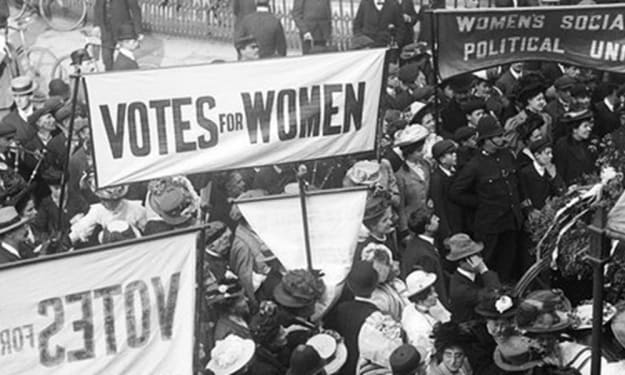
Women in the Edwardian and Interwar Era . Top Story - August 2017.
The Edwardian era began with the death of Queen Victoria on January 21st, 1901 and the accession of her son, Edward VII in 1902. Victoria reigned for 64 years, most of the nineteenth century which was a period of great social reform. Industrialization had created vast wealth, which was in the hands of a small minority of the population. Though the middle class was growing in industrialized countries, a significant portion of the population, those who worked in the factories which made the rich wealthy and gave the middle class the comforts they enjoyed, lived in extreme poverty. Poverty leads to many other social problems. The reform movements which sought to solve these problems often had women playing large roles. These reform movements paved the way for the social change of the twentieth century, which allowed for the emergence of some of the most remarkable, and notorious, women in history.
By Rachel Lesch9 years ago in Viva
Day at Old Sturbridge Village
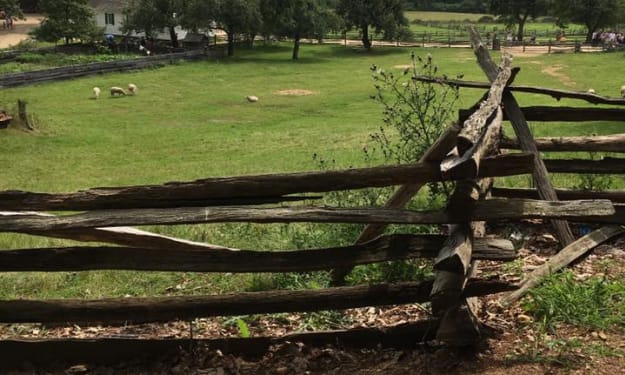
I have not been to Old Sturbridge Village in Sturbridge, MA since I was six or seven, which is going on 15 or 16 years ago. Today, it was open for free as part of the state’s “Free Fridays” program, so my mom and I went there to meet Ruth, an old friend of her’s. The drive from Gloucester was about an hour and 40 minutes.
By Rachel Lesch9 years ago in Wander
Retribution: Chapter 32
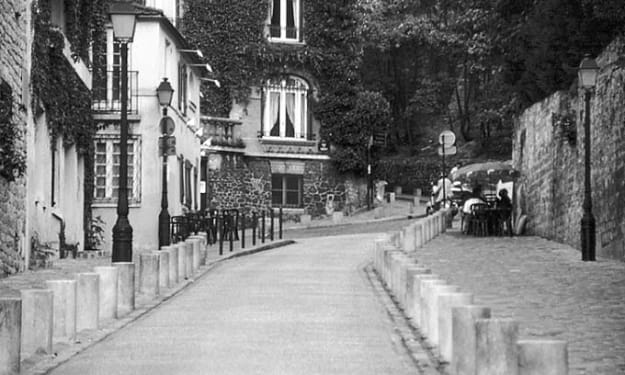
A summer-like heat wave hit Paris at the beginning of May: a week of dry, heavy, and sultry days. At the height of this hot spell, Charles and Adèle opened up their swimming pool. With a pitcher of bee’s knees, the afternoon passed pleasantly. Charles was bringing Adèle, who was sitting on the diving board, another cocktail when Benoît came outside and announced that Madame Brady was there to see them.
By Rachel Lesch9 years ago in Humans
Women In Early British Poetry
It is often said that a good story is timeless, but the best literature can also provide an insight into the time and place in which it was created, specifically its values and attitudes. The period spanning the Dark Ages, Middle Ages, and Early Modern Period, in which some of the most important works of British Literature were written, has often been characterized in later periods as misogynistic, with women being seen as irrelevant or looked upon with loathing. But a closer examination of works from the first thousand years of British Literature shows that the position of women in the past was more complex than that. Seemingly insignificant characters, such as Queen Wealhtheow in Beowulf, can tell us a lot about the important role royal women played in Anglo-Saxon society, and mother monsters can tear that society apart. Depictions of sexualized women in High Medieval poetry can challenge the Madonna-Whore dichotomy and complicated female figures can be forces of creation or destructions in the works of some of England's greatest poets, Shakespeare, Donne, and Milton.
By Rachel Lesch9 years ago in Poets
Retribution: Chapter 31
Gabriel checked over the time table at St. Lazare station; his train would not be boarding for another two hours. He could go and call upon his sister in the meantime, but the walk was too far. The time it would take to get there and back would not allow for much of a visit and he had imposed on Gillian’s hospitality too much of late.
By Rachel Lesch9 years ago in Humans
Retribution: Chapter 30
The first few days of April gave a balmy taste of the summer to come. Marianne opened her bay window to let in some of the cooler evening air. She sat down in the window seat and stroked Johnny’s back. The little dog was sleeping and snored and grunted. A box was placed on Marianne’s lap, upon which she began to write a note.
By Rachel Lesch9 years ago in Humans
Retribution: Chapter 29
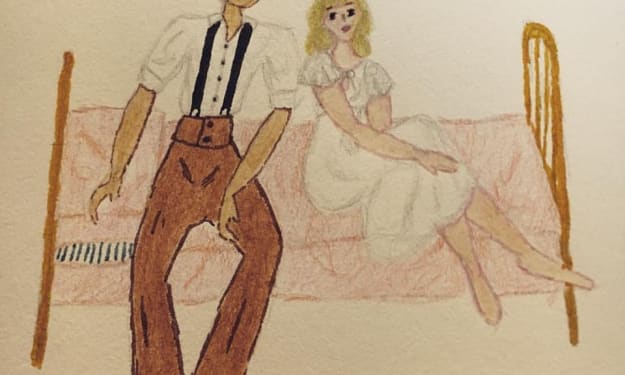
Easter Sunday, 1934, fell up the first of April, which also happened to be a feast day known as April Fish. Mimi’s mail was filled with the usual Easter themed greeting cards depicting crosses, chickens, rabbits, eggs, and lilies, as well as humorous images of fish: children playing with them, pretty girls kissing them, them wearing human clothes. The cards were neatly arranged in a row on her mantlepiece.
By Rachel Lesch9 years ago in Humans