Peace Alber
Stories (4)
Filter by community
How Plates Made From Sugarcane Could Help India's Plastic Problem
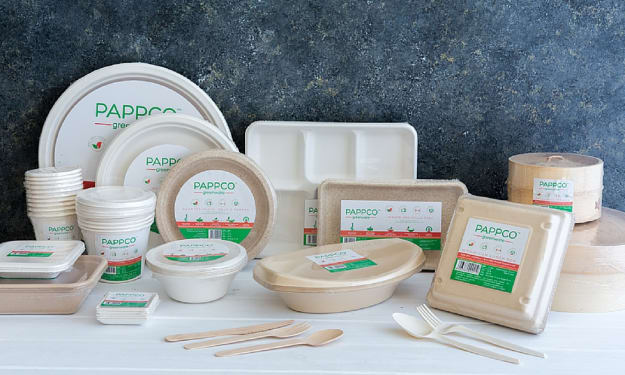
We went to uttar pradesh, India, to see how chuck is making biodegradable tableware from worldwide waste polystyrene was discovered in 1839 and is 10 to 20 times lighter than the fluffiest meringue. It wasn't used for plates and packaging until more than a century later when fast food chains went global, but recycling has never caught up, as is evident across India where an amount of plastic equivalent to the weight of the Taj Mahal ends up in streetsfilling up without government oversight creating unsafe conditions that can lead to fires the idea behind chuck is to replace some of that plastic with biodegradable sugarcane waste india is the world's second largest producer of sugar making more than 25 million metric tons in 2020 and that means mountains of bagasse km sugar mill alone produces over 3 500 tons of it per day during the harvesting season [Music] most of this material will be burned to produce electricity it's a low pollution alternative to fossil fuels but it has other uses too we were told this is a very good fiber for molding for over 40 years veg krishna's family turned sugarcane waste into paper in a factory owned by his parents they named it yashpaka and their company slogan is packaging with the soul but the business ran into financial troubles and had to deal with faulty equipment we didn't know whether the company would run the next day or not what i realized was that all the work that i wanted to do was towards the ecology and environment ved went back to the drawing board he spent years experimenting with new ways to use bagas eventually we realized that you know we have sugarcane pulp and that can be molded into different products which can actually be used as placement for these styrofoam products and by 2017 the company was producing tableware products under a new brand chuck chuck was really good because of course it was about disposable you can chuck it it was also good with chak which is taste in hindi veg set up shop near sugar plantations and mills to keep costs and the carbon footprint low around 100 truckloads of bagas arrive at the chuck factory every day during peak harvest season it can take two hours to unload each truck if the material dries out the fiber loses strength so we have to keep it in wet piles workers then remove a layer of the tiniest fibers before washing and pressure cooking it same concept as you cook dal in your home the same way you cook you use a certain alkaline product to be able to remove the stickies you know if you think of a sugary product it's a little sticky the alkaline solution helps make it moldable workers wash the sludge again to remove any residual chemicals then they distribute it into different machines and molds that press it into shape squeezing out all the water other companies bleach their products but chuck decided against it we were told in the market indians don't like to eat in brown it has to be white but i said no if we are true to our basic idea that we want to be more ecologically sustainable then we have to stay with lesser and lesser chemicals chuck also sources a starch-based compostable packaging for its products instead of virgin plastic we of course realize that our whole ecosystem dna world revolves around the idea of leaving the earth cleaner so if that is the case and we package in plastic then we've defeated the purpose workers like shilwadi check the finished products for quality before counting and packaging it's me hybridizing high low breathing however missing the chuck factory can crank out one million individual items in a day and that's only half of what ved says is possible with the current setup we are still figuring out a lot of the technology by the time they reach consumers chuck products end up being about 20 percent more expensive than items made from plastic chuck's meal tray costs 10 rupees or 13 cents while a plastic tray costs around 8 rupees or 10 cents another reason chuck costs more ved insists on paying his staff a living wage i think we are very proud of having lots of local people more than that we are proud of having 50 women and they're amazing some women like shawwadi can make up to 10 000 rupees a month or 131 dollars that's nearly double the minimum wage in the state of uttar pradesh so far chuck hasn't turned a profit but the business continues to grow over 3 000 restaurants across india have used the company's tableware the pandemic was a major setback sales dropped by 70 percent if restaurants shut down we shut down so that's a challenge but we are trying to now change our model where we are also trying to go direct to customers so ved plans to set up an online store and make their products available in retail locations and he hopes to ramp up his business enough to support india's war on plastic starting in july the country will ban many plastic items including the kind of single-use food containers that chuck wants to replace so are products made from bagasse better for the environment probably chuck recommends leaving its products for 90 to 180 days in a backyard composting bin that maintains moisture and good oxygen flow but they can still harm the environment if they end up in a landfill where they won't decompose as fast plastic on the other hand never really goes away it just keeps breaking down into smaller and smaller particles ved is just one of many entrepreneurs around the world recycling waste into food containers and utensils lifepak in colombia makes compostable plates out of pineapple crowns in mexico bl fosse creates bioplastic cutlery out of avocado waste and in denmark a young innovator is making edible cutlery and bags out of potatoes and it will likely take all these companies and more to manage plastic waste now and into the future so i believe each of us can make a difference it's only a 70 year old challenge typically the plastics that we use the cheapest varieties last about 500 years so you can imagine that first bugger still has 430 years to go you.
By Peace Alber3 years ago in Education
Sleep Experts Debunk 13 More Sleep Myths
If you snore or have sleep apnea, this one is critically important to our sleep physician. My name is johar denjongui, and I am a professor of psychiatry and behavioral sciences. My work focuses primarily on circadian and sleep health. Hi, my name is Rebecca robbins, and I am an instructor in medicine at Harvard Medical School and an associate scientist at the Brigham and Women's Hospital. In my research, I designed behavioral interventions to give individuals night owls and locks there's no question about that both of them do very well in terms of their own personal livelihood the difference is that for a person who happens to be a morning person because of their society structure they tend to do much better we have sayings like the early bird gets the worm and unfortunately that's to the detriment often of evening people they really live in a morning person's world and often are forced to work on a morning person's schedule so what we hope to see happen is that people become aware of the kind of person they are if you happen to be a morning person do know that your performance is going to be much better in the morning if you're an evening person your performance is going to be much better during the evening hours sleeping positions don't matter now wrong sleeping positions absolutely do matter we all believe it or not spend most of our time in one of three positions most people are side sleepers the next most common is your back and the least common is sleeping on your stomach the key thing when it comes to sleeping positions is to make sure that your spinal column is aligned and you are supported over the course of your sleep at night in your preferred position i would only add that if you happen to be somebody who has positional sleep apnea the position in which you sleep does matter because if you are sleeping in a supine position it's more difficult for you to breathe therefore you snore a little louder and your bed partner may not really appreciate that now pregnancy is a time where your sleeping positions also really matter during pregnancy you want to make sure you're comfortable and ideally on your side so that the belly isn't compressing down on top of you and the baby's protected but the key thing for pregnant people is you want to be comfortable in whatever position you take make sure that you are supported with lots of cozy pillows the q4 jet lag is not sleeping all night one of the common things that we hear people say is often you know i'll just stay up all night and i'll cure jet lag and of course that's not a cure for jet lag you're just sleep depriving yourself so significantly that of course you will fall asleep at any time the next day there really is no cure for a jet lag but you can cope with some of the consequences by making sure to walk outside in your new time zone as much as possible get natural light exposure if you're traveling east do not wait until you get there and try to slip the part of yourself you can start to prepare ahead of time so if you're going to be going to paris you know it's about five hours away so what do you do you begin to shift your schedule progressively maybe four or five days before so that by the time you get to paris you're already in the paris time zone and try to avoid alcohol sometimes that can interfere with your ability to get healthy sleep avoid any type of stimulant even if a few days you'll adjust naturally hitting snooze will give you extra meaningful rest this is actually a myth hitting the snooze bar is one of the worst things you can do because what you're doing is you're robbing yourself of some of the best sleep in the second half of the night is when we have most of our rapid eye movement sleep and that's where we get a lot of the benefits cognitively of our sleep so if you're hitting your snooze bar one or two or three or worse more times you're interrupting some of that really valuable sleep when it comes to the standpoint of our cognition stiff fragmentation is really not good because it leads to all kinds of psychological problem as well as physical problem if you have stick fragmented then you are more lucky to have cardiometabolic dysfunctions and your mood is not as positive as it should be instead of hitting this news bar the best thing is to sleep as late as you possibly can you have to go to the office at eight o'clock and it takes you an hour to get ready set your alarm clock for seven o'clock and commit to not snoozing get up at seven o'clock and go about your day so if you find yourself having a heat distance button it tells you you really need to have a much longer period of sleep so you may have to think about your lifestyle and see how can you incorporate more sleep in your daily routine napping makes up for lack of sleep at night napping is an interesting concept in our field it does have its merit it also has some of its drawbacks the ideal duration for a nap is actually about 20 minutes so it's quite short so make sure to set an alarm so you don't sleep too long which will cause you to wake up groggy and might affect your sleep that night if you've already had your seven hours which is your core sleep needs there's no point trying to do more in fact if you're trying to do more you could develop insania because of that taking melatonin will make you fall asleep immediately it's not going to be something that knocks you out right away melatonin we call it a neurotransmitter it's secreted in the brain it's associated with the transition to darkness in our environment and ideally melatonin is a naturally occurring process but melatonin can also be taken exogenously or as a supplement if you're taking short active melatonin substances it's highly recommended you do that about two to four hours before bedtime certainly not right before you go to bed it takes a while before it becomes effective most of the melatonin that's available over the counter isn't highly regulated so unfortunately we don't know its purity the other key thing is many people take far too much so often you go to the drugstore and you see 10 milligrams 20 milligrams of melatonin that's far far too much much smaller doses are important you really want to talk to your physician make sure that you pick the right type of melatonin for the problem that you're having if you pull an all-nighter sleep as soon as possible now hopefully you're not pulling all-nighters because again sleep is so important night in and night out but if you did get a night of either very insufficient sleep or maybe no sleep at all this is a myth in some ways because we don't want to just binge sleep as soon as you're absolutely able to what you want to do is actually get back to your normal routine as fast as possible so that means maybe trying to push through the day and wait until your regular bedtime maybe taking a nap in the afternoon if you're tired but trying to get back on your normal schedule as soon as possible not necessarily sleep as soon as possible that's an excellent point i would only add that if you happen to be a young person that's really true a couple of days before you're back on schedule if you happen to be an older person in your 60s and 70s it could take you up to a week to recover so you have to think about what am i doing do i have to do that because there's a price to pay particularly if you happen to be an older person dreams only last for a few seconds now dreams don't only last for a couple seconds they can be a couple seconds they can be a couple minutes and they can be longer we all dreamed four to five times a night and it happens predominantly in rapid eye movement sleep we believe about eighty percent of dreaming takes place then you could have a dream episode that lasts about five seconds and when you're recounting who actually took place during the night you feel as if you had this dream for like two three hours you could also have a dream that lasted ten minutes and then you feel it really should have been about five seconds it has to do with the emotional content of the dream and in fact most people remember their dreams because of the things that they see if you see the loved one die in a car accident you're going to remember this there's no precise duration of dreams we know less about their kind of quantity and and length but what we do encourage is to have fun with your dreams talk to a loved one maybe keep a dream journal if you snore you have sleep apnea now snoring is one of the most common symptoms of a condition called obstructive sleep apnea which is life-threatening but the snoring doesn't necessarily mean that you absolutely have this condition many people snore and are completely healthy so essentially snoring osteopathic is really a mechanical problem that is because of the excess suede on the upper airway you put too much pressure on your throat therefore the airway collapses either fully or partially that's what snoring really is it's you making effort trying to keep the upper airway open but if that snoring is coupled with excessive daytime sleepiness or if you've ever been told that you wake up over the course of the night or stop breathing or gasp for air those could be signs of sleep apnea sleep apnea is a very serious problem some people can actually die in their sleep this one is critically important to our sleep physician we do not want one more person to die of a heart attack or a stroke because of a problem they could have fixed so you really have to understand if that cardinal symptom of snowing shows up talk to a physician and make sure that you don't have sleep apnea and if you do we can actually help you breathe better sleep better therefore have a very productive and long life insomnia means you can't fall asleep it's partly true partly not so true if you happen to be somebody we can't fall asleep fast enough then you have what we call sleep onset insomnia which is true but you also have the other one which is that you fall asleep okay but you wake up multiple times where the nanny can you cannot go back to sleep that's the main insomnia now insomnia is best treated with a healthcare provider and there are pharmacological treatments but they're actually behavioral treatments that are incredibly effective and that's called cognitive behavioral therapy for insomnia so if you're not sure what to do we could contact with civilization they'll be able to guide you if you can't fall asleep anywhere and at any time it means you're a good sleeper now this most definitely is a myth believe it or not it actually takes time to fall asleep the hallmark of a healthy sleeper is actually what we call sleep latency or the time it takes you to fall asleep of about 15 or 20 minutes if you're falling asleep right away it generally is a sign that you're not getting enough sleep a good sleeper really is a person we can function throughout the day not falling asleep and inappropriate circumstances most people need about seven to eight hours of function optimally but the fact that somebody might be a short sleeper five six hours if they're functioning absolutely during the day they can go home and spend time with the family walk the dog play with the cat then that person is a good sleeper but if you find that you're sleeping five hours when you're at work you fall asleep you can't function properly your mood is not what it's supposed to be then you need to get a bit more sleep more sleep is always better now this is a myth more sleep is not always better because in addition to getting sufficient duration when it comes to sleep consistency is critical so if you look at maybe sleeping in or extending your regular sleep times well beyond what you typically keep then that's going to throw your internal biological or circadian rhythm completely out of whack so instead of sleeping in on the weekends or maybe binge sleeping the ideal thing is to get onto a schedule and try to keep it as close to monday through monday as possible what we don't want people to do is to feel i have to sleep eight hours if you're physiological for seven then that's perfectly fine if it's sick that's perfectly fine the question is is it optimal for you nightmares and night terrors are the same now these two things are distinct a nightmare is of course a disturbing dream and a night terror is actually something that we call a parasomnia which refers to abnormal behavior that occurs during sleep but it largely happens in children and does generally go away around puberty now there are similarities with these two things but the one difference is that a night terror can be very disturbing for the person who isn't sleeping to observe in a sleeper anyone experiencing night terrors is thrashing about violently and so it can be a little bit disturbing to watch nightmares tend to be a resultant of things you have been exposed to during the day if you had watch a horror movie some of those meditations can carry on during the night episode if you happen to be under significant stress you're not doing so well at work all of those can cause nightmares one exception is the environment we find experimentally when we manipulate the temperature so we put sleepers under a heat blanket so we can make sure that they're nice and toasty we actually see that their sleep fragmentation increases and the reports of nightmares as well so make sure that your bedroom is on the cooler side we generally recommend about 68 degrees fahrenheit for an optimal sleeping temperature those sleep means we talk about maybe there are more but at least for now we know these are the ones that are counterproductive to our health and well-being let's all have a good night's sleep are we ready all right you've got to pull it off should we eat both do you want some of these
By Peace Alber3 years ago in Lifehack
How Banana Plant Waste Is Turned Into Sanitary Pads in India
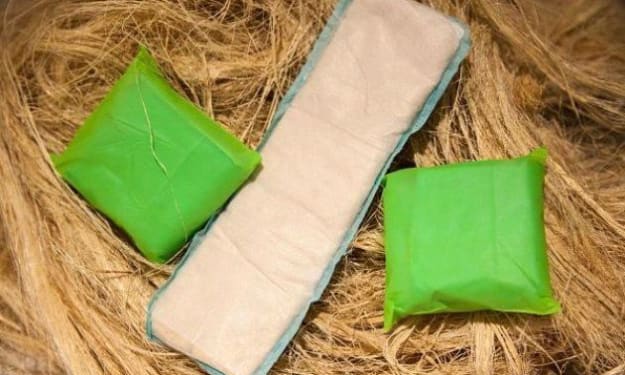
India develops a greater number of bananas than elsewhere on the planet yet about portion of each plant goes to squander one organization is transforming that loss into biodegradable sterile cushions that could be useful to additional individuals have more secure periods with dispensable plastic cushions on the ascent might banana at any point stem save the country from piles of rubbish we visited sati to perceive how it's utilizing overall waste softie began in 2015 only about a third of women in india had access to pads and that can mean more than just discomfort you're missing out on school or work for those five days every month and that sets you back i was proud to be an indian but also was assumed that we cannot provide something of basic necessity and Kristin kagetsu set out to help without creating more plastic trash and they found the answer in farm waste just one banana plant stem can yield up to 3 000 pads according to sathi the stocks only bear fruit once so after each harvest farmers clear the fields to make room for new growth chirag desai is a researcher looking for new ways to use these leftovers the farmers are dumping it on the roadside or canal side and it will create a huge environmental as well as social problems his team has turned banana plant fibers into fertilizer fabric and even candy the market is growing for such type of natural products he shared some of his knowledge with southeast founders they stay here for one week we gave them a good training basics how to estimate the fibers and all that [Music] the first step is to cut the stalks in half workers pull the halves apart layer by layer [Music] they feed these celery-like chunks into machines that leave just the stringy fibers behind wash the fibers and dry them on a line [Music] then they're ready for a second life the founders set up stations with machines like these around the country so local farmers can extract fibers from their own crop waste we have been closely working with 18 000 of them on regular basis where we have set up different extraction units sathy pays the farmers for the fibers giving additional income to farmers that's a first part of our circular economy farmers can also use the liquid from the stems as fertilizer at the sathy factory workers feed fibers into machines that cut them into shorter pieces the next step is turning those pieces into this fluff the founders told us this part is a trade secret we do a magical process once they reach a factory convert them into a cotton-like material with our patented technology which eventually will be pressed into more thinner and thinner sheets this is the absorbent core of the pad what is happening over here is they are putting all the different layers of the pad together workers layer the banana fiber core between other sheets darun says these sheets are made from plants but wouldn't tell us which plants he says he's worried about other companies copying sathi after the pads are cut to size he tests them out from each batch using water mixed with ink and the good part is that it is spreading instead of staying here leaking out of here the material throughout the length is utilized saathi says the adhesive on the back of the pads is non-toxic but wouldn't say exactly what's in it either the pads are ready to be sanitized using light what we use over here is a uvc light which sterilize or reduce any kind of viral road finally workers package the pads so there is not much of a rocket science over here a simple packing they wrap each one in yet another secret plant-based material and seal the packets with heat the founders say the pads and all packaging are 100 biodegradable and they sent their products to a lab that confirmed this this is a packaging made out of hygiene paper with no plastic coating on it roll it up use the same tape to stick it and throw it as it is conventional pads are made mostly of plastic if all the menstruating women in india used them it would create an amount of trash 10 times the weight of the great pacific garbage patch every year saathi says if buried its pads will break down in under 6 months if they're left out in the open it's more like 18 months before disposable pads were invented people often used cloth dried plants or whatever absorbent things they could find i would not say that these are always unhygienic methods of menstruation but what makes it hygienic or unhygienic is whether the material is clean how long it is used for many in india still use cloth for their periods which can cause infections if it's not washed and dried frequently saathi sells its pads at pharmacies at specialty stores and online and for each pad the company sells it gives one away for free we take it from people who have enough and give it to those who need most of the free pads go to people in rural areas who are less likely to have access to them compared to those in cities we have successfully distributed almost 2 million pads now experts say free pads are helpful but education is also key we really need to go beyond just provision of pads now and talk about what it means to hygienically use them four to six hours is the maximum one should use and definitely change after that when sathi introduces its product to a new area it organizes talks about menstrual health for local women at one recent session tarun spoke about pads and handed them out to attendees conditions and price isn't the only issue cultural taboos can also stop people from buying pads for about five years in that time she's seen attitudes towards pads shift is [Music] since 2010 access to pads in india has risen dramatically art activism and government programs are making it easier to talk about periods be focused but about one in four women in india still don't have sanitary period supplies that's tens of millions of people but seeing how things have already changed keeps the founders going a lot of women are having safe periods the environment is not being polluted with plastic the biggest service one can do is leave a greater legacy a better world for generations to come what's better than that you.
By Peace Alber3 years ago in Education