Muhammad Saad
Stories (465)
Filter by community
Voices of the Rising Dawn
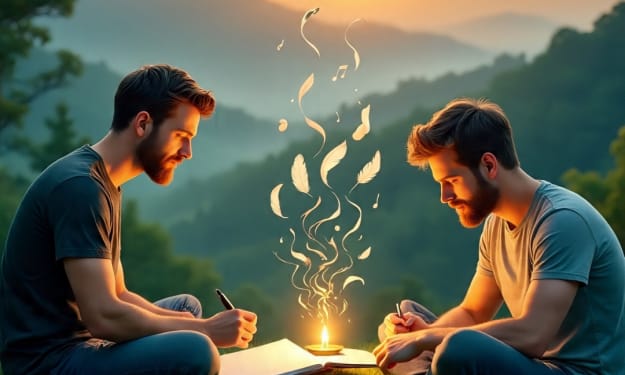
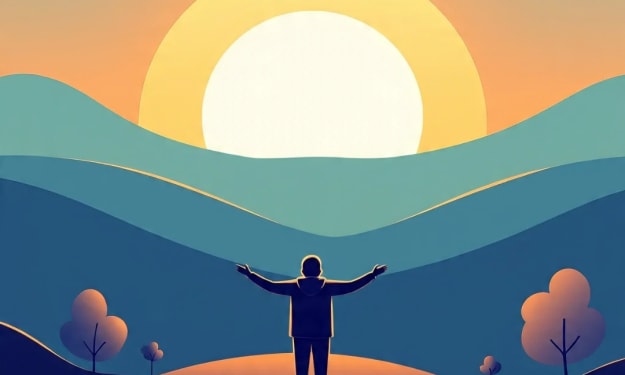
There are moments in life when a single spark of inspiration can change an entire path. For Aayan, that spark arrived with the rising dawn. He had always dreamed of sharing his thoughts with the world, but fear held him silent for years. Words lived inside him like soft birds waiting for release, yet he never believed they were strong enough to fly.
By Muhammad Saad 4 months ago in Motivation
Hello Dear Vocal Creators
Hello, dear Vocal creators. These simple words carry warmth, connection, and the kind of gentle encouragement that helps a community grow. Every day, thousands of words rise from the minds and hearts of people who choose to write—people who choose to share something meaningful, helpful, or inspiring with others. And in this shared space, kindness becomes a language we all understand.
By Muhammad Saad 4 months ago in Humans
The Light We Share
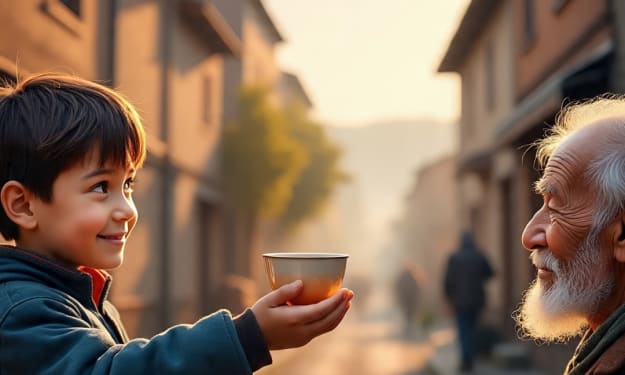
In a small, ordinary town surrounded by gentle hills and quiet mornings, people often said that nothing extraordinary ever happened there. Yet anyone who looked closely enough knew the truth: the ordinary was full of quiet miracles, each shaped by human kindness.
By Muhammad Saad 4 months ago in Humans
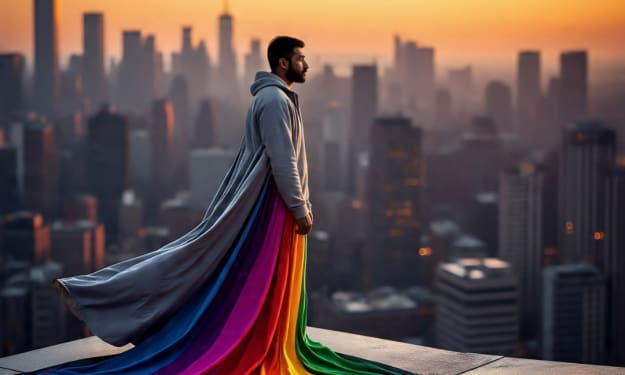
The Colors I Learned to Wear
Shorter Version of the Story Title: The Colors I Learned to Wear Community: Pride All my life, I felt like I was wearing a coat someone else chose for me—too tight, too quiet, too grey. I carried colors inside me, but I hid them, afraid the world wasn’t ready to see them. But hiding your truth is heavy. It slowly wears you down.
By Muhammad Saad 4 months ago in Pride
The Bond That Builds a Home
Marriage is often described as a journey, a path two people choose to walk together with courage, commitment, and hope. For Arman and Rafi, marriage was not just a lifelong promise but a powerful partnership that taught them how to build a meaningful life, step by step, with patience and purpose.
By Muhammad Saad 4 months ago in Marriage
“Where the Quiet Poems Rise”
Poetry never truly disappears—it waits. It waits in the corners of silence, in forgotten notebooks, and in the soft moments between one breath and the next. At least, that was what Liana used to believe. She had once written poems everywhere—on scraps of paper, in the margins of books, even on the backs of receipts. Her friends called her the girl who saw metaphors in everything.
By Muhammad Saad 4 months ago in Poets
The Poetry Within Us: Unlocking the Human Mind Through Verse
It started with a whisper. Not from another person, but from within—the kind of whisper that stirs at the edge of sleep, that makes you pause mid-step and wonder if you’ve forgotten something vital. For Maya, a neuroscience student drowning in textbooks and lab reports, that whisper came on a rainy Tuesday afternoon. She had spent the past four years immersed in facts—studying neurons, brain scans, dopamine pathways. Everything had to be measurable, repeatable, explainable. Yet, despite her academic success, she felt detached from herself, like a satellite orbiting her own life. Then came the elective course: The Psychology of Poetry. She enrolled reluctantly, needing the credits, expecting little more than historical analysis and a few stanzas of Shakespeare. What she didn’t expect was to cry in class. The poem was “Having a Coke with You” by Frank O’Hara. The professor read it aloud—gently, deliberately, with reverence. Maya didn’t understand why her chest tightened or why her eyes stung. She had never met the poet, had never experienced his world, but somehow, in those lines, she felt seen. That was the moment everything changed. --- The human brain, Maya would later learn, doesn’t distinguish sharply between real and imagined emotion. When you read a poem that evokes sadness, joy, or awe, your brain often responds as if you’re living the experience. The same neural circuits activate—the limbic system lights up, oxytocin is released, and connections strengthen. Poetry, she realized, was a neurological symphony. And yet, it was more than chemistry. It was a bridge. In class, students shared poems that had shaped them. One read about their father’s death; another about coming out. A quiet classmate, who never spoke during biology lectures, recited a piece they had written about anxiety—each metaphor a map to a place they’d never shown anyone. For the first time, Maya understood the quiet power of shared vulnerability. Poetry didn’t just unlock the mind. It softened it. --- Maya began writing her own verses. At first, they were clumsy and overly structured, like her lab reports. But slowly, the lines loosened. Rhyme gave way to rhythm. She wrote about her mother’s silence, her childhood fear of thunderstorms, the pressure to be “smart” and composed. Each poem was a key, unlocking memories she hadn’t realized were sealed away. More importantly, it made her a better friend, sister, and researcher. She started noticing emotional subtleties in conversations, listening not just for content but for cadence, for pauses, for what went unsaid. Her empathy deepened, and so did her curiosity—not just about how the brain worked, but about how it felt to be alive. --- Scientific studies began to echo what Maya felt intuitively. A 2023 research article revealed that reading and writing poetry could significantly reduce symptoms of anxiety and depression, especially in adolescents. Another found that poetic language activated regions of the brain associated with reward and memory more intensely than ordinary speech. Even patients with dementia, when exposed to familiar poems, displayed improved communication and mood. Poetry, it turned out, could tap into neural pathways long after others had deteriorated. Maya started volunteering at a memory care center, reading poems to elderly residents. One woman, who rarely spoke, began reciting lines of Emily Dickinson, her voice frail but steady. For a moment, her eyes sparkled with recognition, as if time had folded in on itself and brought her home. It was more than therapy. It was resurrection. --- Years later, with a PhD in neuroscience and a poetry collection published, Maya stood at a TEDx stage. Her talk was titled “The Poetry Within Us: Unlocking the Human Mind Through Verse.” She spoke not just of neurons and scans, but of silence broken by verse, of people finding their voices, of science meeting soul. She ended with her favorite line from Mary Oliver: > “Tell me, what is it you plan to do with your one wild and precious life?” And then she answered, in a quiet voice: “To listen. To write. To feel. To remind others that within every brain—no matter how scarred or silent—there lives a poem waiting to be heard.” --- In a world obsessed with speed, productivity, and logic, poetry reminds us to slow down, to sit with discomfort, to find beauty in ambiguity. It sharpens cognition, enhances emotional literacy, and deepens connection. The poetry within us is not a luxury. It is a necessity. And when we unlock it, we unlock each other.
By Muhammad Saad 4 months ago in Poets
Studying Abroad: A Journey Beyond Borders
The dream of studying abroad is one shared by millions of students around the world. It’s more than just earning a degree from a foreign university—it’s about discovering new cultures, gaining independence, and broadening one’s view of the world. Every year, young learners pack their bags and step into a new chapter of life in a country far from home, driven by curiosity, ambition, and the desire to make a meaningful difference in their future. Studying abroad opens doors to countless opportunities. It allows students to learn from world-class educators, experience advanced research facilities, and become part of an international community. But beyond academics, it teaches lessons that no textbook can cover—resilience, adaptability, and cross-cultural understanding. Living in a new country requires adjusting to different customs, languages, and lifestyles, which helps students grow both personally and professionally. One of the most remarkable benefits of studying abroad is cultural exposure. Students learn to appreciate diversity, understand global perspectives, and develop empathy for people from different backgrounds. Sharing classrooms, meals, and experiences with students from all over the world encourages open-mindedness. For many, this experience helps dissolve stereotypes and fosters respect for other traditions and beliefs. In today’s interconnected world, such global awareness is more valuable than ever. Language learning is another key advantage. Being immersed in a new environment naturally improves communication skills. Whether it’s mastering English in the UK or USA, learning French in Paris, or picking up Japanese in Tokyo, language becomes more than just a subject—it turns into a living experience. The ability to communicate across cultures is not only enriching but also highly valued in the global job market. Beyond academics and language, studying abroad nurtures independence and confidence. Students learn to manage their finances, cook their own meals, and make important decisions—skills that shape them into mature, responsible individuals. For many, it’s their first experience living away from home. The challenges they face, such as homesickness, cultural differences, or even navigating a new city, become stepping stones toward self-growth. Each obstacle overcome builds courage and character. Career opportunities also expand significantly. Employers value international experience because it demonstrates flexibility, problem-solving ability, and cultural awareness. A degree earned abroad can open doors to global companies and international networks. Many graduates find that their overseas education sets them apart from others in competitive job markets. It signals not just academic achievement, but also a readiness to embrace the world. Another inspiring aspect of studying abroad is how it fosters lifelong connections. Students form friendships that cross continents and time zones. These relationships often evolve into professional collaborations or simply remain cherished personal bonds. The sense of belonging to a global family stays long after graduation, reminding students that the world is vast but deeply connected. However, the journey isn’t always easy. Students often face challenges like financial pressure, homesickness, or adapting to new academic systems. But these experiences teach resilience and perseverance. Overcoming these hurdles gives students a sense of accomplishment and pride. In the end, these very challenges become the most memorable parts of the experience—the ones that build strength and gratitude. Studying abroad also broadens one’s perspective on global issues. Students witness how different societies approach topics like sustainability, equality, and innovation. This exposure encourages them to think critically and creatively about solving problems back home. They return not just with a degree, but with a renewed sense of purpose—to contribute meaningfully to their communities and the world. In essence, studying abroad is a journey of discovery—of the world, of knowledge, and of oneself. It transforms young minds into global citizens who think beyond borders and boundaries. Each experience abroad adds a new layer to one’s personality, making them more adaptable, confident, and compassionate. For those who dream of exploring the world through education, studying abroad is not just an option—it’s an opportunity of a lifetime. It’s where learning meets adventure, where classrooms expand into cultures, and where every challenge becomes a stepping stone toward success. So, if you ever get the chance to study abroad, take it with both hands. The world is waiting to teach you lessons that go far beyond books—and those lessons will stay with you forever.
By Muhammad Saad 4 months ago in Education
The Ink That Found Its Sunrise
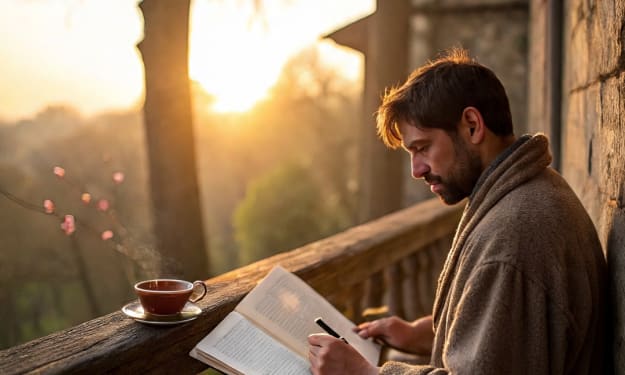
Mira had always believed that morning light carried its own kind of poetry. It slipped into the world quietly, softening everything it touched. But lately, she felt no connection to those first rays of the day. Her pen lay untouched, and the blank pages in her journal seemed to echo her uncertainty.
By Muhammad Saad 4 months ago in Poets
The Colors I Learned to Wear
All my life, I felt like I was living inside a coat someone else chose for me—too tight, too quiet, too grey. I carried colors inside me, but I hid them, afraid the world wasn’t ready. Every morning, I would pull on the same muted shades, blend into the background, and pray that no one noticed the flickers of color struggling to break free within me. School was the hardest. I learned early that difference could be dangerous. Whispers, sideways glances, and the occasional cruel joke taught me that showing who I truly was might cost me friends—or worse, safety. So, I stayed quiet. I smiled, nodded, and dressed in grey, letting my authentic self shrink into shadows. But shadows cannot hold color forever. The first spark came from a book I stumbled upon in the library, hidden on a bottom shelf. It told stories of people who dared to shine, who embraced themselves fully despite fear and doubt. I read late into the night, hearts pounding with recognition. These weren’t just characters on a page—they were mirrors, reflecting pieces of me I had buried so deeply. It began small. A colorful scarf peeking from beneath my grey jacket, a bright bracelet I wore when no one was looking. Each tiny rebellion against the greyness felt like breathing after years underwater. I started talking to people online who understood, who celebrated differences instead of fearing them. I learned words I had never dared to speak aloud: I am me. The next step was terrifying. I remember the first day I walked into school wearing a shirt that wasn’t grey. A deep, bold blue. My heart raced, every step heavy with anxiety. But something miraculous happened. No one laughed. No one shouted. Some noticed, some didn’t—but in that moment, I realized I didn’t need anyone’s approval to exist fully. From that day, color crept into everything. Reds, greens, purples, yellows—each shade became a declaration. Every morning, choosing what to wear was no longer about blending in; it was about showing the world pieces of myself I had once hidden. I discovered that strength doesn’t come from perfection or silence—it comes from courage, from refusing to fade. I met others along the way. Friends whose stories were different but familiar, whose scars were deep but healing. We celebrated each victory, supported each fall, and, together, painted a world far brighter than the one we had been given. Pride wasn’t just a flag we waved—it was a promise to ourselves: We belong. We are enough. Looking back, I see how much fear once controlled me. Yet even in those darkest days, the colors inside me never vanished. They waited, patient and persistent, until I was ready to claim them. And now, standing here, wrapped in a rainbow coat of my own choosing, I understand that authenticity isn’t a gift; it’s a right. So, to anyone reading this who still hides their true self, I want you to know: the world needs your colors. Wear them boldly, wear them proudly, wear them without apology. Because every shade you show is a spark that lights the way for someone else to shine too. We are all masterpieces in progress, and the world is a canvas. Don’t be afraid to paint it with your colors.
By Muhammad Saad 4 months ago in 01
Where the Quiet Words Bloom
Where the Quiet Words Bloom A Story of Finding Hope Through Poetry Mira had always believed that poetry lived inside everyone—hidden in the pauses between thoughts, in the soft sighs at the end of long days, and in the small moments that the world rushed past. Yet she herself hadn’t written a single line in months. Her notebook sat untouched on her desk, its pages blank, mirroring the silence she felt within.
By Muhammad Saad 4 months ago in Poets
Whispers Under the Silver Sky
In every poet’s life, there comes a moment when the familiar rhythm of words suddenly quiets. What once flowed like spring water begins to hesitate, and silence grows where imagination used to bloom. Ayaan knew this feeling too well. For weeks, his pen rested still, and every blank page felt heavier than the last.
By Muhammad Saad 4 months ago in Poets