Kashif Wazir
Bio
Stories (161)
Filter by community
Apple’s Bold Move
Apple has always been at the center of innovation, and now it’s taking another revolutionary step that could change how we travel forever. The company has announced that by the end of 2025, your iPhone will be able to serve as your official passport. This means travelers may soon be able to board planes, pass through immigration, and verify their identity using only their iPhone. It’s a bold, futuristic move that promises convenience, security, and a glimpse into a paperless world. But it also raises important questions about privacy, technology dependence, and digital identity.
By Kashif Wazir4 months ago in The Swamp
Trump’s Controversial ‘Obesity Ban’
In a shocking and highly debated proposal, former President Donald Trump has reportedly expressed interest in creating what some are calling an “Obesity Ban” — a policy that would restrict overweight foreigners from entering the United States. The idea has sparked outrage, confusion, and deep conversations about health, discrimination, and human rights. Trump’s reasoning, according to his supporters, is based on reducing healthcare costs, promoting a “healthier image” of the nation, and prioritizing physical fitness for immigrants. But many critics argue that such a proposal crosses ethical lines and treats people’s bodies as political statements rather than human realities.
By Kashif Wazir4 months ago in Journal
Denmark’s Bold Move: Banning Social Media for Under-15s
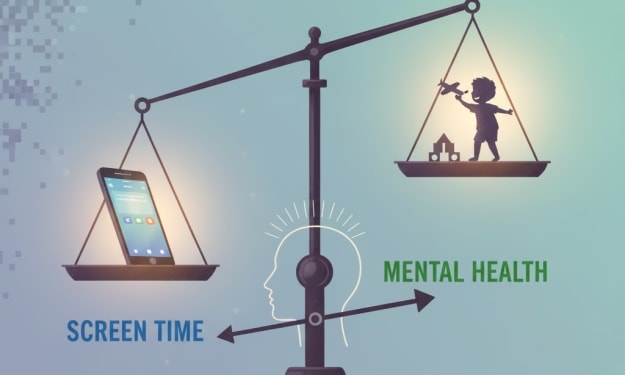
In a world that never stops scrolling, one country has decided to put the brakes on. Denmark has announced that children under 15 will be banned from using social media platforms — unless parents give special permission for children aged 13 or 14. ([Reuters][1]) The government says this move is needed to shield young people from harmful content, digital addiction, and mental-health risks tied to online life. ([The Japan Times][2]) It’s a landmark step, and one that’s sparking global discussion about how societies balance technology, childhood, and freedom in the 21st-century.
By Kashif Wazir4 months ago in The Swamp
Trump Promises $2,000 Check to Every American
Trump Promises $2,000 Check to Every American In a bold move, President Donald Trump has pledged to send at least $2,000 to most U.S. citizens, claiming tariff-generated funds will pay for it — but major questions remain about how and when it will happen
By Kashif Wazir4 months ago in Journal
Scientists Discover Missing 8th Continent “Zealandia”
For decades, the idea of a “missing continent” sounded like something from a science fiction movie, but now it’s a scientific reality. Researchers have officially confirmed the existence of Zealandia — a vast, mostly submerged continent that lies beneath the waters of the South Pacific Ocean near New Zealand. This incredible discovery makes Zealandia the world’s eighth continent, joining Asia, Africa, North America, South America, Antarctica, Europe, and Australia. Though most of it has been underwater for millions of years, this hidden landmass is rewriting what we know about our planet’s past and the forces that shaped it.
By Kashif Wazir4 months ago in Earth
Things I Learned From People Who Hurt Me
Life has a strange way of teaching us lessons, often through people who hurt us the most. At first, their actions feel cruel, unfair, and unbearable, but over time, we realize that pain can be a teacher disguised as betrayal, disappointment, or heartbreak.
By Kashif Wazir4 months ago in Motivation
Why Everyone Wants to Be “Real” Online, but No One Is
In today’s world, everyone talks about being “real” online, posting their true selves, and showing authenticity, but the truth is, most of us are far from real. Social media has created a culture where likes, comments, and shares define our value, and people carefully craft every post to appear relatable, successful, or perfect. Even when someone claims to show their struggles, it is often filtered, staged, or edited to gain approval.
By Kashif Wazir4 months ago in Humans
We Don’t Fall in Love Anymore — We Just Collide
In today’s fast-paced world, love seems to have changed its meaning. We don’t fall in love the way our parents or grandparents did; we don’t take time to truly know someone, to grow together, or to build trust over years. Instead, we collide—quick, intense encounters that leave sparks but often no lasting warmth.
By Kashif Wazir4 months ago in Humans
Good vs. Wicked: Why Morality Is No Longer Black and White
In today’s world, the line between good and wicked has become increasingly blurred. What once seemed like clear moral boundaries have now faded into shades of gray, where right and wrong are often judged by personal feelings, social trends, and convenience. We live in an age of constant change, where the internet and modern media shape our views faster than our conscience can keep up. People are no longer content with simple answers; they seek justifications for every action, and morality has become something flexible rather than firm. Once upon a time, good meant kindness, honesty, and sacrifice, while wickedness meant cruelty, greed, and lies. But now, those definitions depend on perspective. A person fighting for justice might be seen as a hero by some and as a troublemaker by others. A movie villain might be admired because he seems “real” or “relatable,” even if his choices are dark. The more we try to understand everyone’s motives, the more confused we become about what’s right. Society’s moral compass is spinning, and people often choose comfort over conscience. We applaud those who “do what they want” and celebrate independence so much that we forget the importance of responsibility. In this new era, morality has become more about emotions than ethics. People ask, “How does it make me feel?” instead of “Is it right?” This shift has led to a kind of moral fatigue, where people stop caring about what’s good and focus only on what works for them. It’s not that humanity has lost its heart—it’s that we’ve complicated it. Technology and global media constantly expose us to every shade of human behavior, from kindness to cruelty, from justice to chaos. We see so many versions of truth that it becomes hard to pick one. When everyone’s opinion is valid, no one’s moral ground feels stable. Movies, music, and social media now glorify rebellion and “breaking the rules,” while traditional values are often mocked as outdated. The idea of “wicked for good” or “evil with a purpose” has become popular, teaching us that bad actions can somehow lead to good results. This thinking might sound deep, but it’s also dangerous—it normalizes harm as long as it serves a goal. A society that accepts “necessary evil” too easily risks losing its sense of real goodness. True goodness, after all, is not about popularity or reward; it’s about integrity when no one is watching. The world today often confuses being confident with being kind, and being powerful with being right. But strength without empathy becomes domination, and intelligence without ethics turns into manipulation. The most worrying part is that younger generations are growing up surrounded by stories that mix good and bad until they look the same. In entertainment, villains are portrayed as victims, and heroes are criticized for having flaws. While this makes stories more human, it also creates confusion about what to admire or reject. Real life is messy, of course, but that doesn’t mean morality should disappear. We need balance—understanding people’s struggles while still holding on to clear principles of right and wrong. Morality isn’t about judging others harshly; it’s about guiding ourselves wisely. It’s about asking whether our actions bring more light or more darkness into the world. Goodness still exists—it lives in compassion, honesty, and courage—but it needs to be defended, not diluted. Being good doesn’t mean being perfect; it means choosing what’s right even when it’s hard. The world may no longer be black and white, but that doesn’t mean all colors are equal. There are still shades of truth, fairness, and love that shine brighter than deception and greed. The real challenge today is not to return to old moral rules blindly, but to rebuild a sense of conscience that fits our complex world without losing its clarity. Morality should evolve, yes, but it should never vanish. In the end, good and wicked may always coexist, but it’s our choices that decide which one grows stronger. The future will depend on whether we choose to justify wickedness—or rediscover the courage to be good in a world that no longer sees goodness as simple.
By Kashif Wazir4 months ago in Writers
The Death of Wonder: How Modern Media Teaches Us Not to Feel
There was a time when wonder came easily. When a song could stop us in our tracks, when a sunset felt like a miracle, when stories stayed with us long after the final word. But now, in the age of endless scrolling and constant content, it feels like wonder has quietly died. We live in a world where everything is designed to grab our attention, but very little is made to touch our hearts. Modern media, with its quick fixes and viral distractions, has trained us to feel less — to consume more and care less — until we no longer know how to sit with real emotion.
By Kashif Wazir4 months ago in Humans
MrBeast is Opening His Own Theme Park in Saudi Arabia
MrBeast, the YouTube sensation known for jaw-dropping challenges, generous giveaways, and viral stunts, is taking his creativity to the next level. The internet star has announced that he is opening his very own theme park in Saudi Arabia, marking a massive expansion of his brand into real-world experiences. Fans around the globe are already buzzing with excitement, eager to see how MrBeast’s signature mix of entertainment, fun, and spectacle will come to life in a physical space. This isn’t just a theme park; it’s an invitation to step inside the world of one of the most innovative creators of our time.
By Kashif Wazir4 months ago in Journal
Olivia Rodrigo Slams Trump Administration for Using Her Song in ICE Video
Olivia Rodrigo, one of today’s biggest pop stars, has spoken out after discovering that her song was used in a video by the Trump administration promoting ICE, the U.S. Immigration and Customs Enforcement agency. The singer, known for hits that capture teenage emotions and heartbreak, expressed her frustration and disappointment on social media, making it clear that she did not approve her music being associated with government campaigns or political agendas. Fans quickly rallied behind her, turning the incident into a trending topic across platforms.
By Kashif Wazir4 months ago in Journal