Ige Celestina
Stories (1)
Filter by community
World Cup and its ball
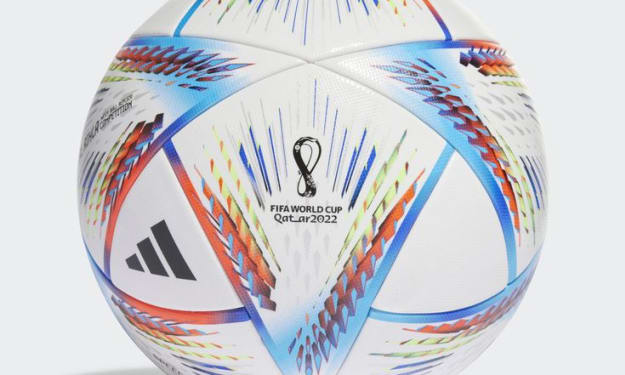
In 1872, soccer rules were established, including the requirement for a spherical ball measuring 27 to 28 inches. The weight increased from 13 to 15 ounces to 14 to 16 ounces in 1937, but the ball's design has changed significantly. The Telstar, used in the 1970 World Cup, was the first ball with 32 panels, forming a truncated icosahedron. The design remained popular for 36 years until the Jabulani, with only eight panels, was introduced in 2010 World Cup. The brazuca match ball for the 2014 World Cup in Brazil had two fewer panels than the Jabulani. It had extra goosebumps and longer seams for a more stable trajectory. The Telstar 18 for the 2018 World Cup had a chip for fans, but players cared about its aerodynamics. The evolution of Official World Cup Match Balls began with Tango Durlast in Argentina, 1978. The ball's design embodied elegance, dynamism, and passion, featuring 20 panels with triads that created an optical illusion of 12 identical circles. The World Cup tournaments drew inspiration from Tango's design. Etrusco introduced in Italy 1990, boasted an internal layer of black polyurethane foam and paid homage to Italy's history and Etruscan art. For the 1994 World Cup in the USA, the rain-resistant, first polyurethane-coated ball, named QUESTRA, revolutionized synthetic match balls with hard and wet surface capabilities. Additionally, the Aztec-inspired design paid tribute to the host nation's culture. Spain's World Cup in 1982 introduced the Tango Espana, featuring rubber inlaid over seams to prevent water seepage, marking the first water-resistant ball. Overtime, kicking would wear out the rubber, necessitating replacement during games, and marking the end of genuine leather World Cup balls. Adidas designed a new ball for the FIFA World Cup Korea Japan, 2002, called Fevernova, featuring thicker inner layers to enhance flight accuracy. The addition of a refined syntactic foam layer improved the predictability of the ball's trajectory. The colorful look embraced Asian culture. An innovative design with fewer panel touch points yielded a smooth, round exterior that augmented accuracy and control. Previous World Cup match ball surfaces had noticeable differences in touch and bounce, stemming from seams and ridges in panel construction. Adidas addressed this issue with the Teamgeist, featuring a propeller-like configuration, minimizing corners to produce a smoother surface for optimal gameplay. The ball incorporated the traditional colors of the German flag, highlighted by the golden hue of the World Cup trophy. The Al-rihla for this year's World Cup has 20 panels and is environmentally friendly. Its "Speedshell" surface is textured with debossed macro and micro patterns, meant to improve the ball's flight stability and swerve.Instead of using raised textures to increase surface roughness like with previous balls, the Al Rihla is covered with dimplelike features that give its surface a relatively smooth feel compared to its predecessors. However, there are concerns about human rights violations and the accuracy of carbon emissions claims. Adidas depends on the success of the Al-rhila ball. The company releases a new ball for each World Cup tournament, with the Al-rhila costing approximately $160 USD. This four-year timeline generates significant demand for the new ball, with consumers eager to purchase the latest design. Host countries have the opportunity to name the ball and select the color scheme and decorative details to personalize it for their World Cup. Adidas' revenue increased by over $6 billion in 2018 due to sales of their World Cup ball. Though the company may aim to create the ideal ball, this demand ensures the release of new designs every four years, extending into the foreseeable future. Personally, I see the Al-rhila ball as the perfect ball, as one that is dependable and can be kicked with ease, with predictable trajectory and distance, but it's also the first blamed by a losing team.
By Ige Celestina 3 years ago in Gamers