Gowhar ali Khan
Bio
I write about life, growth, and the small moments that shape us. Join me as I share stories of reflection, peace, and personal experiences.
Stories (3)
Filter by community
When Family Fights
Growing up, I often found myself caught in the middle of family conflicts. My parents had their share of disagreements, and as a child, I never fully understood why these arguments kept occurring. There were times when I wished for nothing more than to escape, to find peace away from the shouting and tension that seemed to consume our home. But as I grew older, I began to realize that these experiences, though painful, were shaping who I was becoming. In my early childhood, I would often hide in my room, trying to block out the sounds of raised voices. It felt like my entire world was spinning out of control. I loved both of my parents deeply, but watching them fight left me feeling torn. I had no idea how to fix things, and no one ever explained to me what was really happening. The confusion and hurt lingered, and I carried that weight with me every day. However, over time, I started to notice the way my parents would act after their arguments. There were moments of quiet reflection and, occasionally, a heartfelt apology. They would sit down together, discuss what went wrong, and work towards finding a solution. Slowly, I began to understand that conflict was not necessarily a bad thing—it was how it was resolved that mattered. One pivotal moment stands out in my memory. I was about ten years old, and my parents were having another argument. This time, instead of retreating to my room, I stayed in the living room, watching them from the corner of the room. As they argued, something shifted. My father, usually the more outspoken one, paused and looked at my mother. “I’m sorry,” he said softly, his voice filled with sincerity. “I didn’t mean to hurt you. Can we talk about this?” It was the first time I saw my father admit he was wrong. It was the first time I saw him vulnerable. My mother, who had been upset, took a deep breath and nodded. They began to talk calmly, working through their differences. Watching them communicate in such a mature and respectful way left a lasting impression on me. It showed me that even in moments of conflict, it was possible to find resolution through understanding and empathy. As I grew older, I learned that family fights weren’t necessarily a sign of failure. They were an opportunity for growth. Every disagreement, every misunderstanding, had the potential to teach us something valuable. I began to see my parents as human beings, not just authority figures, and I understood that they, too, were navigating the complexities of life just like I was. I also realized that family fights were a reflection of love, in a way. When we care deeply about someone, we argue with them. We disagree because we want what’s best, and sometimes that leads to tension. But it’s in the aftermath of those fights that we learn the most about each other and about ourselves. The willingness to apologize, to forgive, and to move forward is what truly strengthens a family bond. As I entered my teenage years, I found myself in the midst of my own conflicts with my parents. I began to question everything—why did they always seem so strict? Why didn’t they understand me? It was during one particularly heated argument that I realized the cycle of conflict and resolution had come full circle. I wasn’t a child anymore, but a young adult, capable of making my own choices and forming my own opinions. I, too, had to learn the importance of communication, compromise, and forgiveness. That realization didn’t come easily, but it was a turning point in my relationship with my parents. I started to communicate more openly with them, expressing my thoughts and feelings in a way I never had before. And, in turn, they began to listen. It wasn’t always perfect, but the foundation of trust and understanding we had built over the years was strong enough to weather the storms that came our way. Now, as an adult, I look back on those family fights with a sense of gratitude. I may not have understood them at the time, but they played a crucial role in shaping my understanding of relationships. They taught me that conflict is inevitable, but resolution is a choice. They taught me that love is not about perfection; it’s about being able to navigate the ups and downs together. And they taught me that, in the end, it’s not the fights that matter—it’s how we come together afterward that defines us. In my own relationships now, I find myself applying the lessons I learned from my parents. When disagreements arise, I remind myself that they are an opportunity to grow, to understand the other person better, and to strengthen the bond we share. I no longer fear conflict, because I know it’s a natural part of life. What matters is how we choose to handle it. And so, looking back, I can see how those family fights shaped my childhood and helped me become the person I am today. They taught me resilience, communication, and the importance of love and forgiveness. The lessons I learned in those difficult moments have guided me through life’s challenges, and for that, I am truly grateful.
By Gowhar ali Khanabout 11 hours ago in Families
The Power of Kindness
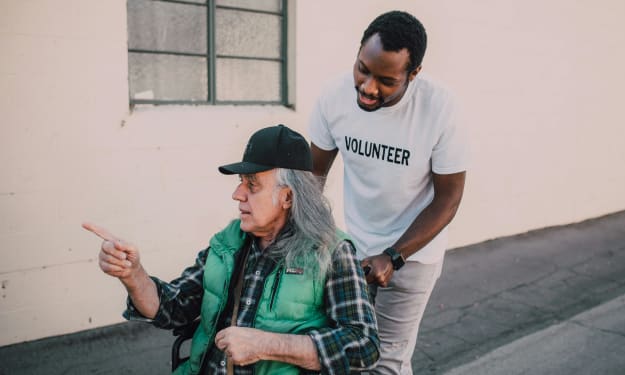
In a world filled with hustle and bustle, where everyone is chasing success and looking out for themselves, it’s easy to forget the power of simple kindness. We are often so wrapped up in our own struggles that we fail to recognize how a small act of kindness can have a profound impact on someone else’s life. I still remember the first time I experienced the true power of kindness. I was just a teenager, struggling with the pressures of school, friends, and family expectations. One day, I was feeling particularly down, as I failed an important exam that I had worked so hard for. I walked out of the classroom, disappointed and defeated, unsure of how I would face my parents. As I made my way down the hallway, lost in my thoughts, I noticed a classmate, someone I had barely spoken to before, standing by the water cooler. She smiled at me and said, “Hey, I know you’ve been working really hard. Don’t worry about the exam. You’ve got this!” Those simple words, spoken with sincerity, lifted my spirits more than I could have imagined. Her small gesture of kindness didn’t solve my problems, but it made me feel seen and understood in a way that nothing else could. That moment taught me something I had never considered before: the impact of kindness is often understated. It doesn’t require grand gestures or elaborate plans; it’s the little things that matter the most. A smile, a kind word, or a helping hand can transform someone’s day and change the course of their life. Sometimes, all it takes is someone acknowledging your struggles and offering support, even if it’s in the most simple of ways. As the years passed, I made it a point to be kind to others. I realized that kindness was not just about making someone else feel good; it was about creating a positive energy that could ripple through communities and impact the world in ways we may never fully understand. Whenever I saw someone struggling, I would offer a helping hand or a few words of encouragement. It didn’t always seem like much, but I began to see the effects of these small acts. People felt appreciated, valued, and loved, and it made the world seem like a better place. Kindness doesn’t have to be about money or material gifts. It can be as simple as listening to someone when they need to talk, holding the door open for a stranger, or offering a seat to someone on a crowded bus. It’s the everyday moments that build connection and foster a sense of community. I remember another instance where I was feeling overwhelmed at work. There were tight deadlines, high expectations, and the pressure to perform at my best. I was stressed and exhausted. One morning, as I sat at my desk, trying to keep it together, my colleague came over and handed me a cup of coffee, along with a note that said, “Take a deep breath, you’ve got this.” The note was simple, but it reminded me that I wasn’t alone in my struggles. That one small act of kindness made me feel supported, and it helped me push through the rest of the day with renewed energy and focus. The truth is, we all face challenges in life, whether they’re big or small. Sometimes, the weight of the world feels too much to bear, and we wonder if we can make it through. But in those moments, a small act of kindness can be the difference between feeling lost and finding hope. It reminds us that there is still good in the world, and that even the smallest gesture can create ripples of positivity that reach far beyond what we can see. Now, I try to practice kindness every day, in every situation. Whether it’s helping a colleague, listening to a friend, or even just offering a smile to a stranger, I know that kindness is something we can all share. It’s a universal language that transcends barriers and connects us all as human beings. And sometimes, that’s all it takes to make the world a little brighter. In conclusion, kindness is not just an action—it’s a way of life. It’s a mindset that can transform our relationships, our communities, and the world at large. By choosing kindness, we choose to make the world a better place, one small act at a time. So, the next time you see someone struggling, remember that a simple smile or a kind word can change their life forever.
By Gowhar ali Khanabout 12 hours ago in Motivation
Family Struggles
Growing up in a household filled with constant tension, I often found myself grappling with family struggles that deeply affected my emotional well-being. My parents’ arguments, whether over trivial matters or deeper issues, created an environment where peace felt out of reach. As a child, I didn’t understand why love and conflict were so closely tied and why tranquility was always interrupted by discord.
By Gowhar ali Khanabout 12 hours ago in Families