Geoffrey Philp
Bio
I'm a Jamaican writer. I write poems, stories & essays about climate change, Marcus Garvey, Bob Marley, haiku & haibun. I've published a graphic novel for children, "My Name is Marcus." For more info, visit: https://www.geoffreyphilp.com/


Stories (88)
Filter by community
From Baldwin to Marley
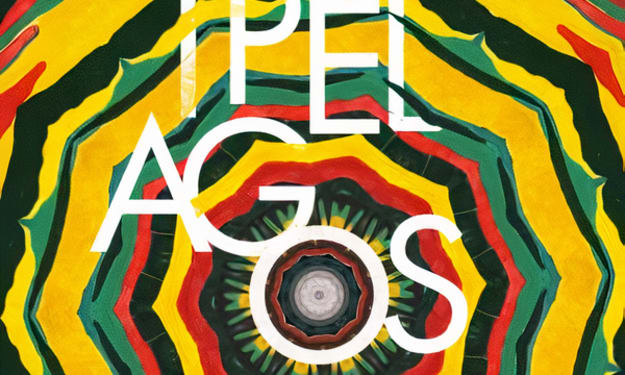
During the lockdown, when most of the poems in "Archipelagos" were written, I reread many of the books that shaped my life and work: Garvey's "The Philosophy and Opinions of Marcus Garvey," Cesaire's "Discourse on Colonialism," Fanon's "The Wretched of The Earth," Brathwaite's "The Arrivants," Walcott's "Collected Poems," and Baldwin's "The Fire Next Time." Revisiting these works, reading Amitav Ghosh's "The Nutmeg's Curse" and listening to Bob Marley influenced the poems in “Archipelagos.” "The Archangel's Trumpet," in particular, embodies the ideas of Brathwaite, Baldwin, and the songwriters who provided a subtext for the poems.
By Geoffrey Philp 3 years ago in Poets
The Mermaid of Little London
Dead parrot fish. It was the first thing that Donovan saw as he walked through the remains of Little London, a town that once brimmed with life. The laughter of children, the chattering of rumheads in Fisher’s Bar, and the gossip of market women had been replaced by a heavy stillness. A tidal wave had destroyed the town. Even the Methodist Church, which had seen its share of hurricanes and earthquakes, was now a shadow of its former glory.
By Geoffrey Philp 3 years ago in Fiction
Why I Wrote "Archipelagos"
As a writer, poet, and climate justice advocate, my deep concerns for the environment, and the devastating impacts of climate change compelled me during the lockdown to write a series of poems, which resulted in the creation of Archipelagos. Inspired by “Derek Walcott’s poem, “Archipelagos,” which is part of a longer poem, “Map of the New World,” and Amitav Ghosh's The Nutmeg's Curse, where he connects climate change with colonialism, I drew on work of other writers such as Aimé Césaire, Adam Hochschild, and Diana McCaulay—to whom the book is livicated-- to offer my perspective on climate change and colonialism, environmental concerns, and Garveyite principles centered around justice, particularly climate justice.
By Geoffrey Philp 3 years ago in Poets
Without Memory, Without Privileges
James Baldwin once said, "To be an African American is to be an African without memory and an American without privilege.1” In this brief passage, Baldwin highlights the plight of African Americans who have been stripped of their cultural roots and dispossessed of their rights and privileges by a system designed to render them stateless.
By Geoffrey Philp 3 years ago in The Swamp
Writing for Love. Top Story - May 2023.
A few days ago, I had an interesting conversation with my friend, Randi Gray Kristensen, who teaches freshman composition at George Washington University. Halfway through our discussion about AI, I suddenly realized that she was approaching the topic as a scholar, and I was coming at the issue as a writer. "In this wilderness of information," as Randi put it, she was concerned that students would turn in papers they had copied from Bard and pass it off as if they had written it. Randi emphasized that she taught her students how to formulate a thesis, gather facts not subject to AI hallucinations, make inferences based on the evidence, and deduce logical conclusions based on sound premises. This is why in academic circles, scholars like Randi ask questions such as "Who did the research and for whom? How was the research conducted, and who paid for it? Did reputable scholars in the field review the results?
By Geoffrey Philp 3 years ago in Motivation
Marcus Garvey & The Origins of Woke
Recently there has been a lot of controversy surrounding the word "woke." From Nike's 2018 Colin Kaepernick ad to P&G's My Black Is Beautiful campaign, companies have been criticized for being "too woke." Whatever that means. “Woke" has come to mean so many things to so many people that it is hard to understand what the word means. So let’s go back to the origins of the word “woke.”
By Geoffrey Philp 3 years ago in The Swamp