Favour Nyimbili
Stories (26)
Filter by community
A Good Man is Hard to Find
"While you all talk to the people in front, I'll run around behind and get in a window," John Wesley suggested. "We'll all stay in the car," his mother said. They turned onto the dirt road and the car raced roughly along in a swirl of pink dust. The grandmother recalled the times when there were no paved roads and thirty miles was a day's journey. The dirt road was hilly and there were sudden washes in it and sharp curves on dangerous embankments. All at once they would be on a hill, looking down over the blue tops of trees for miles around, then the next minute, they would be in a red depression with the dust-coated trees looking down on them. "This place had better turn up in a minute," Bailey said, "or I'm going to turn around." The road looked as if no one had traveled on it in months. "It's not much farther," the grandmother said and just as she said it, a horrible thought came to her. The thought was so embarrassing that she turned red in the face and her eyes dilated and her feet jumped up, upsetting her valise in the corner. The instant the valise moved, the newspaper top she had over the basket under it rose with a snarl and Pitty Sing,the cat, sprang onto Bailey's shoulder. The children were thrown to the floor and their mother, clutching the baby, was thrown out the door onto the ground; the old lady was thrown into the front seat. The car turned over once and landed right-side-up in a gulch off the side of the road. Bailey remained in the driver's seat with the cat-gray-striped with a broad white face and an orange noseclinging to his neck like a caterpillar. As soon as the children saw they could move their arms and legs, they scrambled out of the car, shouting, "We've had an ACCIDENT!" The grandmother was curled up under the dashboard, hoping she was injured so that Bailey's wrath would not come down on her all at once. The horrible thought she had had before the accident was that the house she had remembered so vividly was not in Georgia but in Tennessee. Bailey removed the cat from his neck with both hands and flung it out the window against the side of a pine tree. Then he got out of the car and started looking for the children's mother. She was sitting against the side of the red gutted ditch, holding the screaming baby, but she only had a cut down her face and a broken shoulder. "We've had an ACCIDENT!" the children screamed in a frenzy of delight. "But nobody's killed," June Star said with disappointment as the grandmother limped out of the car, her hat still pinned to her head but the broken front brim standing up at a jaunty angle and the violet spray hanging off the side. They all sat down in the ditch, except the children, to recover from the shock. They were all shaking. "Maybe a car will come along," said the children's mother hoarsely. "I believe I have injured an organ," said the grandmother, pressing her side, but no one answered her. Bailey's teeth were clattering. He had on a yellow sport shirt with bright blue parrots designed in it and his face was as yellow as the shirt. The grandmother decided that she would not mention that the house was in Tennessee. The road was about ten feet above and they could see only the tops of the trees on the other side of it. Behind the ditch they were sitting in there were more woods, tall and dark and deep. In a few minutes they saw a car some distance away on top of a hill, coming slowly as if the occupants were watching them. The grandmother stood up and waved both arms dramatically to attract their attention. The car continued to come on slowly, disappeared around a bend and appeared again, moving even slower, on top of the hill they had gone over. It was a big black battered hearse-like automobile. There were three men in it. It came to a stop just over them and for some minutes, the driver looked down with a steady expressionless gaze to where they were sitting, and didn't speak. Then he turned his head and muttered something to the other two and they got out. One was a fat boy in black trousers and a red sweat shirt with a silver stallion embossed on the front of it. He moved around on the right side of them and stood staring, his mouth partly open in a kind of loose grin. The other had on khaki pants and a blue striped coat and a gray hat pulled down very low, hiding most of his face. He came around slowly on the left side. Neither spoke. The driver got out of the car and stood by the side of it, looking down at them. He was an older man than the other two. His hair was just beginning to gray and he wore silver- rimmed spectacles that gave him a scholarly look. He had a long creased face and didn't have on any shirt or undershirt. He had on blue jeans that were too tight for him and was holding a black hat and a gun. The two boys also had guns. "We've had an ACCIDENT!" the children screamed. The grandmother had the peculiar feeling that the bespectacled man was someone she knew. His face was as familiar to her as if she had known him au her life but she could not recall who he was. He moved away from the car and began to come down the embankment, placing his feet carefully so that he wouldn't slip. He had on tan and white shoes and no socks, and his ankles were red and thin. "Good afternoon," he said. "I see you all had you a little spill." "We turned over twice!" said the grandmother. "Once"," he corrected. "We seen it happen. Try their car and see will it run, Hiram," he said quietly to the boy with the gray hat. "What you got that gun for?" John Wesley asked. "Whatcha gonna do with that gun?" "Lady," the man said to the children's mother, "would you mind calling them children to sit down by you? Children make me nervous. I want all you all to sit down right together there where you're at." "What are you telling US what to do for?" June Star asked. Behind them the line of woods gaped like a dark open mouth. "Come here," said their mother. "Look here now," Bailey began suddenly, "we're in a predicament! We're in . . ." The grandmother shrieked. She scrambled to her feet and stood staring. "You're The Misfit!" she said. "I recognized you at once!" "Yes'm," the man said, smiling slightly as if he were pleased in spite of himself to be known, "but it would have been better for all of you, lady, if you hadn't of reckernized me." Bailey turned his head sharply and said something to his mother that shocked even the children. The old lady began to cry and The Misfit reddened. "Lady," he said, "don't you get upset. Sometimes a man says things he don't mean. I don't reckon he meant to talk to you thataway." "You wouldn't shoot a lady, would you?" the grandmother said and removed a clean handkerchief from her cuff and began to slap at her eyes with it. The Misfit pointed the toe of his shoe into the ground and made a little hole and then covered it up again. "I would hate to have to," he said. "Listen," the grandmother almost screamed, "I know you're a good man. You don't look a bit like you have common blood. I know you must come from nice people!" "Yes mam," he said, "finest people in the world." When he smiled he showed a row of strong white teeth. "God never made a finer woman than my mother and my daddy's heart was pure gold," he said. The boy with the red sweat shirt had come around behind them and was standing with his gun at his hip. The Misfit squatted down on the ground. "Watch them children, Bobby Lee," he said. "You know they make me nervous." He looked at the six of them huddled together in front of him and he seemed to be embarrassed as if he couldn't think of anything to say. "Ain't a cloud in the sky," he remarked, looking up at it. "Don't see no sun but don't see no cloud neither." "Yes, it's a beautiful day," said the grandmother. "Listen," she said, "you shouldn't call yourself The Misfit because I know you're a good man at heart. I can just look at you and tell " "Hush!" Bailey yelled. "Hush! Everybody shut up and let me handle this!" He was squatting in the position of a runner about to sprint forward but he didn't move. "I prechate that, lady," The Misfit said and drew a little circle in the ground with the butt of his gun. "It'll take a half a hour to fix this here car," Hiram called, looking over the raised hood of it. "Well, first you and Bobby Lee get him and that little boy to step over yonder with you," The Misfit said, pointing to Bailey and John Wesley. "The boys want to ast you some- thing," he said to Bailey. "Would you mind stepping back in them woods there with them?" "Listen," Bailey began, "we're in a terrible predicament! Nobody realizes what this is," and his voice cracked. His eyes were as blue and intense as the parrots in his shirt and he remained perfectly still. The grandmother reached up to adjust her hat brim as if she were going to the woods with him but it came off in her hand. She stood staring at it and after a second she let it fall on the ground. Hiram pulled Bailey up by the arm as if he were assisting an old man. John Wesley caught hold of his father's hand and Bobby Lee followed. They went off toward the woods and just as they reached the dark edge, Bailey turned and supporting himself against a gray naked pine trunk, he shouted, "I'll be back in a minute, Mamma, wait on me!" "Come back this instant!" his mother shrilled but they all disappeared into the woods. "Bailey Boy!" the grandmother called in a tragic voice but she found she was looking at The Misfit squatting on the ground in front of her. "I just know you're a good man," she said desperately. "You're not a bit common!" "Nome, I ain't a good man," The Misfit said after a second as if he had considered her statement carefully, "but I ain't the worst in the world neither. My daddy said I was a different breed of dog from my brothers and sisters. 'You know,' Daddy said, 'it's some that can live their whole life out without asking about it and it's others has to know why it is, and this boy is one of the latters. He's going to be into everything!'" He put on his black hat and looked up suddenly and then away deep into the woods as if he were embarrassed again. "I'm sorry I don't have on a shirt before you ladies," he said, hunching his shoulders slightly. "We buried our clothes that we had on when we escaped and we're just making do until we can get better. We borrowed these from some folks we met," he explained. "That's perfectly all right," the grandmother said. "Maybe Bailey has an extra shirt in his suitcase." "I'll look and see terrectly," The Misfit said. "Where are they taking him?" the children's mother screamed. "Daddy was a card himself," The Misfit said. "You couldn't put anything over on him. He never got in trouble with the Authorities though. Just had the knack of handling them." "You could be honest too if you'd only try," said the grandmother. "Think how wonderful it would be to settle down and live a comfortable life and not have to think about some-body chasing you all the time." The Misfit kept scratching in the ground with the butt of his gun as if he were thinking about it. "Yes'm, somebody is always after you," he murmured. The grandmother noticed how thin his shoulder blades were just behind his hat because she was standing up looking down on him. "Do you ever pray?" she asked. He shook his head. All she saw was the black hat wiggle between his shoulder blades. "Nome," he said. There was a pistol shot from the woods, followed closely by another. Then silence. The old lady's head jerked around. She could hear the wind move through the tree tops like a long satisfied insuck of breath. "Bailey Boy!" she called. "I was a gospel singer for a while," The Misfit said. "I been most everything. Been in the arm service, both land and sea, at home and abroad, been twict married, been an undertaker, been with the railroads, plowed Mother Earth, been in a tornado, seen a man burnt alive oncet," and he looked up at the children's mother and the little girl who were sitting close together, their faces white and their eyes glassy; "I even seen a woman flogged," he said. "Pray, pray," the grandmother began, "pray, pray . . ." "I never was a bad boy that I remember of," The Misfit said in an almost dreamy voice, "but somewheres along the line I done something wrong and got sent to the penitentiary. I was buried alive," and he looked up and held her attention to him by a steady stare. "That's when you should have started to pray," she said "What did you do to get sent to the penitentiary that first time?" "Turn to the right, it was a wall," The Misfit said, looking up again at the cloudless sky. "Turn to the left, it was a wall. Look up it was a ceiling, look down it was a floor. I forget what I done, lady. I set there and set there, trying to remember what it was I done and I ain't recalled it to this day. Oncet in a while, I would think it was coming to me, but it never come." "Maybe they put you in by mistake," the old lady said vaguely. "Nome," he said. "It wasn't no mistake. They had the papers on me." "You must have stolen something," she said. The Misfit sneered slightly. "Nobody had nothing I wanted," he said. "It was a headdoctor at the penitentiary said what I had done was kill my daddy but I known that for a lie. My daddy died in nineteen ought nineteen of the epidemic flu and I never had a thing to do with it. He was buried in the Mount Hopewell Baptist churchyard and you can go there and see for yourself." "If you would pray," the old lady said, "Jesus would help you." "That's right," The Misfit said. "Well then, why don't you pray?" she asked trembling with delight suddenly. "I don't want no hep," he said. "I'm doing all right by myself." Bobby Lee and Hiram came ambling back from the woods. Bobby Lee was dragging a yellow shirt with bright blue parrots in it. "Thow me that shirt, Bobby Lee," The Misfit said. The shirt came flying at him and landed on his shoulder and he put it on. The grandmother couldn't name what the shirt reminded her of. "No, lady," The Misfit said while he was buttoning it up, "I found out the crime don't matter. You can do one thing or you can do another, kill a man or take a tire off his car, because sooner or later you're going to forget what it was you done and just be punished for it." The children's mother had begun to make heaving noises as if she couldn't get her breath. "Lady," he asked, "would you and that little girl like to step off yonder with Bobby Lee and Hiram and join your husband?" "Yes, thank you," the mother said faintly. Her left arm dangled helplessly and she was holding the baby, who had gone to sleep, in the other. "Hep that lady up, Hiram," The Misfit said as she struggled to climb out of the ditch, "and Bobby Lee, you hold onto that little girl's hand." "I don't want to hold hands with him," June Star said. "He reminds me of a pig." The fat boy blushed and laughed and caught her by the arm and pulled her off into the woods after Hiram and her mother. Alone with The Misfit, the grandmother found that she had lost her voice. There was not a cloud in the sky nor any sun. There was nothing around her but woods. She wanted to tell him that he must pray. She opened and closed her mouth several times before anything came out. Finally she found herself saying, "Jesus. Jesus," meaning, Jesus will help you, but the way she was saying it, it sounded as if she might be cursing. "Yes'm," The Misfit said as if he agreed. "Jesus shown everything off balance. It was the same case with Him as with me except He hadn't committed any crime and they could prove I had committed one because they had the papers on me. Of course," he said, "they never shown me my papers. That's why I sign myself now. I said long ago, you get you a signature and sign everything you do and keep a copy of it. Then you'll know what you done and you can hold up the crime to the punishment and see do they match and in the end you'll have something to prove you ain't been treated right. I call myself The Misfit," he said, "because I can't make what all I done wrong fit what all I gone through in punishment." There was a piercing scream from the woods, followed closely by a pistol report. "Does it seem right to you, lady, that one is punished a heap and another ain't punished at all?" "Jesus!" the old lady cried. "You've got good blood! I know you wouldn't shoot a lady! I know you come from nice people! Pray! Jesus, you ought not to shoot a lady. I'll give you all the money I've got!" "Lady," The Misfit said, looking beyond her far into the woods, "there never was a body that give the undertaker a tip." There were two more pistol reports and the grandmother raised her head like a parched old turkey hen crying for water and called, "Bailey Boy, Bailey Boy!" as if her heart would break. "Jesus was the only One that ever raised the dead," The Misfit continued, "and He shouldn't have done it. He shown everything off balance. If He did what He said, then it's nothing for you to do but thow away everything and follow Him, and if He didn't, then it's nothing for you to do but enjoy the few minutes you got left the best way you can-by killing somebody or burning down his house or doing some other meanness to him. No pleasure but meanness," he said and his voice had become almost a snarl. "Maybe He didn't raise the dead," the old lady mumbled, not knowing what she was saying and feeling so dizzy that she sank down in the ditch with her legs twisted under her. "I wasn't there so I can't say He didn't," The Misfit said. "I wisht I had of been there," he said, hitting the ground with his fist. "It ain't right I wasn't there because if I had of been there I would of known. Listen lady," he said in a high voice, "if I had of been there I would of known and I wouldn't be like I am now." His voice seemed about to crack and the grandmother's head cleared for an instant. She saw the man's face twisted close to her own as if he were going to cry and she murmured, "Why you're one of my babies. You're one of my own children!" She reached out and touched him on the shoulder. The Misfit sprang back as if a snake had bitten him and shot her three times through the chest. Then he put his gun down on the ground and took off his glasses and began to clean them. Hiram and Bobby Lee returned from the woods and stood over the ditch, looking down at the grandmother who half sat and half lay in a puddle of blood with her legs crossed under her like a child's and her face smiling up at the cloudless sky. Without his glasses, The Misfit's eyes were red-rimmed and pale and defenselesslooking. "Take her off and thow her where you shown the others," he said, picking up the cat that was rubbing itself against his leg. "She was a talker, wasn't she?" Bobby Lee said, sliding down the ditch with a yodel. "She would of been a good woman," The Misfit said, "if it had been somebody there to shoot her every minute of her life." "Some fun!" Bobby Lee said. "Shut up, Bobby Lee" The Misfit said. "It's no real pleasure in life."
By Favour Nyimbili11 months ago in Fiction
A Good Man is Hard to Find
THE GRANDMOTHER didn't want to go to Florida. She wanted to visit some of her connections in east Tennessee and she was seizing at every chance to change Bailey's mind. Bailey was the son she lived with, her only boy. He was sitting on the edge of his chair at the table, bent over the orange sports section of the Journal. "Now look here, Bailey," she said, "see here, read this," and she stood with one hand on her thin hip and the other rattling the newspaper at his bald head. "Here this fellow that calls himself The Misfit is aloose from the Federal Pen and headed toward Florida and you read here what it says he did to these people. Just you read it. I wouldn't take my children in any direction with a criminal like that aloose in it. I couldn't answer to my conscience if I did." Bailey didn't look up from his reading so she wheeled around then and faced the children's mother, a young woman in slacks, whose face was as broad and innocent as a cabbage and was tied around with a green head-kerchief that had two points on the top like rabbit's ears. She was sitting on the sofa, feeding the baby his apricots out of a jar. "The children have been to Florida before," the old lady said. "You all ought to take them somewhere else for a change so they would see different parts of the world and be broad. They never have been to east Tennessee." The children's mother didn't seem to hear her but the eight-year-old boy, John Wesley, a stocky child with glasses, said, "If you don't want to go to Florida, why dontcha stay at home?" He and the little girl, June Star, were reading the funny papers on the floor. "She wouldn't stay at home to be queen for a day," June Star said without raising her yellow head. "Yes and what would you do if this fellow, The Misfit, caught you?" the grandmother asked. "I'd smack his face," John Wesley said. "She wouldn't stay at home for a million bucks," June Star said. "Afraid she'd miss something. She has to go everywhere we go." "All right, Miss," the grandmother said. "Just remember that the next time you want me to curl your hair." June Star said her hair was naturally curly. The next morning the grandmother was the first one in the car, ready to go. She had her big black valise that looked like the head of a hippopotamus in one corner, and underneath it she was hiding a basket with Pitty Sing, the cat, in it. She didn't intend for the cat to be left alone in the house for three days because he would miss her too much and she was afraid he might brush against one of the gas burners and accidentally asphyxiate himself. Her son, Bailey, didn't like to arrive at a motel with a cat. She sat in the middle of the back seat with John Wesley and June Star on either side of her. Bailey and the children's mother and the baby sat in front and they left Atlanta at eight forty-five with the mileage on the car at 55890. The grandmother wrote this down because she thought it would be interesting to say how many miles they had been when they got back. It took them twenty minutes to reach the outskirts of the city. The old lady settled herself comfortably, removing her white cotton gloves and putting them up with her purse on the shelf in front of the back window. The children's mother still had on slacks and still had her head tied up in a green kerchief, but the grandmother had on a navy blue straw sailor hat with a bunch of white violets on the brim and a navy blue dress with a small white dot in the print. Her collars and cuffs were white organdy trimmed with lace and at her neckline she had pinned a purple spray of cloth violets containing a sachet. In case of an accident, anyone seeing her dead on the highway would know at once that she was a lady. She said she thought it was going to be a good day for driving, neither too hot nor too cold, and she cautioned Bailey that the speed limit was fifty-five miles an hour and that the patrolmen hid themselves behind billboards and small clumps of trees and sped out after you before you had a chance to slow down. She pointed out interesting details of the scenery: Stone Mountain; the blue granite that in some places came up to both sides of the highway; the brilliant red clay banks slightly streaked with purple; and the various crops that made rows of green lace-work on the ground. The trees were full of silverwhite sunlight and the meanest of them sparkled. The children were reading comic magazines and their mother had gone back to sleep. "Let's go through Georgia fast so we won't have to look at it much," John Wesley said. "If I were a little boy," said the grandmother, "I wouldn't talk about my native state that way. Tennessee has the mountains and Georgia has the hills." "Tennessee is just a hillbilly dumping ground," John Wesley said, "and Georgia is a lousy state too." "You said it," June Star said. "In my time," said the grandmother, folding her thin veined fingers, "children were more respectful of their native states and their parents and everything else. People did right then. Oh look at the cute little pickaninny!" she said and pointed to a Negro child standing in the door of a shack. "Wouldn't that make a picture, now?" she asked and they all turned and looked at the little Negro out of the back window. He waved. "He didn't have any britches on," June Star said. "He probably didn't have any," the grandmother explained. "Little niggers in the country don't have things like we do. If I could paint, I'd paint that picture," she said. The children exchanged comic books. The grandmother offered to hold the baby and the children's mother passed him over the front seat to her. She set him on her knee and bounced him and told him about the things they were passing. She rolled her eyes and screwed up her mouth and stuck her leathery thin face into his smooth bland one. Occasionally he gave her a faraway smile. They passed a large cotton field with five or six graves fenced in the middle of it, like a small island. "Look at the graveyard!" the grandmother said, pointing it out. "That was the old family burying ground. That belonged to the plantation." "Where's the plantation?" John Wesley asked. "Gone With the Wind," said the grandmother. "Ha. Ha." When the children finished all the comic books they had brought, they opened the lunch and ate it. The grandmother ate a peanut butter sandwich and an olive and would not let the children throw the box and the paper napkins out the window. When there was nothing else to do they played a game by choosing a cloud and making the other two guess what shape it suggested. John Wesley took one the shape of a cow and June Star guessed a cow and John Wesley said, no, an automobile, and June Star said he didn't play fair, and they began to slap each other over the grandmother. The grandmother said she would tell them a story if they would keep quiet. When she told a story, she rolled her eyes and waved her head and was very dramatic. She said once when she was a maiden lady she had been courted by a Mr. Edgar Atkins Teagarden from Jasper, Georgia. She said he was a very good-looking man and a gentleman and that he brought her a watermelon every Saturday afternoon with his initials cut in it, E. A. T. Well, one Saturday, she said, Mr. Teagarden brought the watermelon and there was nobody at home and he left it on the front porch and returned in his buggy to Jasper, but she never got the watermelon, she said, because a nigger boy ate it when he saw the initials, E. A. T.! This story tickled John Wesley's funny bone and he giggled and giggled but June Star didn't think it was any good. She said she wouldn't marry a man that just brought her a watermelon on Saturday. The grandmother said she would have done well to marry Mr. Teagarden because he was a gentleman and had bought Coca-Cola stock when it first came out and that he had died only a few years ago, a very wealthy man. They stopped at The Tower for barbecued sandwiches. The Tower was a part stucco and part wood filling station and dance hall set in a clearing outside of Timothy. A fat man named Red Sammy Butts ran it and there were signs stuck here and there on the building and for miles up and down the highway saying, TRY RED SAMMY'S FAMOUS BARBECUE. NONE LIKE FAMOUS RED SAMMY'S! RED SAM! THE FAT BOY WITH THE HAPPY LAUGH. A VETERAN! RED SAMMY'S YOUR MAN! Red Sammy was lying on the bare ground outside The Tower with his head under a truck while a gray monkey about a foot high, chained to a small chinaberry tree, chattered nearby. The monkey sprang back into the tree and got on the highest limb as soon as he saw the children jump out of the car and run toward him. Inside, The Tower was a long dark room with a counter at one end and tables at the other and dancing space in the middle. They all sat down at a board table next to the nickelodeon and Red Sam's wife, a tall burnt-brown woman with hair and eyes lighter than her skin, came and took their order. The children's mother put a dime in the machine and played "The Tennessee Waltz," and the grandmother said that tune always made her want to dance. She asked Bailey if he would like to dance but he only glared at her. He didn't have a naturally sunny disposition like she did and trips made him nervous. The grandmother's brown eyes were very bright. She swayed her head from side to side and pretended she was dancing in her chair. June Star said play something she could tap to so the children's mother put in another dime and played a fast number and June Star stepped out onto the dance floor and did her tap routine. "Ain't she cute?" Red Sam's wife said, leaning over the counter. "Would you like to come be my little girl?" "No I certainly wouldn't," June Star said. "I wouldn't live in a broken-down place like this for a minion bucks!" and she ran back to the table. "Ain't she cute?" the woman repeated, stretching her mouth politely. "Arn't you ashamed?" hissed the grandmother. Red Sam came in and told his wife to quit lounging on the counter and hurry up with these people's order. His khaki trousers reached just to his hip bones and his stomach hung over them like a sack of meal swaying under his shirt. He came over and sat down at a table nearby and let out a combination sigh and yodel. "You can't win," he said. "You can't win," and he wiped his sweating red face off with a gray handkerchief. "These days you don't know who to trust," he said. "Ain't that the truth?" "People are certainly not nice like they used to be," said the grandmother. "Two fellers come in here last week," Red Sammy said, "driving a Chrysler. It was a old beat-up car but it was a good one and these boys looked all right to me. Said they worked at the mill and you know I let them fellers charge the gas they bought? Now why did I do that?" "Because you're a good man!" the grandmother said at once. "Yes'm, I suppose so," Red Sam said as if he were struck with this answer. His wife brought the orders, carrying the five plates all at once without a tray, two in each hand and one balanced on her arm. "It isn't a soul in this green world of God's that you can trust," she said. "And I don't count nobody out of that, not nobody," she repeated, looking at Red Sammy. "Did you read about that criminal, The Misfit, that's escaped?" asked the grandmother. "I wouldn't be a bit surprised if he didn't attact this place right here," said the woman. "If he hears about it being here,I wouldn't be none surprised to see him. If he hears it's two cent in the cash register, I wouldn't be a tall surprised if he . . ." "That'll do," Red Sam said. "Go bring these people their Co'-Colas," and the woman went off to get the rest of the order. "A good man is hard to find," Red Sammy said. "Every- thing is getting terrible. I remember the day you could go off and leave your screen door unlatched. Not no more." He and the grandmother discussed better times. The old lady said that in her opinion Europe was entirely to blame for the way things were now. She said the way Europe acted you would think we were made of money and Red Sam said it was no use talking about it, she was exactly right. The children ran outside into the white sunlight and looked at the monkey in the lacy chinaberry tree. He was busy catching fleas on himself and biting each one carefully between his teeth as if it were a delicacy. They drove off again into the hot afternoon. The grandmother took cat naps and woke up every few minutes with her own snoring. Outside of Toombsboro she woke up and recalled an old plantation that she had visited in this neighborhood once when she was a young lady. She said the house had six white columns across the front and that there was an avenue of oaks leading up to it and two little wooden trellis arbors on either side in front where you sat down with your suitor after a stroll in the garden. She recalled exactly which road to turn off to get to it. She knew that Bailey would not be willing to lose any time looking at an old house, but the more she talked about it, the more she wanted to see it once again and find out if the little twin arbors were still standing. "There was a secret panel in this house," she said craftily, not telling the truth but wishing that she were, "and the story went that all the family silver was hidden in it when Sherman came through but it was never found . . ." "Hey!" John Wesley said. "Let's go see it! We'll find it! We'll poke all the woodwork and find it! Who lives there? Where do you turn off at? Hey Pop, can't we turn off there?" "We never have seen a house with a secret panel!" June Star shrieked. "Let's go to the house with the secret panel! Hey Pop, can't we go see the house with the secret panel!" "It's not far from here, I know," the grandmother said. "It wouldn't take over twenty minutes." Bailey was looking straight ahead. His jaw was as rigid as a horseshoe. "No," he said. The children began to yell and scream that they wanted to see the house with the secret panel. John Wesley kicked the back of the front seat and June Star hung over her mother's shoulder and whined desperately into her ear that they never had any fun even on their vacation, that they could never do what THEY wanted to do. The baby began to scream and John Wesley kicked the back of the seat so hard that his father could feel the blows in his kidney. "All right!" he shouted and drew the car to a stop at the side of the road. "Will you all shut up? Will you all just shut up for one second? If you don't shut up, we won't go anywhere. "It would be very educational for them," the grandmother murmured. "All right," Bailey said, "but get this: this is the only time we're going to stop for anything like this. This is the one and only time." "The dirt road that you have to turn down is about a mile back," the grandmother directed. "I marked it when we passed." "A dirt road," Bailey groaned. After they had turned around and were headed toward the dirt road, the grandmother recalled other points about the house, the beautiful glass over the front doorway and the candle-lamp in the hall. John Wesley said that the secret panel was probably in the fireplace. "You can't go inside this house," Bailey said. "You don't know who lives there."
By Favour Nyimbili11 months ago in Fiction
The poet part 7
Helen's Soliloqy (All's Well That Ends Well) Our remedies oft in ourselves do lie Which we ascribe to heaven. The fated sky Gives us free scope, only doth backward pull Our slow designs when we ourselves are dull. What power is it which mounts my love so high, That makes me see, and cannot feed mine eye? The mightiest space in fortune nature brings To join like likes and kiss like native things. Impossible be strange attempts to those That weigh their pains in sense and do suppose What hath been cannot be. Who ever strove To show her merit that did miss her love?
By Favour Nyimbili11 months ago in Poets
The poet part 6
It Was A Lover And His Lass IT was a lover and his lass, With a hey, and a ho, and a hey nonino, That o'er the green corn-field did pass, In the spring time, the only pretty ring time, When birds do sing, hey ding a ding, ding; Sweet lovers love the spring. Between the acres of the rye, With a hey, and a ho, and a hey nonino, These pretty country folks would lie, In the spring time, the only pretty ring time, When birds do sing, hey ding a ding, ding; Sweet lovers love the spring. This carol they began that hour, With a hey, and a ho, and a hey nonino, How that life was but a flower In the spring time, the only pretty ring time, When birds do sing, hey ding a ding, ding; Sweet lovers love the spring. And, therefore, take the present time With a hey, and a ho, and a hey nonino, For love is crown`d with the prime In the spring time, the only pretty ring time, When birds do sing, hey ding a ding, ding; Sweet lovers love the spring.
By Favour Nyimbili11 months ago in Poets
The poet part 5
Hark! Hark! The Lark Hark! hark! the lark at heaven's gate sings, And Phoebus 'gins arise, His steeds to water at those springs On chalic'd flowers that lies; And winking Mary-buds begin To ope their golden eyes; With everything that pretty is, My lady sweet, arise: Arise, arise!
By Favour Nyimbili11 months ago in Poets
The poet part 4
Full Fathom Five Full fathom five thy father lies; Of his bones are coral made; Those are pearls that were his eyes: Nothing of him that doth fade But doth suffer a sea-change Into something rich and strange. Sea-nymphs hourly ring his knell: Ding-dong. Hark! now I hear them,--ding-dong, bell.
By Favour Nyimbili11 months ago in Poets
The poet part 3
From Venus And Adonis But, lo! from forth a copse that neighbours by, A breeding jennet, lusty, young, and proud, Adonis' trampling courser doth espy, And forth she rushes, snorts and neighs aloud; The strong-neck'd steed, being tied unto a tree, Breaketh his rein, and to her straight goes he. Imperiously he leaps, he neighs, he bounds, And now his woven girths he breaks asunder; The bearing earth with his hard hoof he wounds, Whose hollow womb resounds like heaven's thunder; The iron bit he crushes 'tween his teeth Controlling what he was controlled with. His ears up-prick'd; his braided hanging mane Upon his compass'd crest now stand on end; His nostrils drink the air, and forth again, As from a furnace, vapours doth he send: His eye, which scornfully glisters like fire, Shows his hot courage and his high desire. Sometime her trots, as if he told the steps, With gentle majesty and modest pride; Anon he rears upright, curvets and leaps, As who should say, 'Lo! thus my strength is tried; And this I do to captivate the eye Of the fair breeder that is standing by.' What recketh he his rider's angry stir, His flattering 'Holla,' or his 'Stand, I say?' What cares he now for curb of pricking spur? For rich caparisons or trapping gay? He sees his love, and nothing else he sees, Nor nothing else with his proud sight agrees. Look, when a painter would surpass the life, In limning out a well-proportion'd steed, His art with nature's workmanship at strife, As if the dead the living should exceed; So did this horse excel a common one, In shape, in courage, colour, pace and bone Round-hoof'd, short-jointed, fetlocks shag and long, Broad breast, full eye, small head, and nostril wide, High crest, short ears, straight legs and passing strong, Thin mane, thick tail, broad buttock, tender hide: Look, what a horse should have he did not lack, Save a proud rider on so proud a back. Sometimes he scuds far off, and there he stares; Anon he starts at stirring of a feather; To bid the wind a race he now prepares, And whe'r he run or fly they know not whether; For through his mane and tail the high wind sings, Fanning the hairs, who wave like feather'd wings. He looks upon his love, and neighs unto her; She answers him as if she knew his mind; Being proud, as females are, to see him woo her, She puts on outward strangeness, seems unkind, Spurns at his love and scorns the heat he feels, Beating his kind embracements with her heels. Then, like a melancholy malcontent, He vails his tail that, like a falling plume Cool shadow to his melting buttock lent: He stamps, and bites the poor flies in his fume. His love, perceiving how he is enrag'd, Grew kinder, and his fury was assuag'd. His testy master goeth about to take him; When lo! the unback'd breeder, full of fear, Jealous of catching, swiftly doth forsake him, With her the horse, and left Adonis there. As they were mad, unto the wood they hie them, Out-stripping crows that strive to over-fly them. I prophesy they death, my living sorrow, If thou encounter with the boar to-morrow. "But if thou needs wilt hunt, be rul'd by me; Uncouple at the timorous flying hare, Or at the fox which lives by subtlety, Or at the roe which no encounter dare: Pursue these fearful creatures o'er the downs, And on they well-breath'd horse keep with they hounds. "And when thou hast on food the purblind hare, Mark the poor wretch, to overshoot his troubles How he outruns with winds, and with what care He cranks and crosses with a thousand doubles: The many musits through the which he goes Are like a labyrinth to amaze his foes. "Sometime he runs among a flock of sheep, To make the cunning hounds mistake their smell, And sometime where earth-delving conies keep, To stop the loud pursuers in their yell, And sometime sorteth with a herd of deer; Danger deviseth shifts; wit waits on fear: "For there his smell with other being mingled, The hot scent-snuffing hounds are driven to doubt, Ceasing their clamorous cry till they have singled With much ado the cold fault cleanly out; Then do they spend their mouths: Echo replies, As if another chase were in the skies. "By this, poor Wat, far off upon a hill, Stands on his hinder legs with listening ear, To hearken if his foes pursue him still: Anon their loud alarums he doth hear; And now his grief may be compared well To one sore sick that hears the passing-bell. "Then shalt thou see the dew-bedabbled wretch Turn, and return, indenting with the way; Each envious briar his weary legs doth scratch, Each shadow makes him stop, each murmur stay: For misery is trodden on by many, And being low never reliev'd by any. "Lie quietly, and hear a little more; Nay, do not struggle, for thou shalt not rise: To make thee hate the hunting of the boar, Unlike myself thou hear'st me moralize, Applying this to that, and so to so; For love can comment upon every woe."
By Favour Nyimbili11 months ago in Poets
The poet part 1
Fear no more the heat o' the sun; Nor the furious winter's rages, Thou thy worldly task hast done, Home art gone, and ta'en thy wages; Golden lads and girls all must, As chimney sweepers come to dust. Fear no more the frown of the great, Thou art past the tyrant's stroke: Care no more to clothe and eat; To thee the reed is as the oak: The sceptre, learning, physic, must All follow this, and come to dust. Fear no more the lightning-flash, Nor the all-dread thunder-stone; Fear not slander, censure rash; Thou hast finished joy and moan; All lovers young, all lovers must Consign to thee, and come to dust. No exorciser harm thee! Nor no witchcraft charm thee! Ghost unlaid forbear thee! Nothing ill come near thee! Quiet consummation have; And renowned be thy grave!
By Favour Nyimbili11 months ago in Poets
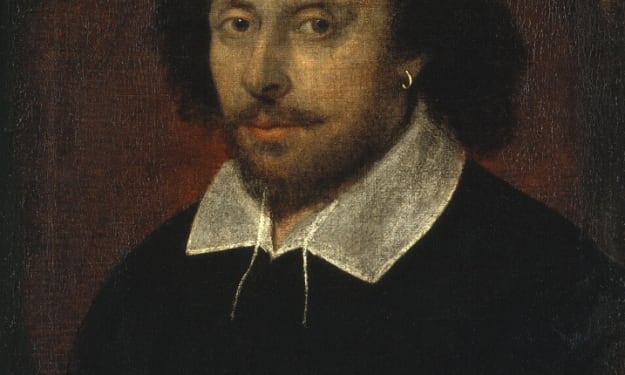
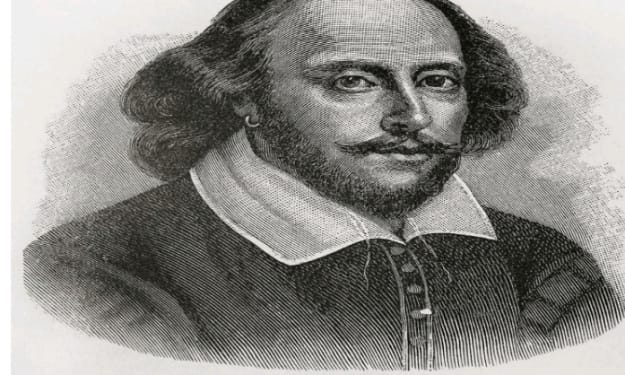
Biography of William Shakespeare the best poetry , playwright and actor
William Shakespeare (April 1564 – 23 April 1616) was an English playwright, poet and actor. He is widely regarded as the greatest writer in the English language and the world's pre-eminent dramatist. He is often called England's national poet and the "Bard of Avon" (or simply "the Bard"). His extant works, including collaborations, consist of some 39 plays, 154 sonnets, three long narrative poems and a few other verses, some of uncertain authorship. His plays have been translated into every major living language and are performed more often than those of any other playwright. Shakespeare remains arguably the most influential writer in the English language, and his works continue to be studied and reinterpreted.
By Favour Nyimbili11 months ago in History
Poet's
Antony and Cleopatra, Act II, Scene II [The barge she sat in, like a burnish'd throne] Enobarbus describes Queen Cleopatra Enobarbus: I will tell you. The barge she sat in, like a burnish'd throne, Burned on the water: the poop was beaten gold; Purple the sails, and so perfumed that The winds were lovesick with them; the oars were silver, Which to the tune of flutes kept stroke, and made The water which they beat to follow faster, As amorous of their strokes. For her own person, It beggar'd all description: she did lie In her pavilion, cloth-of-gold of tissue, O'erpicturing that Venus where we see The fancy outwork nature: on each side her Stood pretty dimpled boys, like smiling Cupids, With divers-colour'd fans, whose wind did seem To glow the delicate cheeks which they did cool, And what they undid did. Agrippa: O, rare for Antony. Enobarbus: Her gentlewomen, like the Nereides, So many mermaids, tended her i' th' eyes, And made their bends adornings. At the helm A seeming mermaid steers: the silken tackle Swell with the touches of those flower-soft hands That yarely frame the office. From the barge A strange invisible perfume hits the sense Of the adjacent wharfs. The city cast Her people out upon her; and Antony, Enthroned i' th' marketplace, did sit alone, Whistling to th' air; which, but for vacancy, Had gone to gaze on Cleopatra too, And made a gap in nature. Agrippa: Rare Egyptian! Enobarbus: Upon her landing, Antony sent to her, Invited her to supper. She replied It should be better he became her guest; Which she entreated. Our courteous Antony, Whom ne'er the word of "No" woman heard speak, Being barbered ten times o'er, goes to the feast, And for his ordinary, pays his heart For what his eyes eat only. Agrippa: Royal wench! She made great Caesar lay his sword to bed; He plowed her, and she cropped. Enobarbus: I saw her once Hop forty paces through the public street; And having lost her breath, she spoke, and panted, That she did make defect perfection, And, breathless, pow'r breathe forth. Maecenas: Now Antony must leave her utterly. Enobarbus: Never; He will not: Age cannot wither her, nor custom stale Her infinite variety. Other women cloy The appetites they feed, but she makes hungry Where most she satisfies; for vilest things Become themselves in her, that the holy priests Bless her when she is riggish.
By Favour Nyimbili11 months ago in Poets
Poetry
A Fairy Song Over hill, over dale, Thorough bush, thorough brier, Over park, over pale, Thorough flood, thorough fire! I do wander everywhere, Swifter than the moon's sphere; And I serve the Fairy Queen, To dew her orbs upon the green; The cowslips tall her pensioners be; In their gold coats spots you see; Those be rubies, fairy favours; In those freckles live their savours; I must go seek some dewdrops here, And hang a pearl in every cowslip's ear.
By Favour Nyimbili11 months ago in Poets
The best story books
Books have the unique power to transport us into different worlds, introduce us to unforgettable characters, and stir emotions that stay with us long after the final page. Among the vast ocean of literature, some books stand out for their exceptional storytelling—stories that capture the imagination, spark deep thought, or touch the heart. These are the books with the best stories: timeless tales that entertain, inspire, and resonate across generations and cultures. Whether fiction or non-fiction, fantasy or romance, the best story-driven books connect us to the human experience in the most powerful and meaningful ways
By Favour Nyimbili11 months ago in Motivation